Artwork
Diana and Actaeon
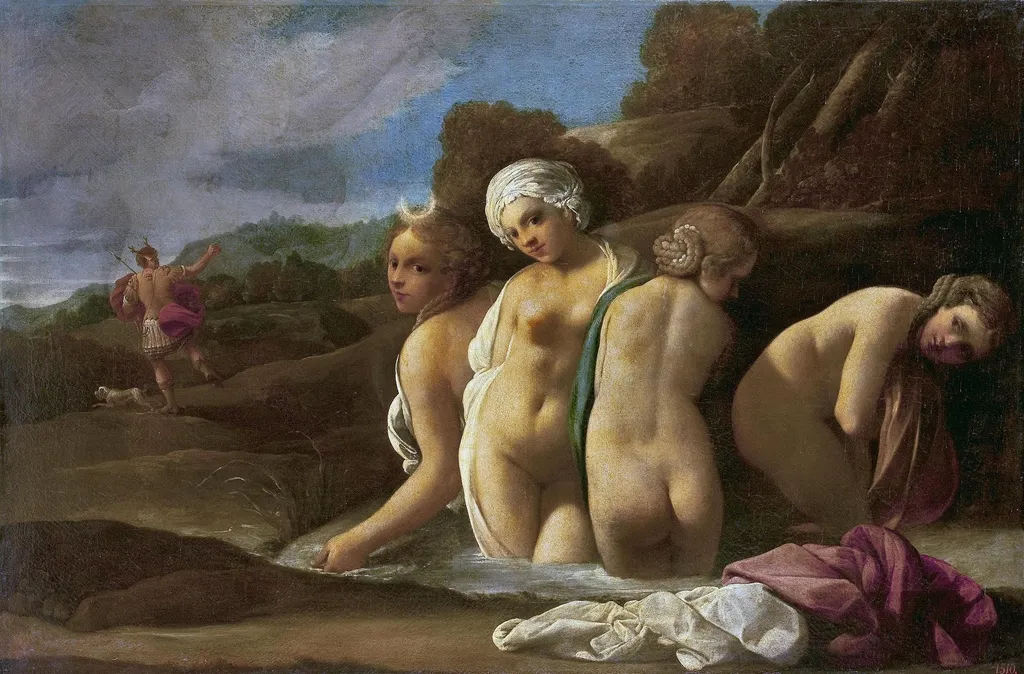
Diana and Actaeon is an oil painting by the Early Baroque Italian artist Bartolomeo Schedoni. It dates from 1615 and is held in the collection of the Hermitage Museum.
About this work
Subject & Meaning
The episode functions as a moral caution against forbidden sight and the dangers of desire.
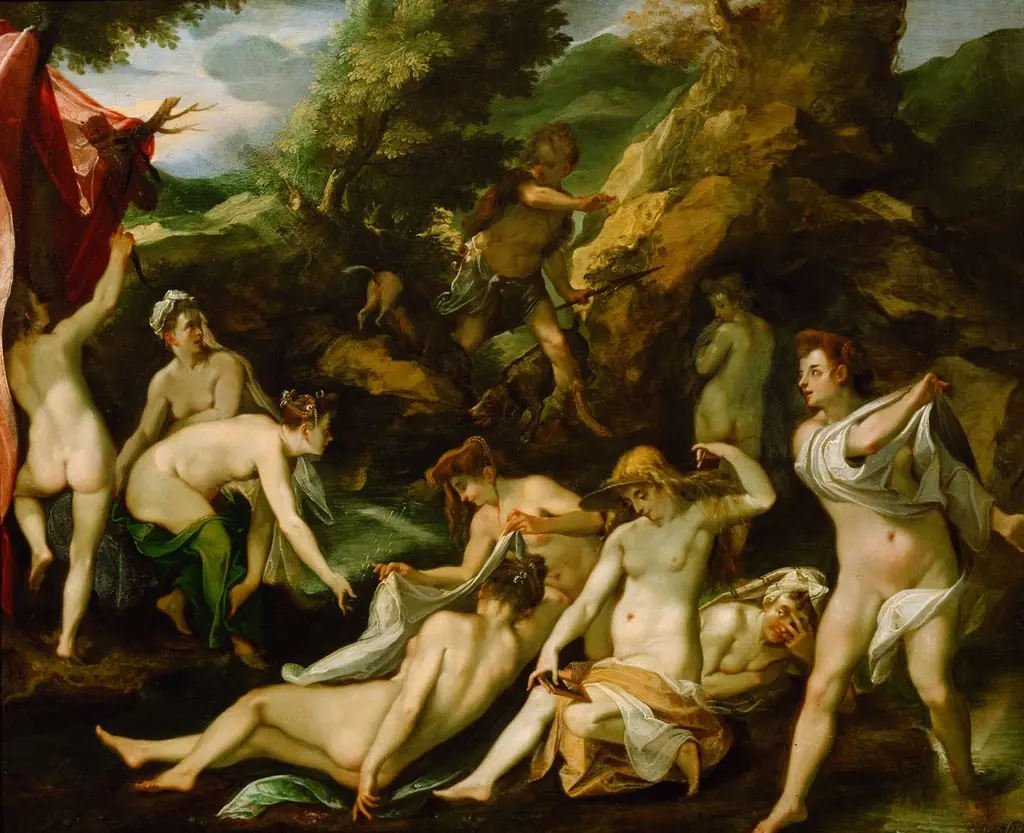
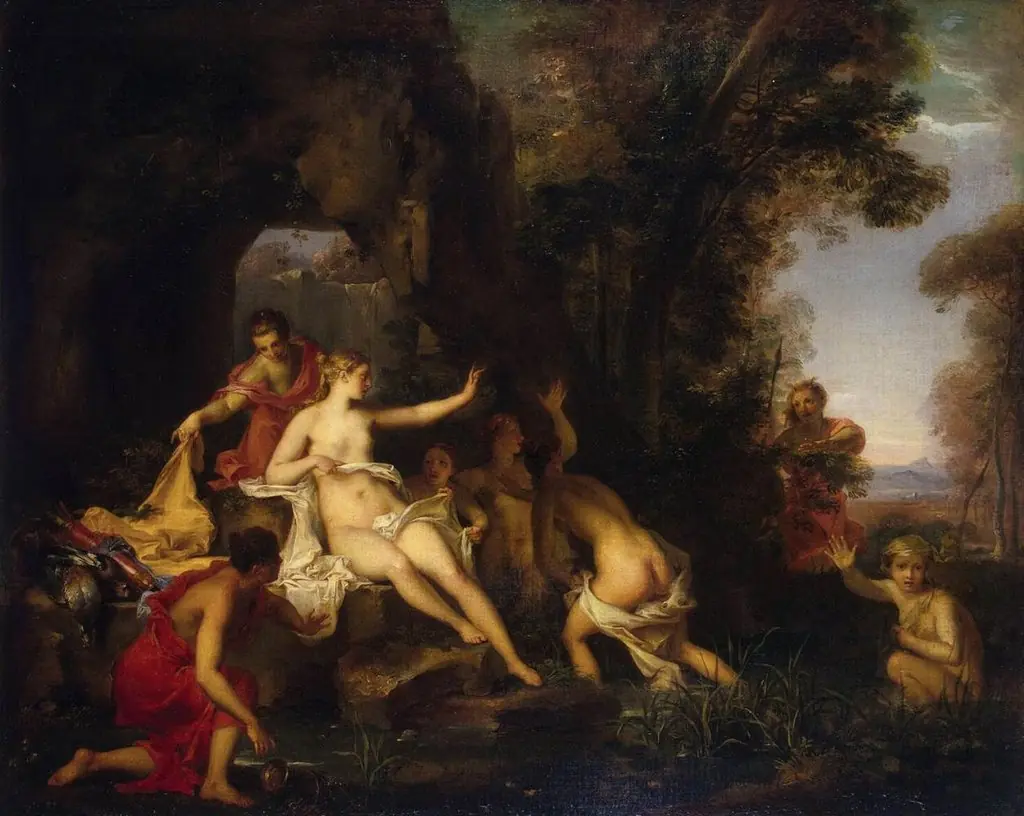
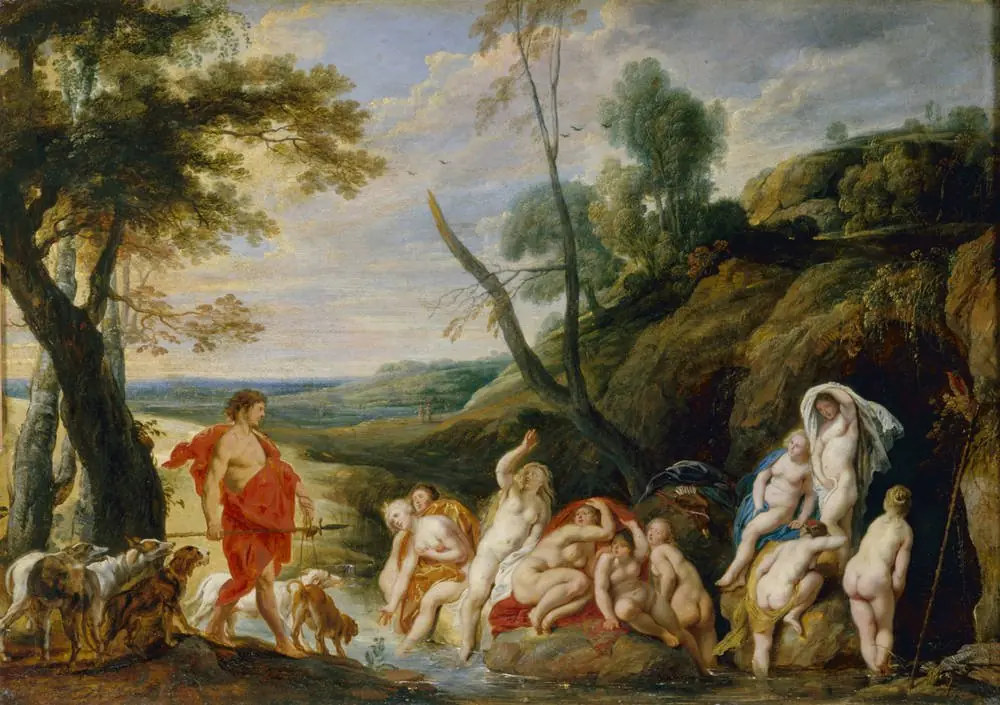
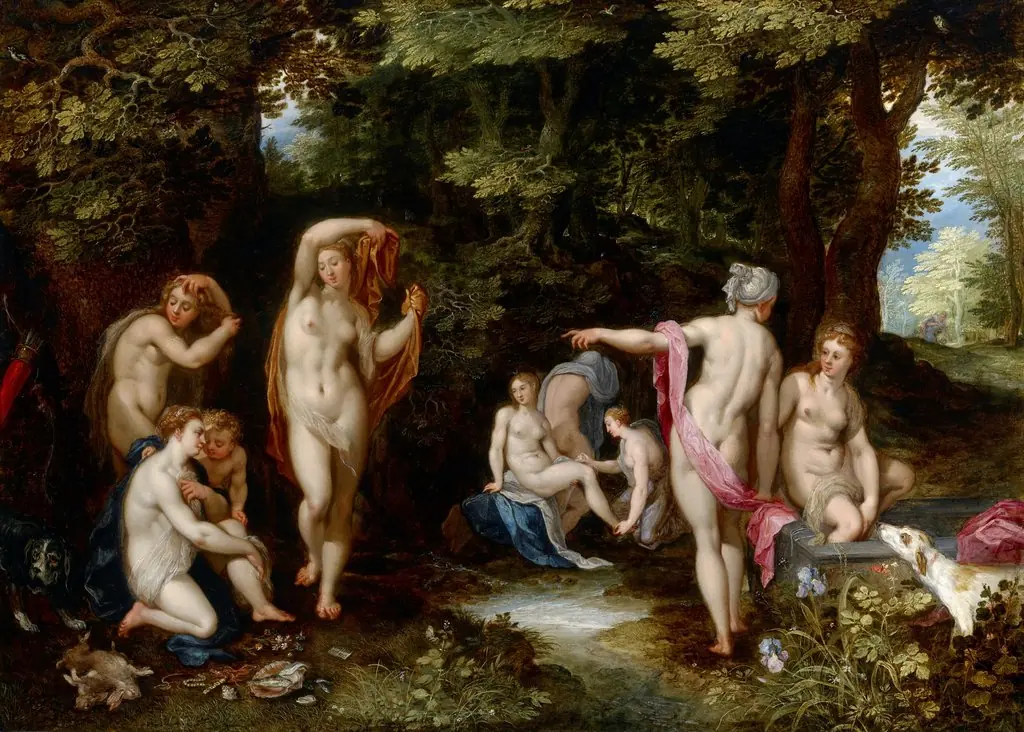
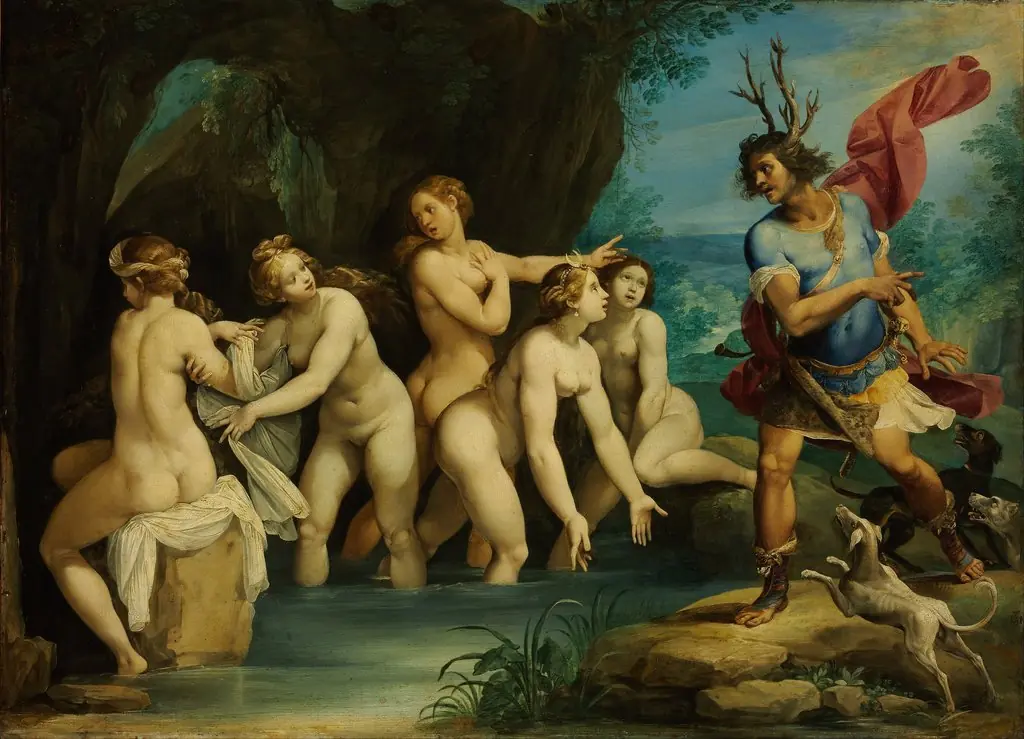
The painting depicts the Ovidian myth in which the huntress Diana surprises Actaeon while bathing, a moment that leads to the hunter’s fatal transformation into a stag. Schedoni renders the scene at the instant Diana covers herself and recoils, her companions likewise startled, while Actaeon’s presence is revealed by a diagonal shaft of light that draws the viewer’s eye to his tense, imploring gesture.
The episode functions as a moral caution against forbidden sight and the dangers of desire. By staging the nude female body within a classical narrative, the composition channels Renaissance poetic ekphrasis to stage the moment when unchecked curiosity incurs divine wrath.
Technique & Style
The painting is executed in oil on canvas, measuring 128 cm in height and 191.5 cm in width, and was created in Italy in 1615.
The handling emphasizes fluid, luminous brushwork that renders the figures with a delicate, almost sculptural presence. The composition unfolds in a restrained palette of silvery grays and soft ochres, heightened by subtle contrasts in light and shadow. The figures are arranged in a shallow, stage-like space, with Diana positioned centrally and Actaeon to the left, their gestures and gazes conveying a sudden, dramatic confrontation. The landscape background dissolves into muted tonalities, reinforcing the mythological narrative’s emotional immediacy.
History & Provenance
The painting Diana and Actaeon was created by Bartolomeo Schedoni in 1615 as an oil on canvas work measuring 128 cm by 191.5 cm. It entered the Hermitage Museum's collection, where it remains on display, having been acquired as part of the museum's holdings of mythological paintings from Italy.
The painting is held in the collection of the State Hermitage Museum, St. Petersburg.
Its inventory number is ГЭ-1417.
It was shown in the exhibition “The Hermitage in the Renaissance” held at the State Hermitage Museum, St. Petersburg, from 19 September 2014 to 25 January 2015.
Overview
Bartolomeo Schedoni's 1615 oil painting 'Diana and Actaeon' is a mythological scene depicting a pivotal moment from classical mythology, featuring the goddess Diana and the hunter Actaeon. The work is part of the collection at the State Hermitage Museum.
Context
The painting reflects the Baroque period's fascination with classical mythology and the dramatic potential of light and shadow. It aligns with contemporary artistic trends that emphasized emotional intensity and visual spectacle.
Legacy
While specific influences or direct artistic lineage are not detailed, 'Diana and Actaeon' contributes to the broader legacy of Baroque painting's exploration of light, shadow, and mythological themes, potentially inspiring later artists in their depiction of dramatic, illuminated scenes.
Own this work as a print
Artist & collection