Artwork
Benjamin Bunny & Son Greengrocers
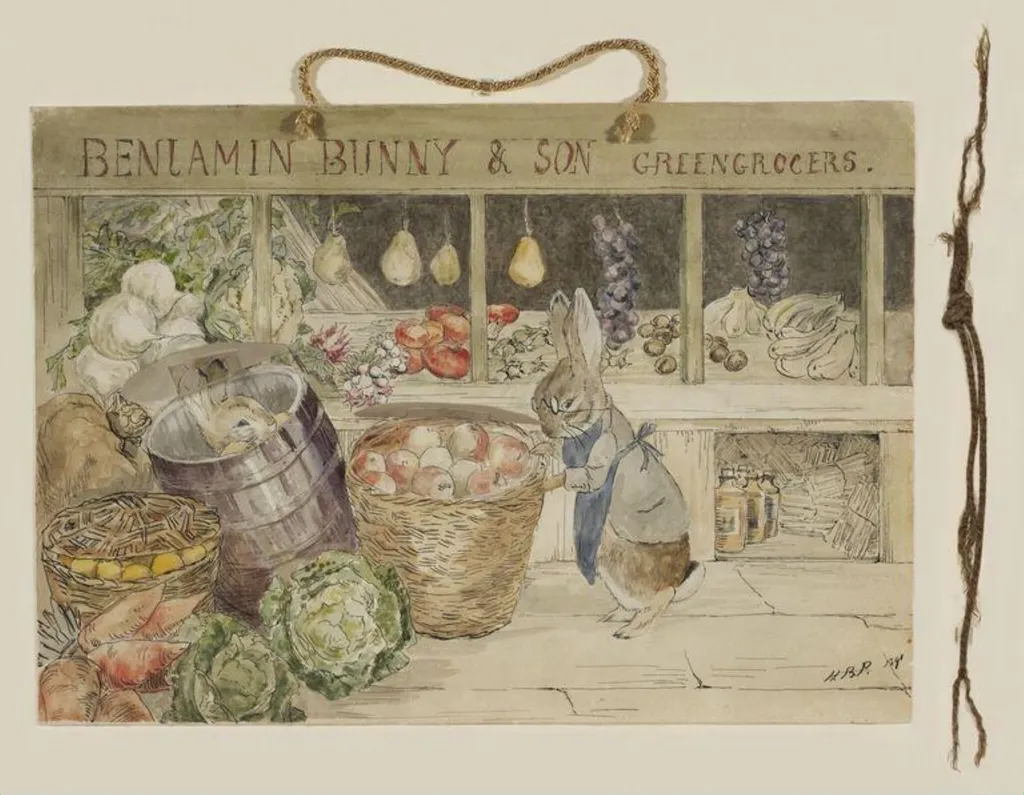
Benjamin Bunny & Son Greengrocers is a watercolor work on paper by the Impressionist artist Beatrix Potter. It dates from 1891 and is held in the collection of the Victoria and Albert Museum. This 1891 watercolor portrays a modest greengrocer’s shop front, rendered in delicate washes of color.
About this work
Overview
The scene centers on a rabbit in a blue apron standing beside the entrance, with produce arranged in baskets and barrels just outside.
This 1891 watercolor portrays a modest greengrocer’s shop front, rendered in delicate washes of color. The scene centers on a rabbit in a blue apron standing beside the entrance, with produce arranged in baskets and barrels just outside. The composition captures a quiet, domestic moment, emphasizing texture and natural light rather than narrative drama.
The work was painted as a private commission and later entered a major public collection through a bequest.
Subject & Meaning
The shop, named Benjamin Bunny & Son Greengrocers, reflects a gentle anthropomorphism common in Beatrix Potter’s early illustrations. The rabbit’s presence as a vendor suggests a parallel between animal life and human commerce, without overt fantasy. The abundance of fresh fruit, vegetables, and preserves conveys themes of seasonal labor and self-sufficiency, grounded in rural English life rather than fairy tale.
Technique & Style
Soft, translucent watercolor washes define the forms, with minimal detail to suggest texture, baskets woven with implied lines, fruit glowing with subtle highlights. The palette is muted yet warm, dominated by earth tones and pale greens, enhancing the sense of quiet realism. Light falls naturally across the produce, lending a tactile freshness without theatrical contrast or dramatic shadow.
History & Provenance
Commissioned by Walter Gaddum in 1891, the painting remained in private hands until 1973, when it was acquired by the Victoria and Albert Museum as part of the Linder Bequest. This collection, comprising over two thousand items tied to Beatrix Potter and her family, preserved materials spanning her artistic development, personal correspondence, and early illustrations beyond her published tales.
Context
Created during Potter’s formative years as an illustrator, this work predates her famous children’s books but shares their attention to botanical accuracy and quiet observation of rural England. It reflects her interest in natural history and domestic detail, influenced by her studies of plants and animals, as well as the Victorian tradition of genre painting focused on everyday commerce.
Legacy
Though not part of her published stories, this painting illustrates Potter’s broader artistic practice beyond narrative illustration. It contributes to understanding her visual language, precise, restrained, and deeply attuned to the textures of the natural world. Its inclusion in the V&A’s Linder Bequest underscores its value as a document of her artistic evolution and the cultural milieu that shaped her work.
Own this work as a print
Artist & collection
Artist
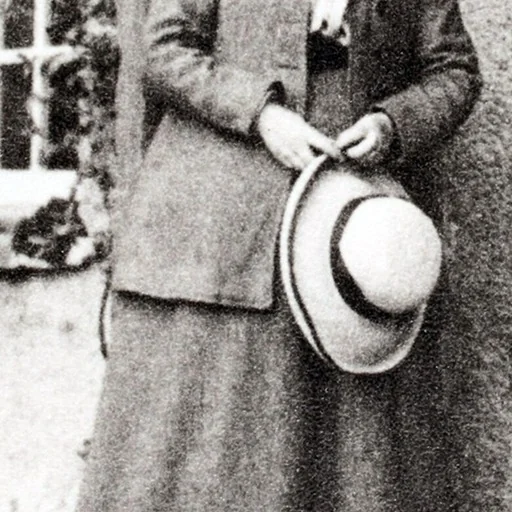
Helen Beatrix Heelis (née Potter; 28 July 1866 – 22 December 1943), usually known as Beatrix Potter ( BEE-ə-triks), was an English writer, illustrator, natural scientist, and conservationist.

- The Rabbits' Christmas Party: Roasting Apples
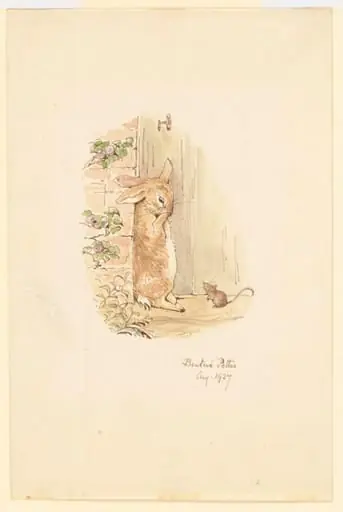 Peter by the door in the wall
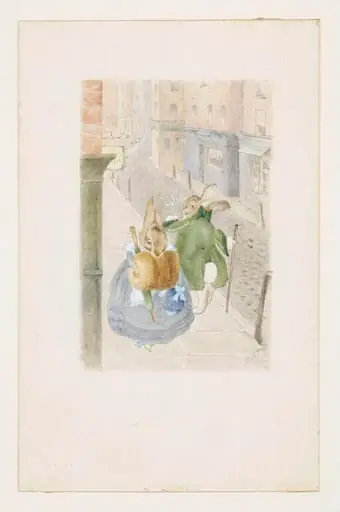 Lady rabbit and gentleman rabbit passing on the street
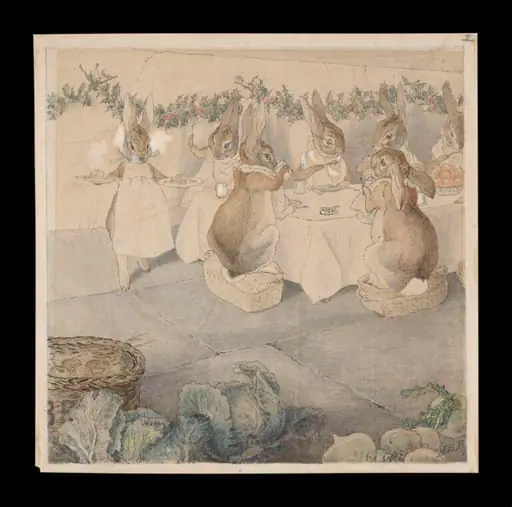 The Rabbits' Christmas Party: Christmas Dinner
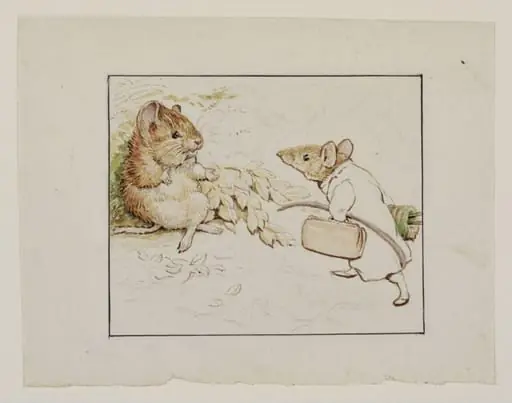 Untitled
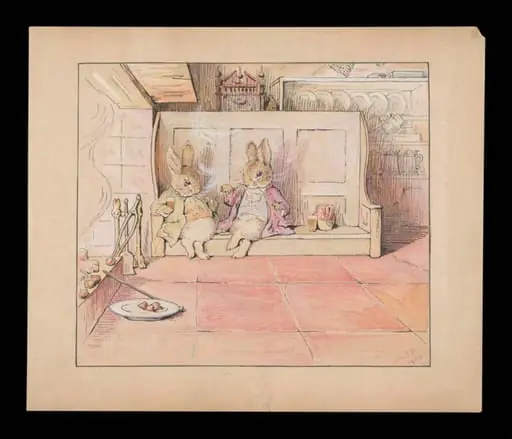 Two rabbits smoking pipes
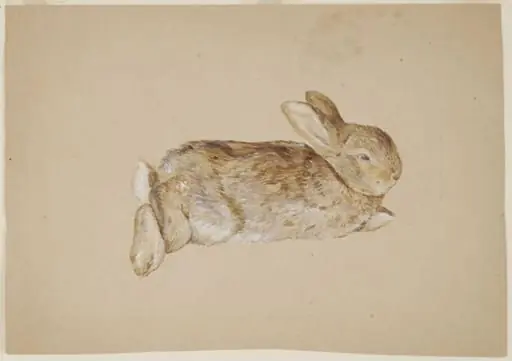 Untitled
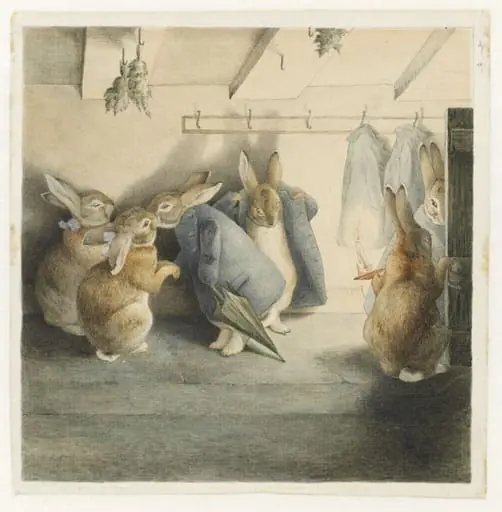 The Rabbits' Christmas Party: The Departure
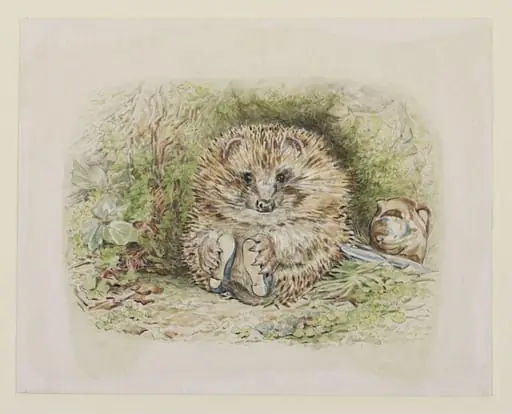 Old Mister Prickly Pin
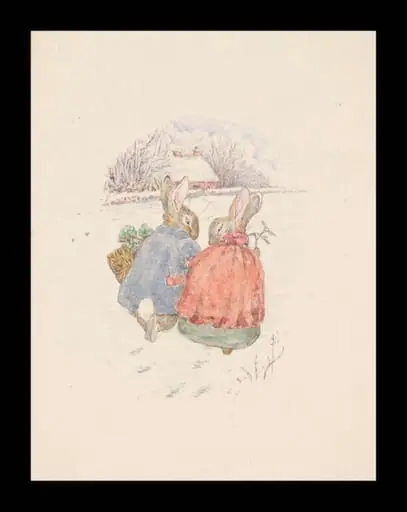 Design for a christmas card
 "Gentlemen came every day"