Artwork
White rose
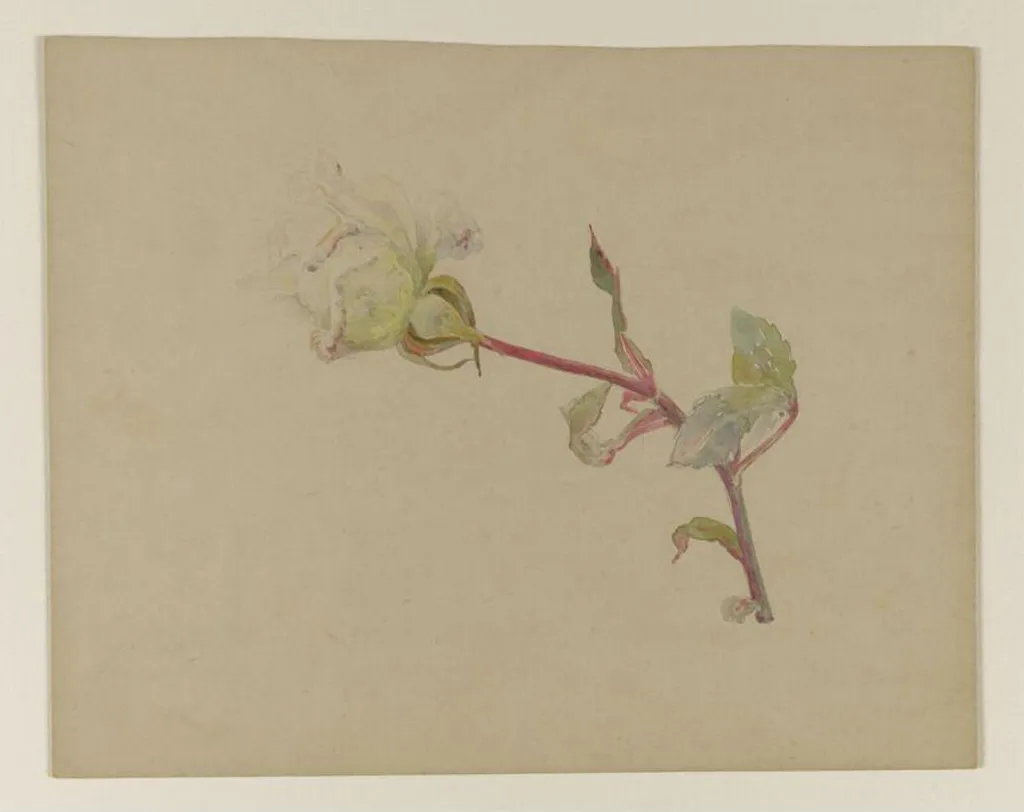
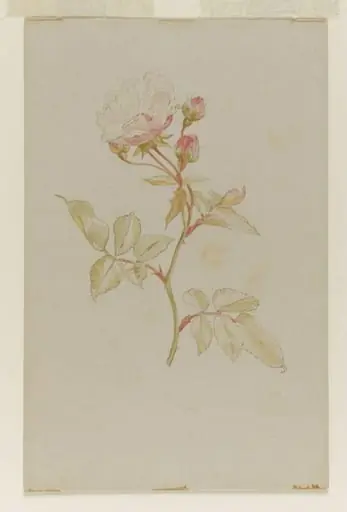
White rose is a watercolor work on paper by the Naïve art artist Beatrix Potter. It dates from 1850 and is held in the collection of the Victoria and Albert Museum.
About this work
Overview
This watercolour study by Beatrix Potter depicts a single white rose, rendered with precise attention to its stem, leaves, and thorns.
This watercolour study by Beatrix Potter depicts a single white rose, rendered with precise attention to its stem, leaves, and thorns. Executed in delicate washes, the work reflects her lifelong engagement with natural observation. Unlike her narrative illustrations, this piece stands as a standalone scientific sketch, revealing her disciplined approach to botanical accuracy and quiet aesthetic restraint.
Subject & Meaning
The white rose is presented without symbolism or anthropomorphism, treated purely as a botanical specimen. Potter’s focus on anatomical detail, each thorn, vein, and petal curl, suggests an intent rooted in scientific curiosity rather than romantic idealization. The composition invites close looking, emphasizing the plant’s intrinsic structure over decorative appeal.
Technique & Style
Using transparent watercolour, Potter built form through layered washes and fine linework, avoiding heavy outlines. Her technique prioritizes subtle tonal shifts and naturalistic texture, capturing the fragility of petals and the rigidity of thorns with equal care. The restrained palette and intimate scale reflect a method honed through years of field study, not studio embellishment.
History & Provenance
Created during Potter’s formative years, this study belongs to a larger body of botanical drawings she made between the 1880s and early 1900s. Many were produced for her own education and later influenced her published illustrations. The work remains in private or institutional collections, with several held by the Victoria and Albert Museum, where her scientific sketches are preserved alongside her literary manuscripts.
Context
In late Victorian England, amateur naturalism was a common pursuit among educated women. Potter’s botanical studies aligned with this tradition, yet her precision exceeded typical hobbyist efforts. Her work intersected with contemporary scientific illustration practices, though she never formally published her plant studies, reserving them as preparatory tools for her later fictional worlds.
Legacy
Potter’s botanical precision directly informed the lifelike settings of her children’s books, grounding fantasy in observable reality. Her early studies provided the visual vocabulary for the moss, foliage, and flora that populate Peter Rabbit’s world. Today, these sketches are recognized not merely as preparatory works, but as significant contributions to the tradition of British naturalist art.
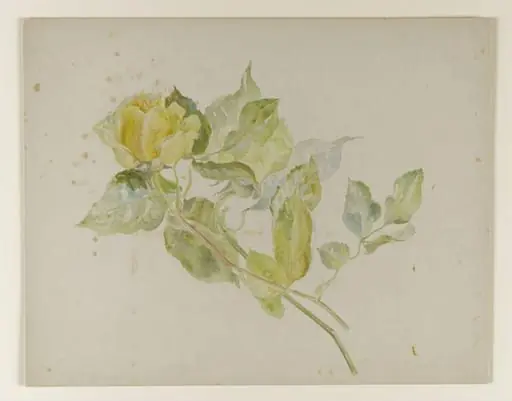
Own this work as a print
Artist & collection
Artist
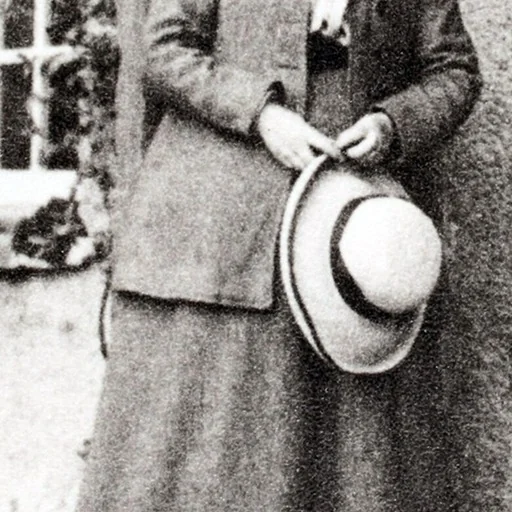
Helen Beatrix Heelis (née Potter; 28 July 1866 – 22 December 1943), usually known as Beatrix Potter ( BEE-ə-triks), was an English writer, illustrator, natural scientist, and conservationist.

- Yellow rose
 Pink rose
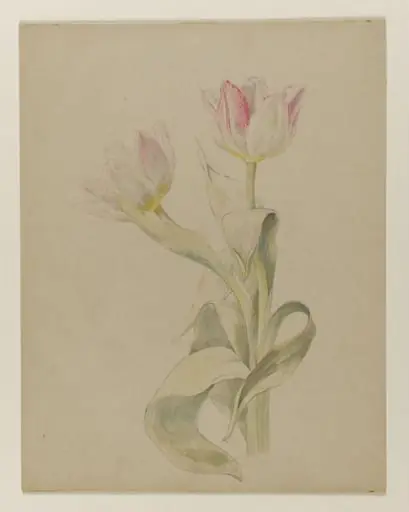 Pink and white tulips
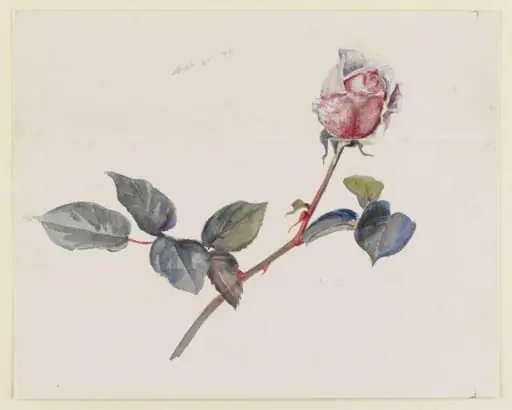 Pink rosebud with leaves
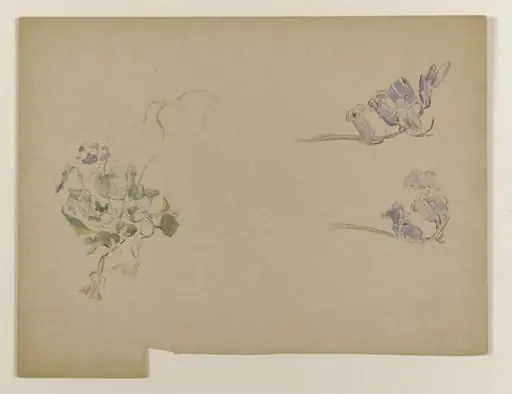 Violets and bluebells
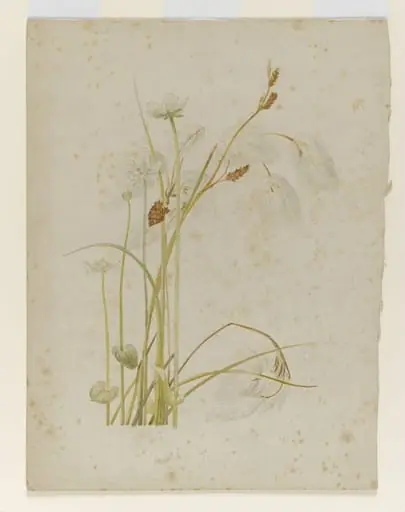 Cotton sedge with white wildflowers
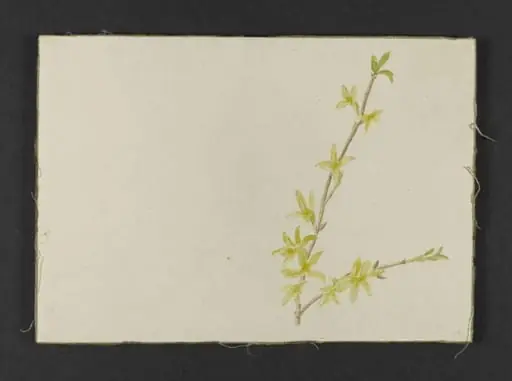 Spray of yellow forsythia
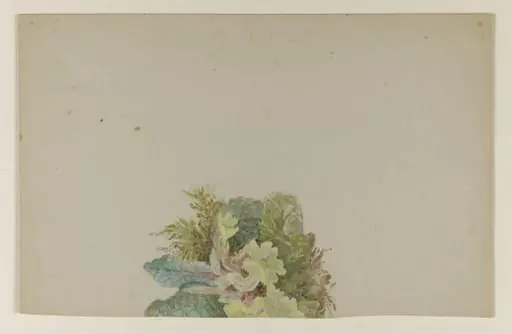 A cluster of primroses with leaves and moss
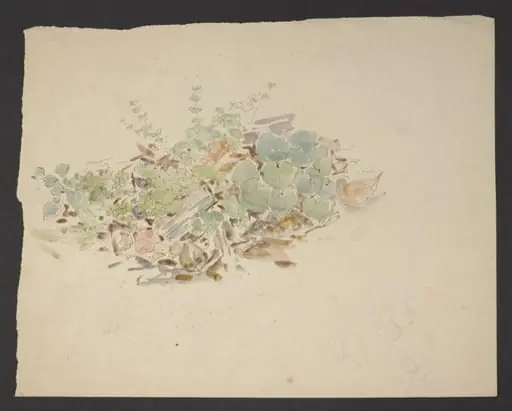 Study of a patch of ground with plants including clover
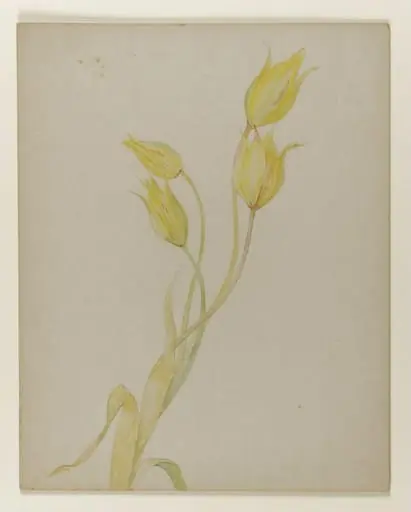 Yellow tulips
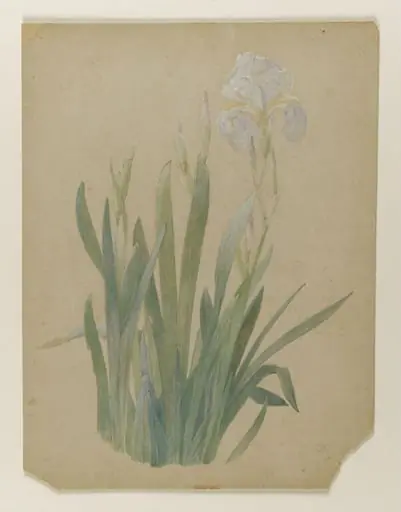 A group of irises, one in flower
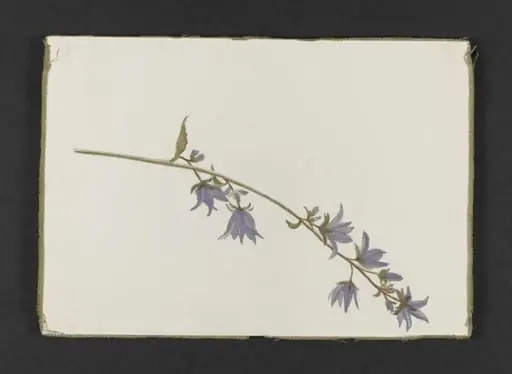 Spray of purple campanula