Artwork
Bookplate of Hieronymus Baumgartner
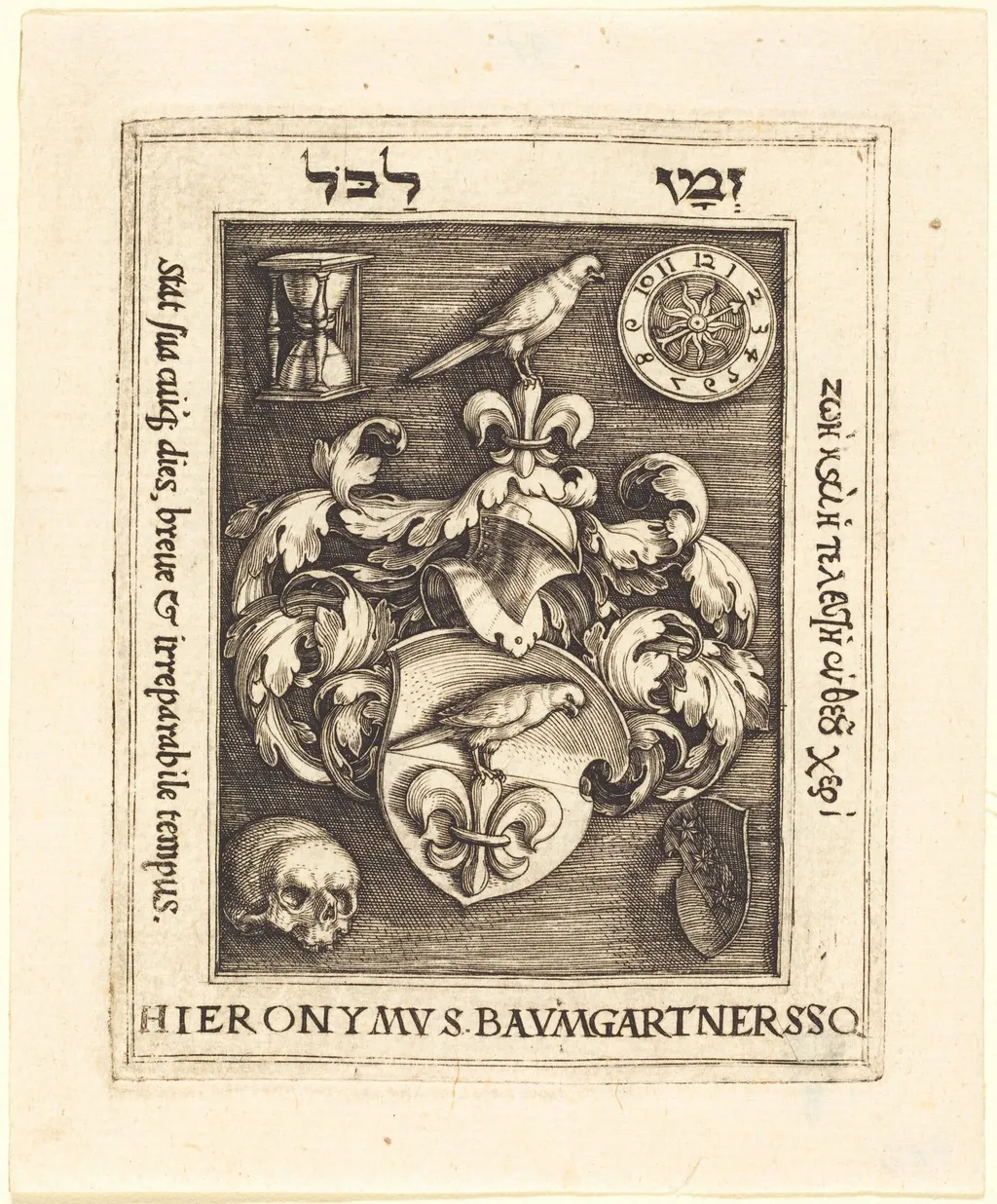
Bookplate of Hieronymus Baumgartner is an ink print by the Renaissance artist Barthel Beham. It dates from 1530 and is held in the collection of the National Gallery of Art.
- Inscription
- Inscribed:at left, in margin outside of image, in plate: stat sua cuiq[ue] dies, breve & irreparabile tempus. [Baumgartner's latin motto]; at top, in margin outside of image, in plate: [hebrew text of Baumgartner's motto]; at right, in margin outside of image, in plate: [greek text of Baumgartner's motto]; at bottom, in margin outside of image, in plate: HIERONYMVS BAVMGARTNER SSQ
About this work
Overview
This engraving on laid paper, created circa 1530 by Barthel Beham, serves as the bookplate for Hieronymus Baumgartner. The compact design integrates multiple symbolic elements within a decorative frame.
Subject & Meaning
The composition juxtaposes natural imagery (a wreath of leaves and flowers with perched birds) with temporal and mortality symbols (an hourglass, clock face, and skull). These elements converge to convey a message likely elaborated upon by the surrounding Latin text, which, though partially obscured, suggests a thematic depth exploring the transience of life and time.
Technique & Style
Executed in black and white, the engraving showcases Beham's skill in dense, intricate design. The narrow border of Latin text adds an extra layer of visual and intellectual complexity to the already layered symbolic core.
History & Provenance
Created for Hieronymus Baumgartner around 1530, specific details about the bookplate's subsequent ownership history are not provided in the available information.
Context
As a bookplate, this work would have been used to mark ownership within Baumgartner's collection, reflecting the Renaissance practice of personalizing books with symbolic, often allegorical, designs.
Legacy
While the engraving's direct influence is not detailed here, it represents a characteristic example of 16th-century German engraving, with its blend of symbolism and technical precision contributing to the broader legacy of Renaissance printmaking.
Own this work as a print
Artist & collection

 Portrait of Marie of Baden
 Portrait of Sabina of Bavaria
 Kunigunde of Austria, wife of Duke Albrecht IV of Bavaria
 Historienzyklus: Kreuzauffindung der hl. Helena
 Emperor Charles V
 Portrait of a Man
 Susanna von Brandenburg, Gemahlin Ottheinrichs (Seitenverkehrte Kopie nach Inv.-Nr. 2450) (Kopie nach)
 Portrait of Herzog Johann III, Paltzgraf bei Rhein (1488-1538)
- Coat of Arms of Lazarus Spengler
 Ornamental fillet with the crucifixion and the virgin and child
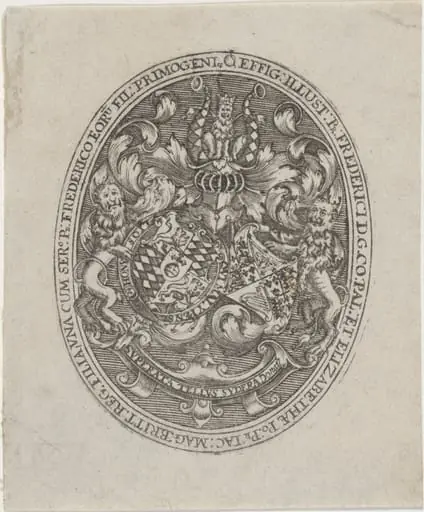 Shields of Frederick V, Elizabeth, and Prince Frederick Henry
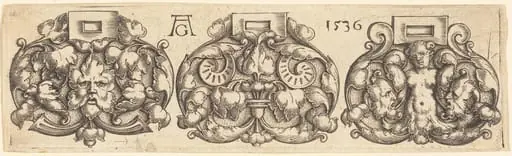 Three Buckles of Girdles Side by Side
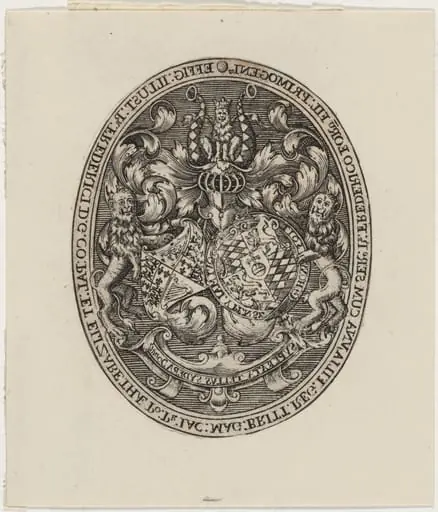 Shields of Frederick V, Elizabeth, and Prince Frederick Henry
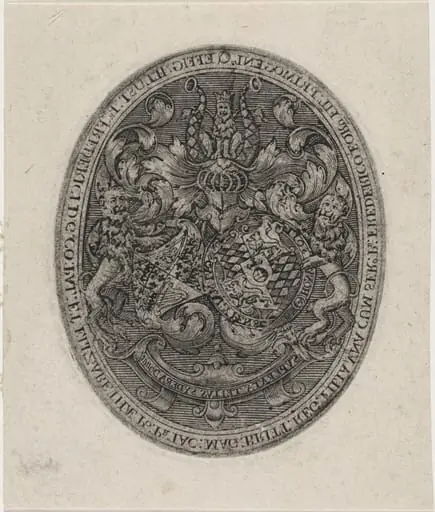 Shields of Frederick V, Elizabeth, and Prince Frederick Henry
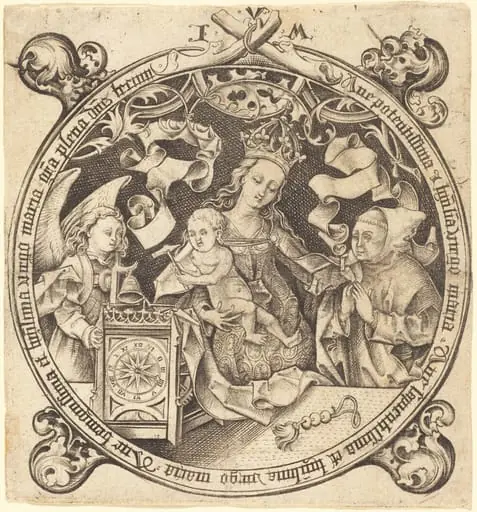 The Madonna with the Clock
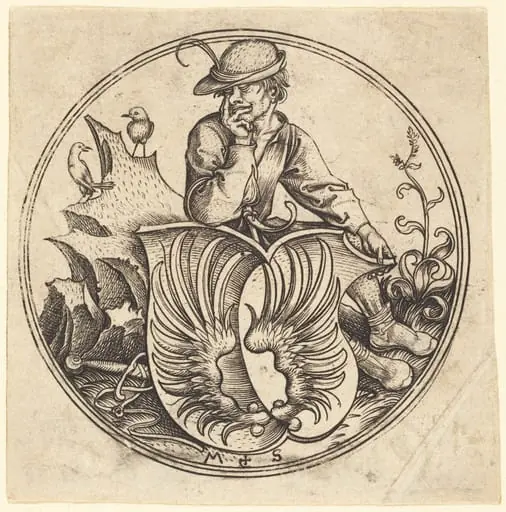 Shield with Wings, Held by Peasant
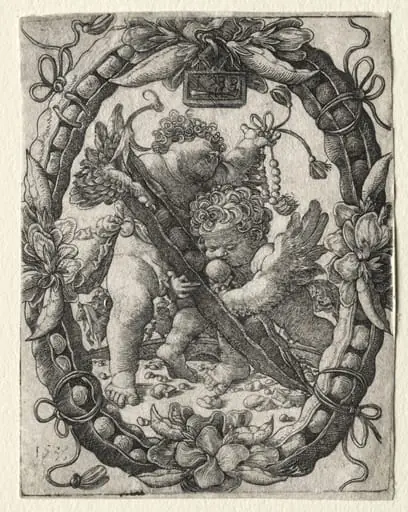 The Pea Pod
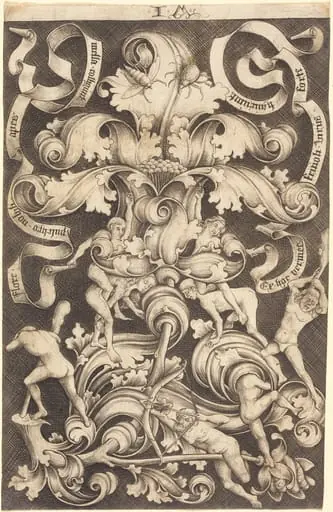 Ornament with Flower and Eight Wild Folk
 Arabesque Designs
 Coat of Arms of Michael Behaim