Artwork
Judith with the Head of Holofernes
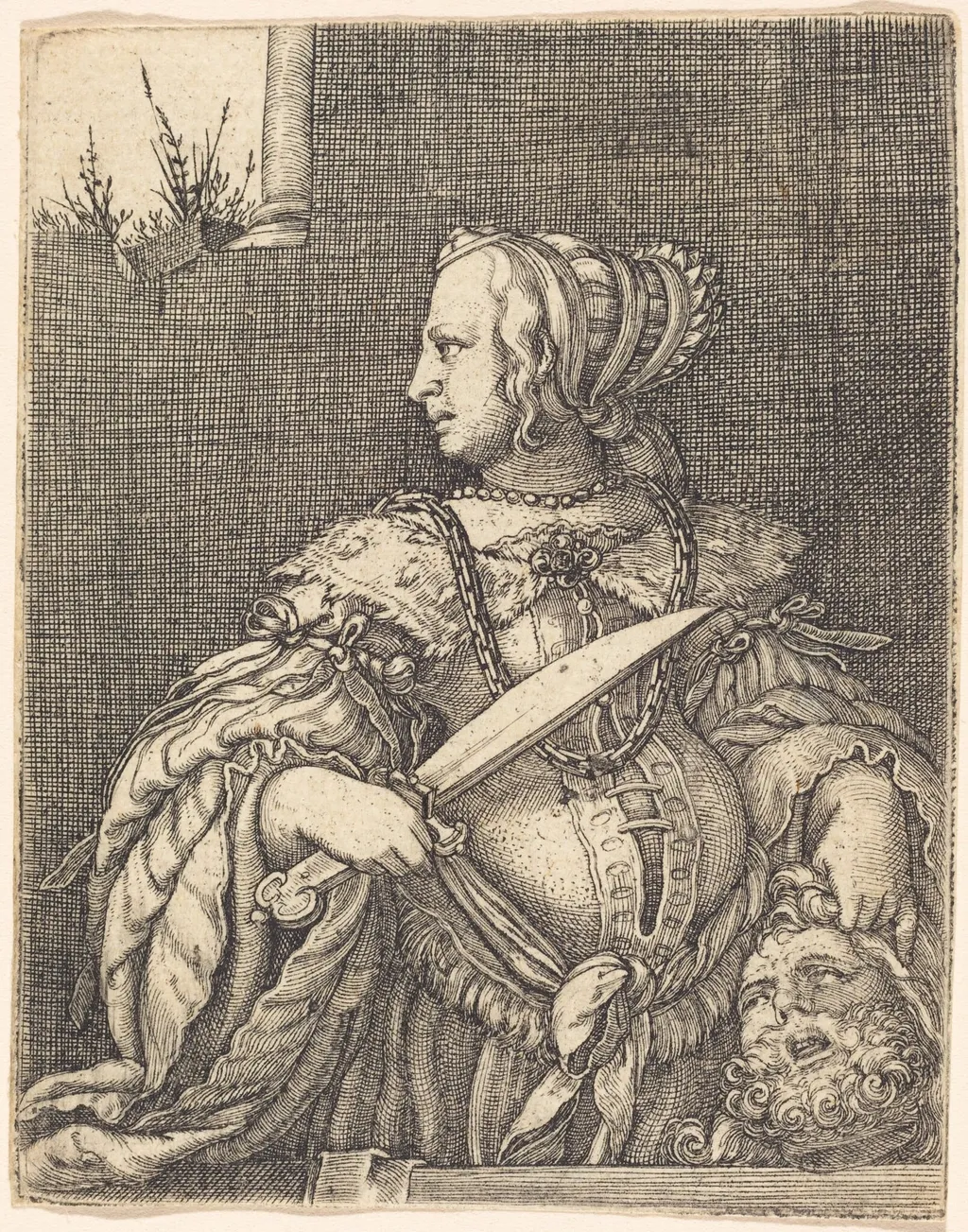
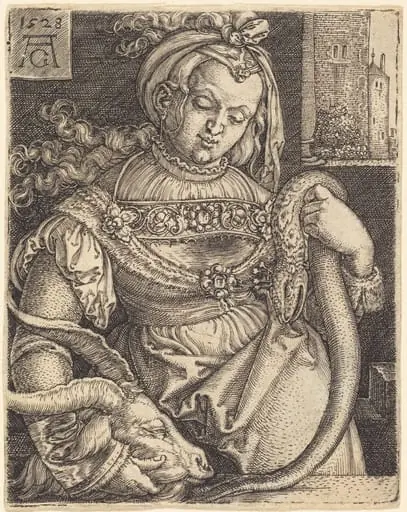
Judith with the Head of Holofernes is an ink print by the Renaissance artist Barthel Beham. It dates from 1526 and is held in the collection of the National Gallery of Art.
- Inscription
- Inscribed:upper right, in image, in pen and ink by later hand: AG
About this work
Overview
Barthel Beham's 1526 engraving, Judith with the Head of Holofernes, depicts the biblical heroine immediately after the assassination of the Assyrian general.
Barthel Beham's 1526 engraving, Judith with the Head of Holofernes, depicts the biblical heroine immediately after the assassination of the Assyrian general. The composition centers on Judith, who holds the severed head of Holofernes by the hair in her left hand while gripping a sword in her right. She is portrayed with a composed, almost serene expression, contrasting with the violence of the act.
Her attire reflects contemporary Northern Renaissance fashion, featuring a high-necked gown with elaborate ruffled collars and a prominent necklace, rather than ancient costume. The background is minimal, defined by a textured wall or curtain with a woven pattern that adds depth without distracting from the figure. A small plant emerges in the lower corner, a common motif in Beham's works that grounds the scene in a domestic or garden setting.
Created during the height of the German Renaissance, this print exemplifies Beham's skill as a miniaturist and engraver, known for his intricate detail and small-scale formats. The work aligns with the Nuremberg school's interest in combining classical themes with precise, observational realism, serving as both a moral exemplar of virtue overcoming tyranny and a demonstration of technical mastery in printmaking.
Subject & Meaning
The image draws on the Old Testament narrative in which Judith, a widow, beheads Holofernes to save her people. By emphasizing her calm demeanor and the dramatic act of holding the head by the hair, the work underscores themes of virtue, cunning, and the triumph of a seemingly powerless individual over tyrannical force.
Technique & Style
Executed in fine-line engraving, Beham employs cross-hatching and delicate shading to model the folds of Judith’s garments, the sheen of her hair, and the texture of the background. The precise incisions create a sense of three-dimensionality, while the intricate detail in the jewelry and ruffles reflects the Northern Renaissance’s interest in realism and surface treatment.
History & Provenance
Created in the early sixteenth century, the print belongs to a period when Beham, a member of the German “Little Masters,” produced small, highly detailed works for a growing market of collectors. Surviving copies have appeared in several European collections, indicating the image’s circulation among connoisseurs of devotional and narrative prints.
Context
The subject aligns with a broader Renaissance fascination with biblical heroines, particularly Judith, whose story was frequently depicted in painting, sculpture, and print. Beham’s rendition reflects contemporary moralizing interests, presenting Judith as an exemplar of piety and courage, while also catering to patrons’ taste for intricate, portable artworks.
Own this work as a print
Artist & collection
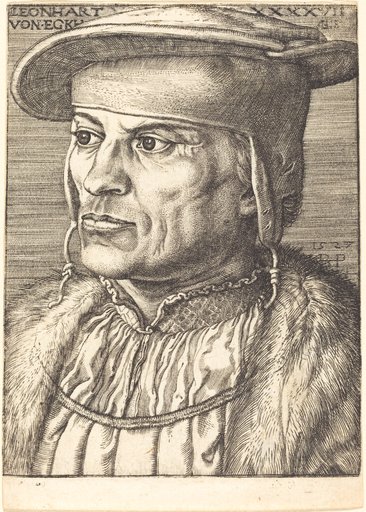

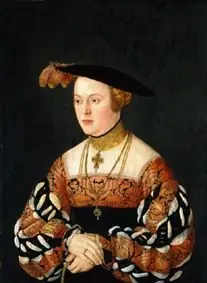 Portrait of Marie of Baden
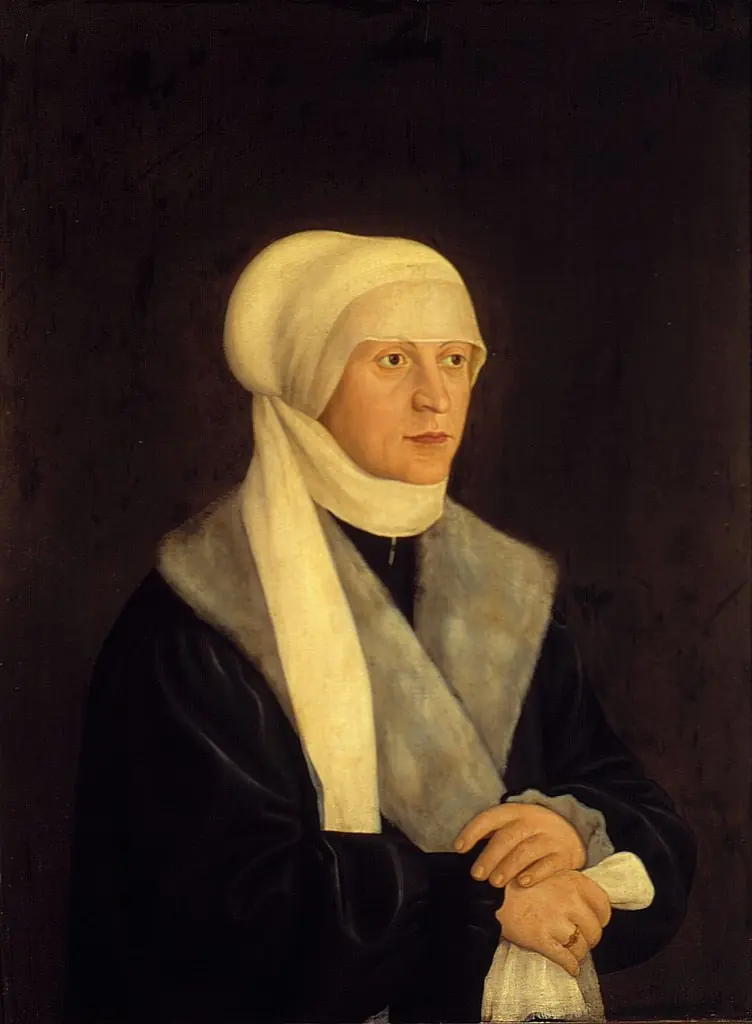 Portrait of Sabina of Bavaria
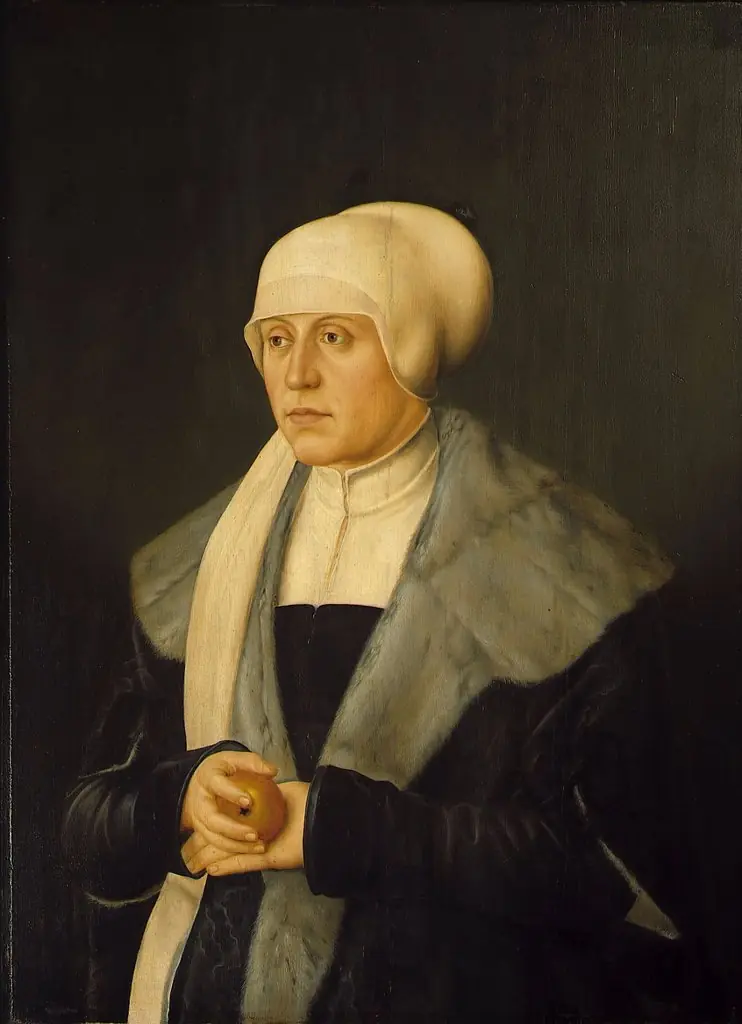 Kunigunde of Austria, wife of Duke Albrecht IV of Bavaria
 Historienzyklus: Kreuzauffindung der hl. Helena
 Emperor Charles V
 Portrait of a Man
 Susanna von Brandenburg, Gemahlin Ottheinrichs (Seitenverkehrte Kopie nach Inv.-Nr. 2450) (Kopie nach)
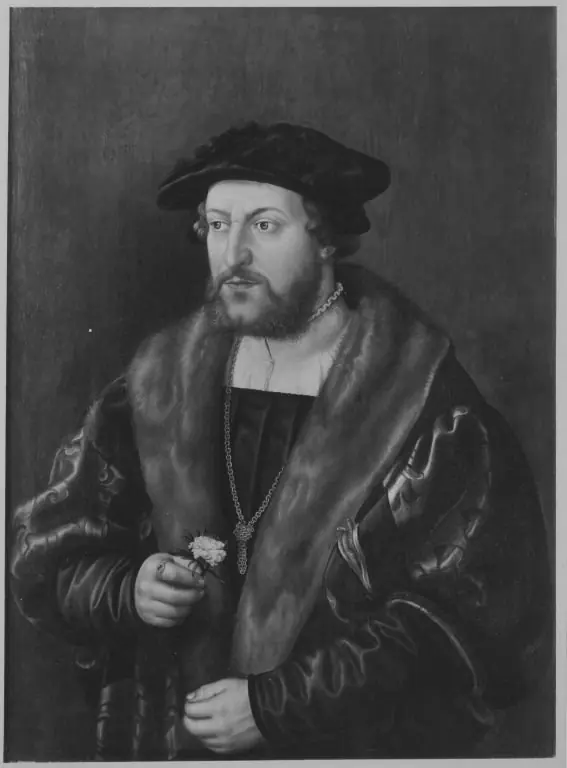 Portrait of Herzog Johann III, Paltzgraf bei Rhein (1488-1538)