Artwork
Dido
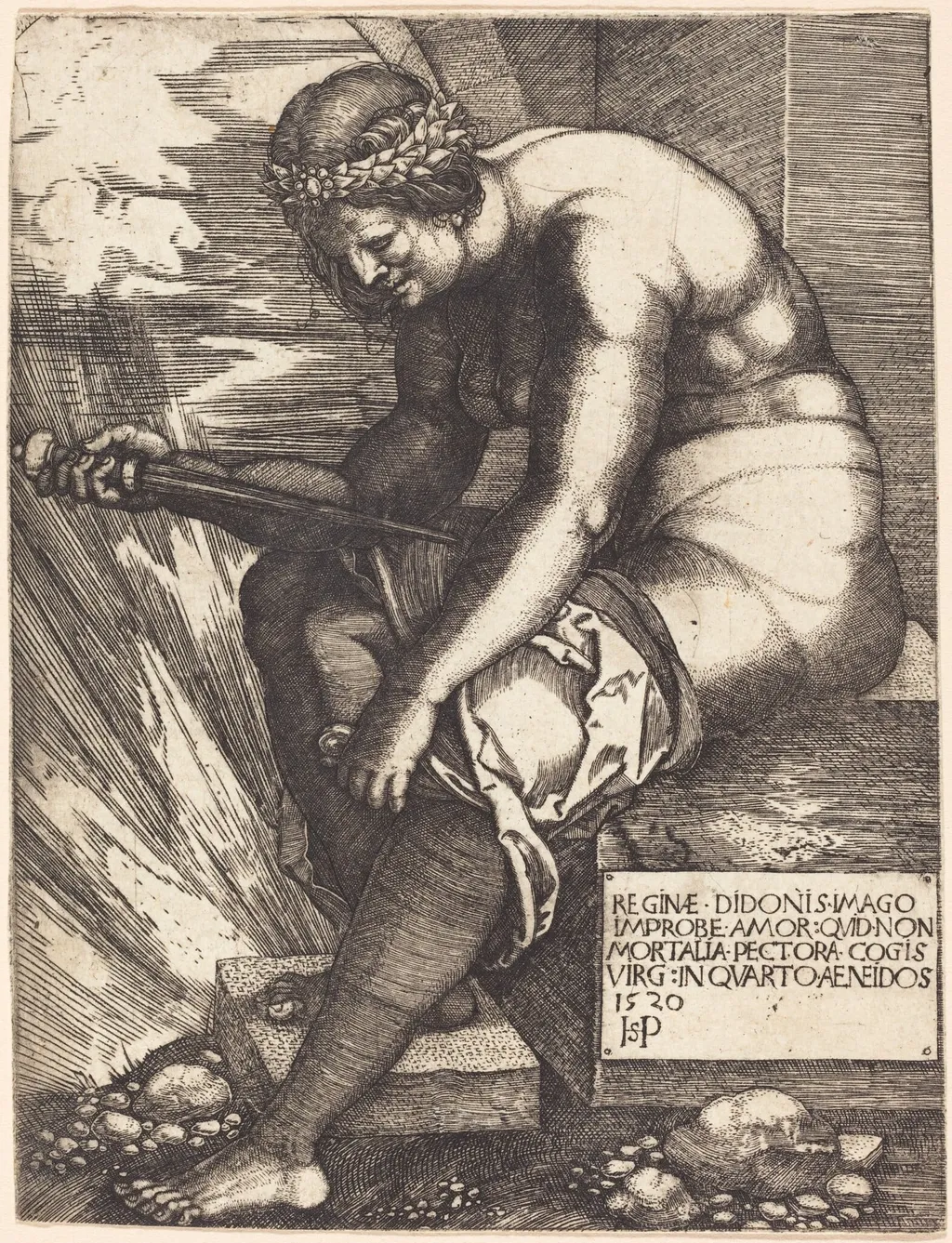
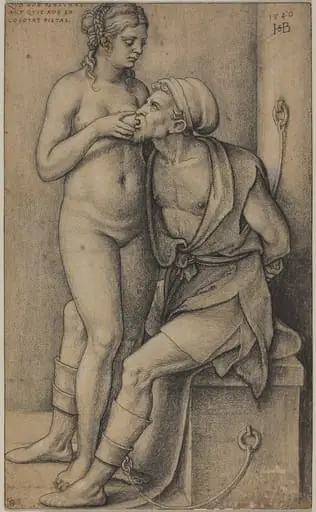
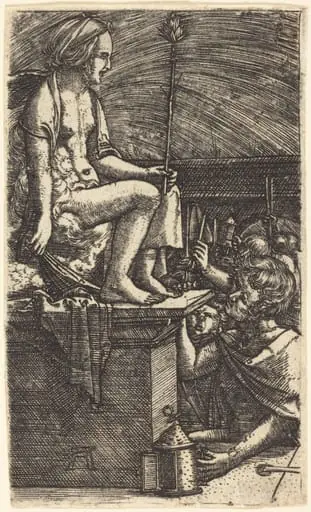
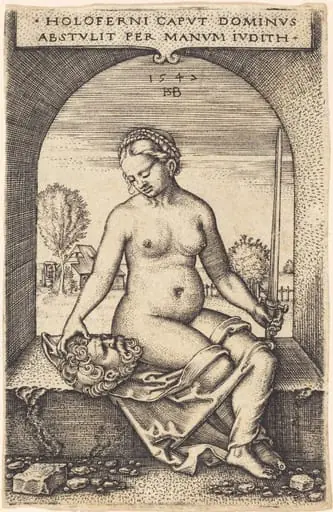
Dido is an ink print by the Renaissance artist Sebald Beham. It dates from 1520 and is held in the collection of the National Gallery of Art.
About this work
Overview
Sebald Beham, a German printmaker active in the early sixteenth century, produced the engraving titled Dido around 1520. Executed in a diminutive format, the work exemplifies the meticulous detail for which Beham, a member of the so‑called “Little Masters,” was celebrated. It is a black‑and‑white print that depicts a dramatic moment from the classical legend of Dido, queen of Carthage.
Subject & Meaning
The image presents a kneeling female figure on a rugged surface, her torso twisted as she reaches toward a supine male companion. A leafy wreath crowns her head, and she clutches a sword, while the man rests his head on her arm, his gaze turned away. The composition evokes the tragic climax of Dido’s story, suggesting themes of love, betrayal, and impending doom.
Technique & Style
Beham achieved tonal variation through dense cross‑hatching, employing fine, parallel lines that intersect to render shadows and volume. The background is filled with dark, textured strokes that intensify the scene’s weight. This precise line work, characteristic of Beham’s miniature engravings, allows intricate modeling despite the print’s small scale.
History & Provenance
Created during a period when Beham divided his career between Nuremberg and Frankfurt, Dido is one of hundreds of engravings and woodcuts he produced. The work bears a Latin inscription identifying the subject, confirming its intended reference to the Roman narrative. Its survival in collections reflects the continued interest in Beham’s finely rendered prints.
Context
The early 1520s saw a flourishing market for small, highly detailed prints that could be collected by affluent amateurs. Beham’s output catered to this demand, positioning him among the “Little Masters” whose works combined technical virtuosity with classical and mythological themes, aligning with the humanist interests of the period.
Legacy
Beham’s Dido illustrates the potential of engraving to convey complex narrative and emotional intensity within a compact format. The piece contributes to the broader appreciation of Northern Renaissance printmaking, influencing later artists who explored the capabilities of line and shading to achieve depth and drama.
Own this work as a print
Artist & collection
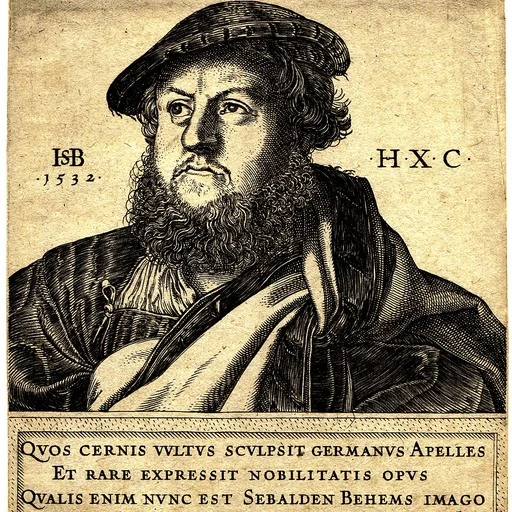
Artist
Sebald Beham (1500–1550) was a German painter and printmaker, mainly known for his very small engravings.