Artwork
The Prima Macchina for the Chinea of 1750: The New Pier of Naples
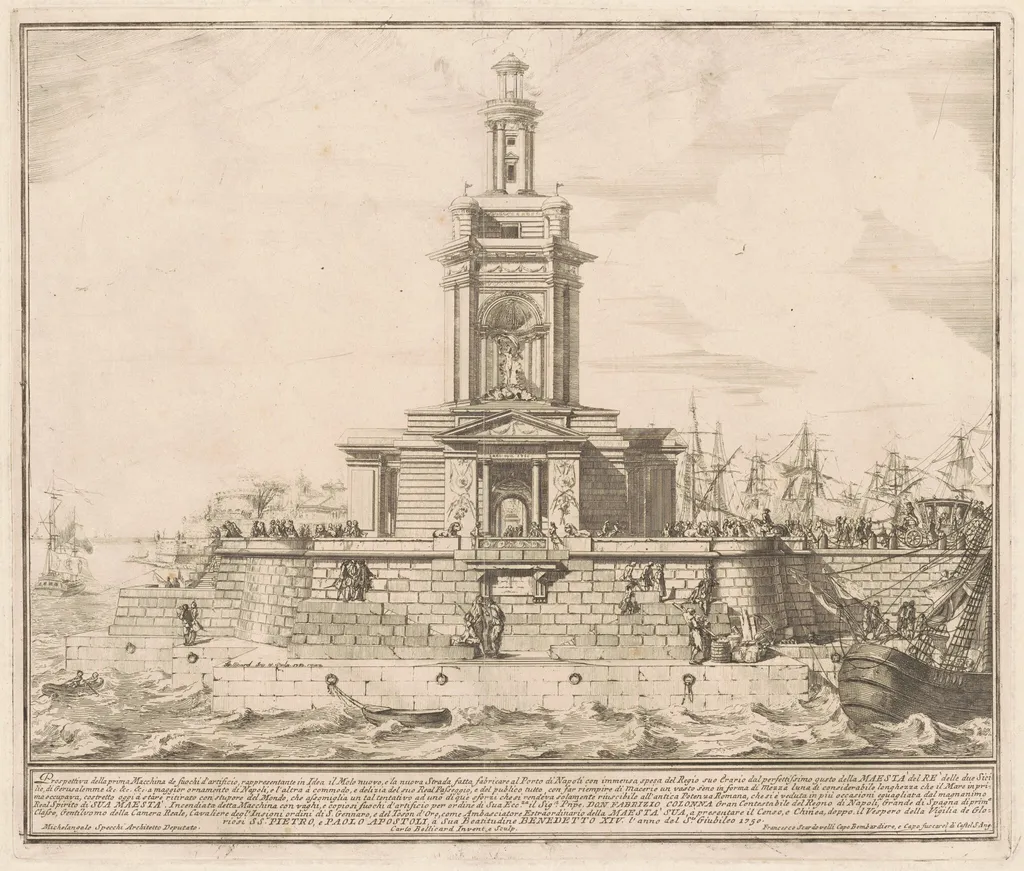
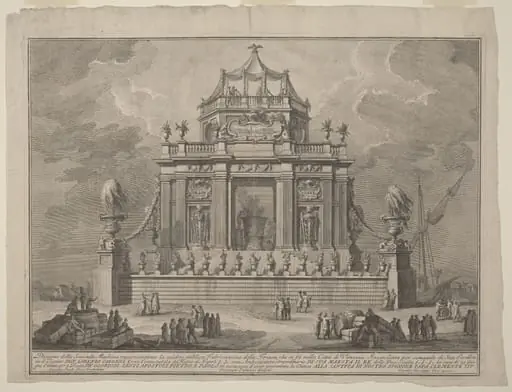
The Prima Macchina for the Chinea of 1750: The New Pier of Naples is an ink print by the Romanticist artist Jérôme Charles Bellicard. It dates from 1750 and is held in the collection of the National Gallery of Art.
- Inscription
- Inscribed:Lettered LL: "Michelangelo Specchi Architetto Deputato" Lettered LC: "Carlo Bellicard Invent. e Sculp." Lettered LC: " Prospettiva della prima Macchina de fuochi d'artificio rappresentante in Idea il Molo nuovo [...] l'anno del S.to Giubileo 1750"
About this work
Overview
Created in 1750, the etching titled The Prima Macchina for the Chinea of 1750: The New Pier of Naples is the work of French printmaker Jérôme‑Charles Bellicard. Executed in the traditional copper‑plate method, the image records a bustling Neapolitan waterfront, centering on an ornate tower that crowns a broad brick pier.
Subject & Meaning
The composition depicts a tall, embellished tower crowned with a clock and sculptural figures, standing atop a massive pier. Below, figures dressed in period costume traverse the walkway while several vessels drift in the adjacent water, suggesting a lively commercial and ceremonial scene associated with the annual Chinea festivities.
Technique & Style
Bellicard employed fine, cross‑hatching and delicate line work to render the play of light and shadow across stone, water, and fabric. The etching’s tonal modulation, achieved through varied bite depth, creates a sense of atmospheric depth, highlighting architectural details and the movement of figures within the harbor setting.
History & Provenance
The print was produced as part of the visual program for the 1750 Chinea, a diplomatic tribute from the Kingdom of Naples to the Pope. While the original copper plate is unrecorded, surviving impressions are held in several European print collections, reflecting the work’s role in documenting contemporary urban development in Naples.
Own this work as a print
Artist & collection


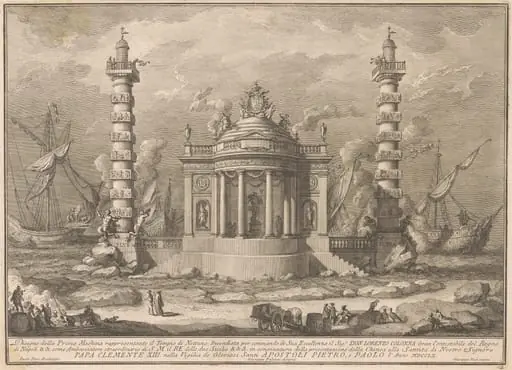
- The Prima Macchina for the Chinea of 1760: The Temple of Neptune
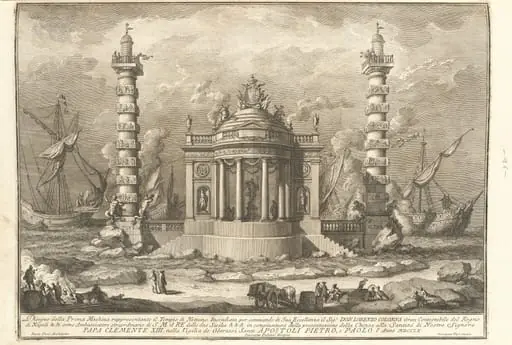 The Prima Macchina for the Chinea of 1760: The Temple of Neptune
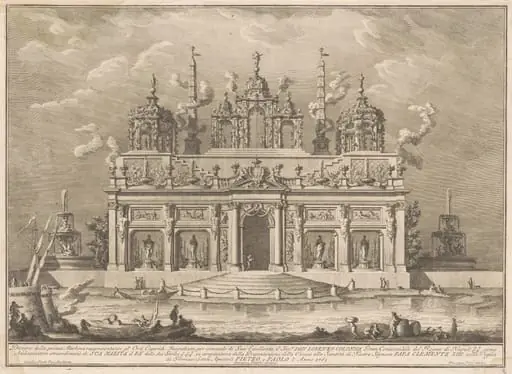 The Prima Macchina for the Chinea of 1765: The Garden of the Hesperides
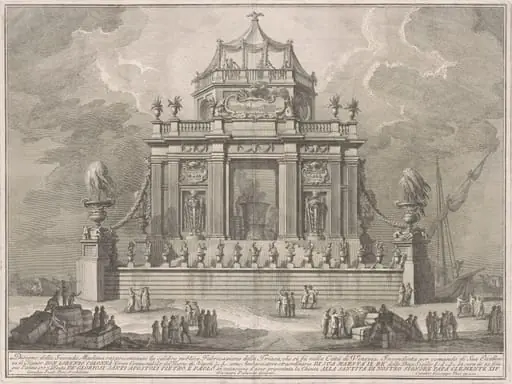 The Seconda Macchina for the Chinea of 1773: The Preparation of Theriac in Venice
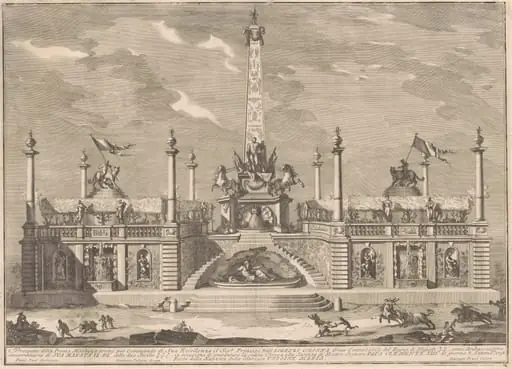 The Prima Macchina for the Chinea of 1758: A "Deliziosa" with Hanging Gardens
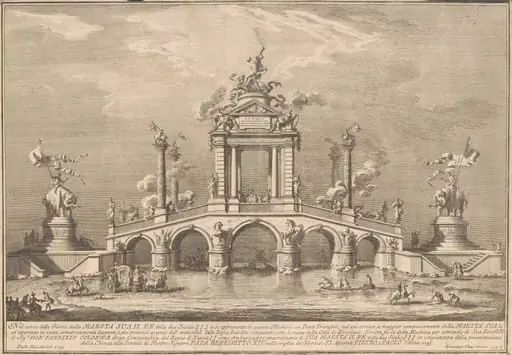 The Prima Macchina for the Chinea of 1755: A Triumphal Bridge with Antiquities from Herculaneum
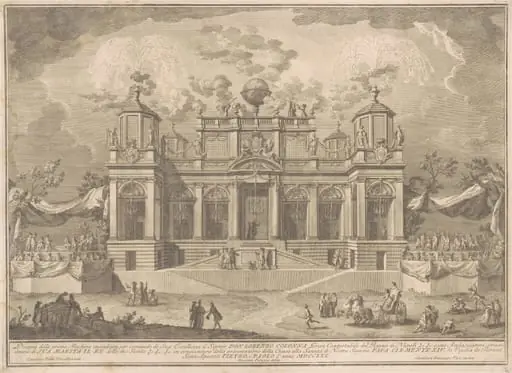 The Prima Macchina for the Chinea of 1770: An Roman Building for Commerce
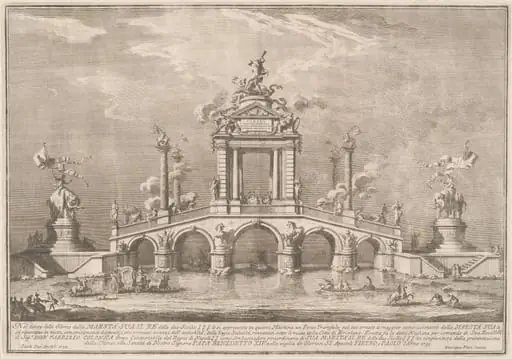 The Prima Macchina for the Chinea of 1755: A Triumphal Bridge with Antiquities from Herculaneum
 The Seconda Macchina for the Chinea of 1773: The Preparation of Theriac in Venice
 The Seconda Macchina for the Chinea of 1754: An Allegory of Waterworks
 The Prima Macchina for the Chinea of 1754: The Palace of Venus in Cyprus