Artwork
Madonna and Child
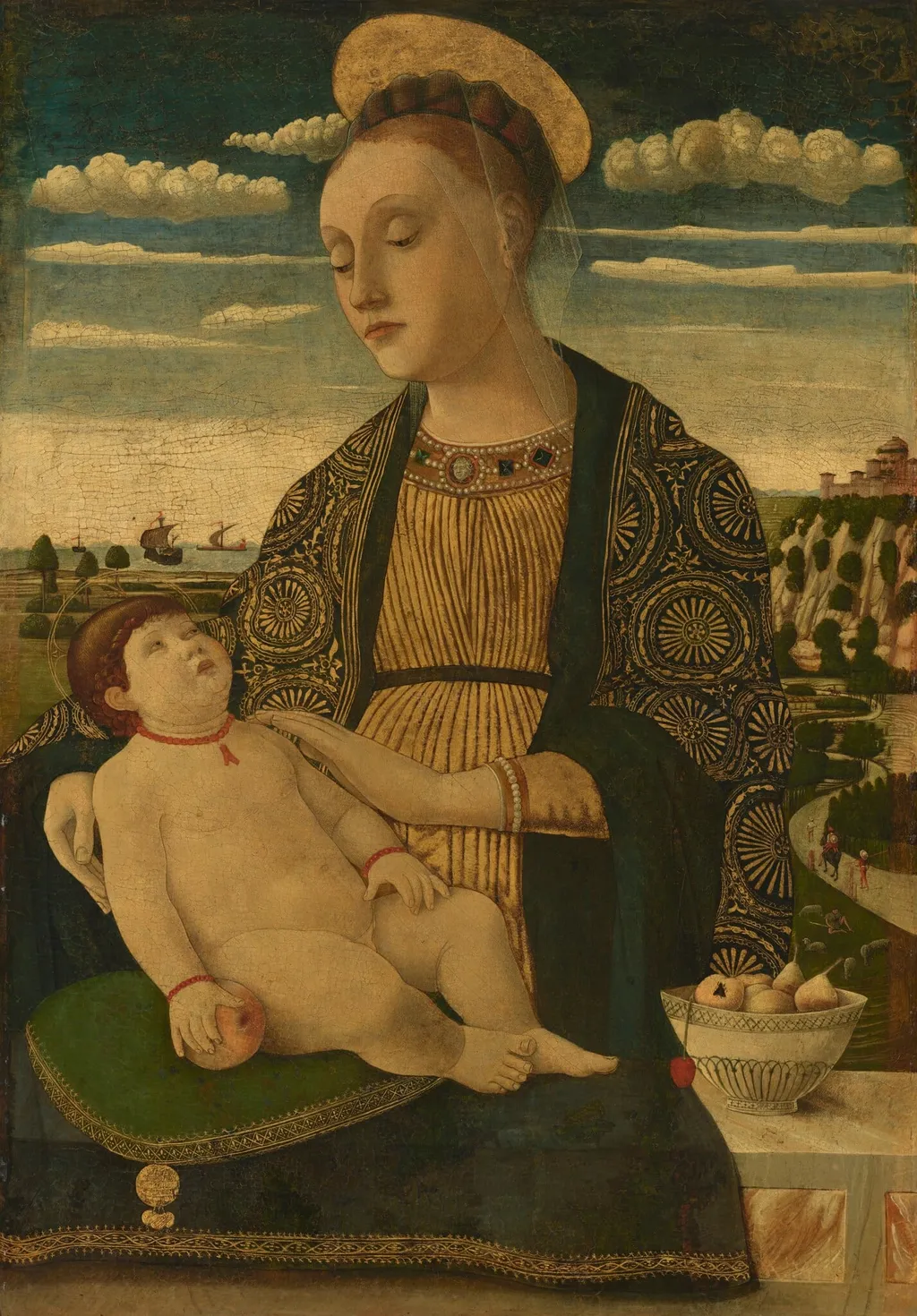
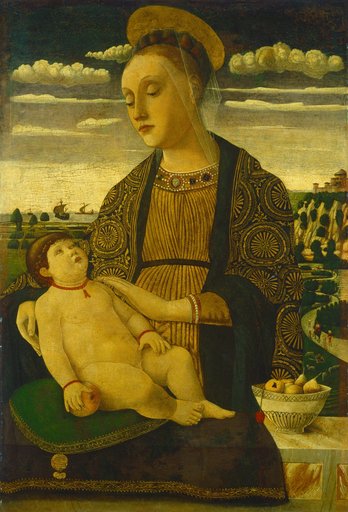
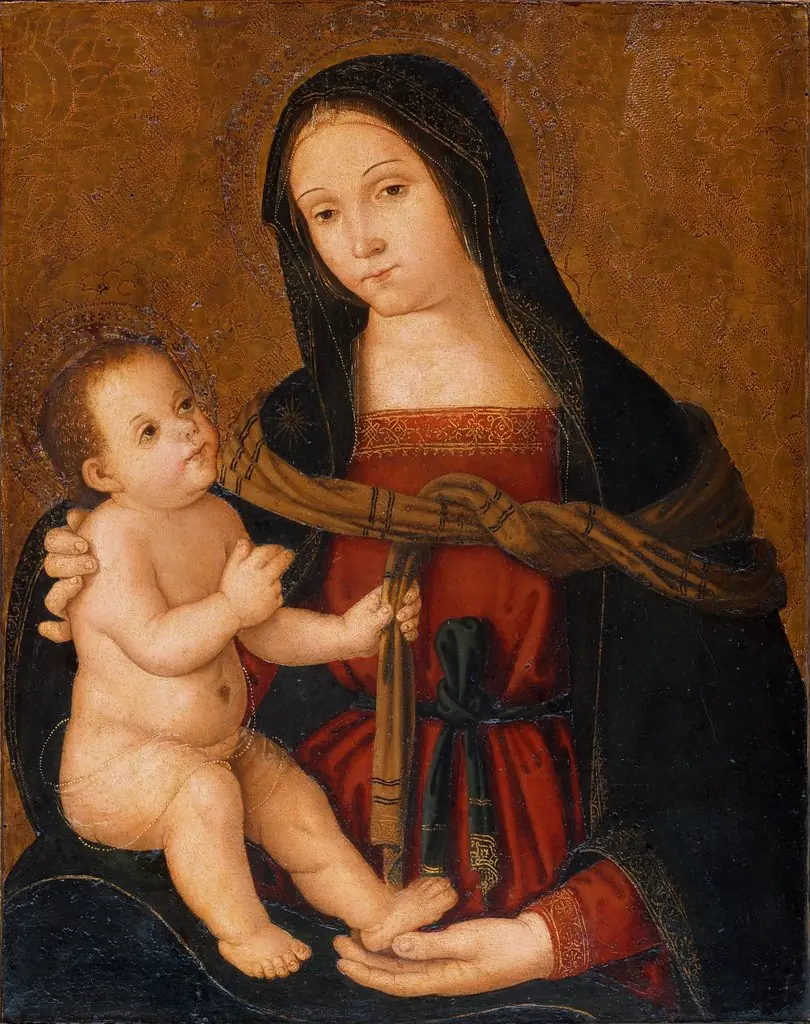
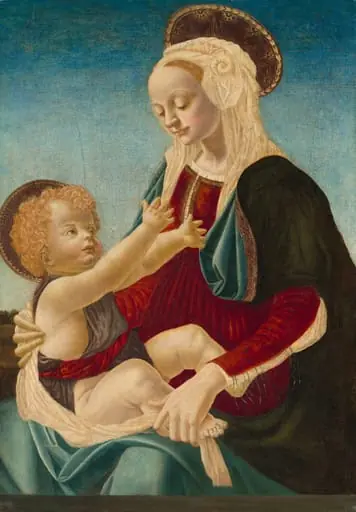
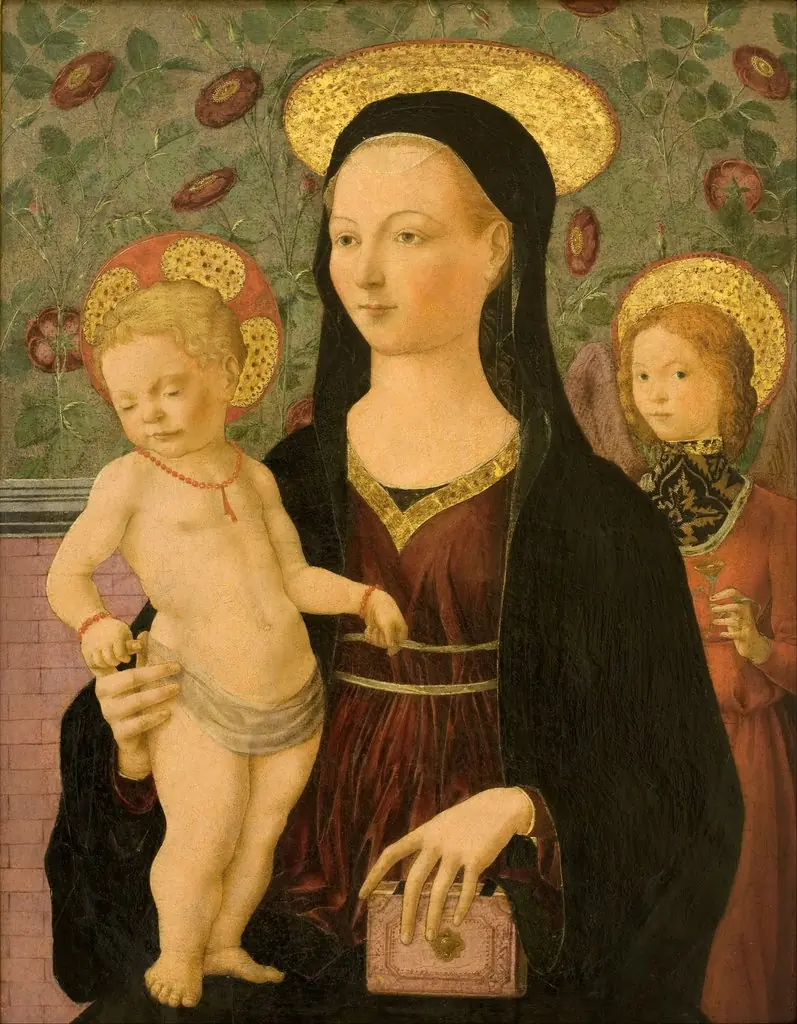
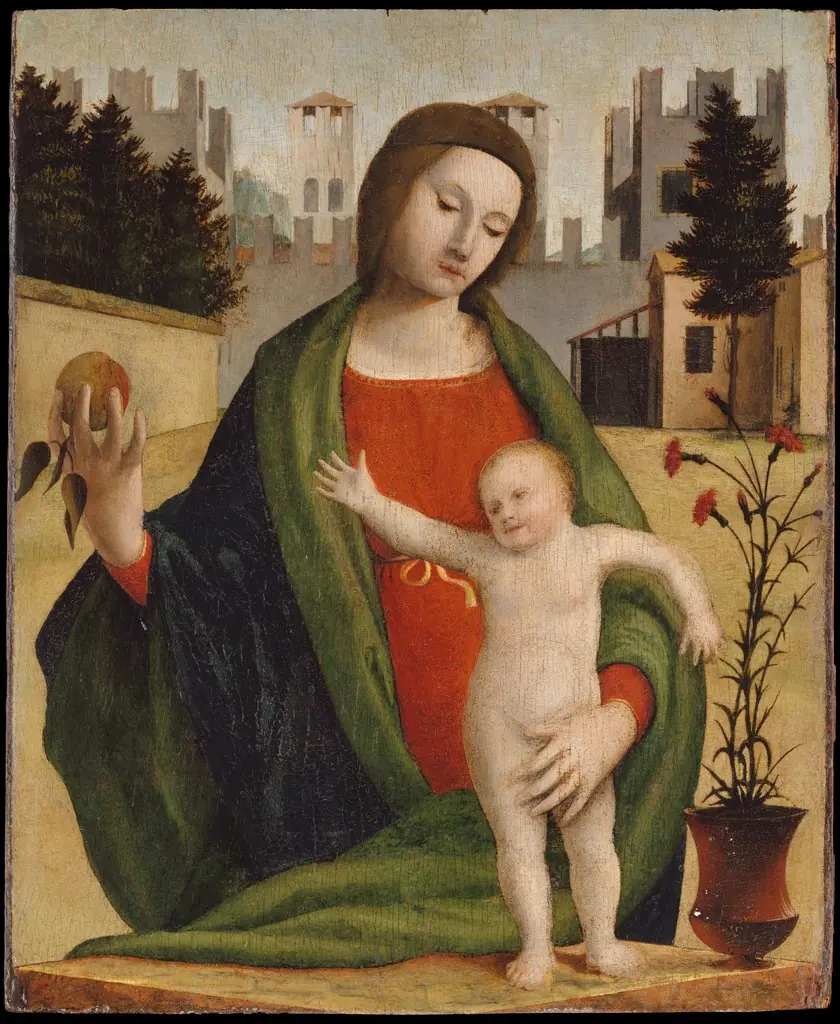
Madonna and Child is a tempera painting by the Early Renaissance artist Francesco Benaglio. It dates from 1464 and is held in the collection of the National Gallery of Art.
About this work
Subject & Meaning
The specific identification of the figures as Mary and the Christ Child confirms the painting's role within the tradition of Christian devotional imagery.
The artwork depicts the Virgin Mary and the Christ Child, a central subject in religious art known as the Madonna and Child. Created by Francesco Benaglio in 1460, the painting presents the two figures as the main focus of the composition. As a work of religious genre, it serves to represent the theological concept of the Incarnation, where the divine enters the human world through the birth of Jesus to Mary.
The visual pairing of mother and son is a standard iconographic formula used to convey themes of maternal care, divine love, and the humanity of Christ. The specific identification of the figures as Mary and the Christ Child confirms the painting's role within the tradition of Christian devotional imagery.
Technique & Style
Executed in 1460, this religious work by Francesco Benaglio utilizes tempera as its primary medium. While originally created on a wooden panel, the painting has undergone a structural transfer to canvas support. The composition features the Madonna and Christ Child, rendered within dimensions measuring approximately 80.7 by 56.2 centimeters.
As a piece classified within the Early Italian school, the work demonstrates the material practices typical of the mid-15th century, though the specific handling of the brushwork and current state of preservation are not detailed in the available records beyond the notable change in support material from wood to fabric.
History & Provenance
The work titled Madonna and Child, painted by Francesco Benaglio around 1460, is executed in tempera on panel that was later transferred to canvas. It entered the art market in Florence early in the 20th century and was owned by Leo Nardus before being acquired by Peter A. B. Widener in 1905 for his Lynnewood Hall collection. Upon Peter Widener’s death the painting passed to his son Joseph E. Widener, who gifted it to the National Gallery of Art in Washington, D.C., in 1942.
Documentation in Bernard Berenson’s notes links the work to Dom. Morone and to Langton Douglas, and it was catalogued by Berenson and William Roberts in 1916.
The painting is held by the National Gallery of Art, Washington, D.C., where it is catalogued as accession number 1942.9.104. It entered the collection as a gift in 1942 through Joseph E. Widener’s power of appointment, having been purchased in 1905 by Peter A.B. Widener from Leo Nardus. Prior to 1900 it had appeared on the Florentine art market and was later associated with the Berenson circle in Italy.
Overview
This painting, titled Madonna and Child, was created by Francesco Benaglio around 1464. Executed in tempera on panel, later transferred to canvas, it presents a traditional religious subject. The artwork depicts the Virgin Mary tenderly holding the Christ Child, a common theme in devotional art of the period. Benaglio's work exemplifies the artistic trends of the late 15th century in Italy.
Context
Created in the late 1460s, this painting emerged during a period when artists increasingly sought to imbue religious narratives with genuine human emotion. Benaglio's depiction of Mary as a nurturing mother, rather than a distant queen, aligns with this evolving artistic sensibility. Such works aimed to foster a more personal and empathetic connection between the viewer and the sacred figures.
Legacy
Francesco Benaglio was active in Verona during the 15th century. While details of his life are somewhat limited, his artistic output includes several religious works. Other examples of Benaglio's paintings can be found in prominent collections, such as the National Gallery of Art in Washington, D.C., allowing for further study of his distinctive style and contributions to Renaissance art.
Own this work as a print
Artist & collection