Artwork
Madonna and Child
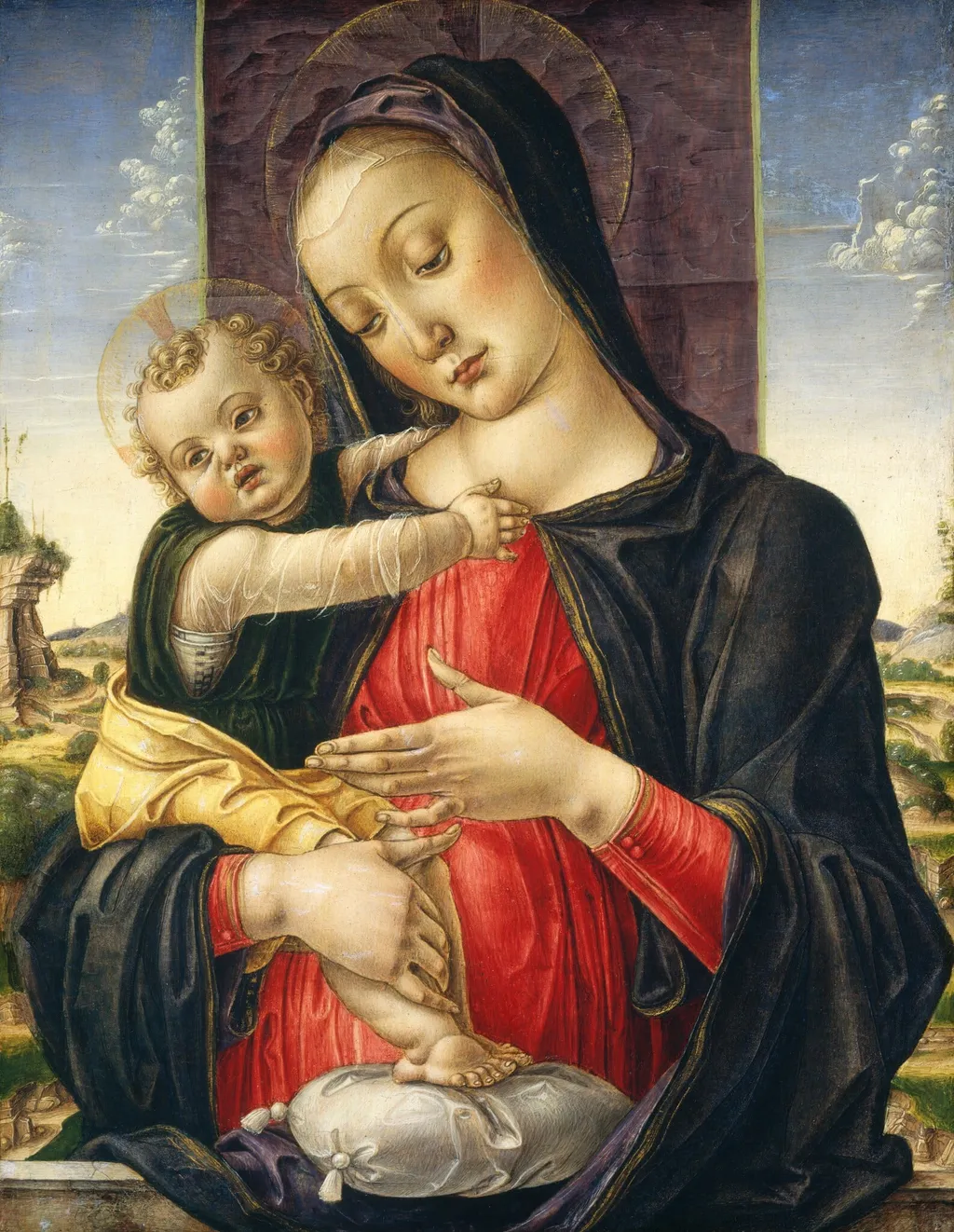
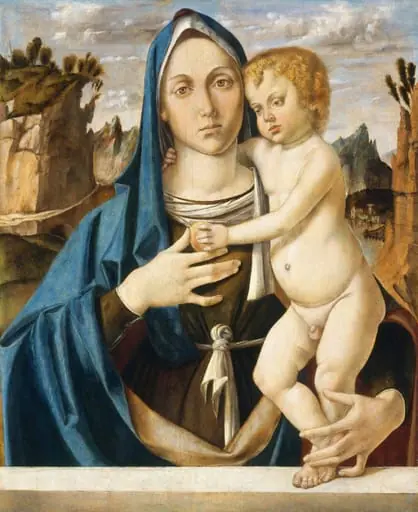
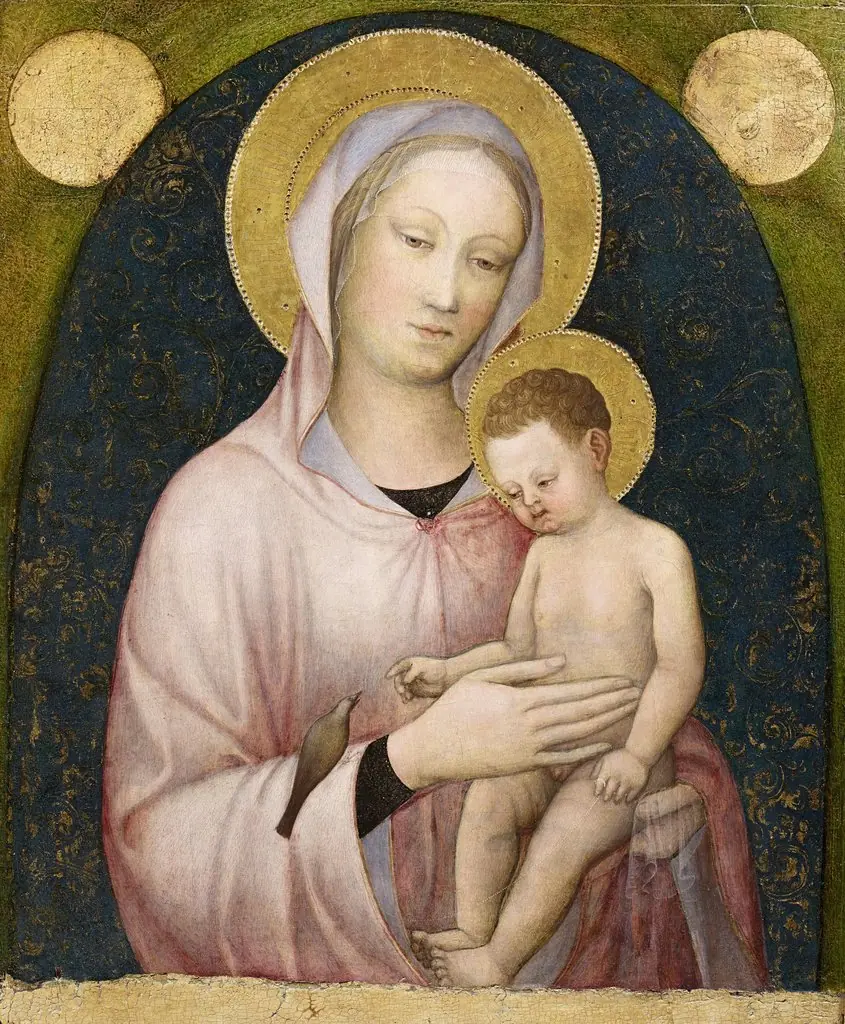
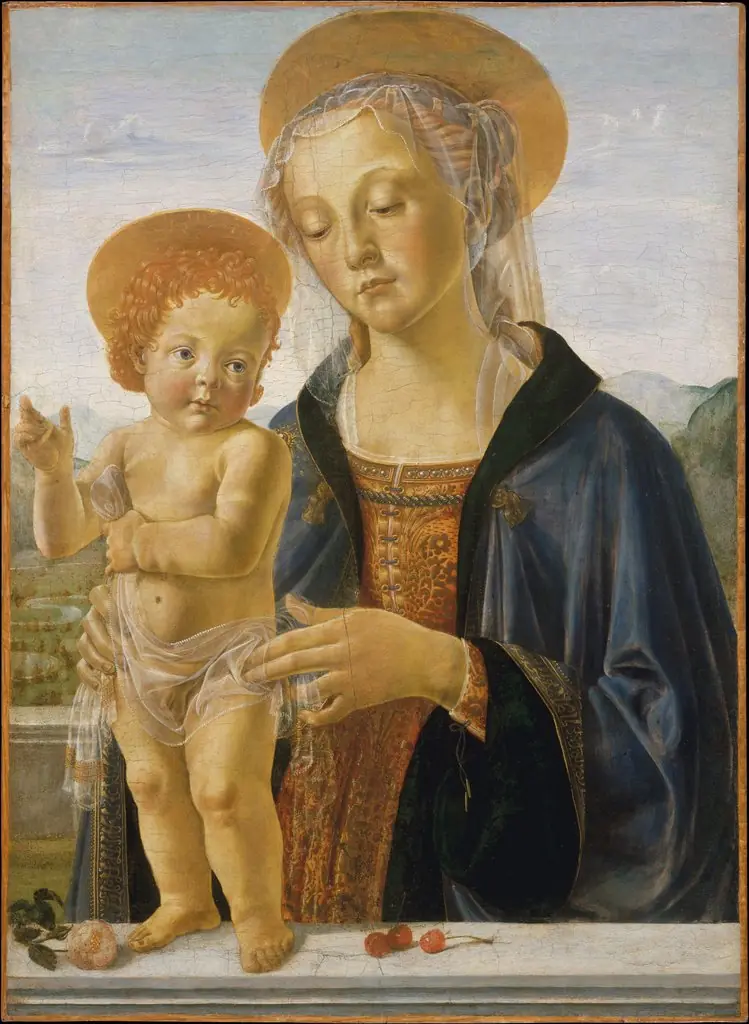
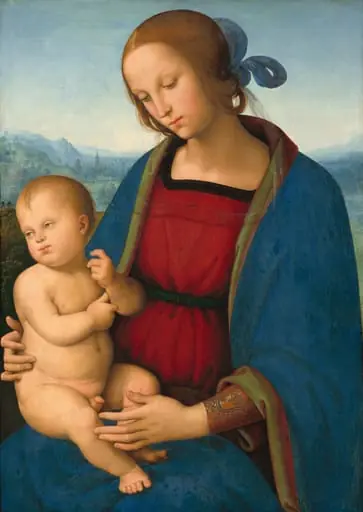
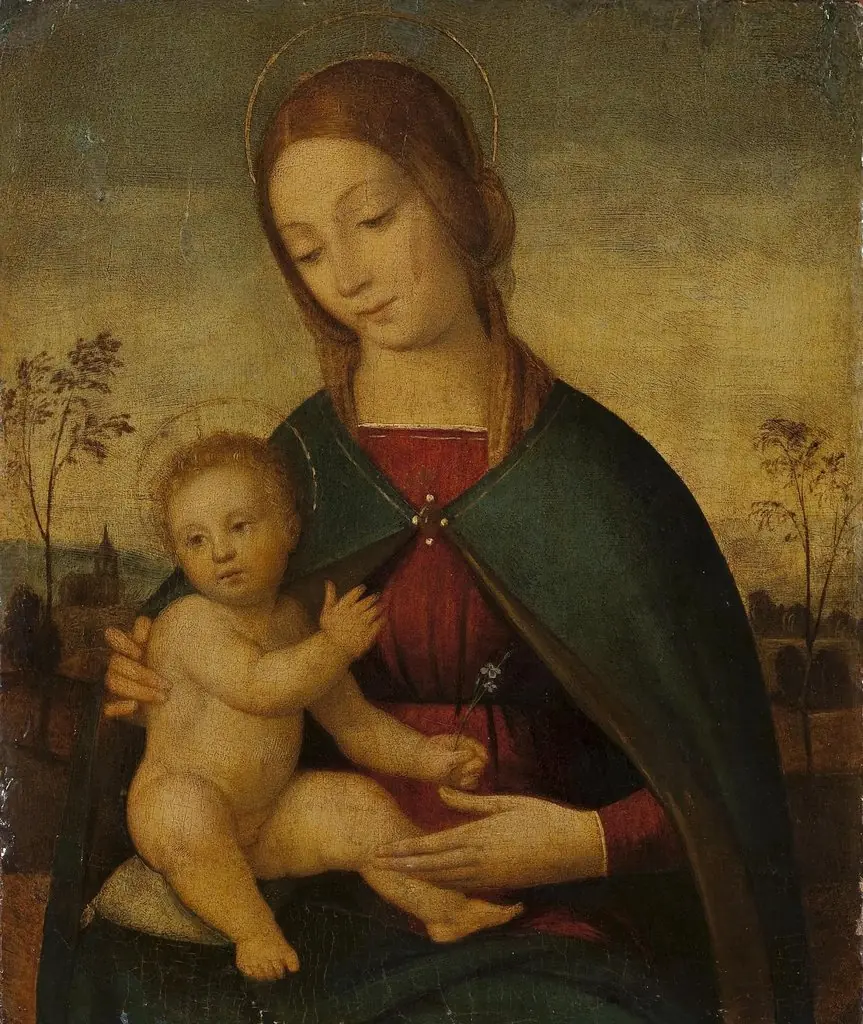
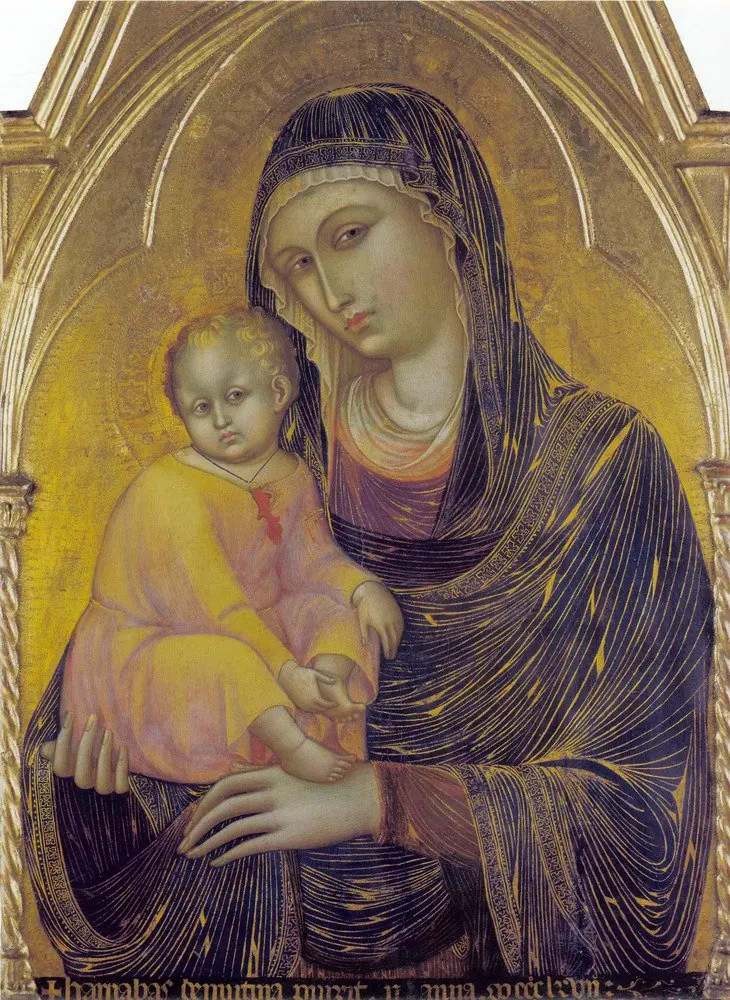
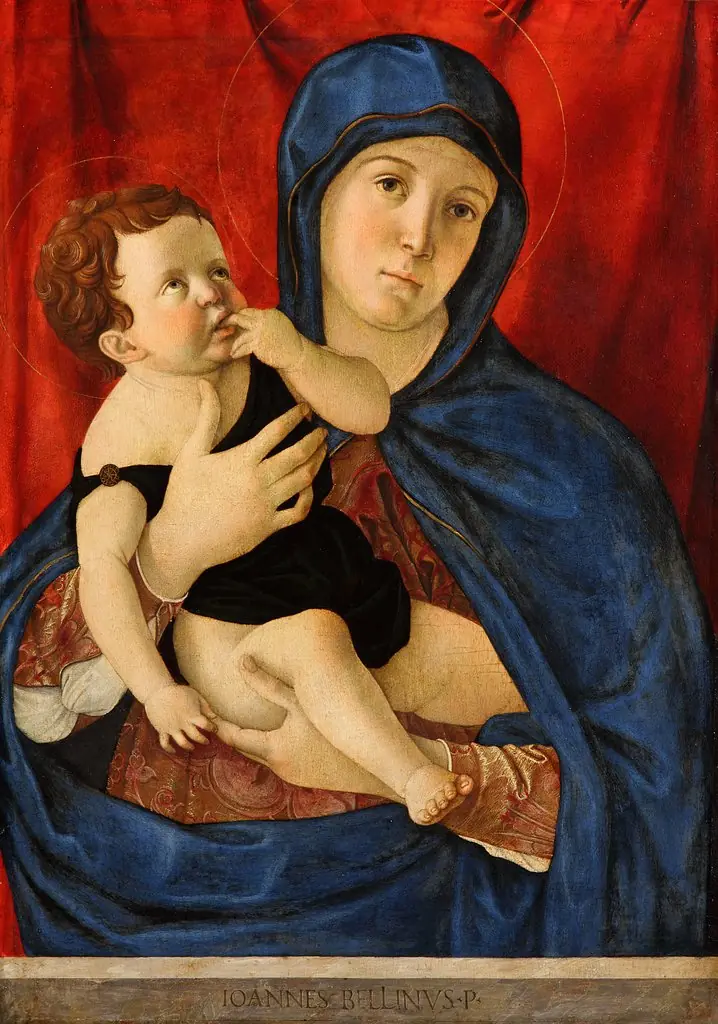
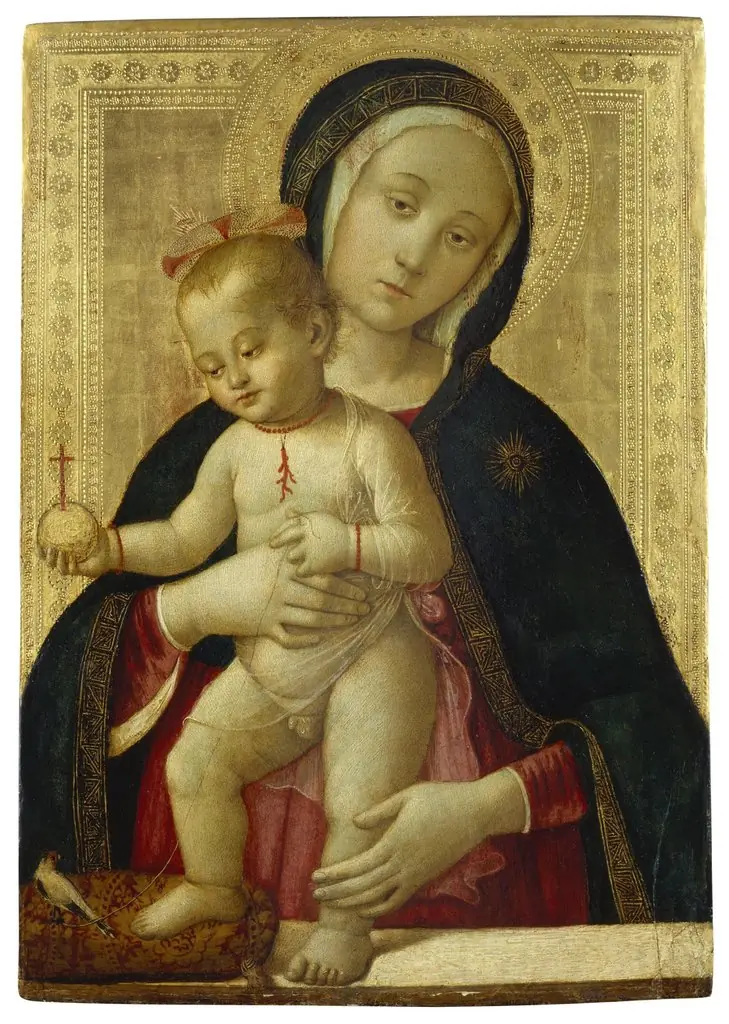
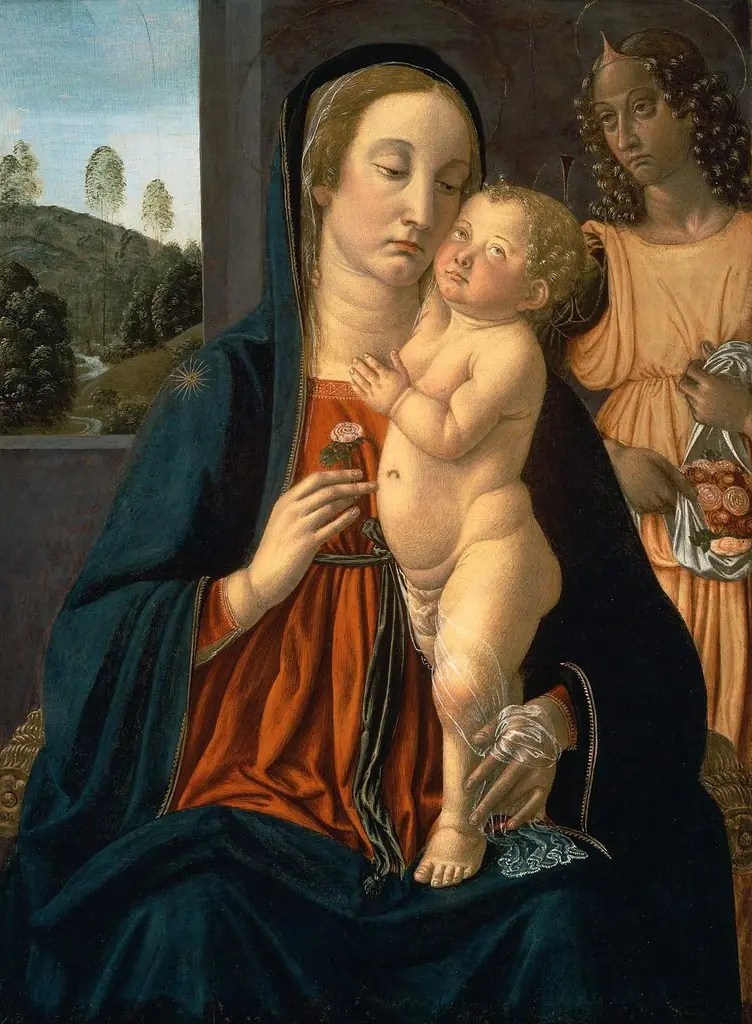
Madonna and Child is a tempera painting by the Early Renaissance artist Bartolomeo Vivarini. It dates from 1475 and is held in the collection of the National Gallery of Art.
About this work
Mary in a red robe holds the Christ Child against a gold ground meant to suggest heaven. Bartolomeo Vivarini painted it around 1475, near the end of his life, in tempera made from egg yolk and pigment, which gives the colors a soft glow.
Subject & Meaning
Created by Bartolomeo Vivarini in 1475, the painting presents the two figures as the main subject, consistent with the genre of religious imagery.
The work depicts the Virgin Mary and the Christ Child, representing the central subject of the Madonna and Child in religious art. Created by Bartolomeo Vivarini in 1475, the painting presents the two figures as the main subject, consistent with the genre of religious imagery. As a tempera on poplar panel, the piece focuses on the intimate relationship between the mother and the infant Jesus, a standard iconographic theme in Christian tradition.
The depiction aligns with the broader artistic classification of religious works from the late fifteenth century, emphasizing the spiritual significance of the figures without additional narrative elements beyond their presence together.
History & Provenance
Bartolomeo Vivarini's Madonna and Child was created in 1475. The tempera-on-poplar-panel work passed through the collection of Sir Edward Smithson in Surrey before reaching Count Alessandro Contini Bonacossi in Florence, from whom the Samuel H. Kress Collection, New York, purchased it on 23 June 1933 as part of a ten-painting sale. The Kress Collection gave the work to the National Gallery of Art, Washington, D.C., in 1939, where it remains under the Kress Collection inventory number 1323.
No direct evidence of a specific original commission survives in the available records, and the painting has been exhibited primarily within the National Gallery of Art as part of its permanent collection.
Overview
Bartolomeo Vivarini's Madonna and Child, painted around 1475, exemplifies early Renaissance artistry. Executed in tempera on a poplar panel, this painting portrays the Virgin Mary tenderly holding the Christ Child. Vivarini, an Italian artist active throughout the latter half of the 15th century, was a prominent figure within a family of painters who significantly shaped the artistic landscape of the Venetian Renaissance. This work reflects the period's pervasive religious themes.
Technique & Style
Vivarini employed tempera paint for this work, a common medium during the early Renaissance. This technique involves mixing powdered pigments with egg yolk, resulting in a paint that dries quickly to a matte finish. The application of tempera allowed Vivarini to achieve a distinct clarity and a soft, luminous quality in the colors, contributing to the painting's delicate and reverent atmosphere.
Context
Bartolomeo Vivarini was an influential Italian painter whose career spanned from approximately 1450 to 1499. He belonged to a notable family of artists, including his brother Antonio Vivarini, who were instrumental in developing the Venetian Renaissance style. This painting, created towards the end of his active period, showcases his adherence to the devotional themes and artistic conventions characteristic of his era and region.
Own this work as a print
Artist & collection
Artist
Bartolomeo or Bartolommeo Vivarini (c. 1432 – c. 1499) was an Italian Renaissance painter, known to have worked from 1450 to 1499.