Artwork
Charles Floyd
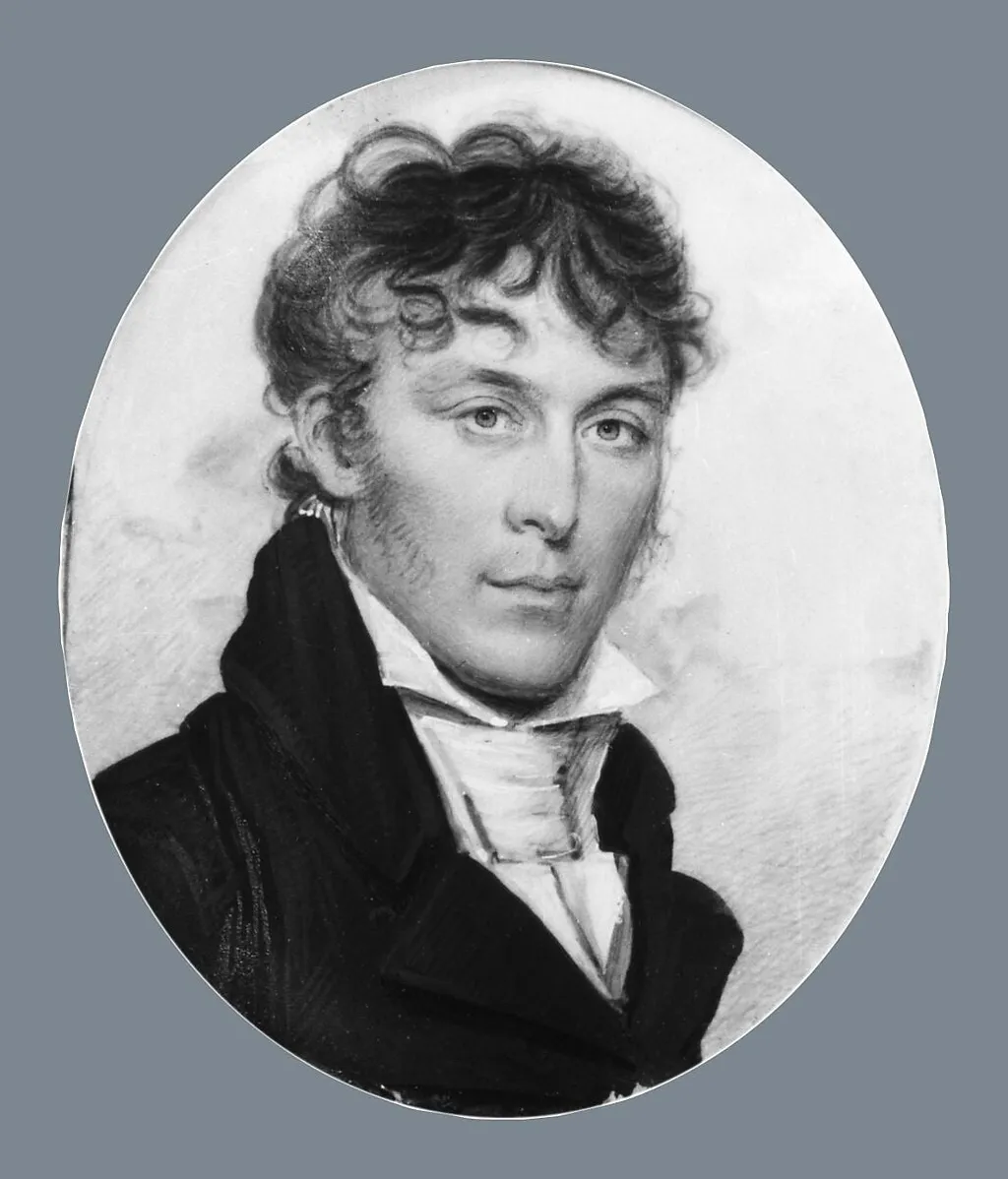
Charles Floyd is a watercolor painting by the American Folk Art artist Benjamin Trott. It dates from 1804 and is held in the collection of the Metropolitan Museum of Art.
About this work
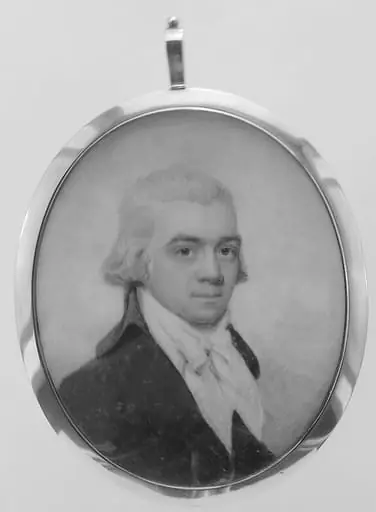
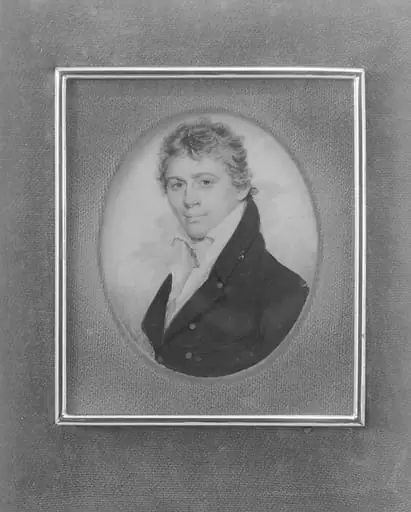
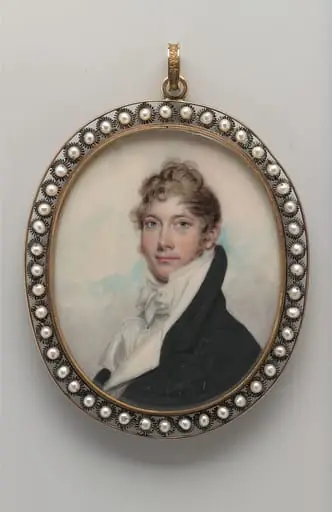
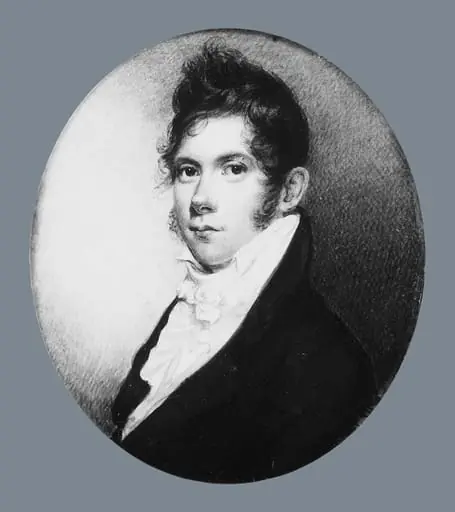
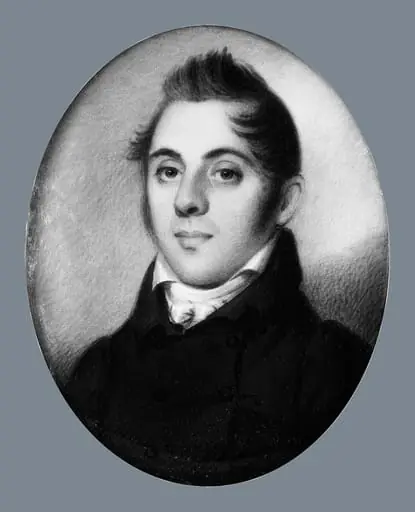
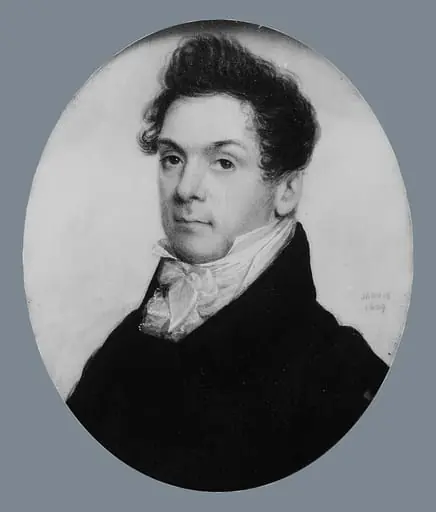
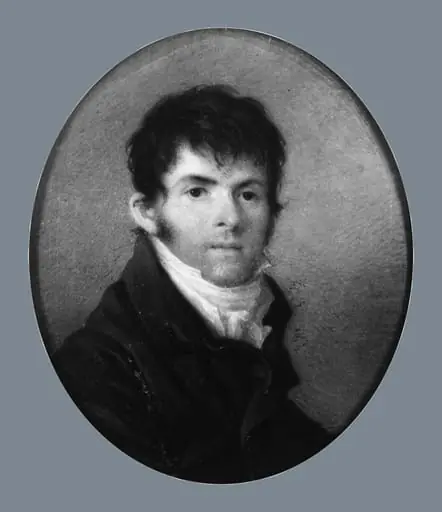
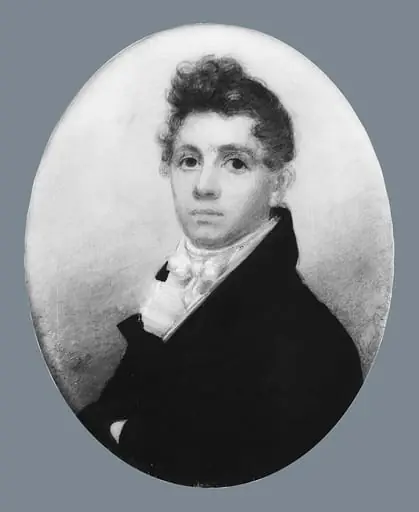
A young man in a dark coat looks straight out, hair neatly tied back, a soft pink in his cheeks. The work is painted on ivory rather than paper, where layered watercolor glows like living skin. Charles Floyd was a soldier and explorer, but here he is simply a quiet face from 1804.
Subject & Meaning
As a genre portrait, the image focuses on representing the specific individual rather than employing complex allegorical symbolism or broader abstract meanings.
Created in 1804 by Benjamin Trott, this watercolor on ivory functions as a portrait depicting Charles Floyd. The work's primary subject is Floyd himself, identified explicitly as a man within the piece's iconographic framework. As a genre portrait, the image focuses on representing the specific individual rather than employing complex allegorical symbolism or broader abstract meanings.
The composition serves to document the likeness of Floyd, who is the sole main subject of the artwork. The piece is classified within the American Wing, reflecting its status as a representation of an American figure from the early nineteenth century.
Technique & Style
The miniature portrait of Charles Floyd by Benjamin Trott employs watercolor on ivory as its primary medium and support, a common choice for early 19th-century American portrait miniatures. The handling reflects the delicate stippling and fine brushwork typical of the period, emphasizing facial features with subtle gradations of tone. The composition is tightly framed, focusing on the sitter’s head and shoulders against a neutral background to highlight individual character.
Stylistically, the work adheres to the neoclassical conventions of the time, with careful attention to anatomical precision and restrained emotional expression. The ivory support contributes to the luminous quality of the watercolor, enhancing the lifelike rendering of Floyd’s visage.
History & Provenance
The portrait of Charles Floyd was created by Benjamin Trott in 1804. Executed as a watercolor on ivory, the work measures 6.5 by 5.1 inches and depicts the subject as a man. The piece is currently held within the collection of the Metropolitan Museum of Art, specifically located in The American Wing.
While the specific commissioning details or original ownership chain prior to its arrival at the museum are not detailed in the available records, the work's inception is firmly dated to the year 1804. The attribution to Trott is consistent across records, identifying the artist responsible for this miniature portrait of Charles Floyd.
Benjamin Trott's 1804 watercolor-on-ivory portrait of Charles Floyd is held in the collection of the Metropolitan Museum of Art, where it is classified under The American Wing. While specific inventory or accession numbers are not documented in the provided sources, the work's dimensions are recorded as 6.5 cm in height and 5.1 cm in width. The available sources do not provide any details regarding the artwork's exhibition history.
Overview
This miniature portrait depicts Charles Floyd, a soldier and explorer, rendered with a direct gaze. Created in 1804, the small-scale work features a young man with neatly styled hair and a dark coat, his complexion subtly flushed. The choice of watercolor on ivory, a distinctive medium, contributes to the delicate rendering of his features, presenting a quiet, intimate likeness.
Artist & collection

Artist
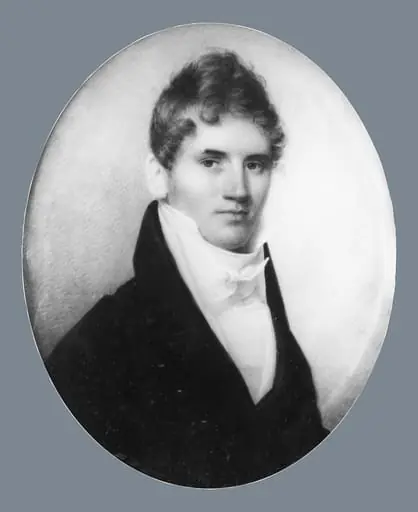
Benjamin Trott (c. 1770, in Boston – 27 November 1843, in Baltimore) was an American painter who specialized in portrait miniatures.