Artwork
William Edward Wilmerding
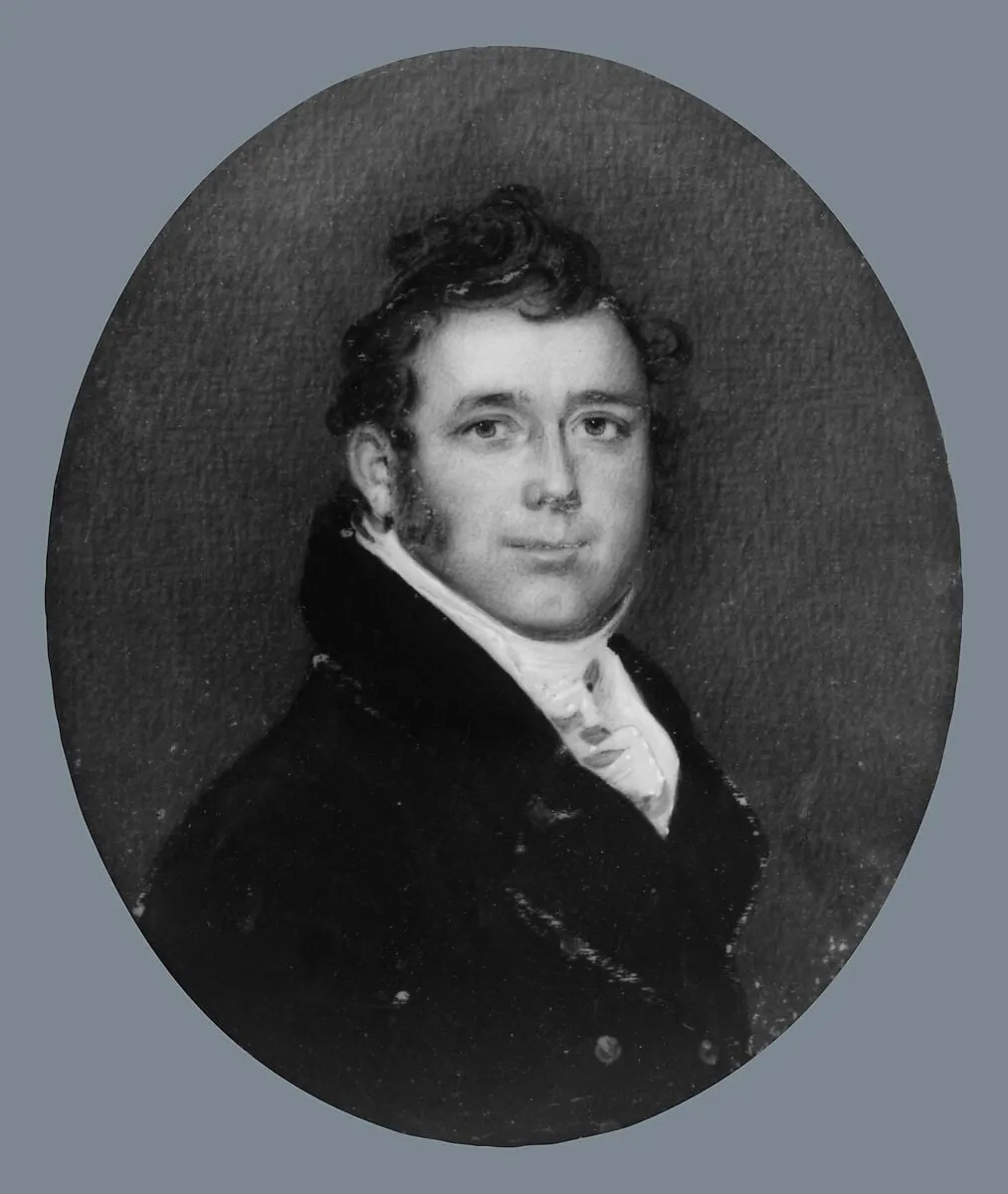
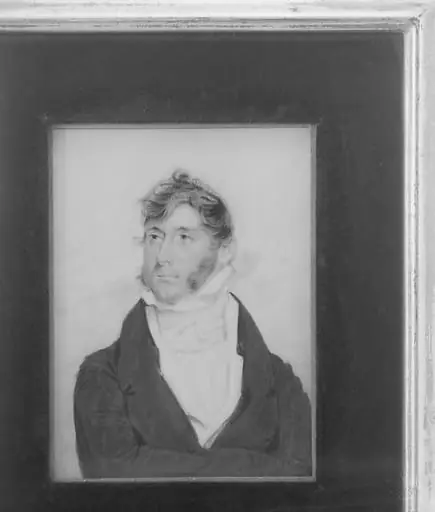
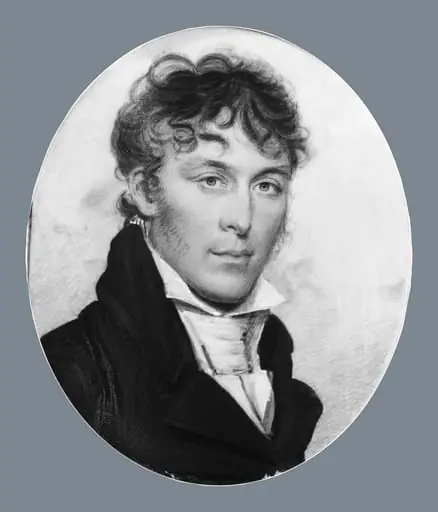
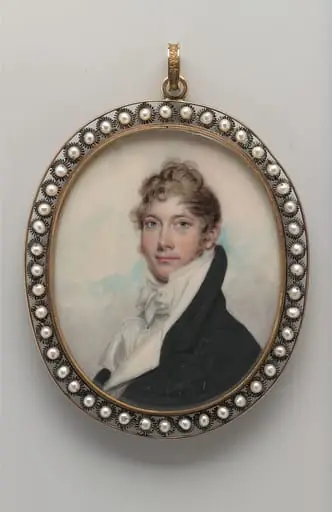
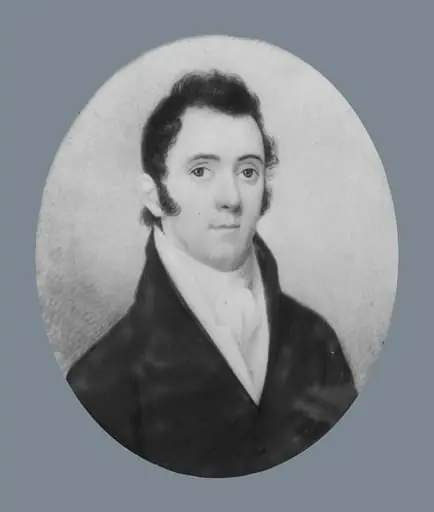
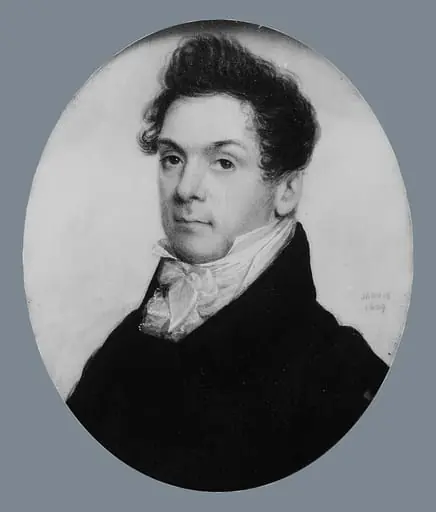
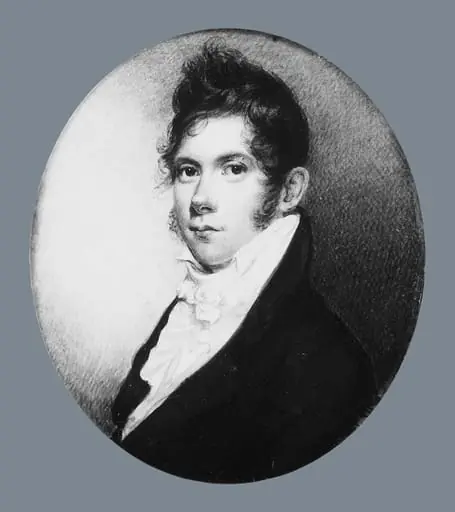
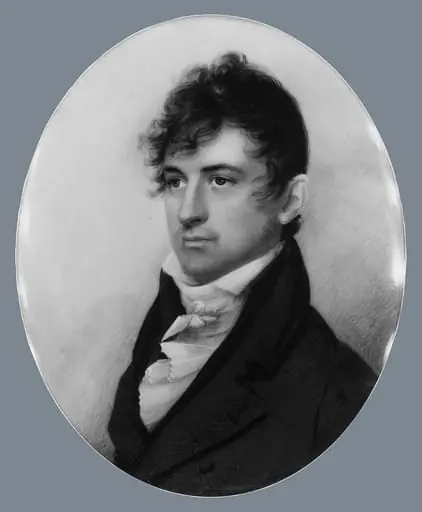
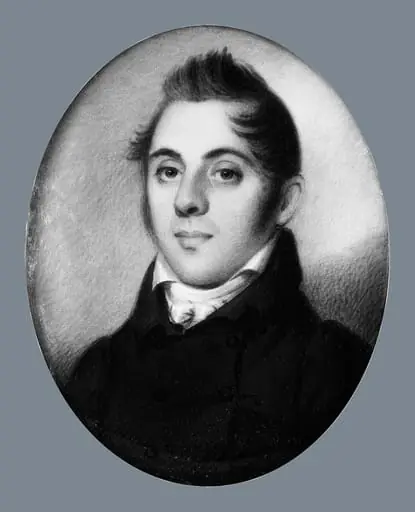
William Edward Wilmerding is a watercolor painting by the American Folk Art artist Benjamin Trott. It dates from 1825 and is held in the collection of the Metropolitan Museum of Art.
About this work
Technique & Style
The specific use of watercolor on ivory suggests a delicate handling of pigment to capture fine details on the smooth, translucent surface of the support.
Benjamin Trott's 1825 portrait of William Edward Wilmerding is executed in watercolor on an ivory support, a medium characteristic of miniature portraiture during the early nineteenth century. The work measures 7.5 inches in height and 6 inches in width, dimensions consistent with the intimate scale of the genre. Stylistically, the piece adheres to the formal conventions of the American portrait tradition, focusing on the likeness of the male sitter.
The classification within the American Wing highlights its significance as a representative example of the period's painting techniques. The specific use of watercolor on ivory suggests a delicate handling of pigment to capture fine details on the smooth, translucent surface of the support.
History & Provenance
Created in 1825, this watercolor portrait on ivory depicts William Edward Wilmerding and was executed by the artist Benjamin Trott. The work measures 7.5 by 6 units and is classified as a portrait genre piece. It currently resides within the collection of the Metropolitan Museum of Art, specifically housed in the institution's American Wing.
The provided records confirm the inception date and the creator's identity, establishing the work's origin in the early nineteenth century, though no specific details regarding its original commission or intermediate ownership history prior to its museum acquisition are contained in the available data.
Overview
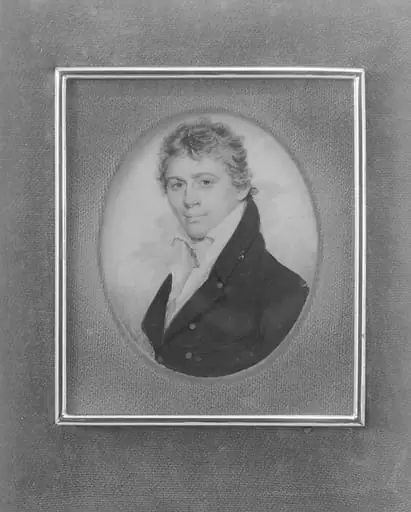
Benjamin Trott's William Edward Wilmerding, created around 1825, is a small-scale portrait executed in watercolor on ivory. This intimate depiction captures the likeness of a young man, presented in a dark coat with a white collar and a subtle smile. The work exemplifies the detailed craftsmanship characteristic of American portrait miniatures from the early 19th century.
Context
Before the advent of photography, portrait miniatures served as cherished personal mementos. These small, portable images allowed individuals to carry the likenesses of loved ones, functioning much like modern-day photographs. Their intimate scale made them ideal for private contemplation or for sharing within close circles, reflecting their role as treasured keepsakes.
Artist & collection

Artist
Benjamin Trott (c. 1770, in Boston – 27 November 1843, in Baltimore) was an American painter who specialized in portrait miniatures.