Artwork
The Ambassador from Tunis with His Attendants as He Appeared in England in 1781
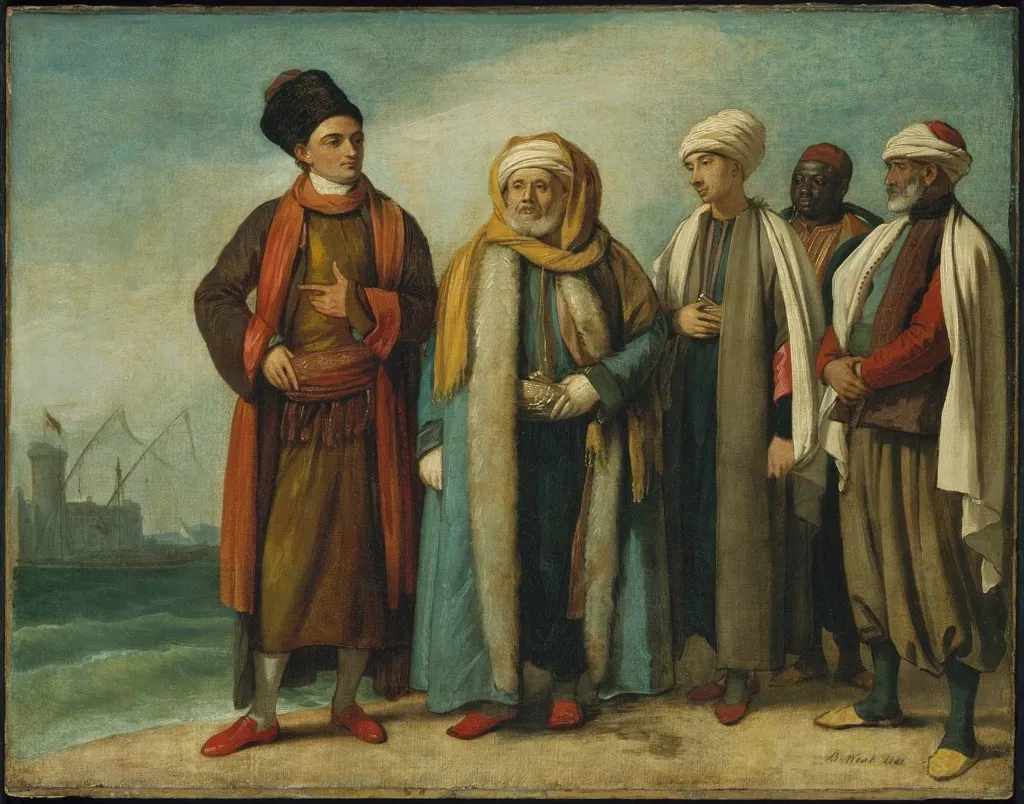
The Ambassador from Tunis with His Attendants as He Appeared in England in 1781 is an oil painting by the Neoclassicist artist Benjamin West. It dates from 1791 and is held in the collection of the Museum of Fine Arts Boston.
About this work
Overview
Painted in 1791 by Benjamin West, The Ambassador from Tunis with His Attendants as He Appeared in England in 1781 is an oil painting depicting a Tunisian diplomatic delegation in England a decade prior. Created by a prominent American-born British neoclassicist, the work blends contemporary subject matter with classical artistic traditions.
Subject & Meaning
The painting portrays the Tunisian ambassador and four attendants, capturing their 1781 visit to England. The scene reflects West’s practice of framing modern events within a neoclassical aesthetic, emphasizing dignity and formality. The composition highlights the ambassador, drawing attention to his central role.
Technique & Style
West employed a nuanced color palette, contrasting muted earth tones of the figures’ attire with vivid blues and greens of the background water and distant ship. The use of chiaroscuro creates depth and warmth, guiding the viewer’s focus towards the ambassador. The overall style adheres to neoclassical principles, emphasizing clarity and balance.
History & Provenance
Completed in 1791, the painting documents an event from a decade earlier, showcasing West’s role as a historical painter to the British court. Originally created for an unknown patron, the work is now part of a public collection, though its specific provenance details are not provided here.
Context
The work reflects late 18th-century British interests in global diplomacy and cultural exchange. As a neoclassicist, West’s approach to depicting non-European figures balanced curiosity with a classical idealization of form and posture.
Legacy
While not widely recognized as a seminal work in West’s oeuvre, The Ambassador from Tunis contributes to the broader understanding of neoclassical adaptations of contemporary themes. Its depiction of cross-cultural encounter also makes it a point of interest in studies of 18th-century British perceptions of the Islamic world.
Artist & collection

Artist
Benjamin West (October 10, 1738 – March 11, 1820) was an American-born British painter who specialised in history painting, creating such works as The Death of Nelson, The Death of General Wolfe, the Treaty of Paris,…

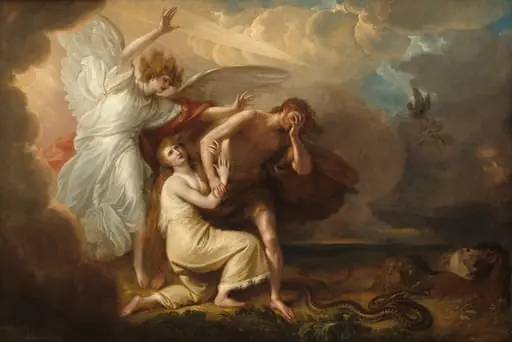 The Expulsion of Adam and Eve from Paradise
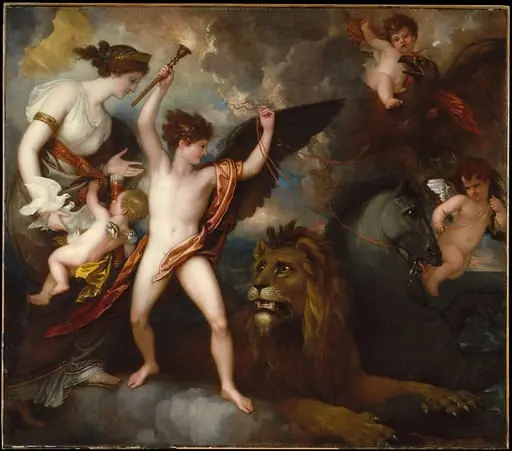 Omnia Vincit Amor, or The Power of Love in the Three Elements
 Cupid, Stung by a Bee, Is Cherished by his Mother
 Colonel Guy Johnson and Karonghyontye (Captain David Hill)
 Mary Bethel Boude (Mrs. Samuel Boude)
 Dr. Samuel Boude
 Moses Shown the Promised Land
 Hagar and Ishmael
 Eastern scene – Selling horses
 A Moroccan Amir
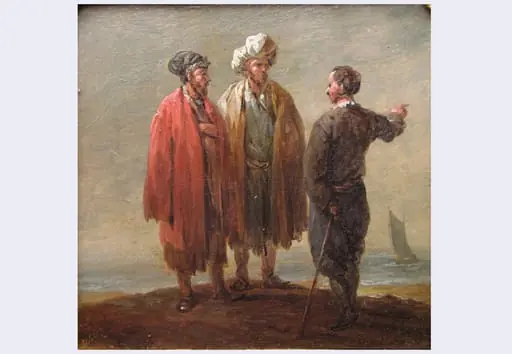 La malul mării ; pandant: Țăran și doi călugări
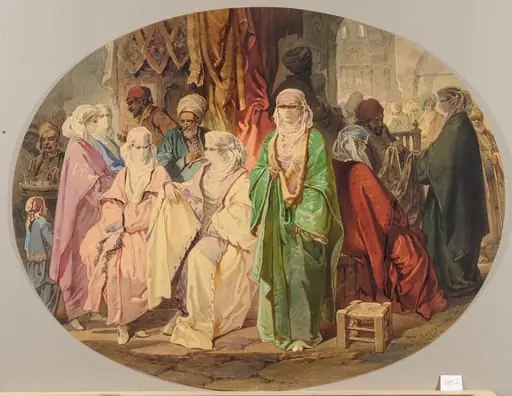 Bazar
Bazar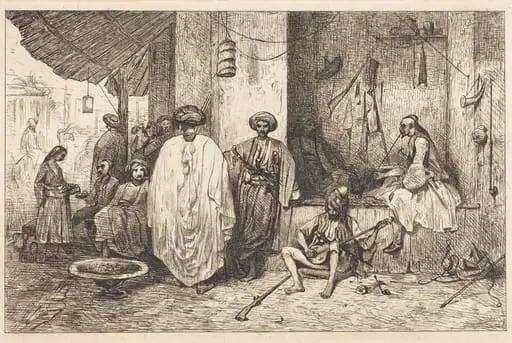 Le Corps de Garde
![Advanced guard & Baggage of the Royal artillery landi[ng] a[t] Alexandria en route for India, by T. B. S.](https://artifactworldgallery.com/img/t-b-s--advanced-guard-baggage-of-the-royal-artillery-landi-ng-a-t-a--605f6f4d9d8dfe93-w320.webp) Advanced guard & Baggage of the Royal artillery landi[ng] a[t] Alexandria en route for India
Advanced guard & Baggage of the Royal artillery landi[ng] a[t] Alexandria en route for India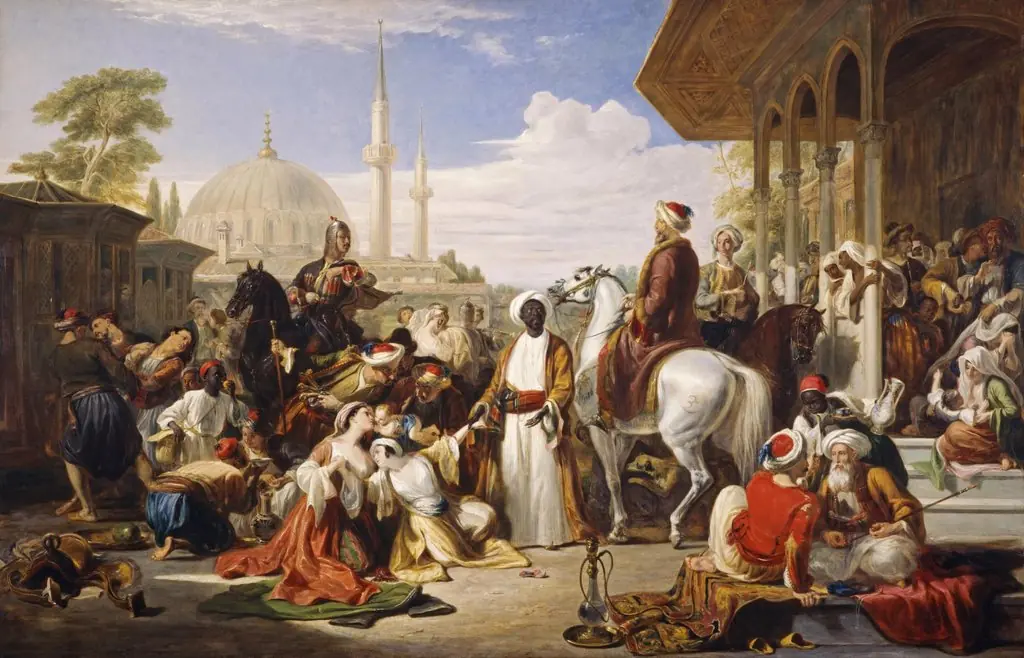 The Slave Market, Constantinople
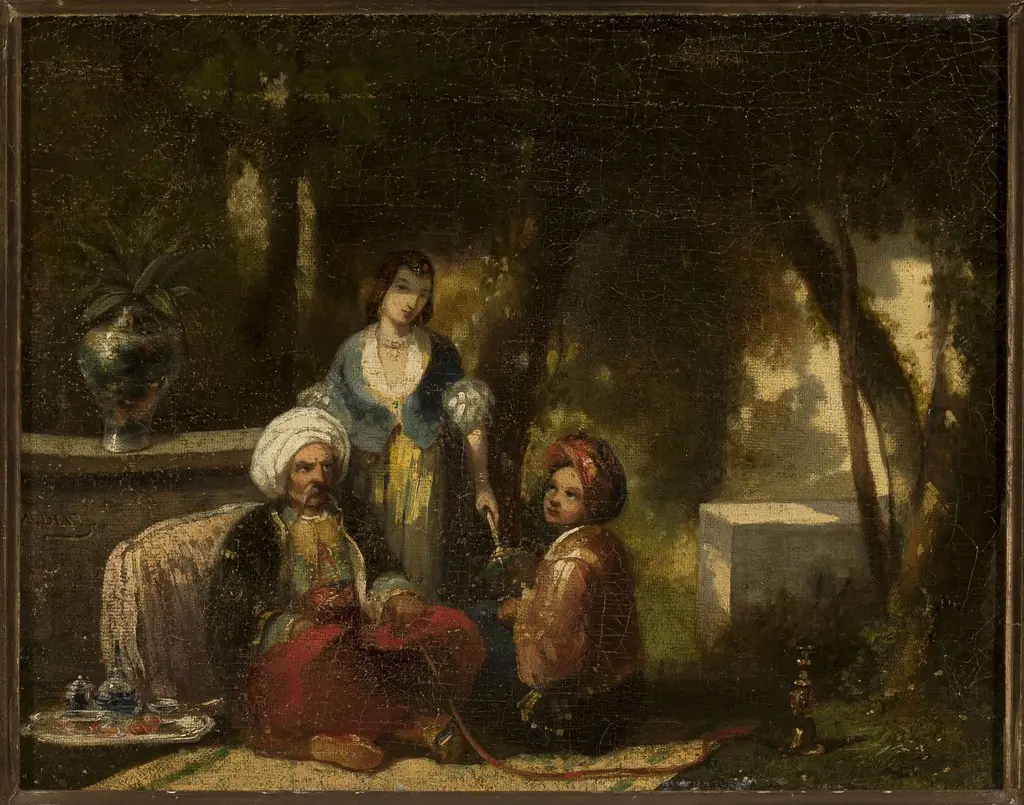 Man with a narghile against forest landscape
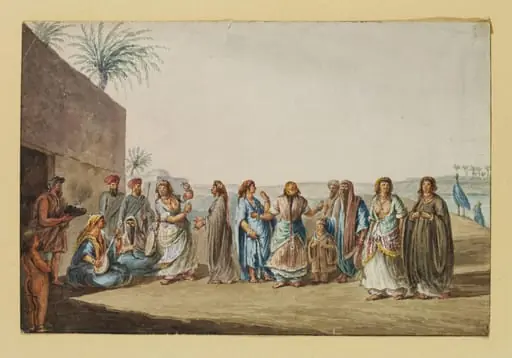 An Egyptian Ball, At Ned Sili
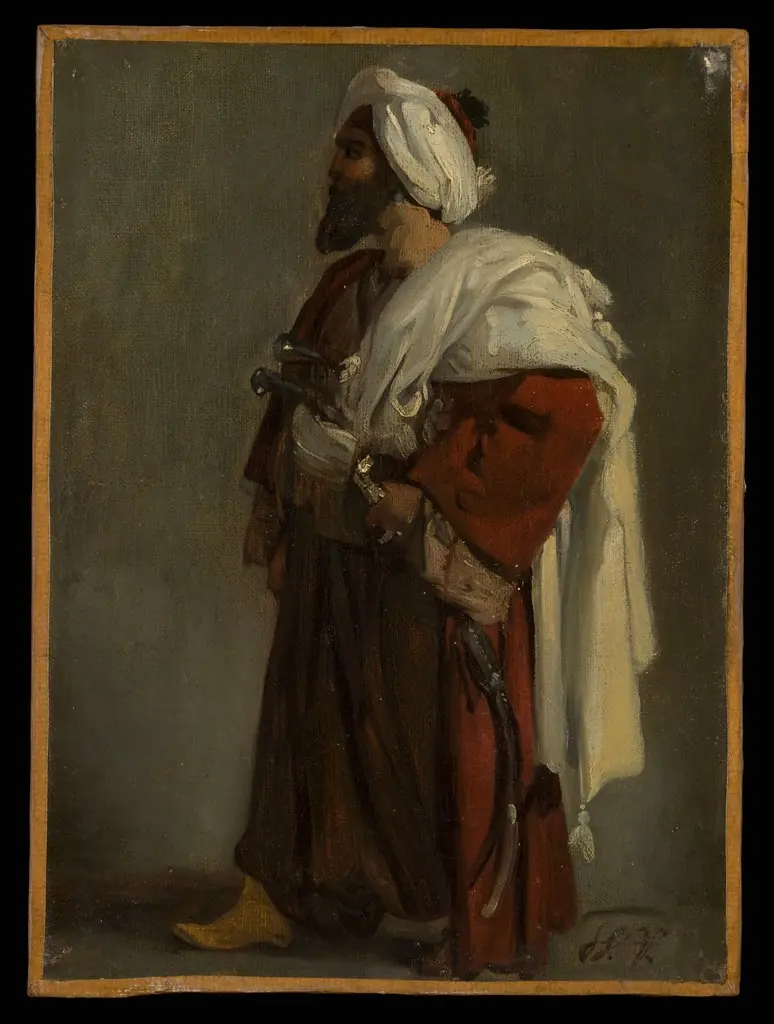 Arab Warrior
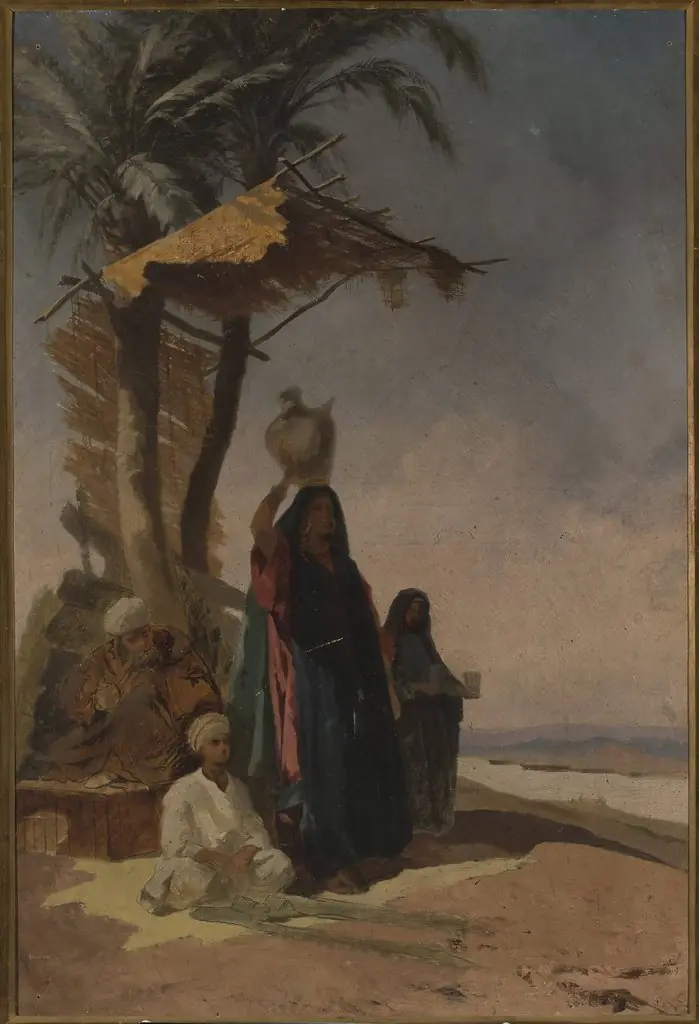 Eastern genre scene under a palm tree
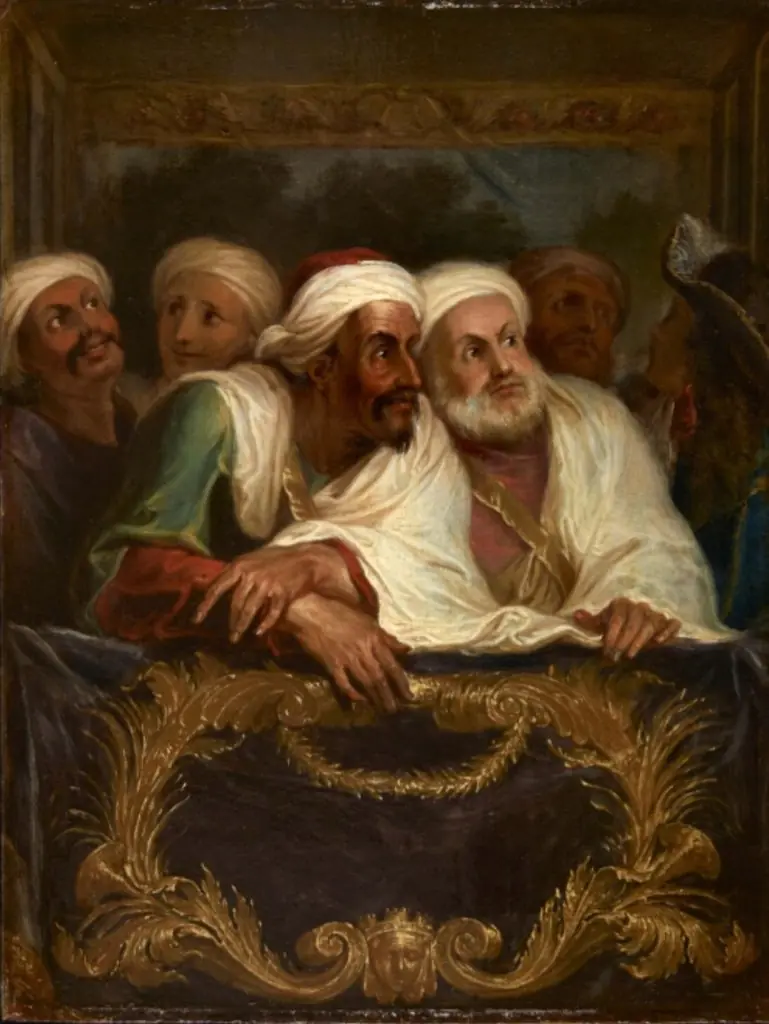
- The Moroccan ambassador and his retinue at the Comédie italienne in Paris, February 1682