Artwork
Hagar and Ishmael
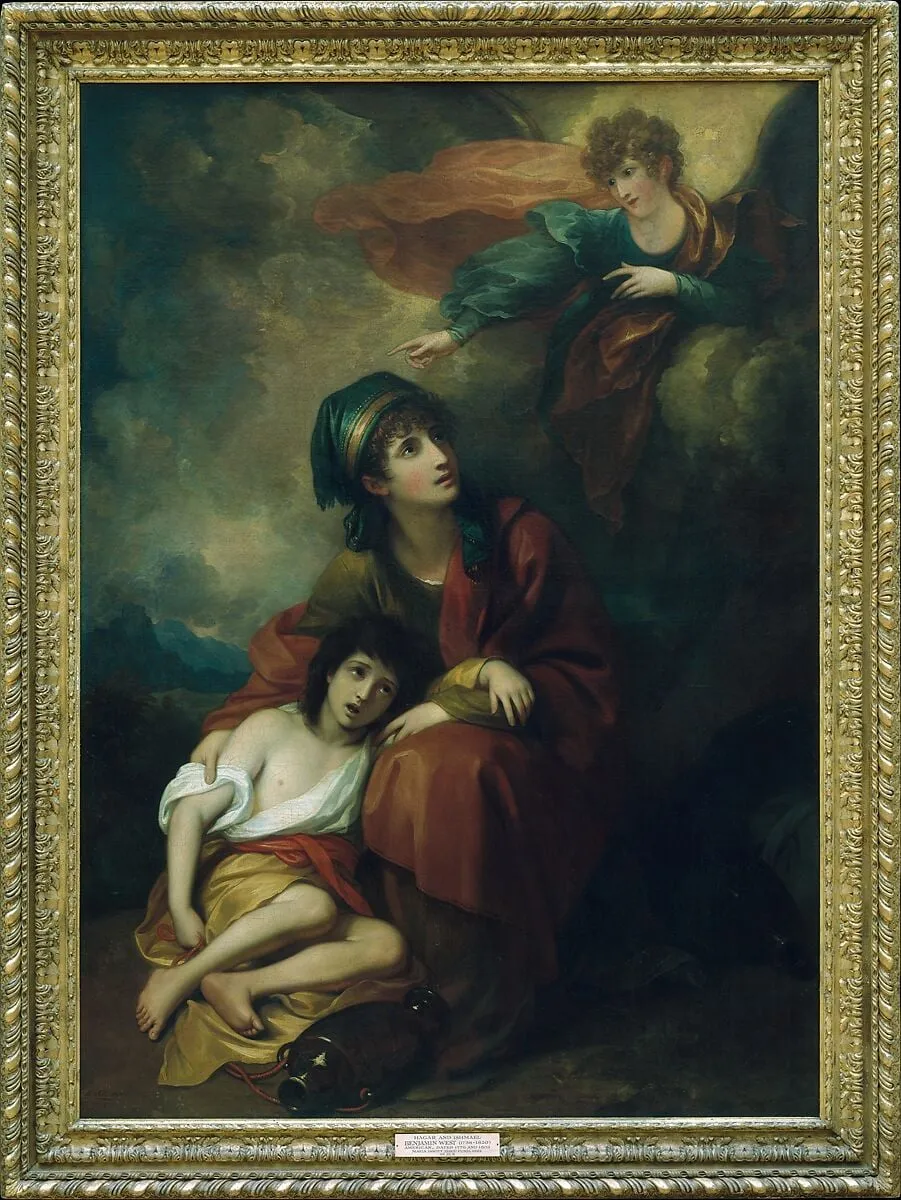
Hagar and Ishmael is an oil painting by the Neoclassicist artist Benjamin West. It dates from 1776 and is held in the collection of the Metropolitan Museum of Art.
About this work
A woman and a boy kneel in the desert while an angel hovers above with a water jug. The boy's face turns up, pleading. Benjamin West painted it in 1776 and reworked it over the next 27 years. Soft light on the angel's robe glows against the dark sand.
Subject & Meaning
Painted by Benjamin West in 1789, Hagar and Ishmael treats a biblical episode classified as religious art and identified by its main subject as the Banishment of Hagar and Ishmael. The composition centers on three figures: a woman, a boy, and an angel, corresponding to the Old Testament narrative in which Hagar and her son Ishmael, cast out into the wilderness, are visited and sustained by a divine messenger. The pairing of the maternal figure with the child conveys themes of exile and vulnerability, while the angel introduces the element of divine providence and rescue.
Together, the iconography of the woman, boy, and angel encapsulates the moment of succor at the heart of the story, presenting the encounter as both a personal drama of abandonment and a manifestation of heavenly intervention.
Technique & Style
The artwork is currently classified within the American Wing of the Metropolitan Museum of Art, where its physical support remains a stretched canvas.
Executed in 1789, Benjamin West's Hagar and Ishmael is an oil painting on canvas. The work measures approximately 193 centimeters in height by 138.4 centimeters in width. As a piece of religious art, the composition formally depicts three figures: a woman, a boy, and an angel, illustrating the biblical narrative of the Banishment of Hagar and Ishmael.
The medium of oil paint allows for the rendering of these figures within a traditional religious genre framework. The artwork is currently classified within the American Wing of the Metropolitan Museum of Art, where its physical support remains a stretched canvas.
History & Provenance
Hagar and Ishmael is an oil-on-canvas work by Benjamin West, dated 1789. The painting entered the Metropolitan Museum of Art's collection and is housed in the American Wing, where it remains on view. Its subject is the biblical banishment of Hagar and Ishmael, with iconography centered on a woman, a boy, and an angel. No records of commission, intermediate ownership, or acquisition history are documented in the available sources.
Hagar and Ishmael is held by the Metropolitan Museum of Art, New York, where it is catalogued as 1975.1.151. The painting was accessioned in 1975 through the Rogers Fund. It has not been recorded as traveling in major exhibitions since its acquisition, remaining in the museum’s permanent holdings.
Overview
Benjamin West, an American artist who established his career in London, completed Hagar and Ishmael in 1776. This oil-on-canvas work exemplifies a religious history painting, a genre central to the Neoclassical movement. It portrays a pivotal moment from the biblical narrative, featuring an angel providing solace and aid to Hagar and her son Ishmael in the wilderness. The painting reflects West's dedication to grand narrative compositions.
Context
Benjamin West, though American-born, became a pivotal figure in the London art scene. He garnered significant royal patronage and was instrumental in the establishment of the Royal Academy of Arts, serving as its second president. His leadership and artistic output, particularly his large-scale history paintings, profoundly shaped the direction of British art. West's numerous biblical scenes are represented in various museum collections, underscoring his lasting impact on the genre.
Artist & collection

Artist
Benjamin West (October 10, 1738 – March 11, 1820) was an American-born British painter who specialised in history painting, creating such works as The Death of Nelson, The Death of General Wolfe, the Treaty of Paris,…

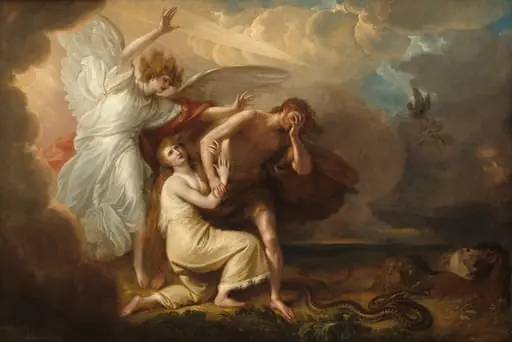 The Expulsion of Adam and Eve from Paradise
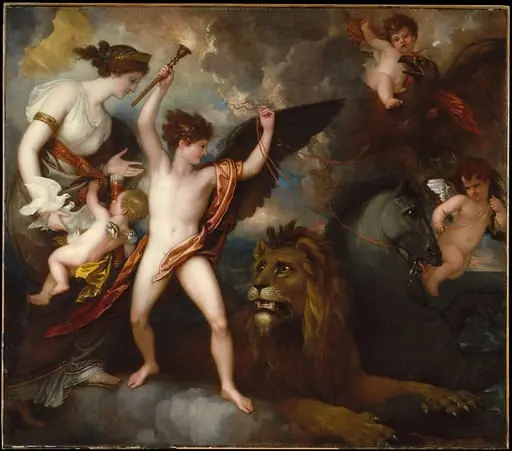 Omnia Vincit Amor, or The Power of Love in the Three Elements
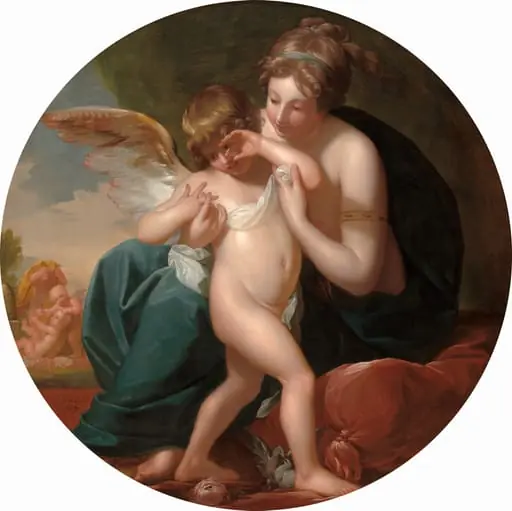 Cupid, Stung by a Bee, Is Cherished by his Mother
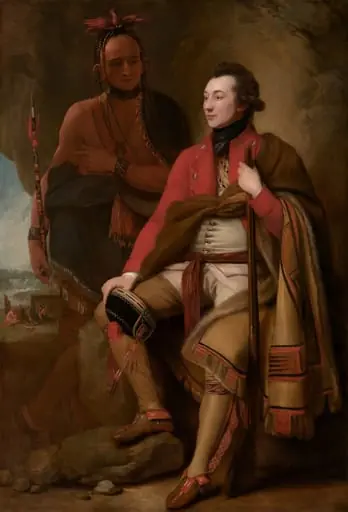 Colonel Guy Johnson and Karonghyontye (Captain David Hill)
 Mary Bethel Boude (Mrs. Samuel Boude)
 Dr. Samuel Boude
 Moses Shown the Promised Land
 The Damsel and Orlando
 Cottage Children (The Wood Gatherers)
 Mrs. Hugh Morgan and Her Daughter
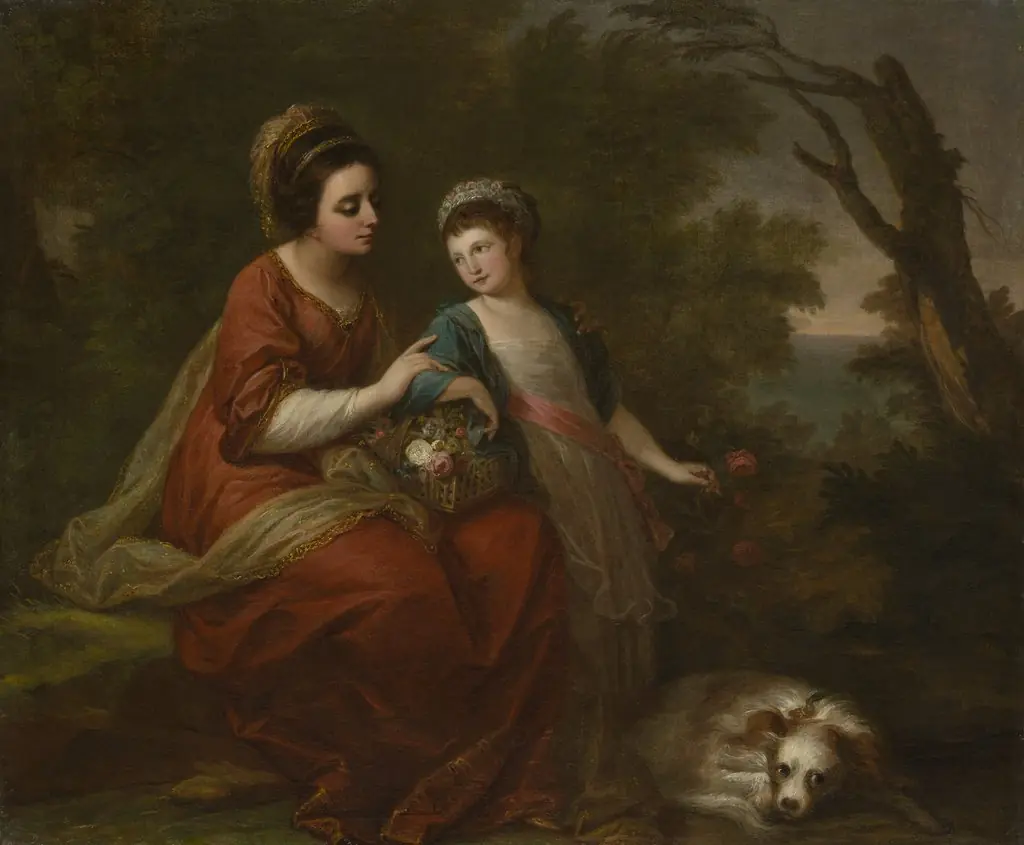 Mrs. Hugh Morgan and Her Daughter
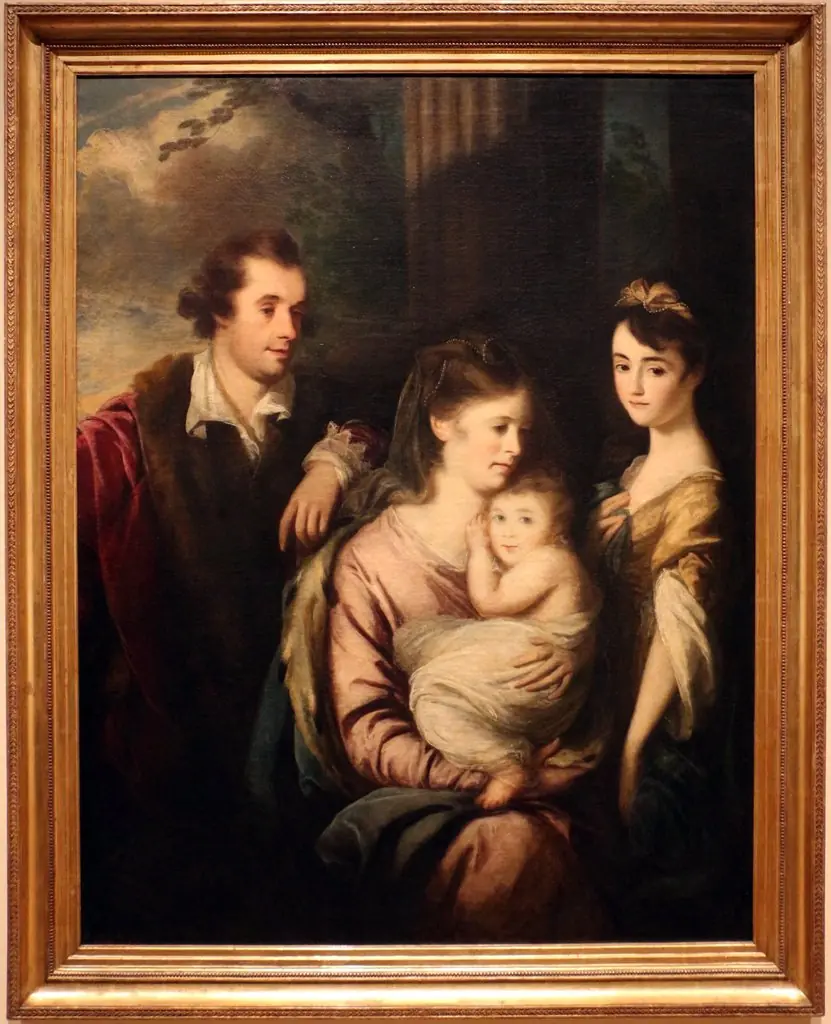 Retrato de família
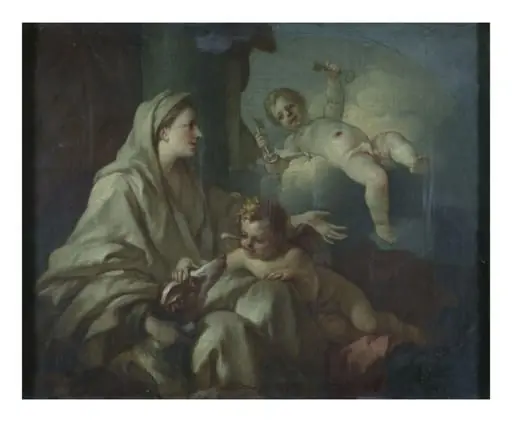 An Allegory
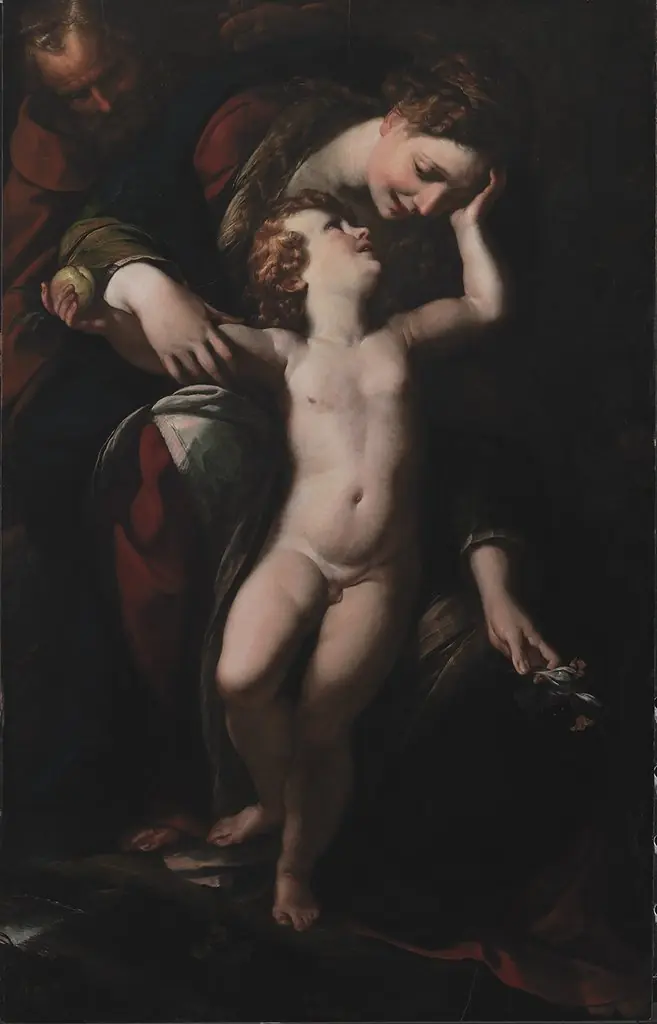 The Holy Family. The Rest on the Flight into Egypt
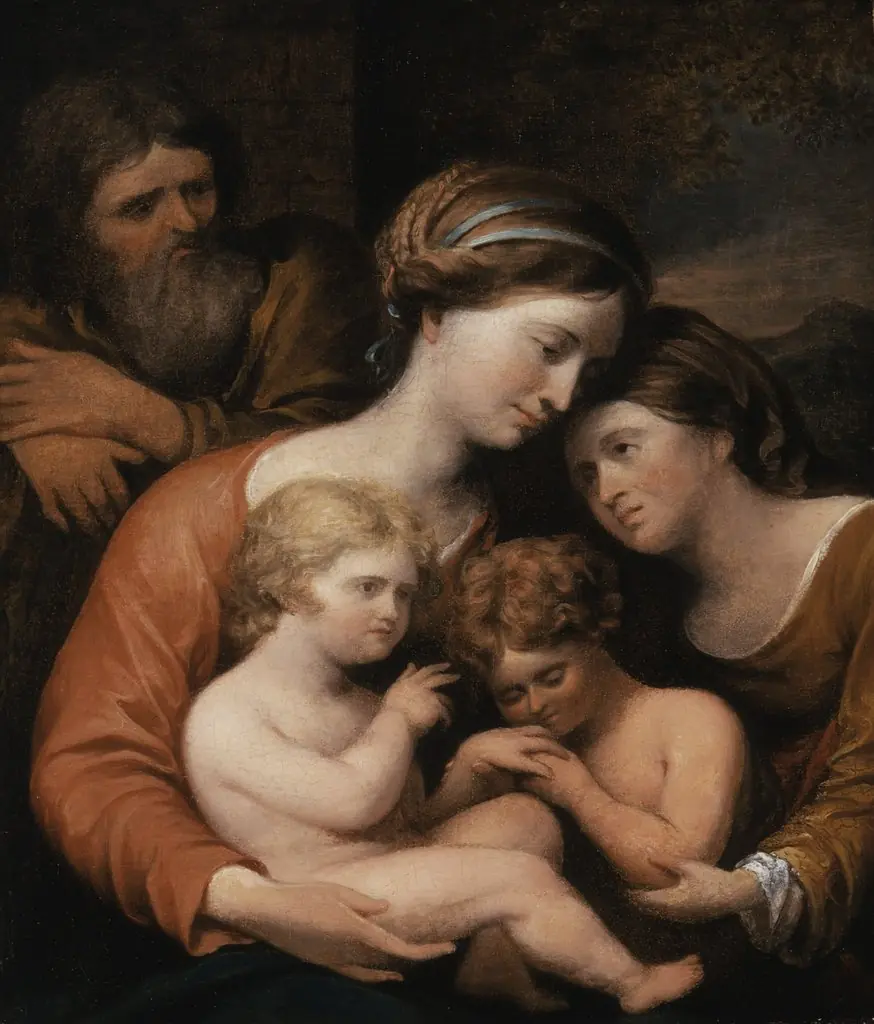 Holy Family
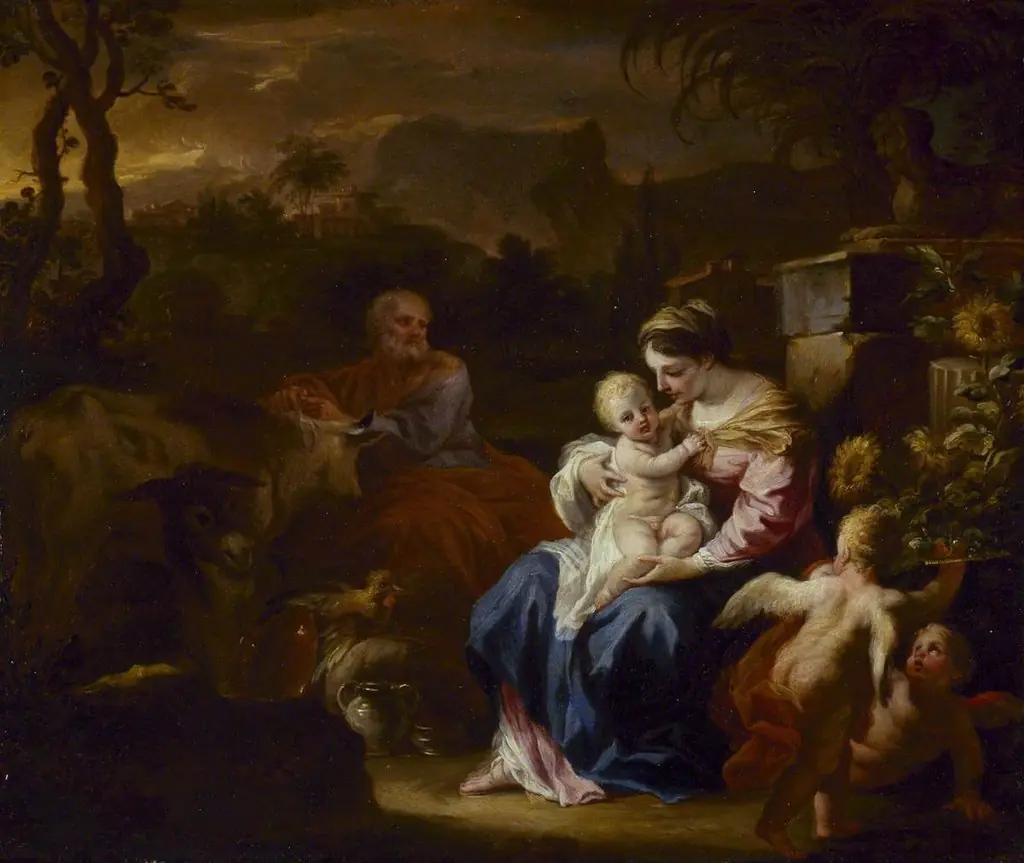 The Rest on the Flight into Egypt
 Elizabeth Shewell West and Her Son, Raphael
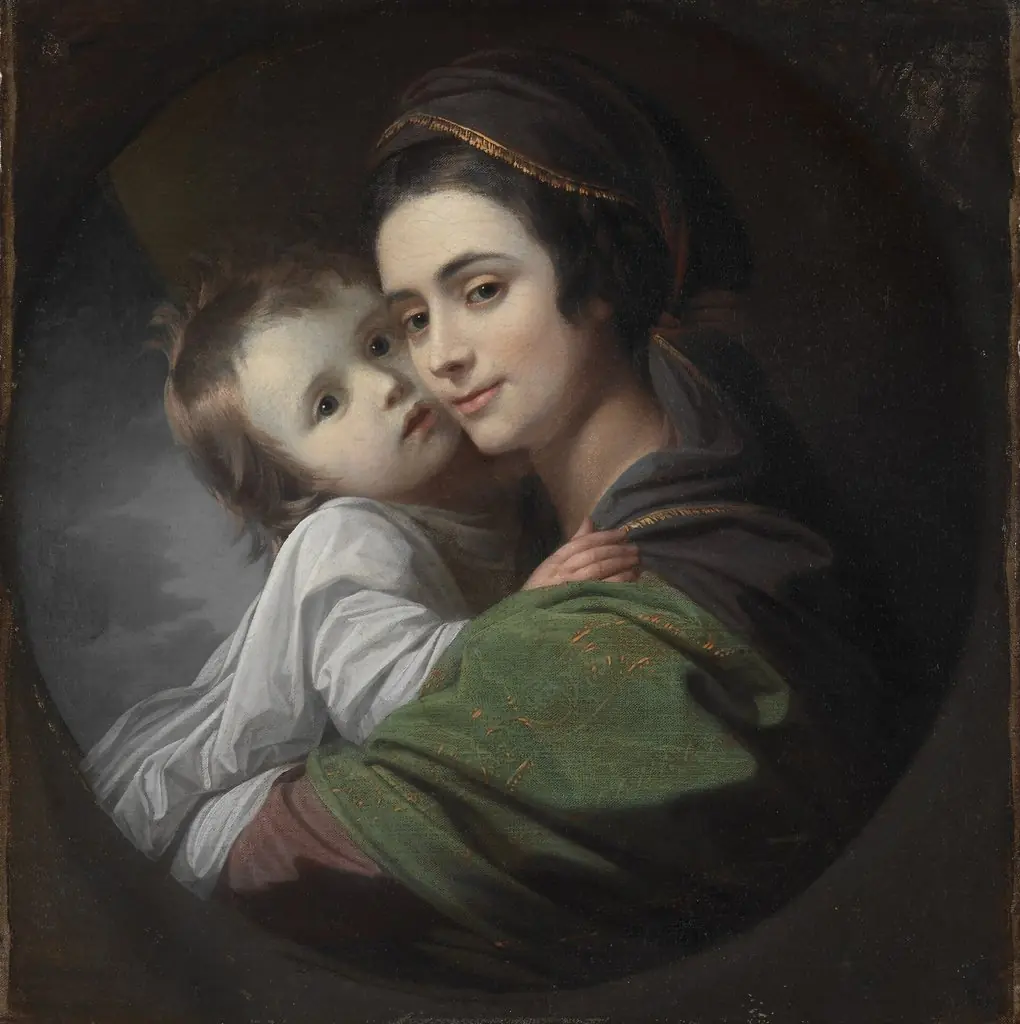 Elizabeth Shewell West and Her Son, Raphael
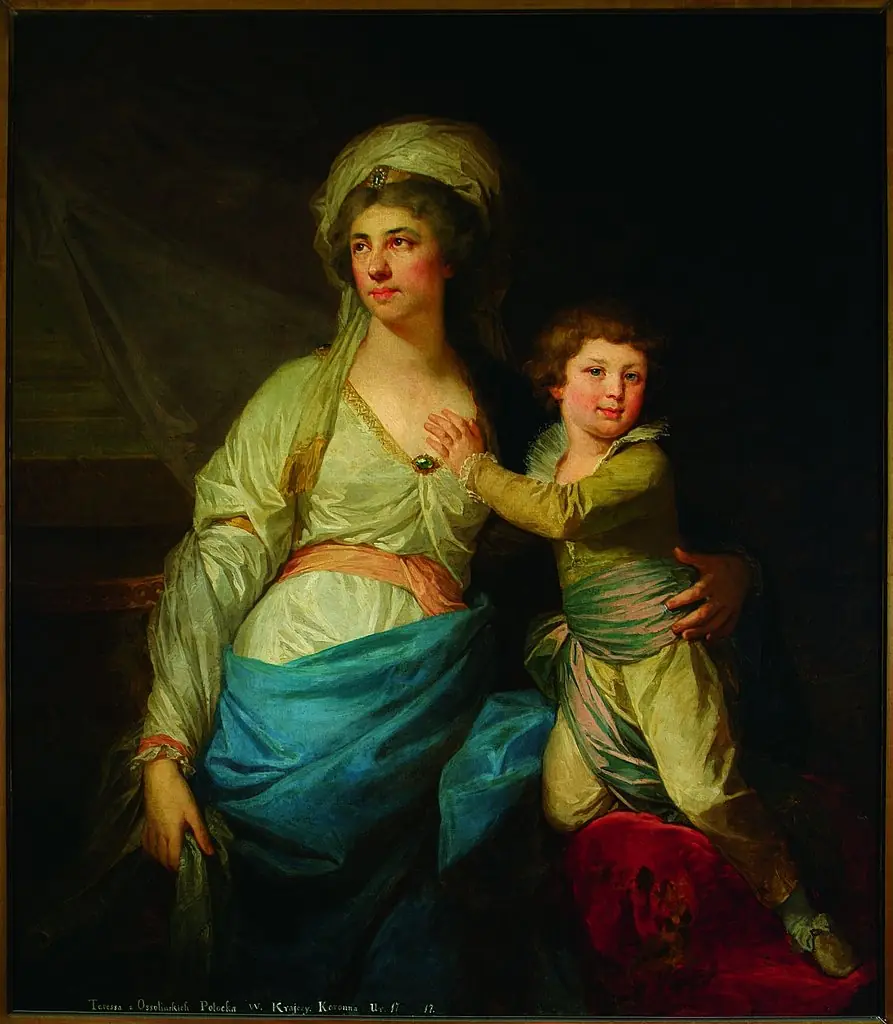 Portrait of Teresa Potocka née Ossolińska with her grandson Alfred
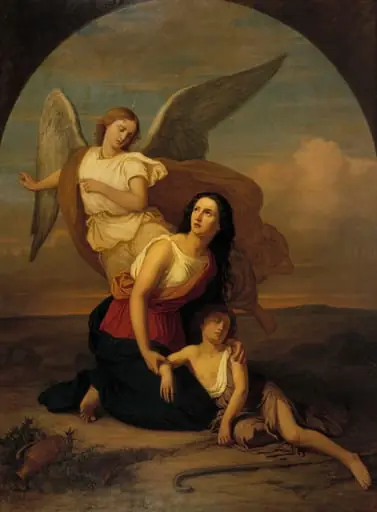
- Haagar ja Ismael