Artwork
Cupid, Stung by a Bee, Is Cherished by his Mother
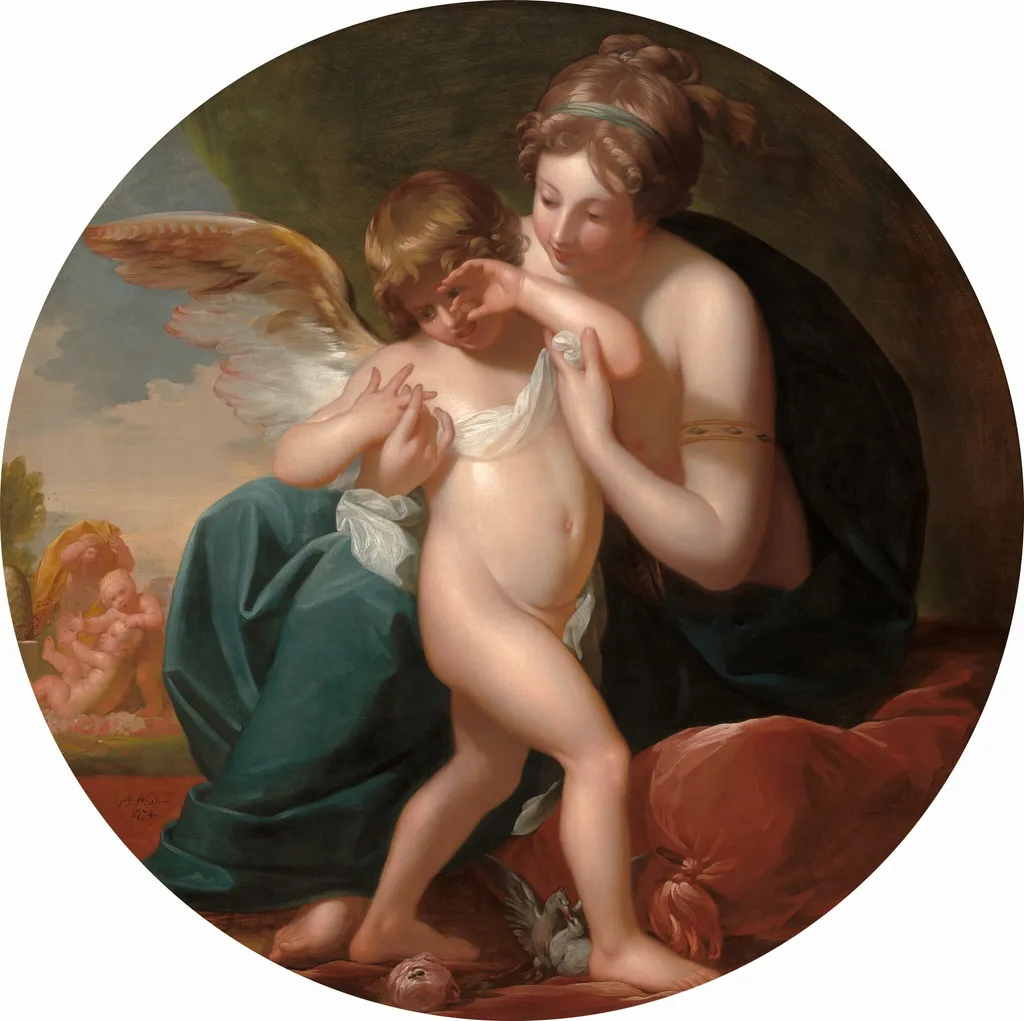
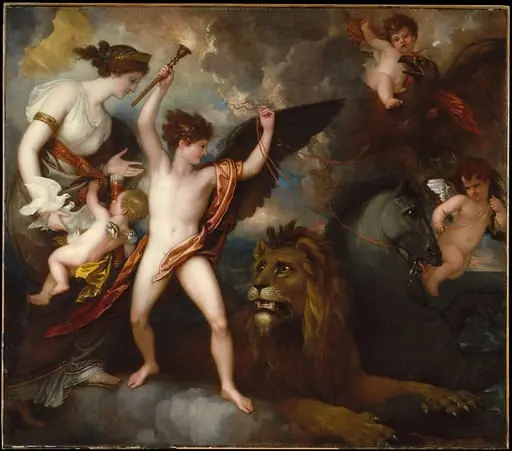
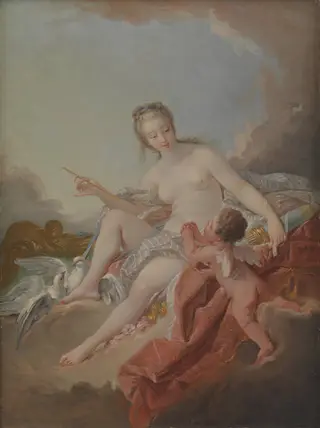
Cupid, Stung by a Bee, Is Cherished by his Mother is an oil painting by the Neoclassicist artist Benjamin West. It dates from 1774 and is held in the collection of the National Gallery of Art.
About this work
Subject & Meaning
As a work of mythological painting, the subject illustrates a narrative moment where the consequences of Cupid's mischievous nature are met with maternal care.
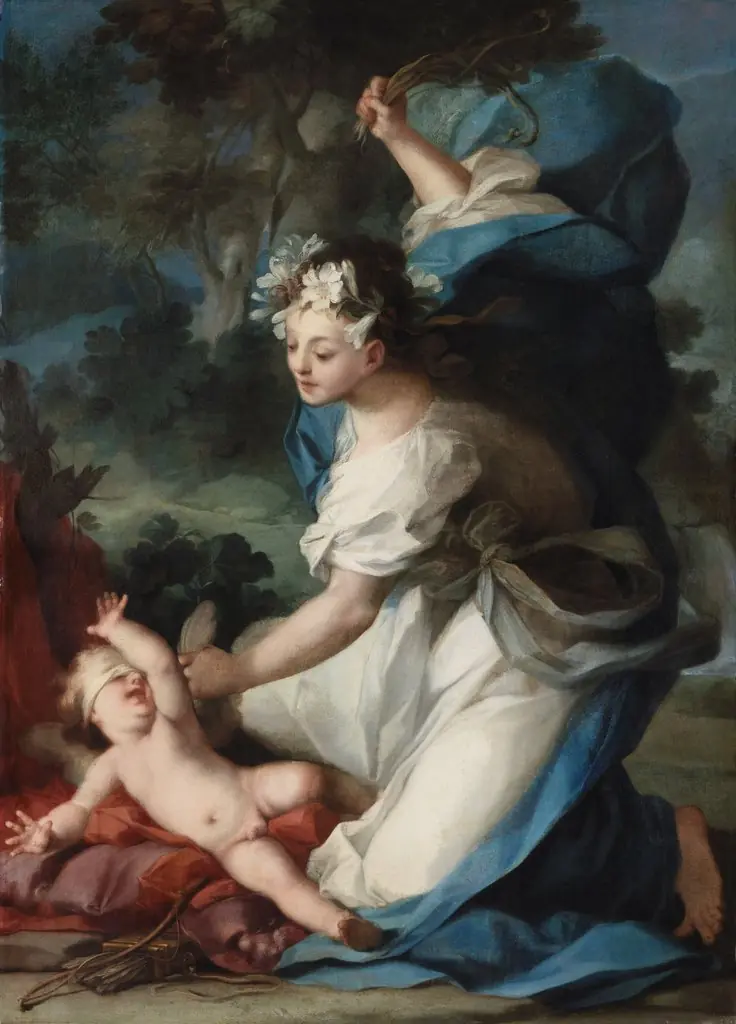
The painting depicts a mythological scene featuring Cupid and his mother, Venus. In this composition, the infant god of desire has been stung by a bee and is shown being comforted or cherished by Venus. As a work of mythological painting, the subject illustrates a narrative moment where the consequences of Cupid's mischievous nature are met with maternal care.
The interaction between the two figures serves as the central focus, representing the dynamic between the powerful deity and the vulnerable child. The artwork captures the specific emotional response of the mother to her son's pain, grounding the mythological figures in a relatable human experience of injury and consolation.
Technique & Style
Executed in oil on canvas, the painting is classified as a mythological work within the tradition of oil painting on a textile support. The medium and support are consistent with standard eighteenth-century British practice for history and mythological subjects. The work belongs to the genre of mythological painting and depicts Cupid and Venus, rendered in oil paint on canvas. No further details regarding handling, condition, or specific stylistic qualities are documented in the available sources.
History & Provenance
Attributed to Benjamin West, the oil-on-canvas painting Cupid, Stung by a Bee, Is Cherished by his Mother is dated to 1744, though some records also suggest a 1774 inception. The work originally entered the collection of Agmondisham Vesey (1708–1785) at Lucan House in County Dublin, Ireland, remaining in the Vesey family by descent until it was sold at Christie, Manson & Woods in London on December 3, 1926. Following this sale, the painting changed hands multiple times through London auctions in 1927, eventually reaching New York via collector Mortimer Brandt.
By 1950, it was held by Mrs. E. Lovette West in Bronxville, and subsequently passed to her daughter, Bernice West Beyers, in Dallas. The piece was gifted to the Corcoran Gallery of Art in Washington, D.C., in 1963, and was acquired by the National Gallery of Art in 2014.
The painting is held by the National Gallery of Art in Washington, D.C. It entered the Corcoran Gallery of Art in Washington in 1963 as a gift from Bernice West Beyers, daughter of Mrs. E. Lovette West of Bronxville, New York, who had acquired the work by 1950. The National Gallery of Art acquired it from the Corcoran in 2014. Earlier provenance traces through the Vesey family of Lucan House, County Dublin, beginning with Agmondisham Vesey (1708–1785), followed by sales at Christie, Manson & Woods in London on 3 December 1926 (lot 92, purchased by Walton) and 25 March 1927 (lot 95, purchased by Barclay), with subsequent passage through Mortimer Brandt of New York before reaching the West family. No exhibition history is recorded in the available sources.
Context
Benjamin West's 1744 oil on canvas Cupid, Stung by a Bee, Is Cherished by his Mother exemplifies his early mythological subjects, aligning with the genre classification recorded for the work. The painting, depicting Cupid and Venus, entered the National Gallery of Art after a documented chain of ownership that began with Agmondisham Vesey and passed through several London and New York collectors before acquisition by the museum in 2014. Within West's early output, the canvas is categorized as a mythological painting, reflecting his engagement with classical themes and illustrating the transition toward Neoclassicism in British art.
Overview
Painted in 1774, Benjamin West's 'Cupid, Stung by a Bee, Is Cherished by his Mother' depicts the mythological scene where the infant god of love, Cupid, is comforted by his mother, Venus, after being stung by a bee. The composition centers on the intimate interaction between the two figures, capturing a moment of vulnerability and maternal care. West, an American artist who achieved significant success in London, utilizes the oil-on-canvas medium to render the soft textures of skin and drapery, characteristic of his Neoclassical style.
The work reflects the artist's engagement with classical mythology, a frequent subject in his oeuvre during this period. By focusing on a tender, domesticated aspect of the divine, West moves away from grand heroic narratives to explore emotional resonance. This painting exemplifies West's ability to blend academic rigor with sentimental appeal, a trait that contributed to his prominence in 18th-century British art.
The piece stands as a testament to the artist's skill in portraying human emotion within a mythological framework, showcasing his influence on the development of history painting in the Atlantic world.
Own this work as a print
Artist & collection

Artist
Benjamin West (October 10, 1738 – March 11, 1820) was an American-born British painter who specialised in history painting, creating such works as The Death of Nelson, The Death of General Wolfe, the Treaty of Paris,…