Artwork
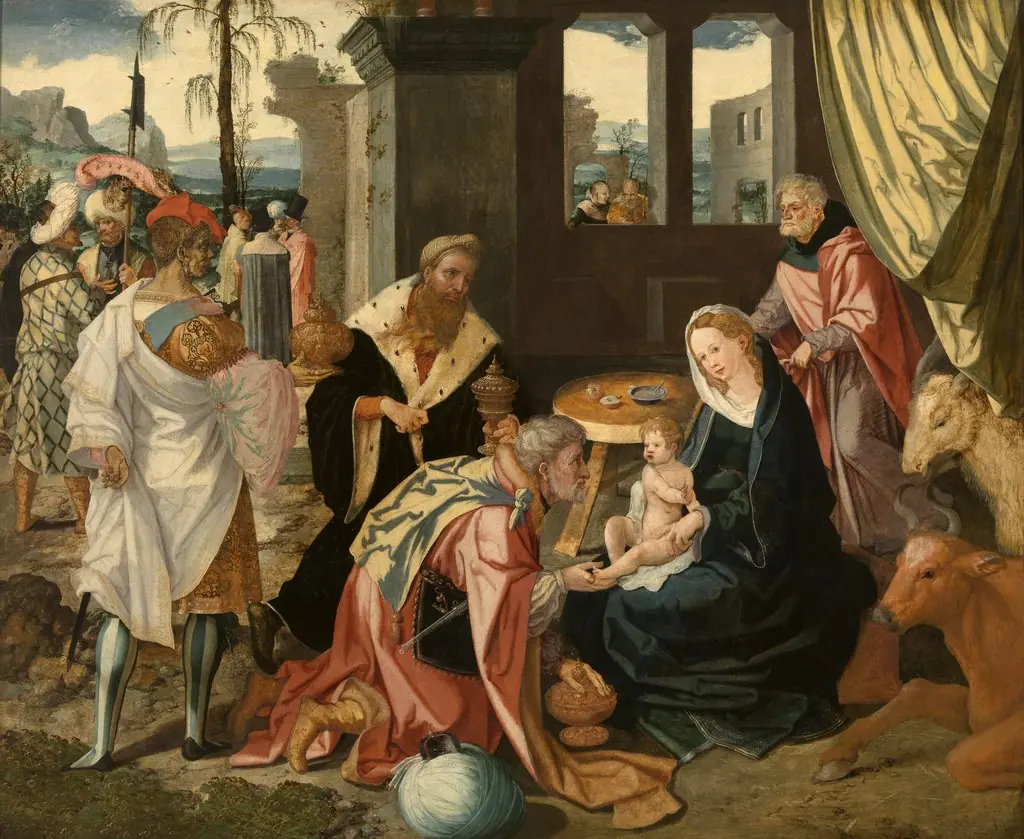
The Adoration of the Magi
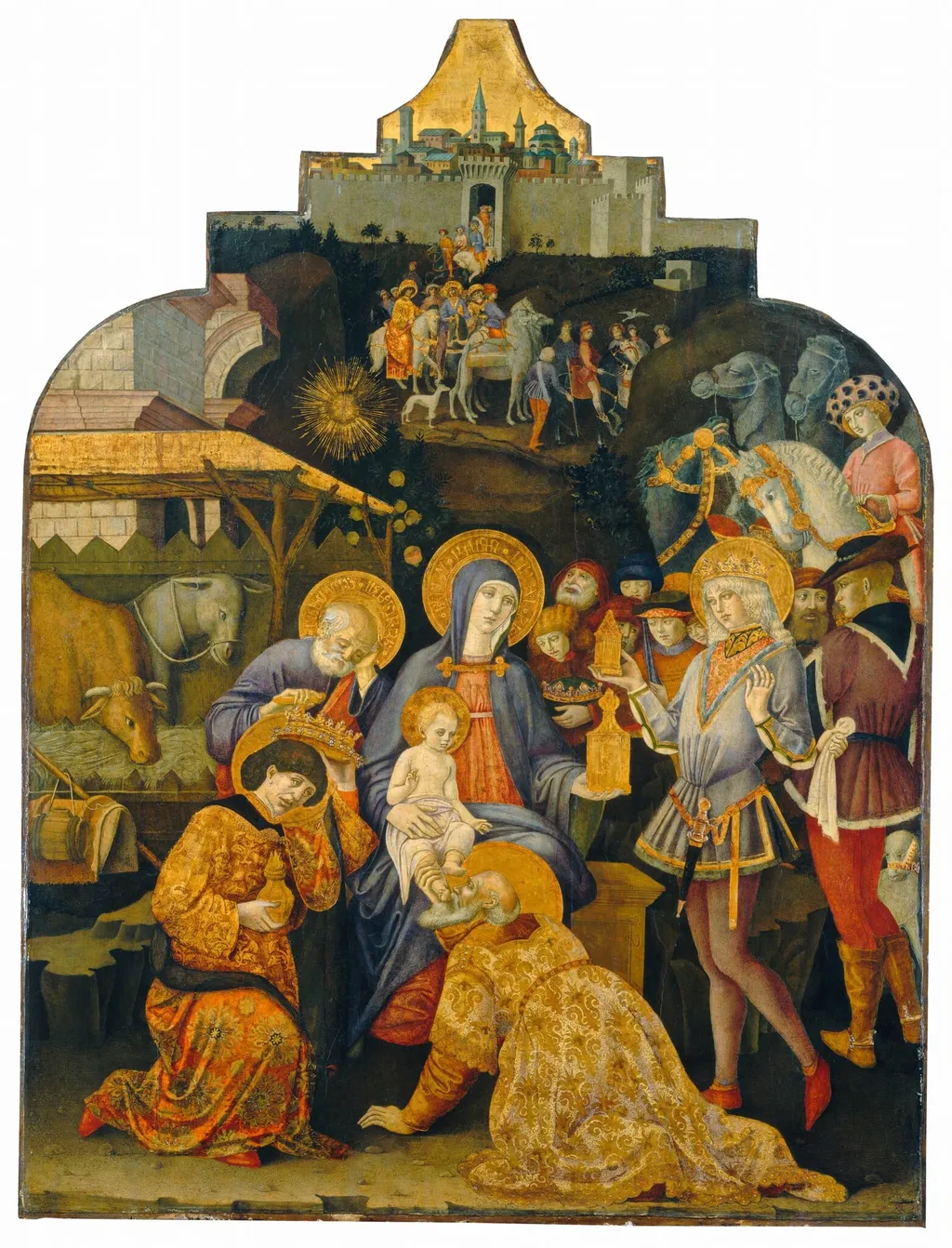
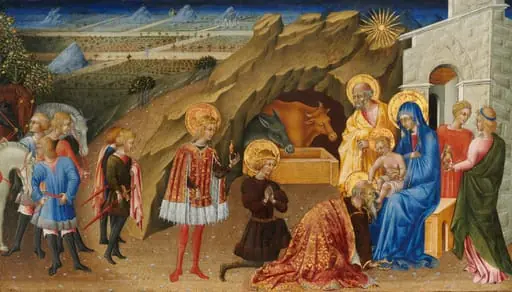
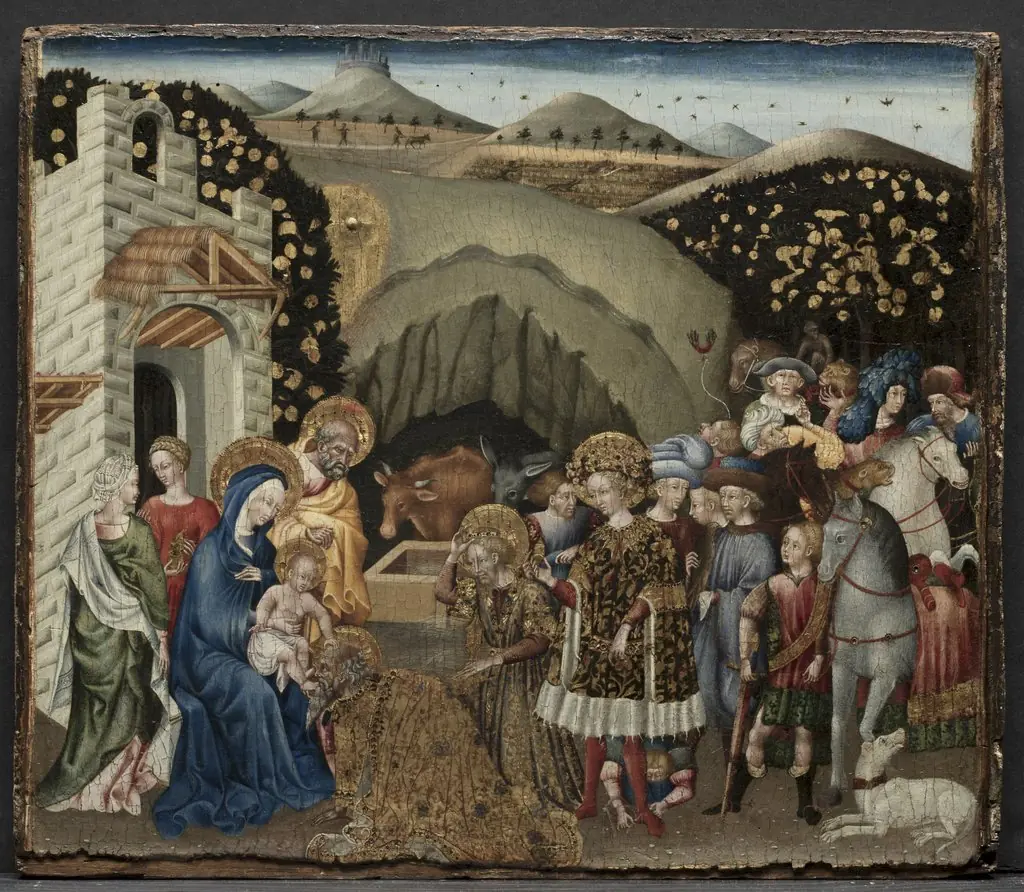
The Adoration of the Magi is a tempera painting by the Early Renaissance artist Benvenuto di Giovanni. It dates from 1472 and is held in the collection of the National Gallery of Art.
About this work
Subject & Meaning
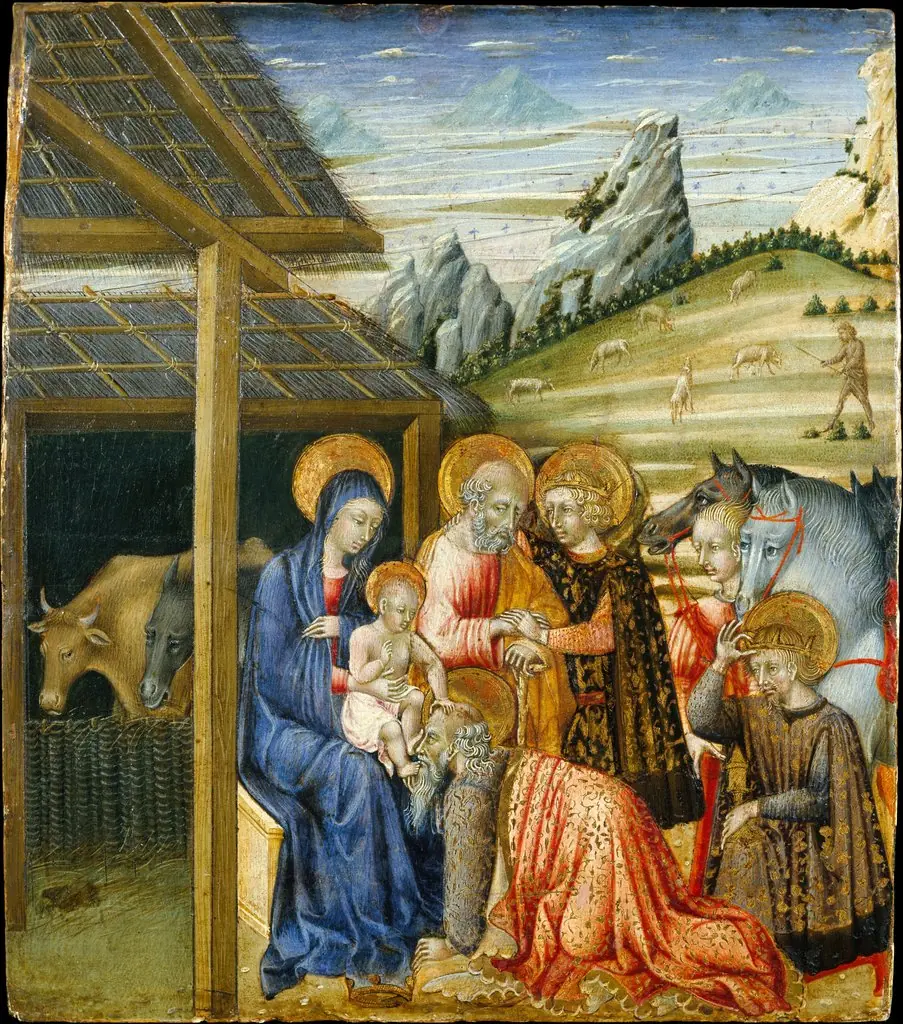
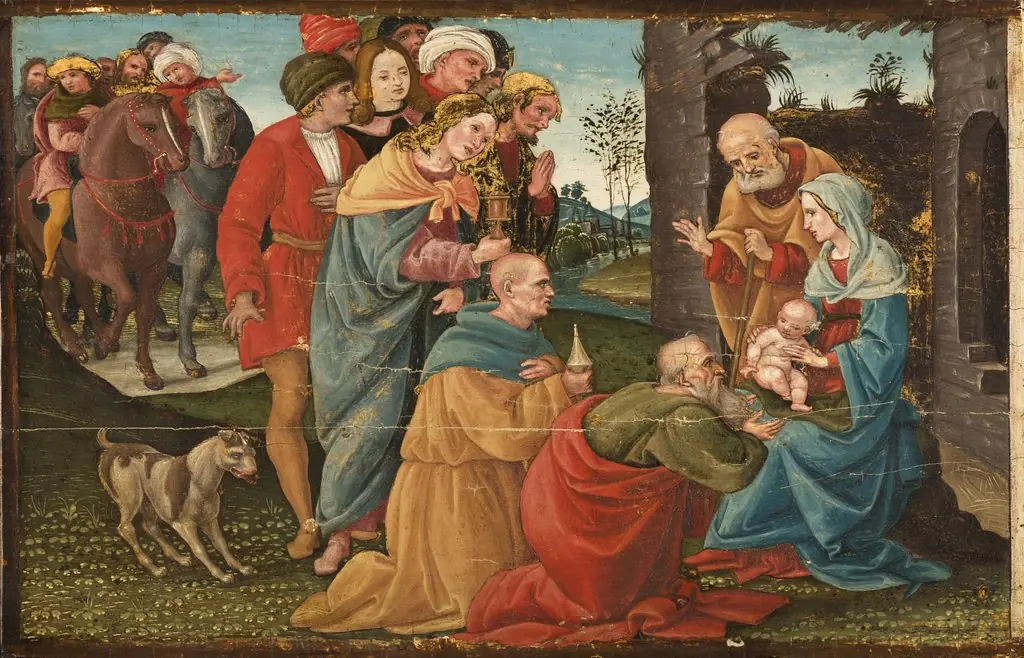
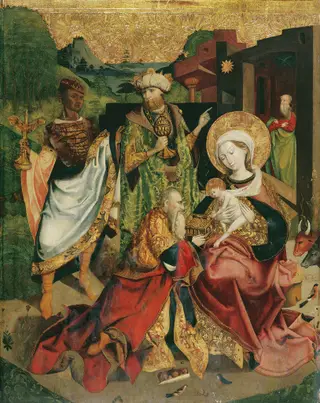
The Adoration of the Magi depicts the biblical scene of the three Magi presenting gifts to the infant Christ, a common Renaissance iconography symbolizing the recognition of Christ’s divinity by the Gentile world. The composition centers the Christ Child on the Virgin’s lap, surrounded by the Magi in regal attire, with traditional attributes of gold, frankincense and myrrh emphasizing the theological meaning of revelation and kingship. As described in the sources, the work is classified as religious art and was created by Benvenuto di Giovanni in 1470, reflecting the devotional emphasis on the Epiphany within the genre.
Technique & Style
The physical dimensions and material composition define the object's formal presence as a significant devotional image attributed to Benvenuto di Giovanni.
Created in 1470, this religious painting is executed in tempera on a poplar panel support. The work measures 182 cm in height and 137 cm in width. As a panel painting from the late 15th century, it depicts the Biblical Magi and the Christ Child within a traditional devotional format.
The medium and support are characteristic of the period's Italian workshop practices, utilizing wood panels prepared for egg-based pigments. The physical dimensions and material composition define the object's formal presence as a significant devotional image attributed to Benvenuto di Giovanni.
History & Provenance
The Adoration of the Magi by Benvenuto di Giovanni is dated to circa 1470 based on stylistic and technical analysis. The panel was first recorded in the collection of Giuseppe Toscanelli in Pisa and Pontedera between 1828 and 1891. It was sold in Florence in 1883 as a work by Gentile da Fabriano, later passing to Sir William Neville Abdy in England.
After Abdy’s death in 1910, it was inherited by his daughter Florence, Lady Abdy, and sold at auction in London in 1911. The work then entered the trade via Wallis & Son, London, before being acquired by Charles Sedelmeyer in Paris by 1913. Duveen Brothers purchased it in August 1919 and briefly placed it with Carl W. Hamilton in New York in 1920–21.
It was ultimately acquired by The A.W. Mellon Educational and Charitable Trust in December 1936 and gifted to the National Gallery of Art, Washington, D.C., in 1937.
The Adoration of the Magi by Benvenuto di Giovanni is held by the National Gallery of Art in Washington, D.C., where it is part of the Andrew W. Mellon collection and listed in the museum’s holdings as a tempera painting on poplar panel created around 1470. Its provenance traces from the Toscanelli family in Italy through several private owners to Charles Sedelmeyer, after which it entered the Mellon Trust and was gifted to the gallery in 1937. The work has not been recorded in major public exhibitions beyond its inclusion in the gallery’s permanent display, reflecting its status as a component of the museum’s collection rather than a frequently loaned piece.
Legacy
The Adoration of the Magi became a touchstone for debates on late‑15th‑century Florentine painting. Early 19th‑century scholar Amico Ricci cited the work as evidence of Gentile da Fabriano’s style, a view later questioned when connoisseurs linked it to Benvenuto di Giovanni; the painting’s documented ownership by Toscanelli, Abdy, Sedelmeyer and Duveen reflects its appeal to major collectors. Its inclusion in the National Gallery of Art and subsequent scholarly references helped shape the modern reputation of the piece as a key example of devotional art, illustrating how provenance narratives contribute to an artwork’s lasting legacy.
Overview
Benvenuto di Giovanni's painting, "The Adoration of the Magi," depicts a pivotal biblical event. Executed in tempera on a poplar panel, the work presents three elaborately dressed figures kneeling before an infant, offering them precious gifts. The setting is a modest interior, contrasting with the opulence of the visitors. The artist's meticulous approach is evident in the finely rendered details throughout the composition.
Own this work as a print
Artist & collection

Artist
Benvenuto di Giovanni, also known as Benvenuto di Giovanni di Meo del Guasta (13 September 1436 – c.