Artwork
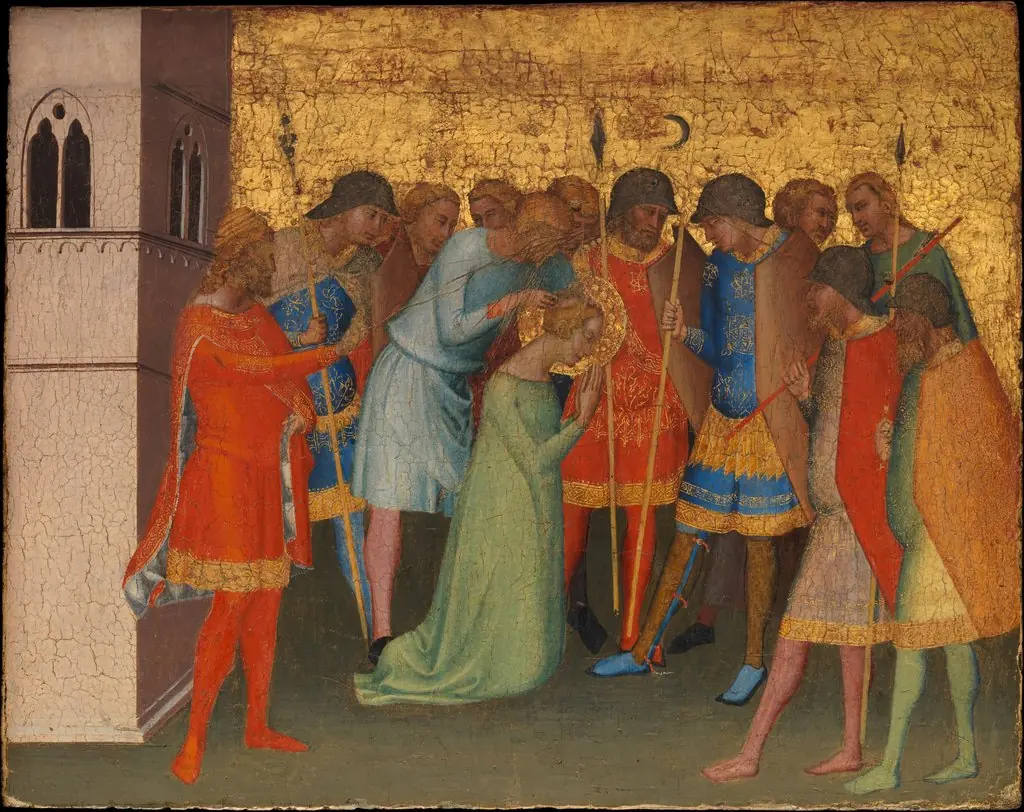
Saint Reparata Tortured with Red-Hot Irons
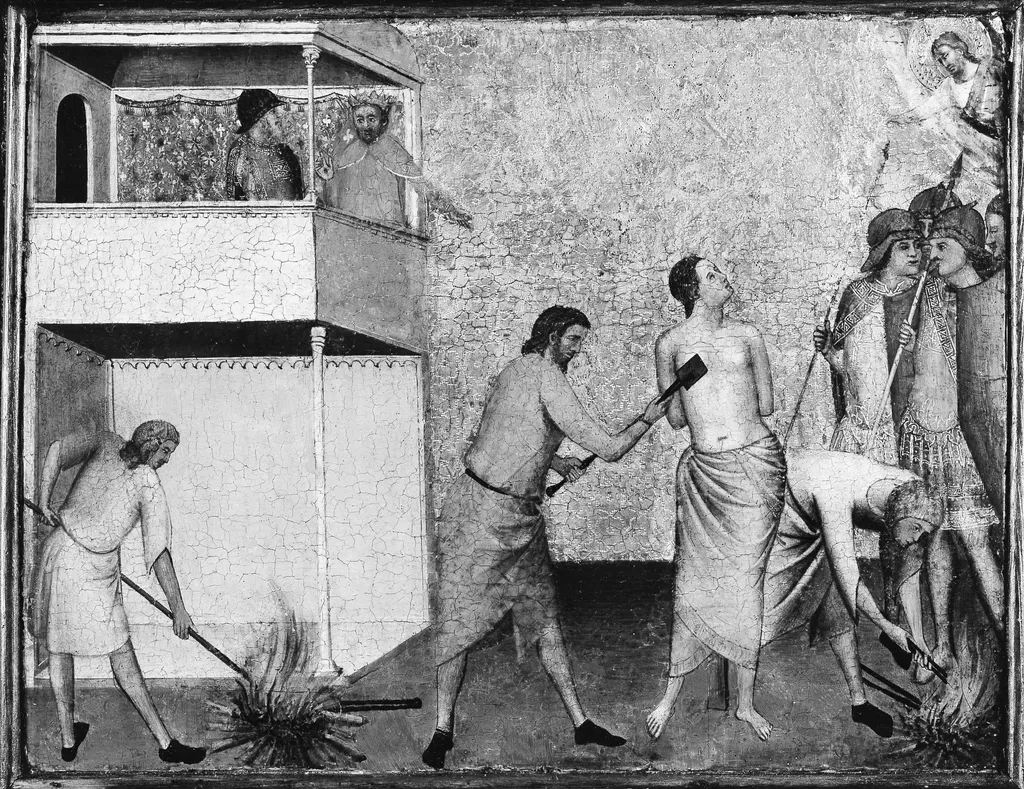
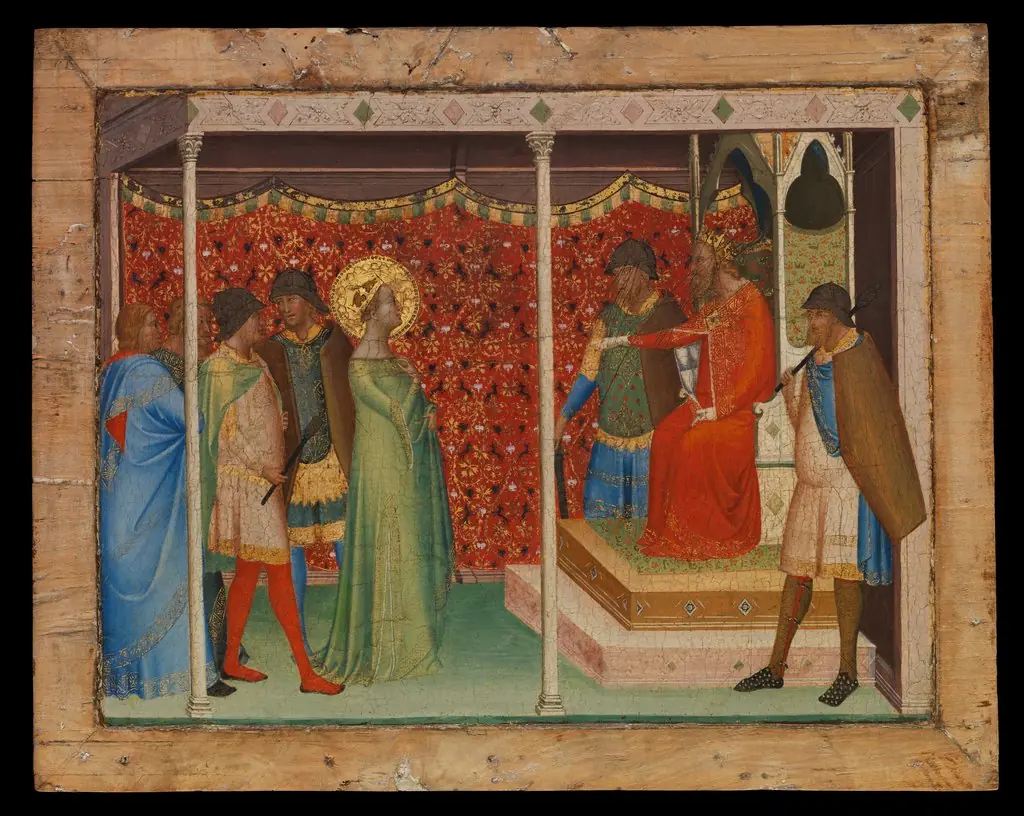
Saint Reparata Tortured with Red-Hot Irons is a tempera painting by the Early Renaissance artist Bernardo Daddi. It dates from 1337 and is held in the collection of the Metropolitan Museum of Art.
About this work
Technique & Style
As a product of the Trecento period, the piece employs the traditional tempera technique characteristic of Florentine panel painting of the era.
Bernardo Daddi's Saint Reparata Tortured with Red-Hot Irons, executed in 1337, is a religious panel painting created using tempera on a wooden panel, measuring 33 centimetres in height and 41.9 centimetres in width. As a product of the Trecento period, the piece employs the traditional tempera technique characteristic of Florentine panel painting of the era. The medium and support facilitate the detailed depiction of the saint and the narrative of her martyrdom, aligning with the stylistic conventions of Daddi's workshop.
The physical dimensions and material composition define the object as a portable devotional image, consistent with the classification of religious art from the mid-14th century.
History & Provenance
The painting Saint Reparata Tortured with Red-Hot Irons was created by the Florentine artist Bernardo Daddi in 1337. Executed in tempera on panel measuring 33 by 41.9 centimetres, it is a religious depiction of a female saint's martyrdom. The Metropolitan Museum of Art holds the piece under accession number 11.126.2, acquired in 1911.
While the specific commission details and original patron remain unrecorded, the work dates to the mid-14th century, aligning with Daddi's active period.
Overview
Bernardo Daddi, a prominent Florentine painter of the early Italian Renaissance, completed Saint Reparata Tortured with Red-Hot Irons in 1337. This tempera painting illustrates a dramatic scene of martyrdom, characteristic of religious narratives from the period. The work exemplifies the shift towards more naturalistic depictions that began to emerge in art during the 14th century, moving away from earlier Gothic conventions. It is currently housed at The Metropolitan Museum of Art.
Subject & Meaning
The painting vividly portrays Saint Reparata enduring torture. At the center, the saint, clad in a white robe, is restrained by two figures, one of whom applies a red-hot iron to her body. Her face registers intense pain and fear, conveying the brutality of the ordeal.
In the background, additional figures, including a crowned man and a woman with an infant, observe the scene, which unfolds against a stark stone wall, emphasizing the atmosphere of suffering.
Context
Bernardo Daddi was a leading artistic figure in Florence during the 14th century, a period of significant transition in Italian art. His work, including this depiction of Saint Reparata, contributed to the nascent Early Renaissance movement. This era saw artists beginning to explore more lifelike representations and narrative clarity, departing from the symbolic and less naturalistic forms prevalent in earlier medieval art.
Own this work as a print
Artist & collection
Artist
Bernardo Daddi (c. 1280 – 1348) was an early Italian Renaissance painter and the leading painter of Florence of his generation. He was one of the artists who contributed to the revolutionary art of the Renaissance,…

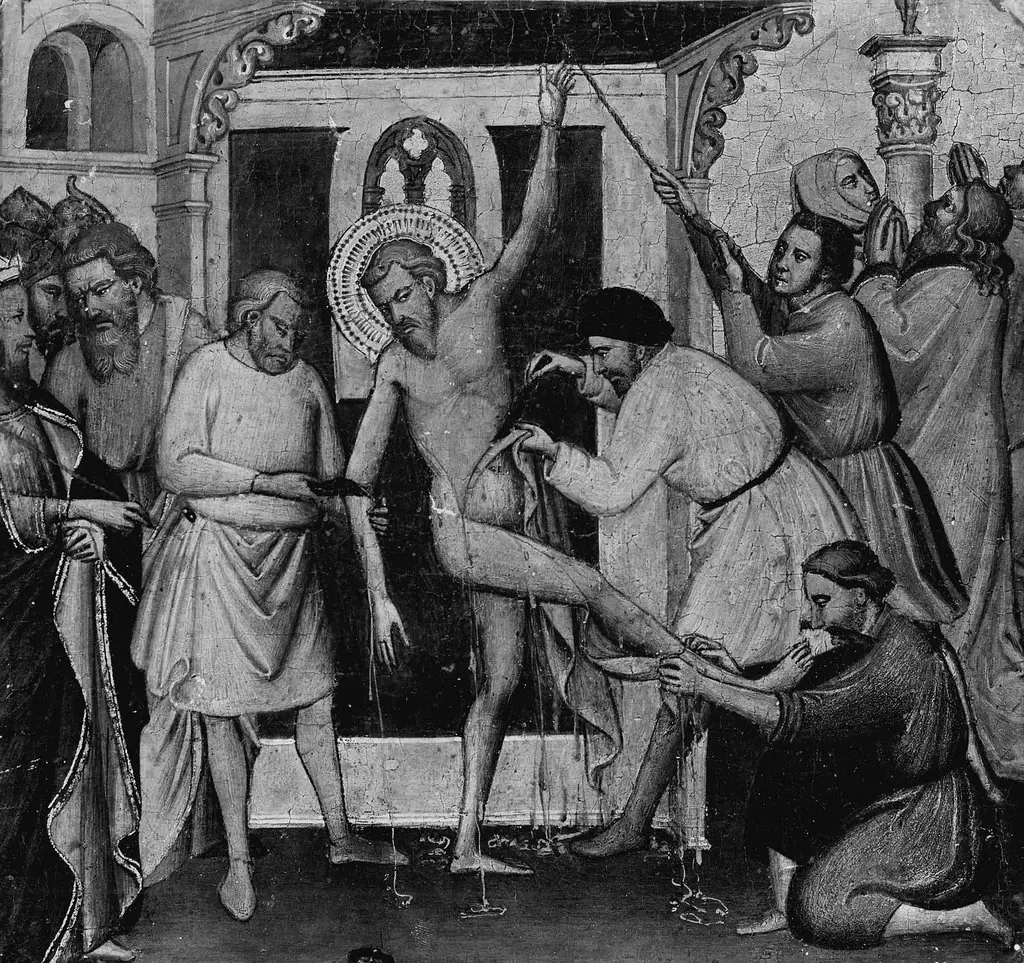
- Martyrdom of Saint Bartholomew
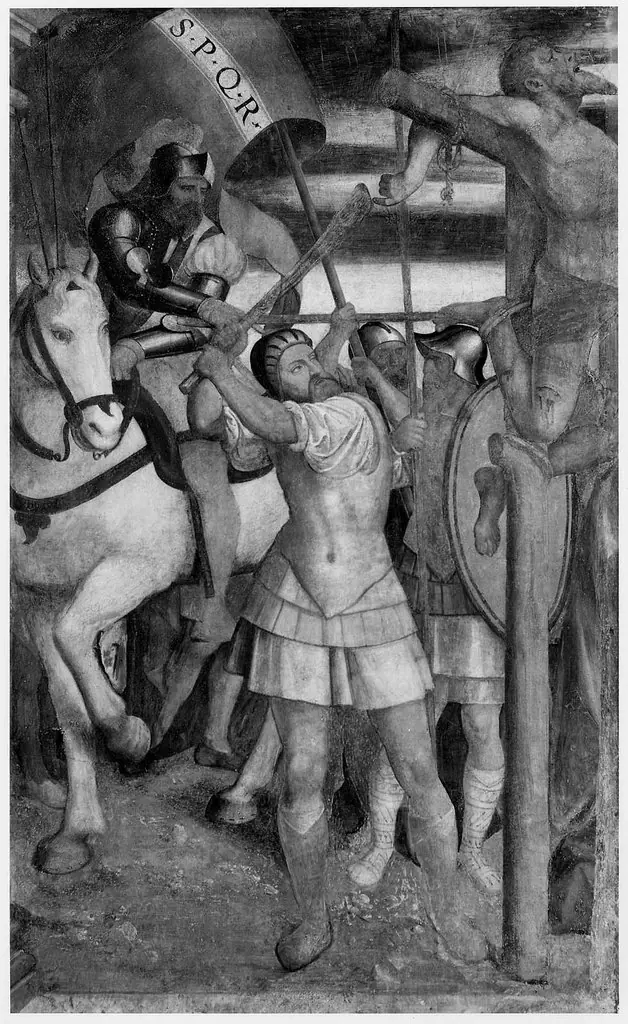 Crucifixion of a Thief
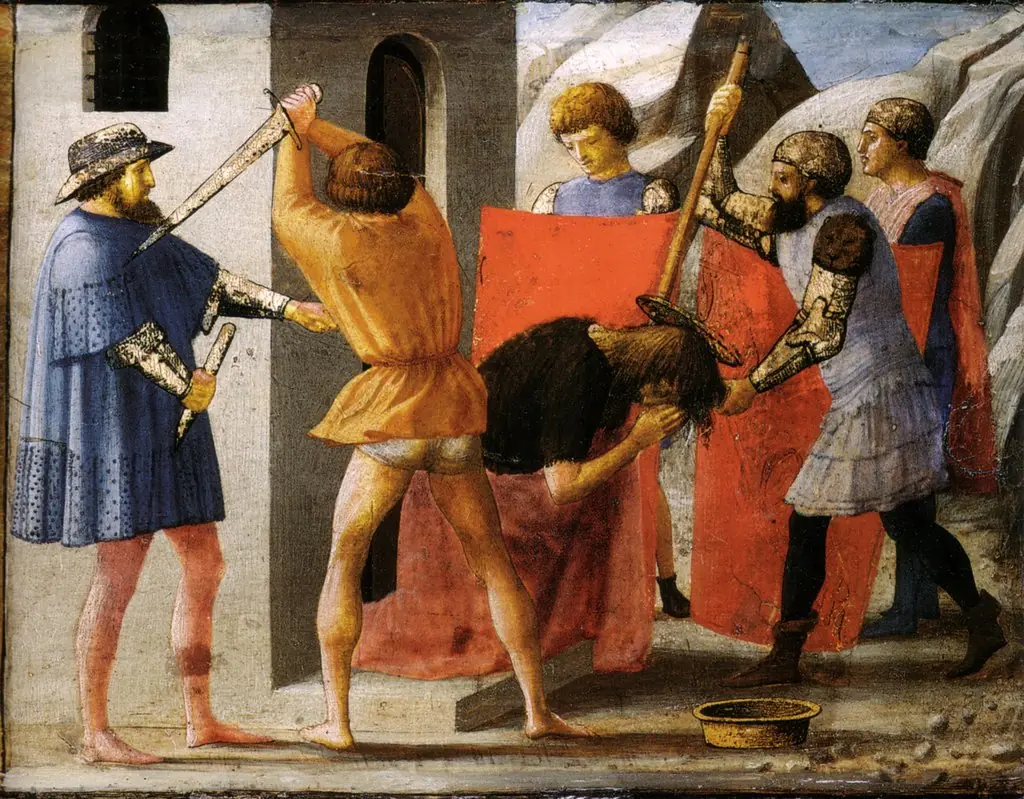 The Decapitation of Saint John the Baptist
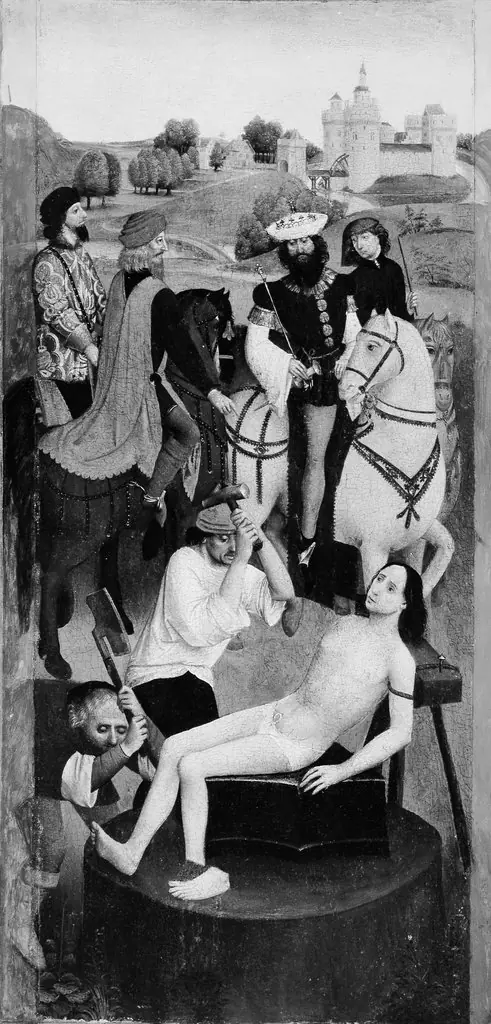 The Martyrdom of Saint Adrian; The Martyrdom of Two Saints, Possibly Ache and Acheul
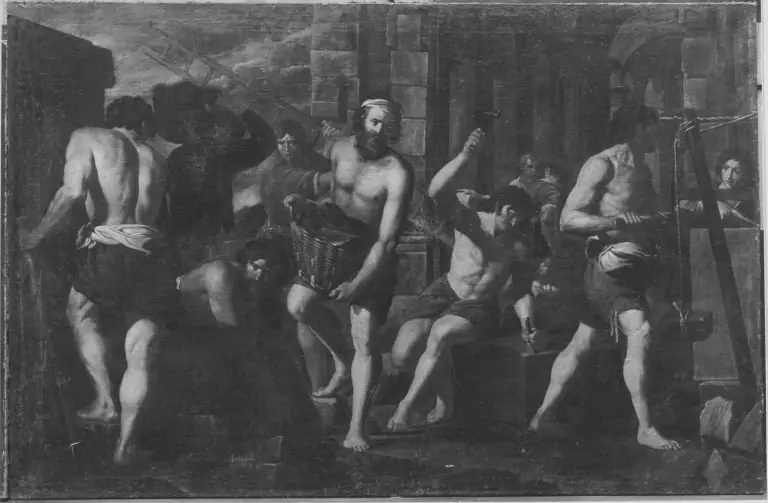 Bauleute am Werk
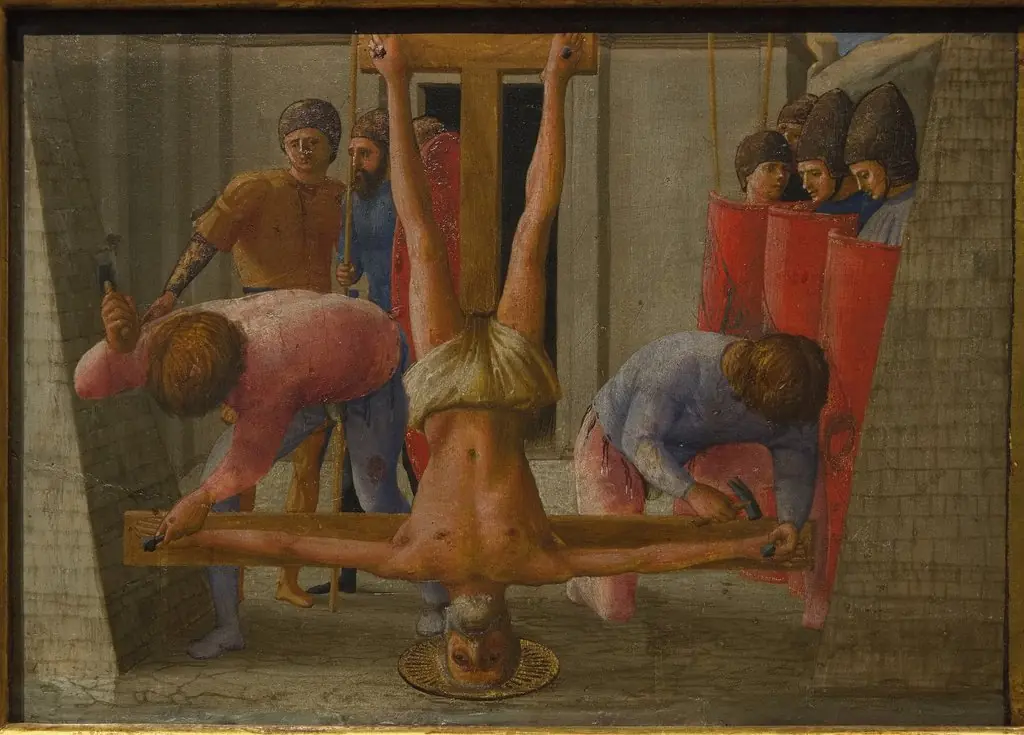 The Crucifixion of Saint Peter
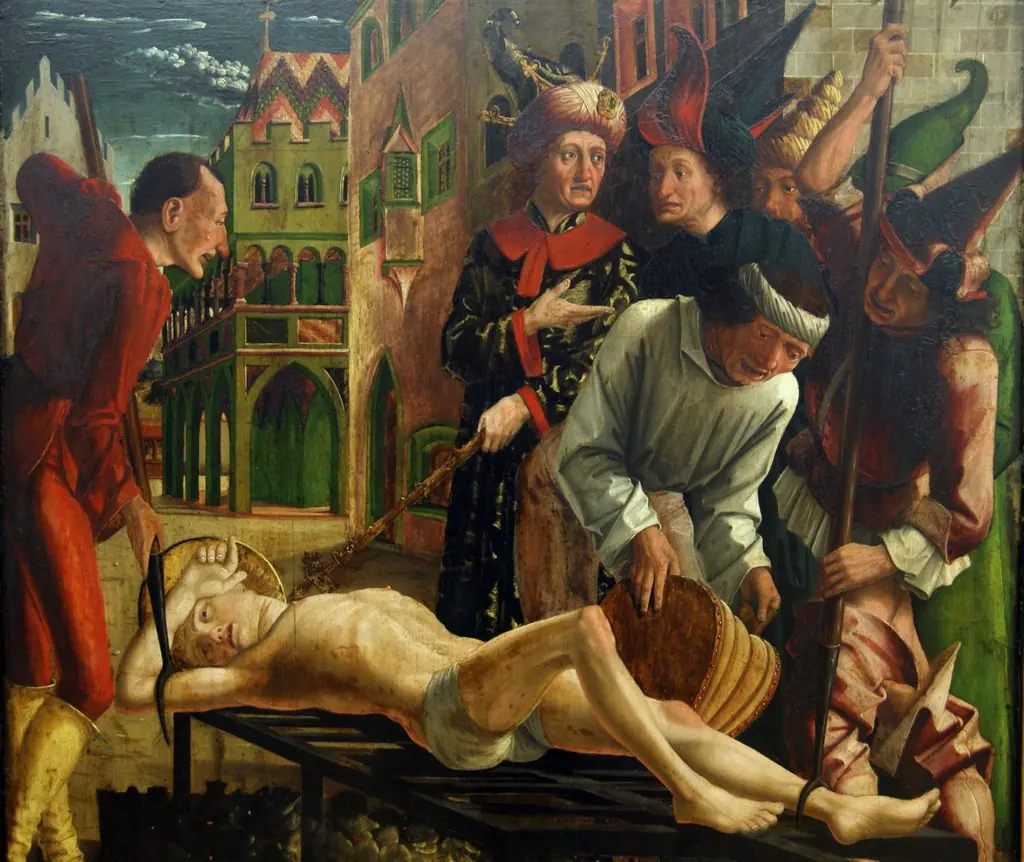 The Martyrdom of St. Lawrence
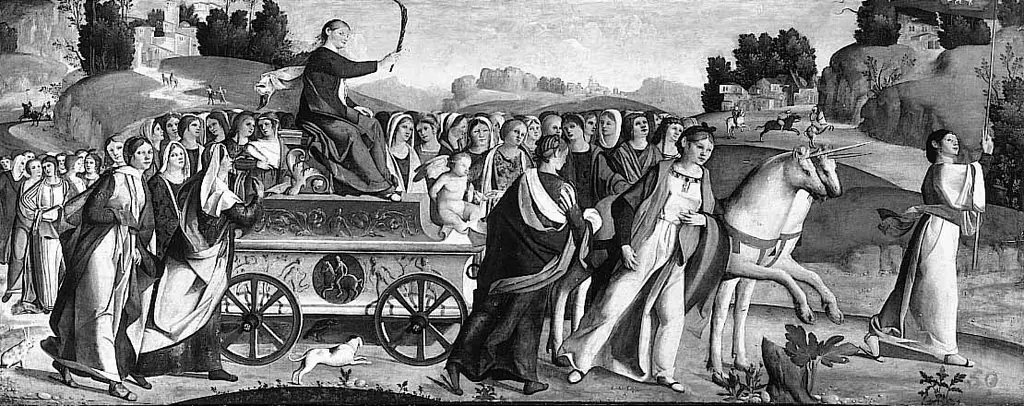 Triumph of castity
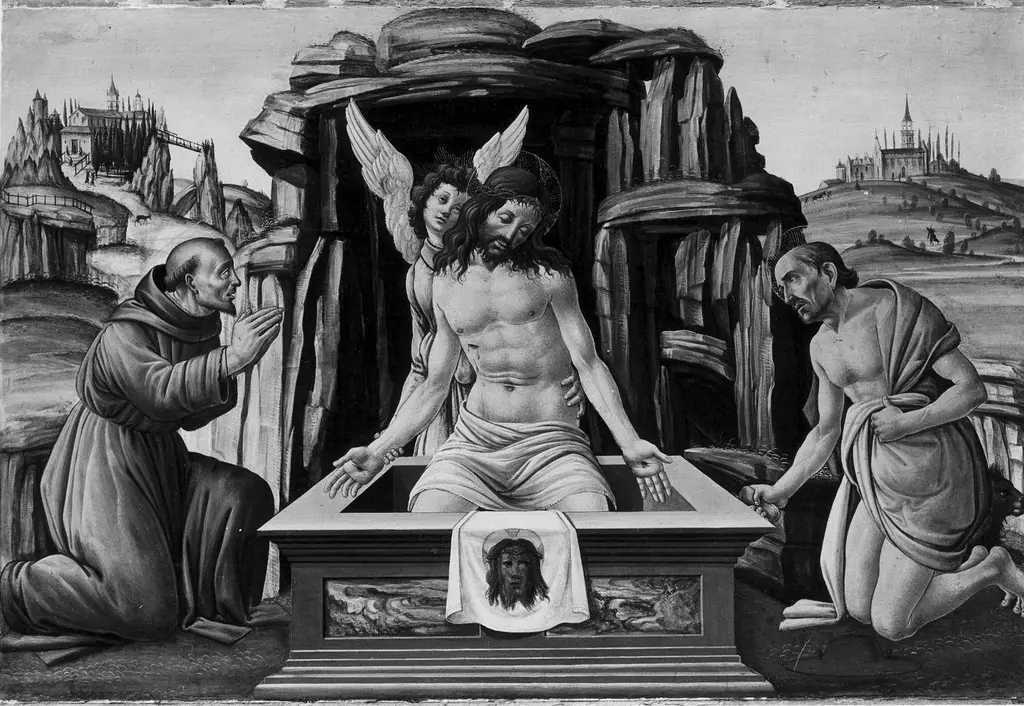 Christ in the tomb
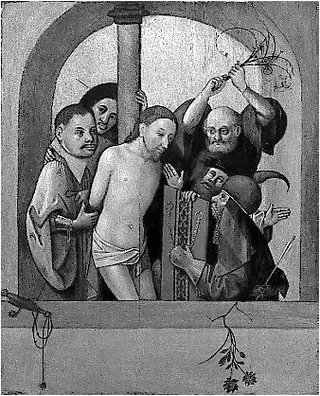 The Flagellation of Christ
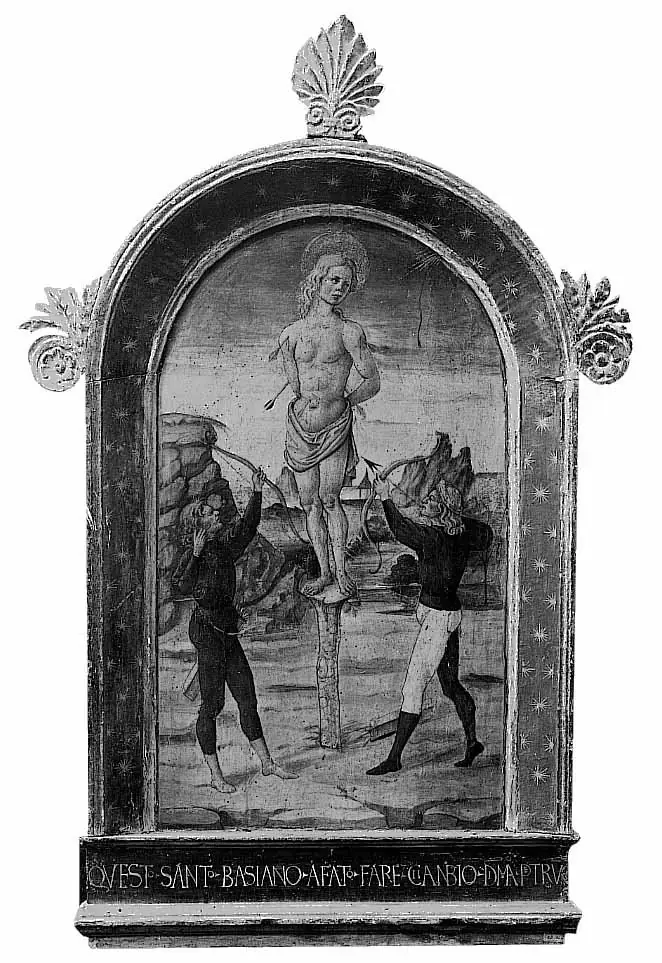 The Martyrdom of St. Sebastian
 Geißelung Christi