Artwork
Victoria Eugenie of Battenberg
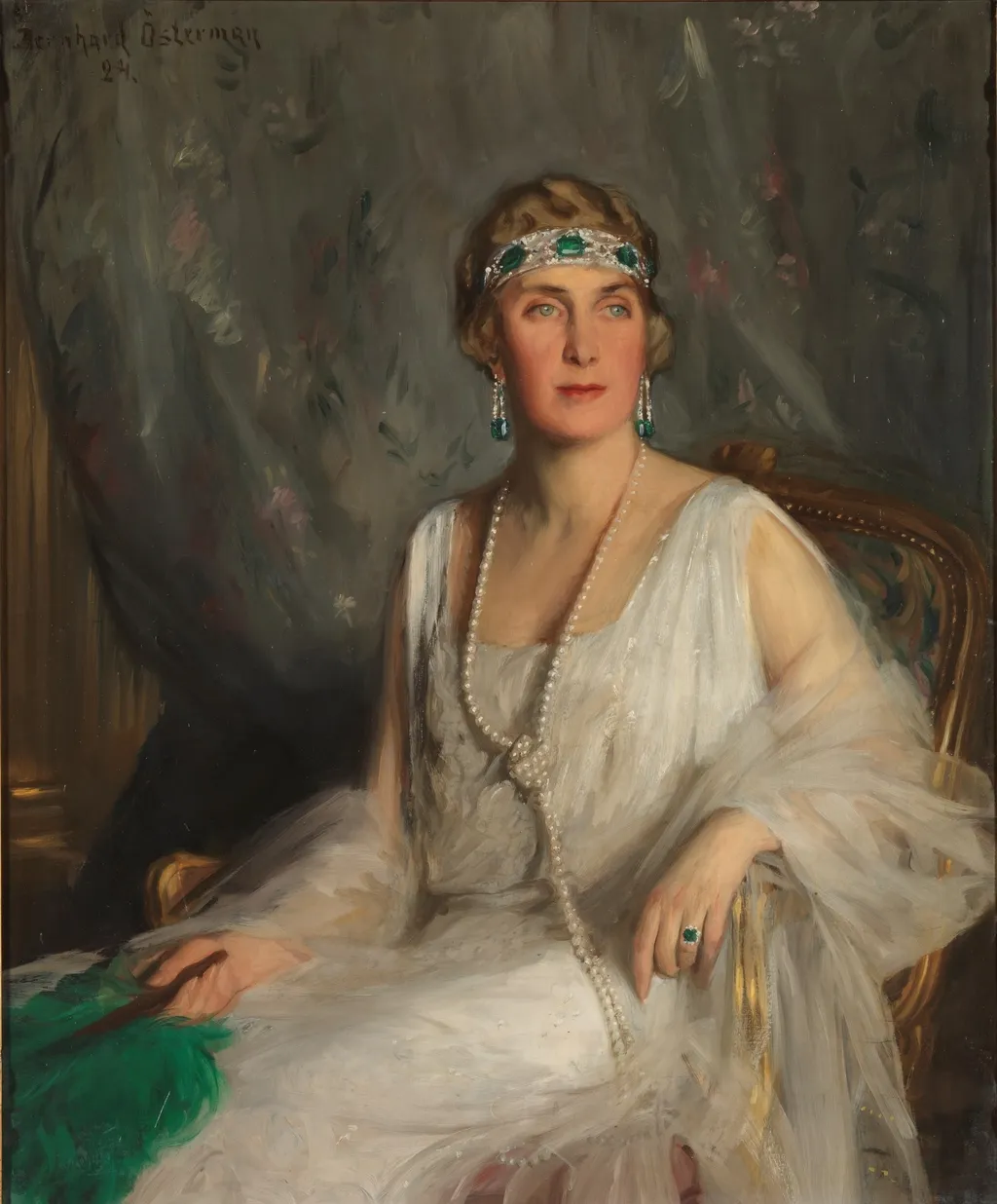
Victoria Eugenie of Battenberg is an oil painting by the Rococo painting artist Bernhard Österman. It dates from 1924 and is held in the collection of the Museo del Prado.
About this work
Subject & Meaning
The fan and jeweled elements function as visual cues to her noble status and the cultural significance of courtly display in early twentieth‑century Spain.
The painting portrays Victoria Eugenie of Battenberg wearing a hand fan and a gemstone‑embellished garment, symbols that reference her aristocratic lineage and the ceremonial role of European royal women. The fan and jeweled elements function as visual cues to her noble status and the cultural significance of courtly display in early twentieth‑century Spain. Rendered in oil on canvas, the work underscores the intersection of personal identity and aristocratic symbolism within the portrait genre.
Technique & Style
Executed in 1924 by Bernhard Österman, this portrait utilizes oil paint applied to a canvas support. The work measures 102 cm in height and 84 cm in width. As a formal portrait, the composition depicts Victoria Eugenie of Battenberg holding a hand fan and wearing gemstones, adhering to the conventions of the genre.
History & Provenance
The painting is part of the Museo del Prado collection and is accessioned under the museum's inventory system, though the specific accession number is not provided in the sources. It has been exhibited in the museum's galleries as part of its portrait holdings, reflecting its significance within the institution's decorative arts displays.
Overview
Bernhard Österman’s 1924 oil portrait presents Victoria Eugenie of Battenberg seated gracefully in a darkened interior. She is attired in a flowing white gown embellished with beadwork, a tiara, and an array of pearl jewelry, while holding a delicate hand‑fan and a gemstone. The composition is signed by the artist in the upper left and now forms part of the Museo del Prado’s holdings.
Context
The portrait reflects early‑20th‑century interest in historicist styles, reviving Rococo aesthetics to portray contemporary royalty. Victoria Eugenie, a member of European high society, is depicted in a manner that aligns with earlier court portraiture, merging modern sensibilities with a nostalgic visual language.
Own this work as a print
Artist & collection
Artist
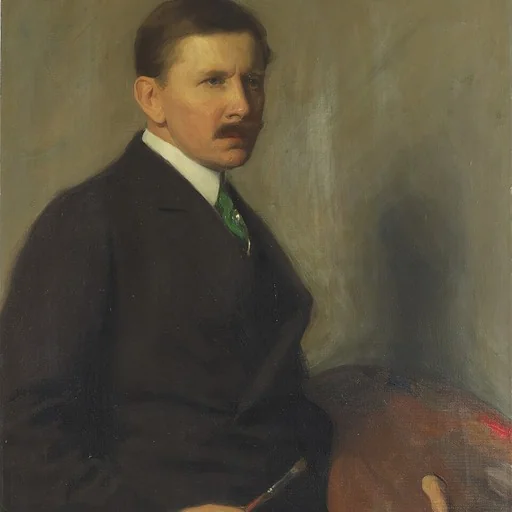
Gustaf Bernhard Österman (11 January 1870, in Västra Vingåker Parish, Södermanland – 10 March 1938, in Stockholm) was a Swedish painter, illustrator and curator. His twin brother, Emil, was also an artist.

- Portrait of Elizabeth Gottschalk de Hirsch
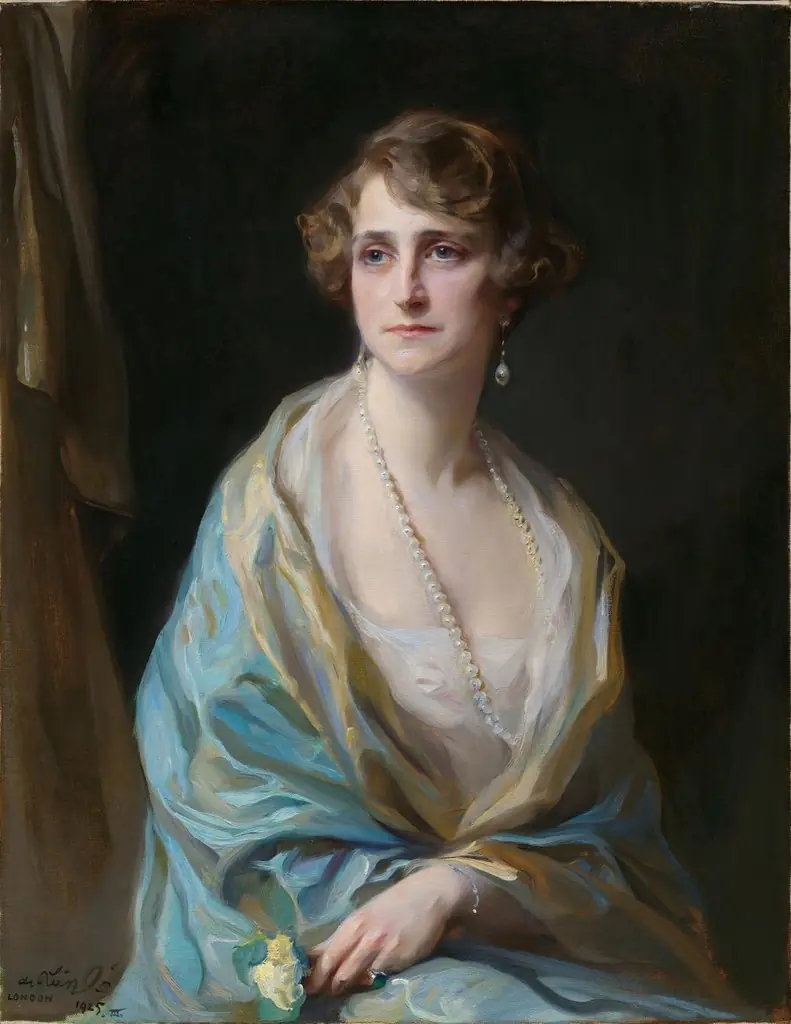 Portrait of Clarice de Rothschild
 María de los Ángeles Beruete y Moret condesa viuda de Muguiro
 Portrait of Cecilia Tower
 Portrait of Mrs N.S. Falla
 Portretul Reginei Maria
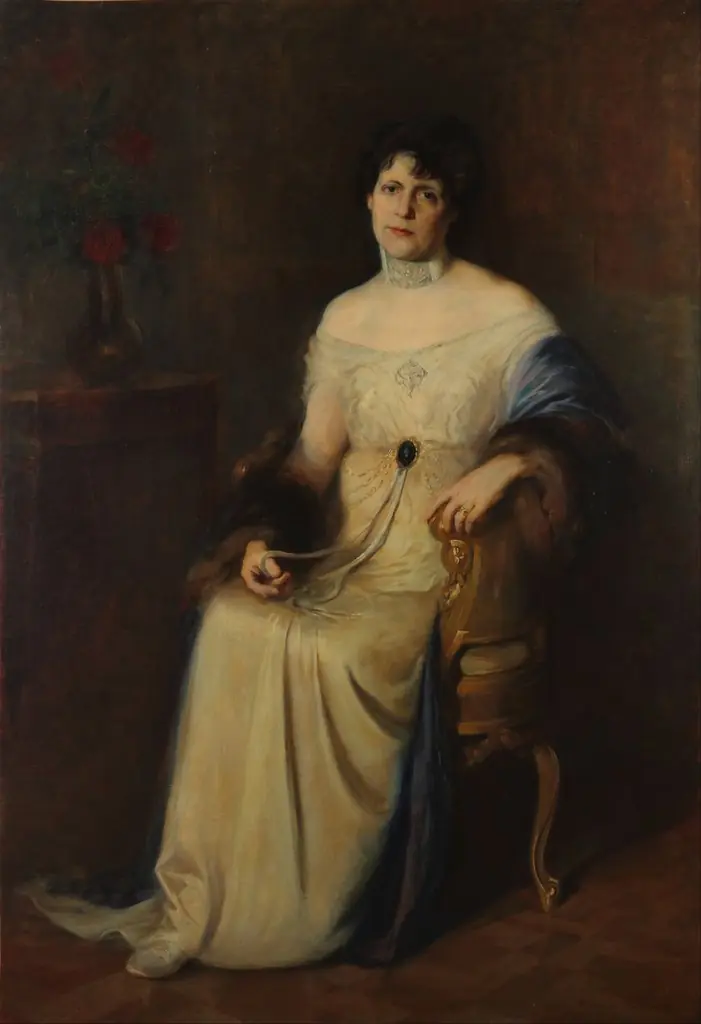 Retrato de la esposa del autor
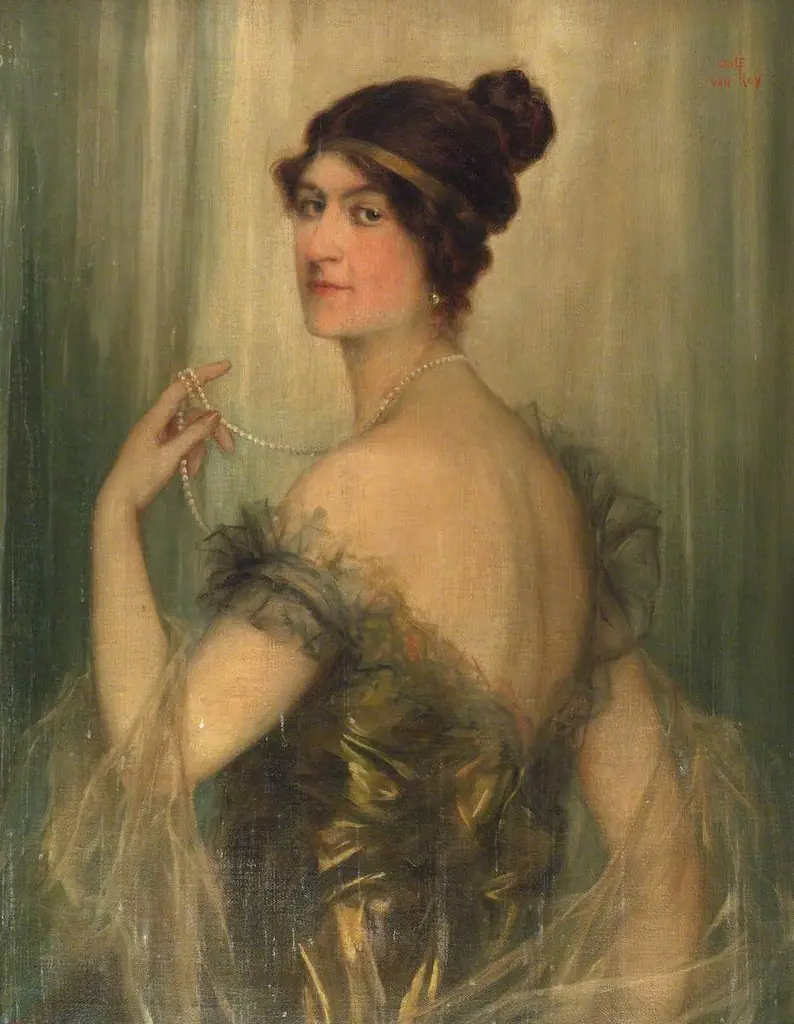 Isobelle Humphreys-Owen
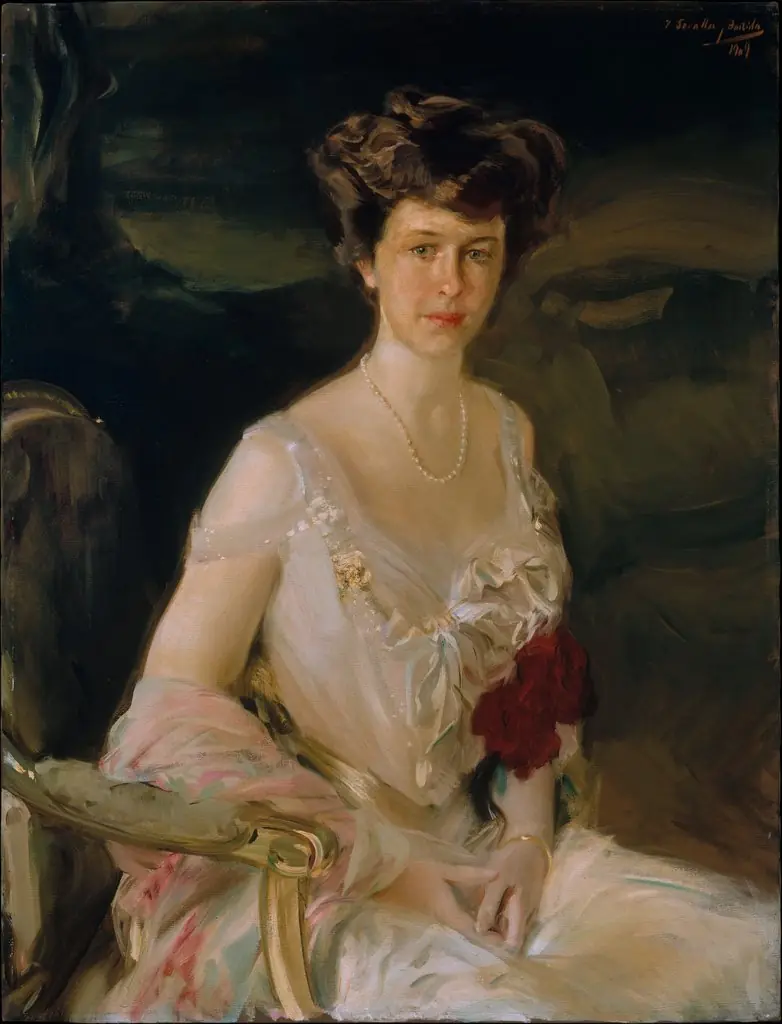 Mrs. Winthrop W. Aldrich (Harriet Alexander, 1888–1972)
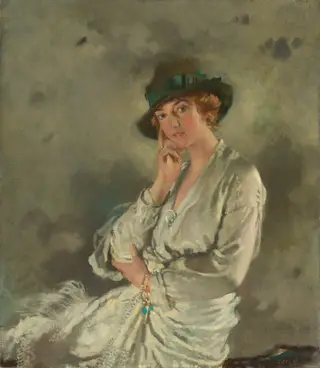 Mrs. Charles S. Carstairs
 V.A. Morozova
 Portrait of Princess Z.N. Yusupova