Artwork
Molly Wales Fobes
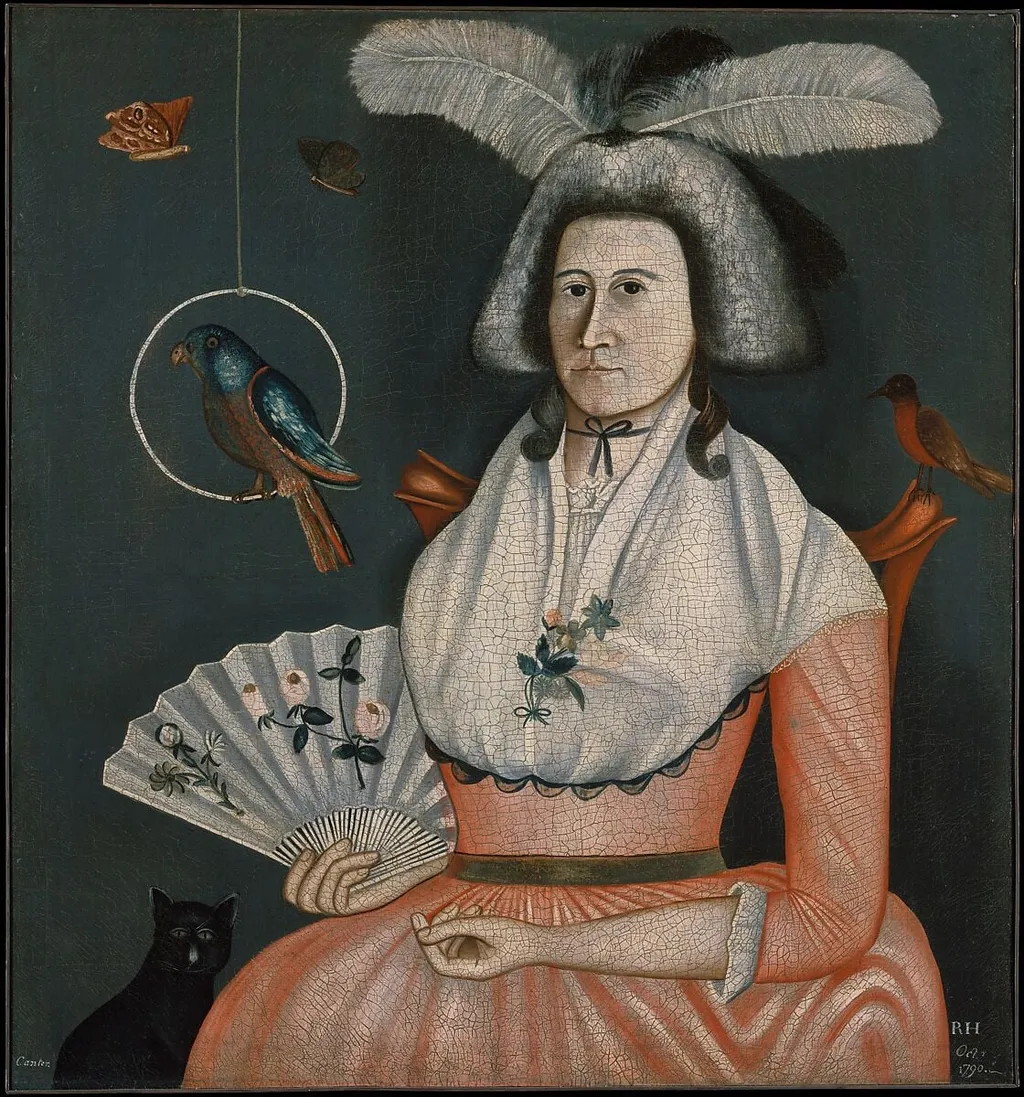
Molly Wales Fobes is an oil painting by the American Folk Art artist Rufus Hathaway. It dates from 1790 and is held in the collection of the Metropolitan Museum of Art.
About this work
Also called Lady with Her Pets, it is Hathaway's earliest known work and reached the Met in 1963 as a Garbisch gift.
A twenty-year-old Rufus Hathaway painted Molly Wales Fobes in 1790, seated in a Chippendale chair with her cat, two birds, and mothlike insects arranged around her like emblems. Two large ostrich feathers crown her French-style coiffure, and flowers on her fan and bodice signal refinement. Also called Lady with Her Pets, it is Hathaway's earliest known work and reached the Met in 1963 as a Garbisch gift.
Overview
Rufus Hathaway painted "Molly Wales Fobes," an oil on canvas portrait, in 1790 when he was twenty years old. This work, also known as "Lady with Her Pets," represents Hathaway's earliest documented artistic endeavor. The painting depicts Molly Wales Fobes of Raynham, Massachusetts.
It was later acquired by The Metropolitan Museum of Art in 1963, entering the collection as a gift from prominent folk-art collectors Colonel Edgar William and Bernice Chrysler Garbisch.
Subject & Meaning
The portrait features Molly Wales Fobes seated formally in a Chippendale-style chair, adorned in fashionable attire. Her French-inspired coiffure, embellished with large ostrich feathers, a rose-decorated fan, and floral bodice details, conveys a sense of sophistication. Arranged around her are a cat, two birds, and a pair of moths, forming an almost emblematic composition.
These creatures likely symbolize beauty, loyalty, and affection, potentially also referencing her father's profession as a professor of Natural and Experimental Philosophy.
Technique & Style
Hathaway, who had no documented artistic training and is believed to have been self-taught, possibly after working as a ship-carver or decorative specialist, demonstrates a distinctive style in this early work. The painting exhibits flattened spatial rendering, bold patterns, and details that are both naive and keenly observed. Hathaway's approach suggests an interpretation of European print conventions and the influence of sophisticated portraitists like John Singleton Copley, translated into a unique provincial American folk idiom.
History & Provenance
This portrait holds significance as Rufus Hathaway's earliest known work, painted in 1790. Its journey into a major institutional collection culminated in 1963 when The Metropolitan Museum of Art acquired it. The painting was a generous gift from Colonel Edgar William and Bernice Chrysler Garbisch, renowned collectors whose contributions were instrumental in building the museum's holdings of American folk art.
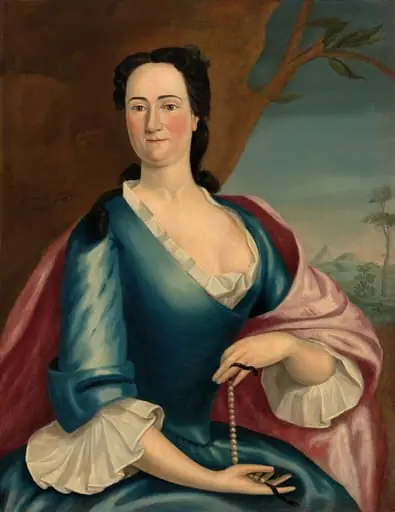
Artist & collection

Artist
Rufus Hathaway (1770–1822) was an American medical doctor and folk art painter. He lived in southern Massachusetts, where he painted numerous portraits between 1790 and 1795. He later studied medicine and established…

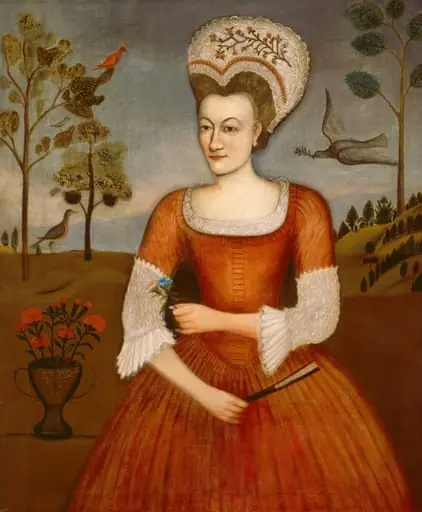 Catharine Hendrickson
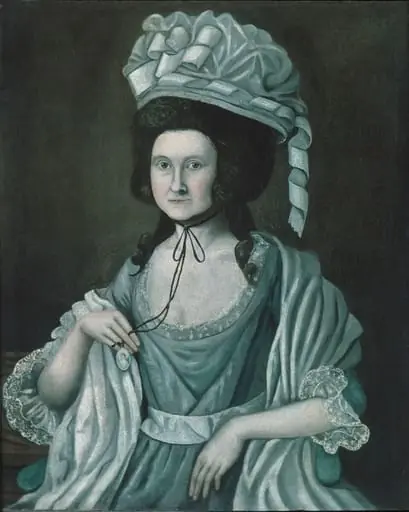 Sally Sanford Perit
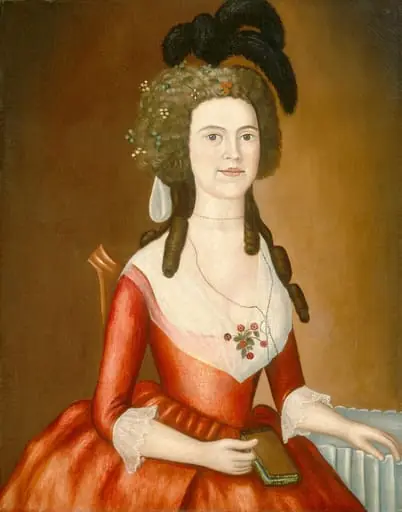 Elizabeth Denison
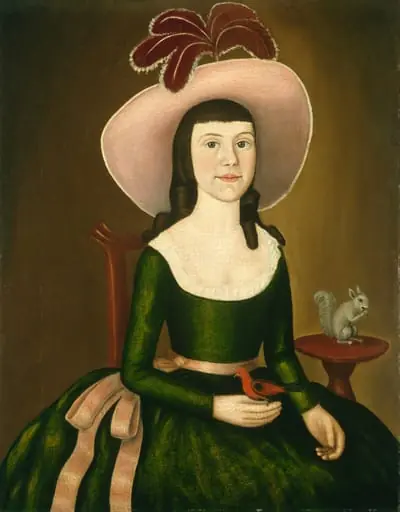 Miss Denison of Stonington, Connecticut (possibly Matilda Denison)
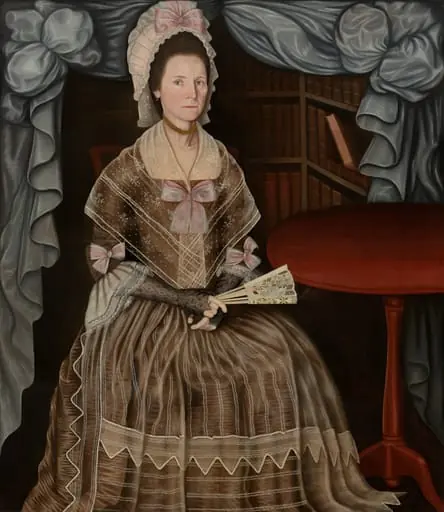 Mrs. Samuel Chandler
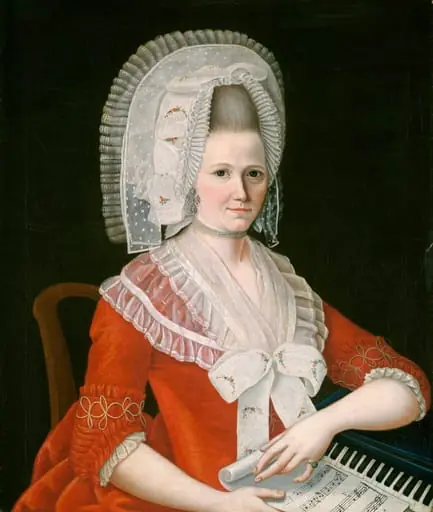 Lady Wearing a Large White Cap
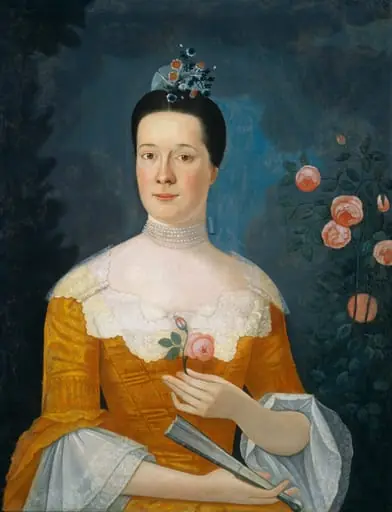 Mrs. John Lothrop
 Young Lady with a Rose
 Emma Homan
 Mrs. Patrick Henry (Dorothea Dandridge)
 Portrait of a lady of the Krasuski family
- Elizabeth Fulford Welshman