Artwork
Portrait of a Lady with an Ostrich-Feather Fan
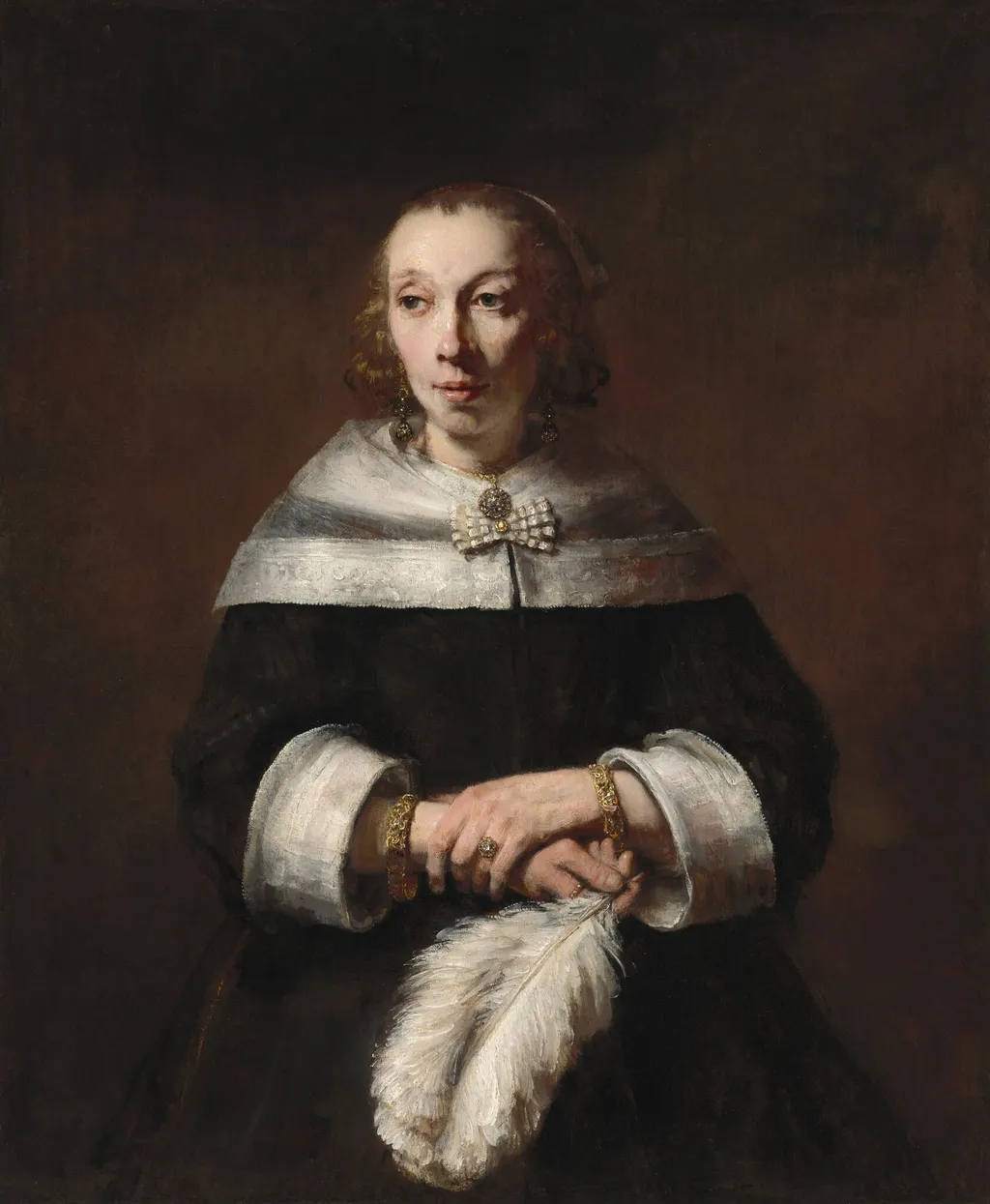
Portrait of a Lady with an Ostrich-Feather Fan is an oil painting by the Baroque artist Rembrandt van Rijn. It dates from 1657 and is held in the collection of the National Gallery of Art.
About this work
Subject & Meaning
Thus the portrait represents not merely a likeness but an embodiment of virtuous, dignified demeanor typical of mid-17th-century Dutch portraiture.
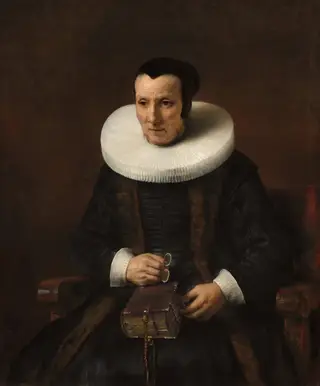
The painting depicts Margrieta Wijnants, a Dutch woman who served as a housekeeper before marrying the mathematician Frans van Schooten; it was created as a pendant to a portrait of her husband. The work conveys a reserved, serious character through its composition: the subject's lowered gaze and hands resting one upon the other suggest composure, while the dark background and controlled lighting emphasize her psychological presence. Her costume, rich yet not ostentatious, with a translucent lace collar and modest jewelry, denotes an austere sobriety.
The ostrich-feather fan, a fashionable accessory, further reinforces this restrained elegance rather than overt luxury. Thus the portrait represents not merely a likeness but an embodiment of virtuous, dignified demeanor typical of mid-17th-century Dutch portraiture.
Technique & Style
The portrait, executed in oil on a canvas support that has been transferred to a new canvas, demonstrates Rembrandt's late-style emphasis on chiaroscuro and tactile brushwork. A dark, nondescript background and subtle light modulation direct attention to the sitter's psychological presence. The handling is deliberately summary, with translucent fabric, lace trim, and ostrich feathers rendered in loose, suggestive strokes that prioritize texture over fine detail.
Dimensions are 99.5 × 83 cm. This technique creates a restrained but rich materiality, characteristic of Rembrandt's mature portraiture.
History & Provenance
This portrait by Rembrandt dates to 1656 or the period 1656–1658. It depicts Margrieta Wijnants, who is believed to have been a household attendant and subsequently the wife of the mathematician Frans van Schooten; the painting was executed as a pendant to Rembrandt’s portrait of van Schooten. The earliest known provenance possibly links the work to Gerard Hoet Jr. at a 1760 auction.
By 1803 the painting belonged to Prince Nicolai Borisovich Yusupov in Russia, and it descended through the Yusupov family, first to his son Boris, then to his grandson Nicolai, and finally to his great-granddaughter Zinaida. After the Russian Revolution, Zinaida’s son Prince Felix Yusupov encountered financial difficulties and sold the painting in 1921 to collector Joseph E. Widener. It entered the National Gallery of Art, Washington, in 1942 as part of the Widener collection.
The painting is held at the National Gallery of Art in Washington, D.C. (accession information not provided in the sources). It entered the museum as a gift in 1942 from the estate of Peter A. B. Widener, via funds provided by Joseph E. Widener. Its exhibition history includes the Rembrandt exhibition held in Amsterdam in 1898, while it was still in the Yusupov collection. More recently, it was included in the 'Late Rembrandt' exhibition.
Overview
This painting, titled "Portrait of a Lady with an Ostrich-Feather Fan," depicts a woman in elaborate attire. Executed in oil on canvas, the work presents a serious figure holding a distinctive fan, an accessory indicative of her social standing. The composition reflects the artistic conventions of portraiture from its period, focusing on the sitter's presence and the details of her luxurious garments. The medium was later transferred from its original support.
Own this work as a print
Artist & collection

Artist
Rembrandt Harmenszoon van Rijn, known mononymously as Rembrandt, was a Dutch Golden Age painter, printmaker, and draughtsman.

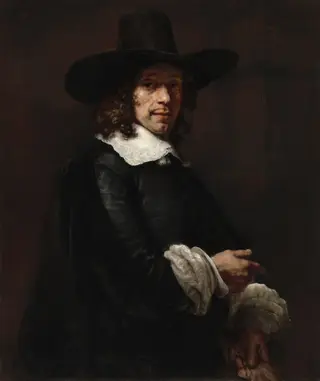
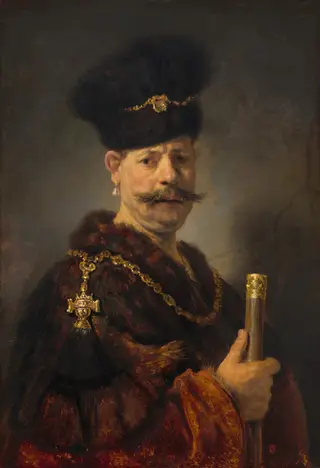
- Portrait of a Lady
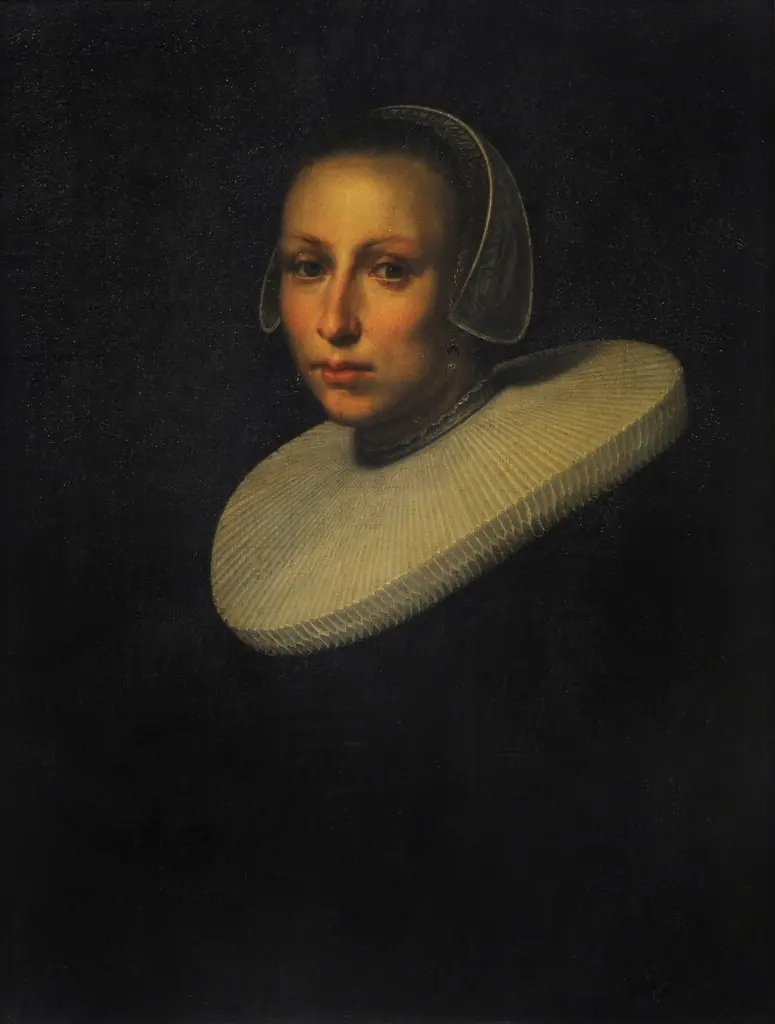 Portrait of a Lady
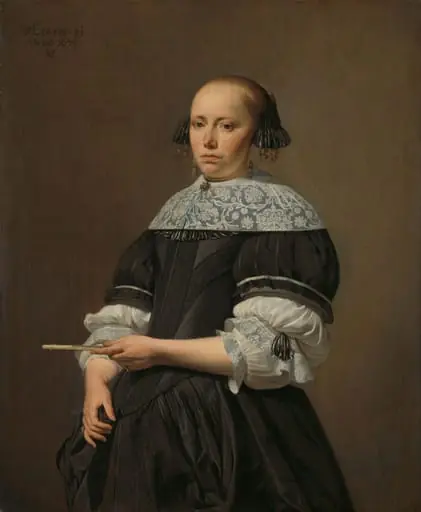 Portrait of Elisabeth Pietersdr Kessels (1640-1717)
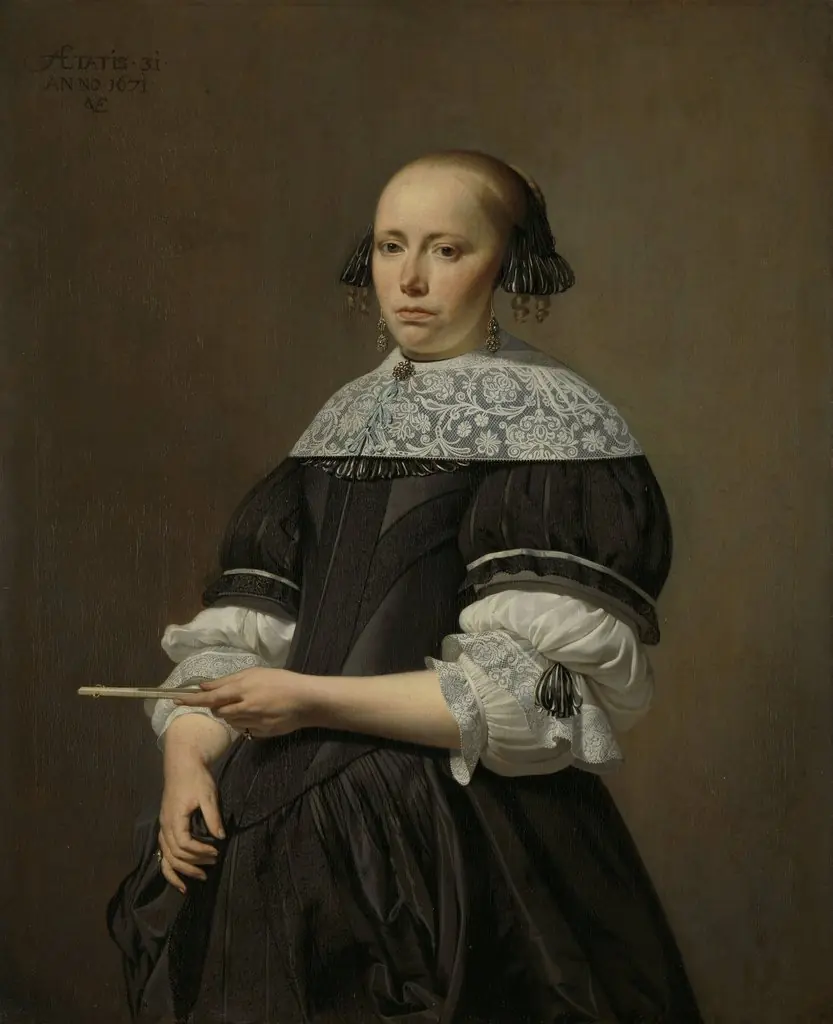 Elisabeth van Kessel (1640-1717). Wife of Willem Jacobsz Baert
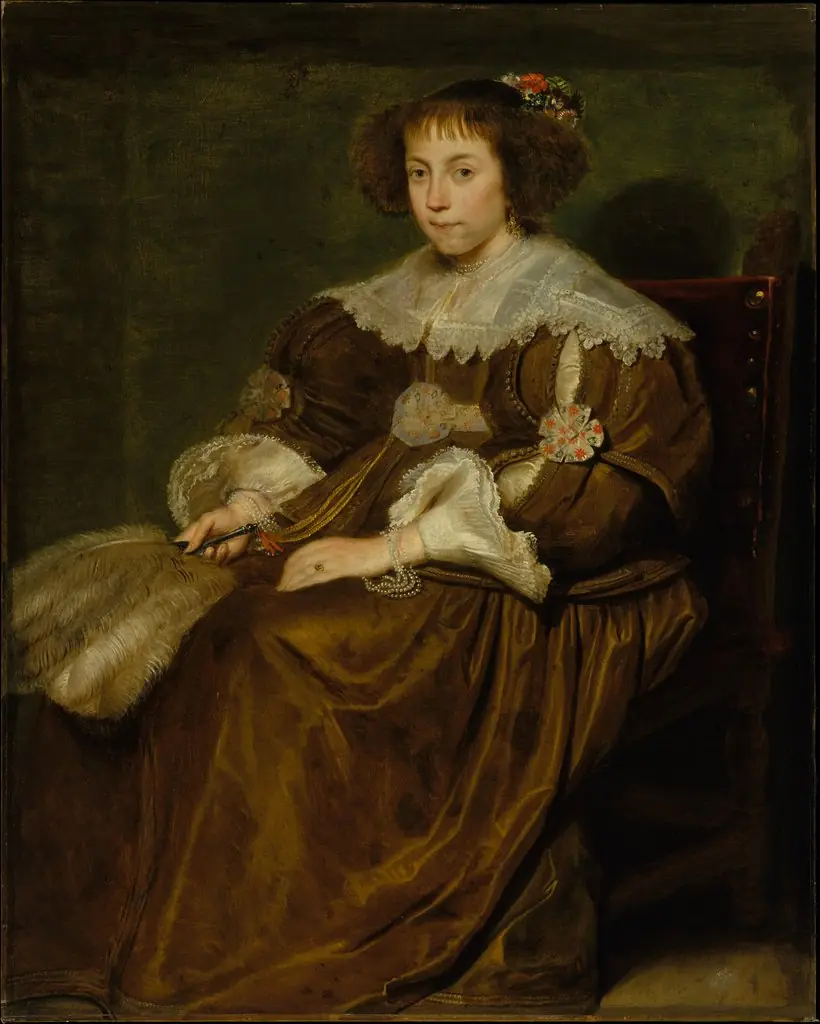 Portrait of a Young Woman
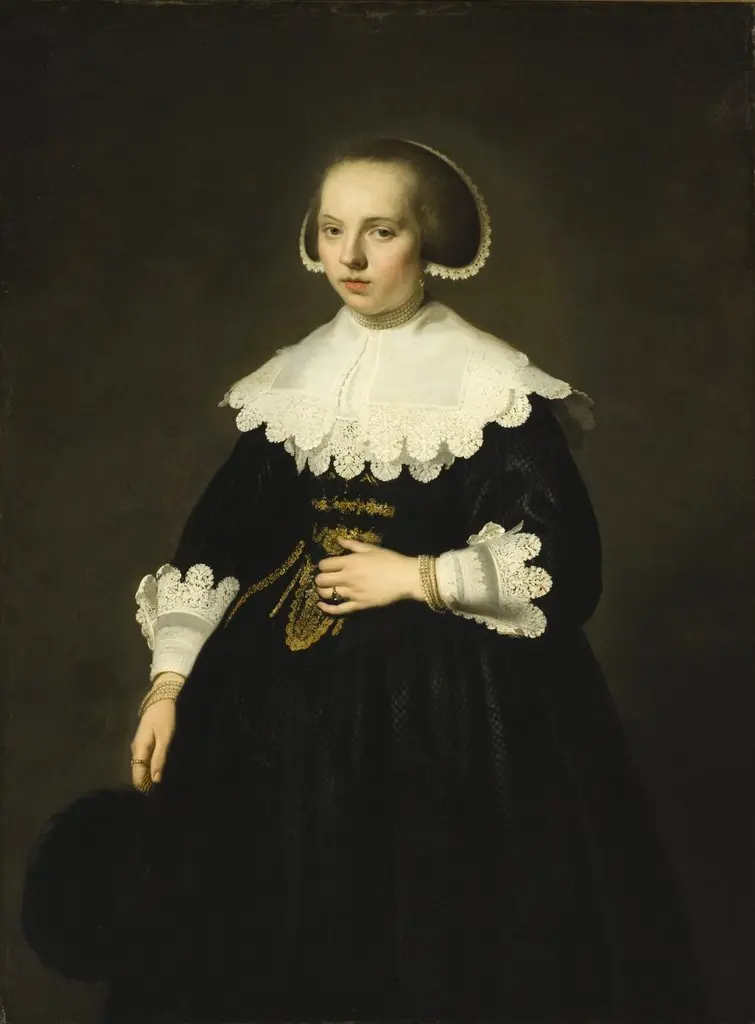 Portrait of a Young Woman
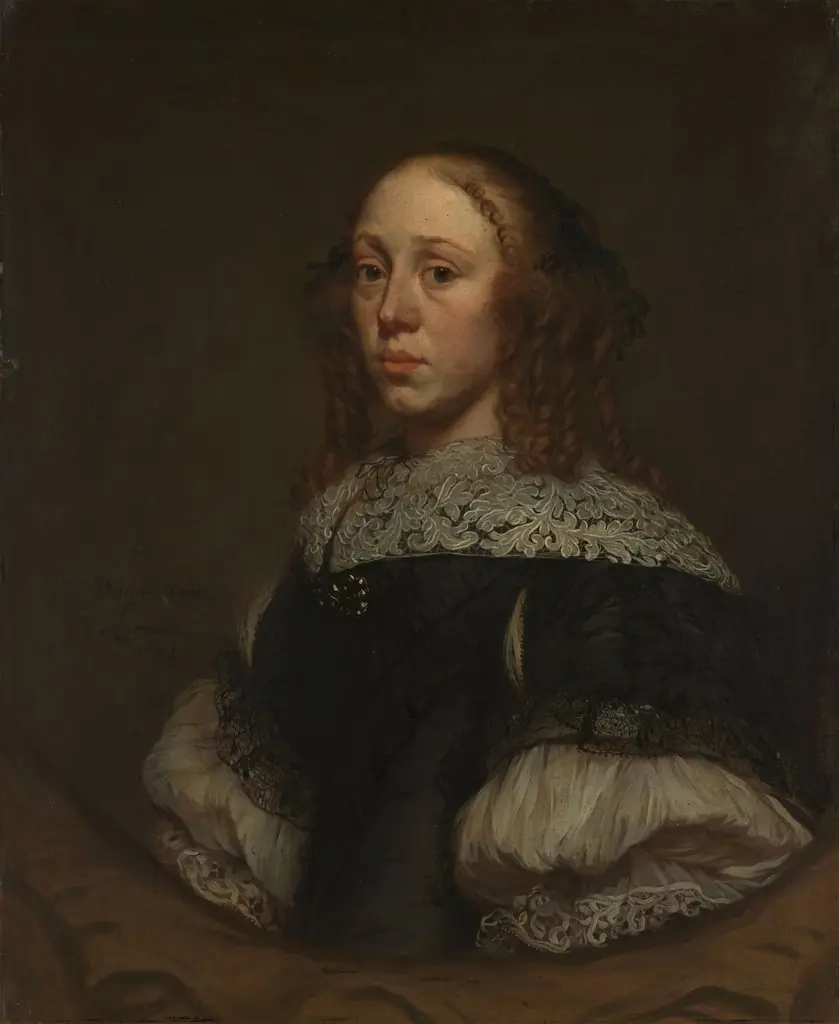 Portrait of a woman
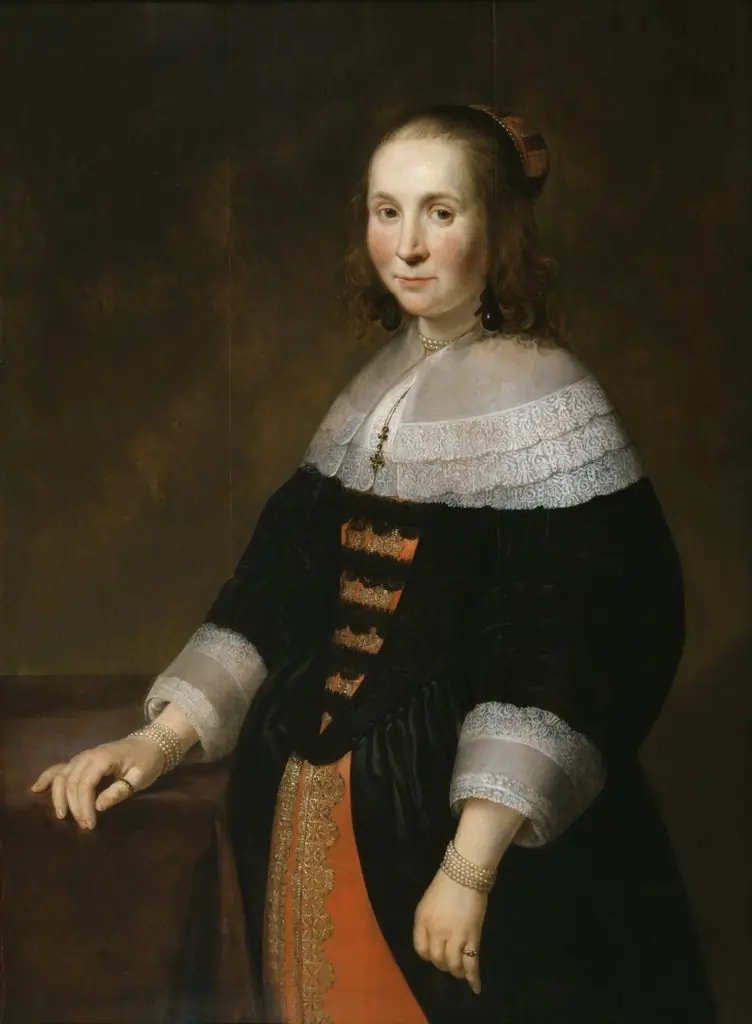 Portrait of a Wife
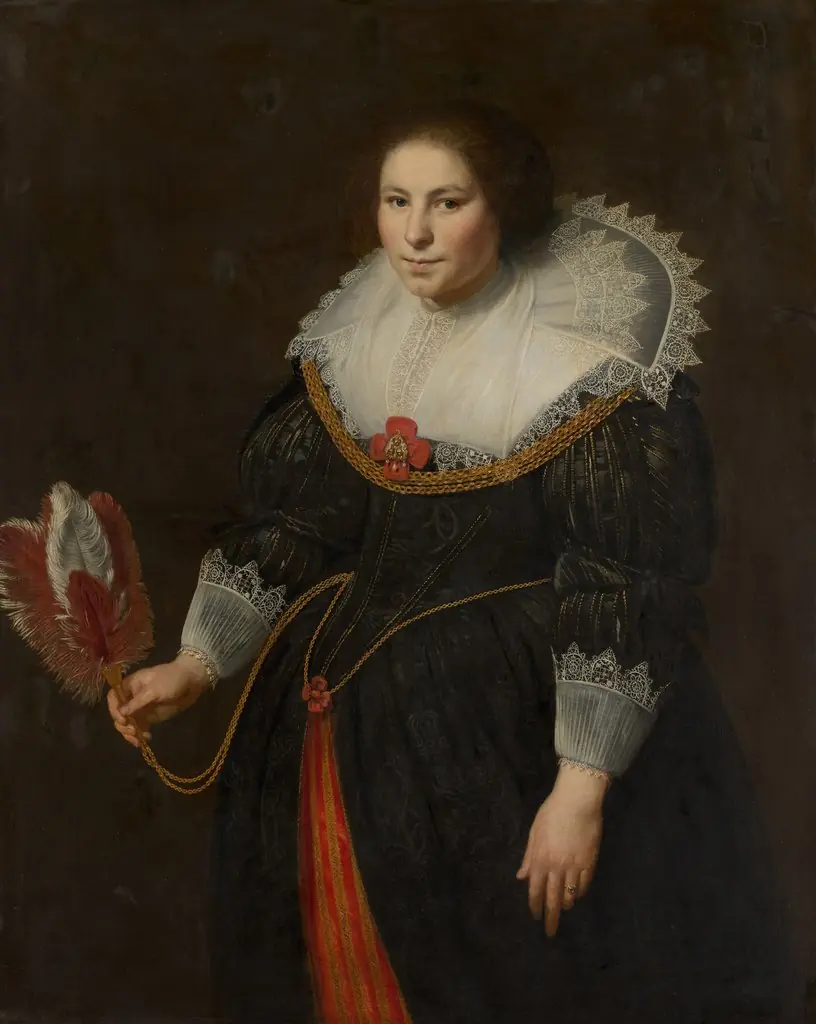
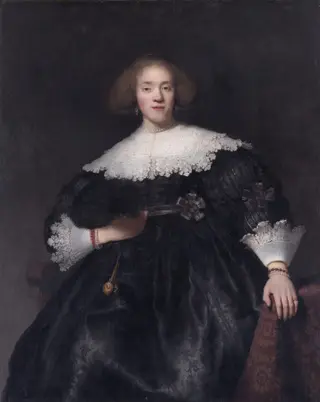 Portrait of a Young Woman with a Fan
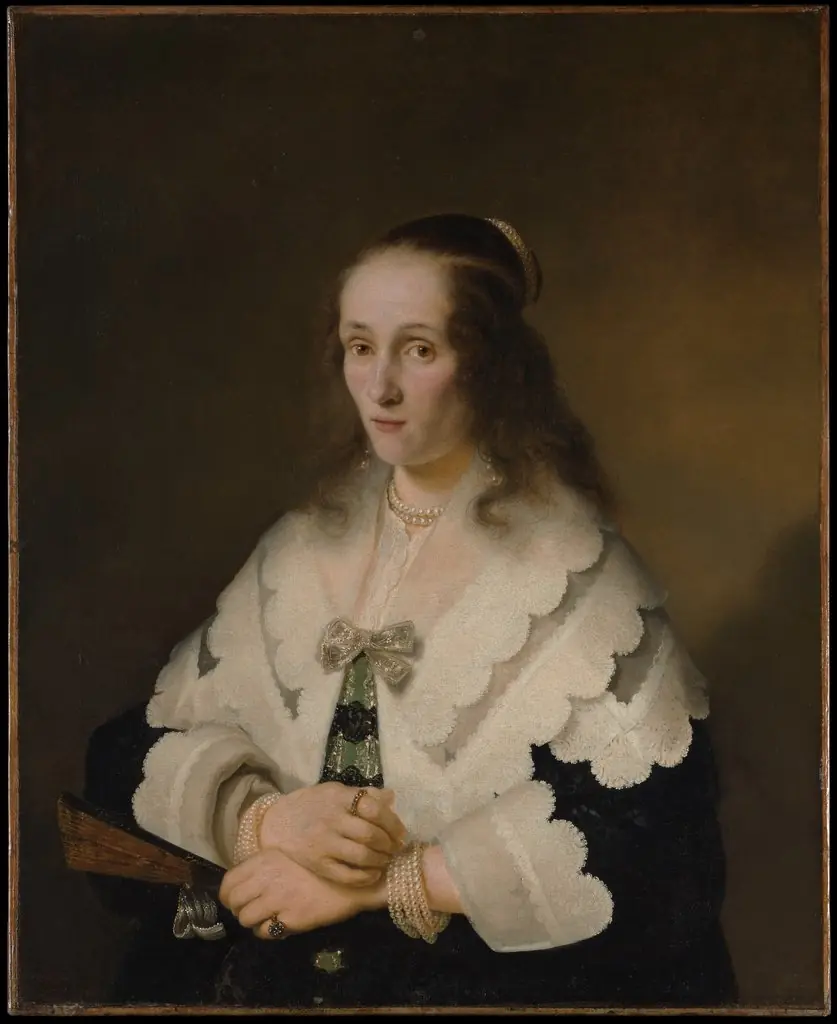 Portrait of a Woman
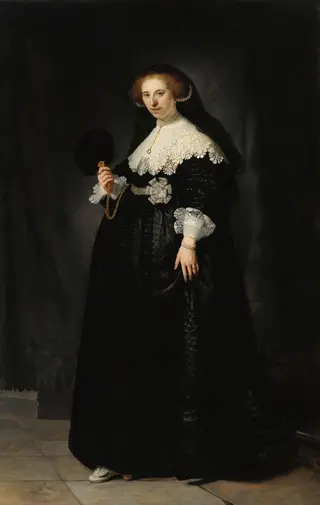 Portrait of Oopjen Coppit
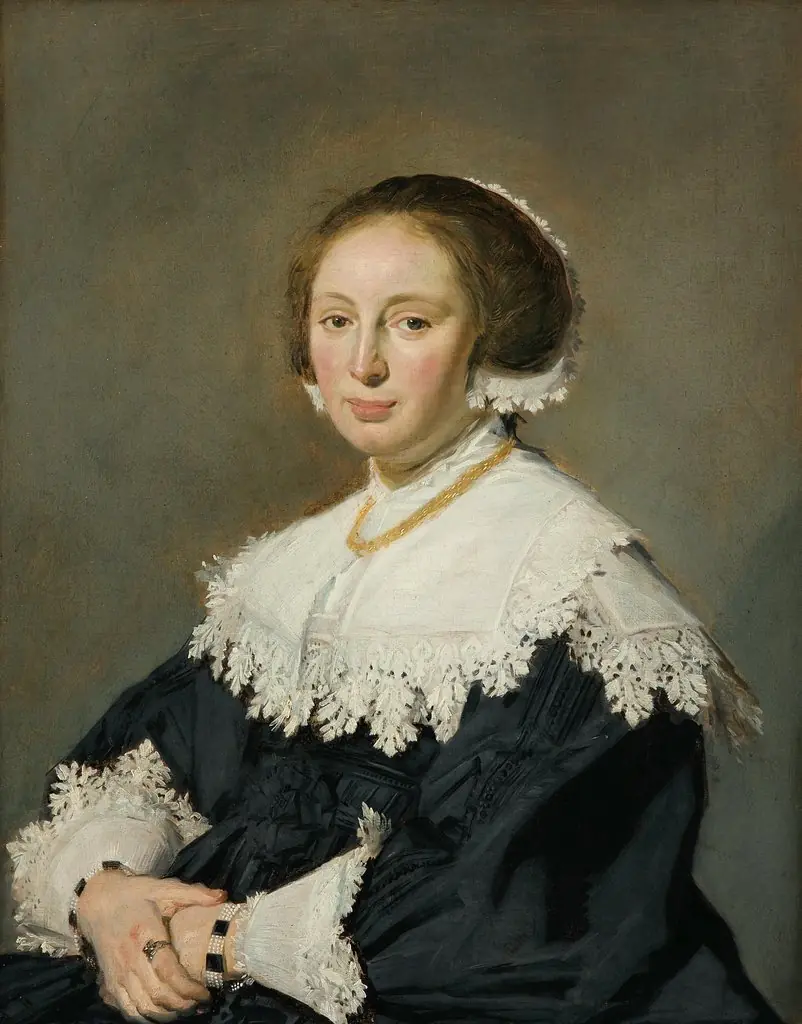 Portrait of a Woman