Artwork
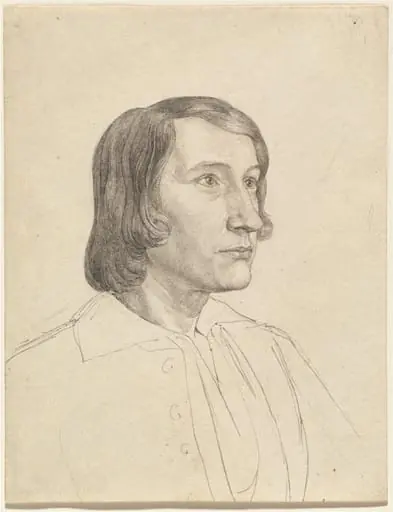
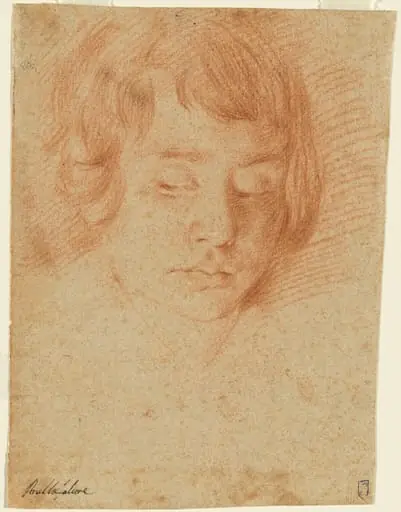
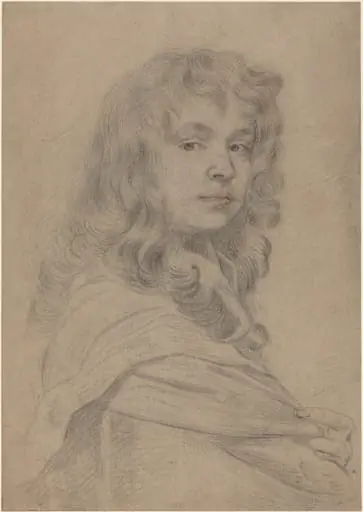
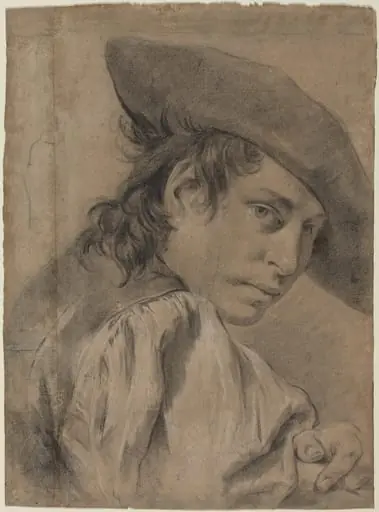
Portrait of a Young Man
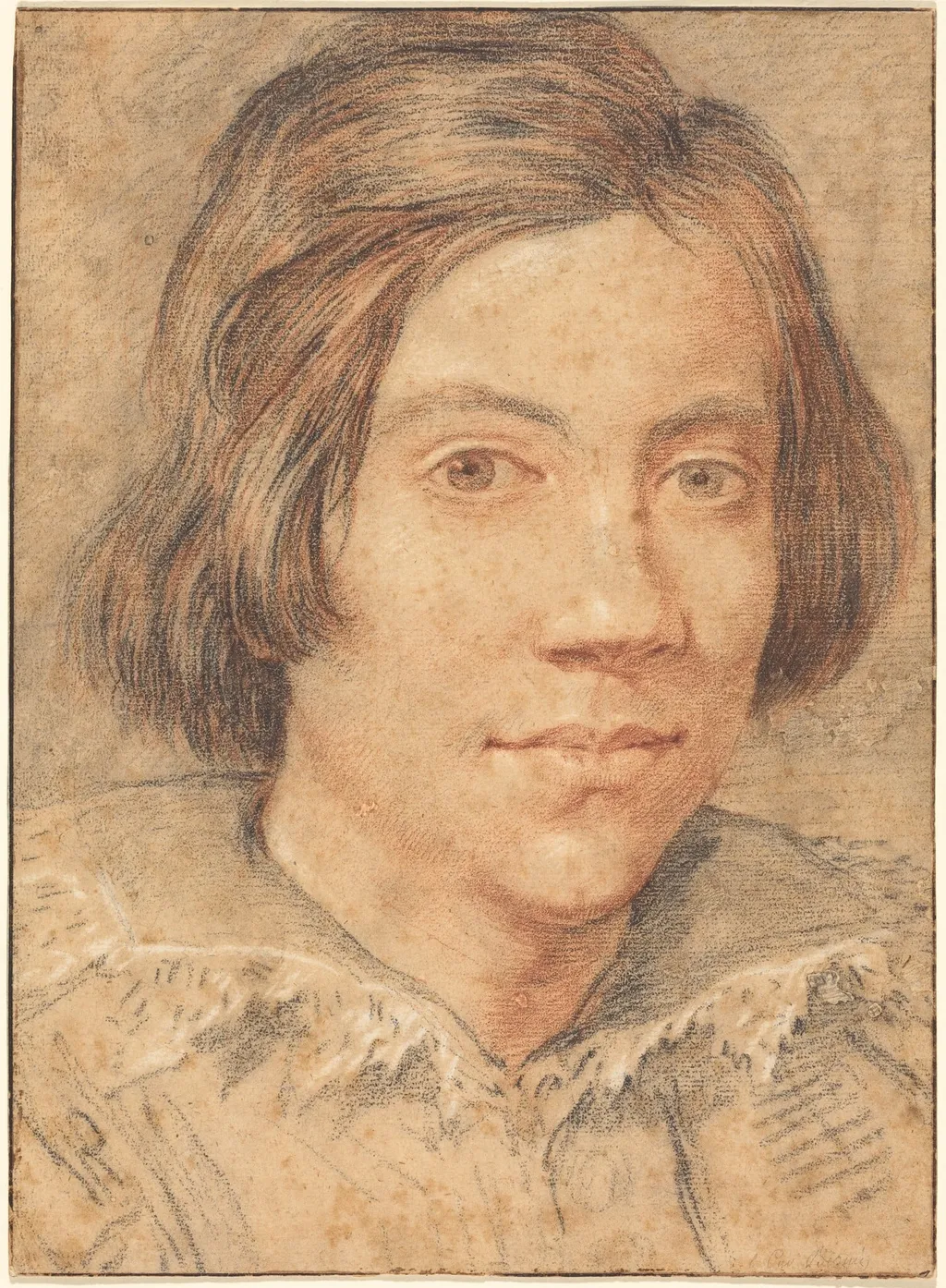
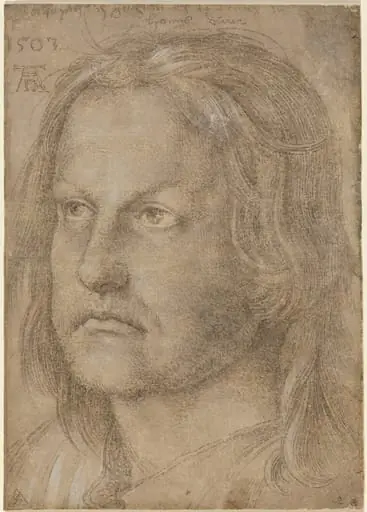
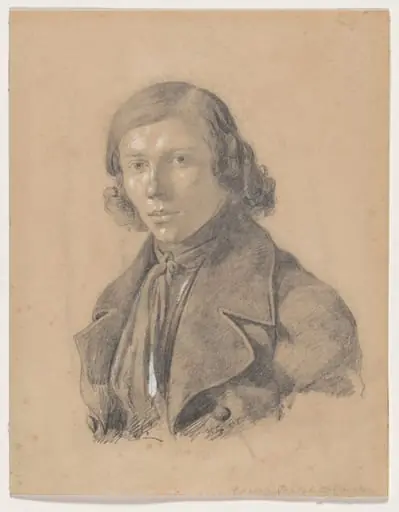
Portrait of a Young Man is a chalk drawing by the Baroque artist Gian Lorenzo Bernini. It dates from 1615 and is held in the collection of the National Gallery of Art.
- Inscription
- Inscribed:in unknown hand, lower right: da Cav. Bernini
About this work
Subject & Meaning
The subject is identified simply as a man or youth, focusing on the individual's likeness rather than allegorical meaning.
The work depicts a man or youth, rendered as a portrait of a young male figure. Created by Gian Lorenzo Bernini around 1615 (with some sources citing 1623–1624), the drawing presents a straightforward representation of a young man without explicit narrative iconography or complex symbolic attributes described in the available records. The subject is identified simply as a man or youth, focusing on the individual's likeness rather than allegorical meaning.
As a Baroque-era drawing executed in black, red, and white chalk, the piece serves primarily as a study of portraiture, capturing the appearance of the sitter rather than conveying a specific moral or mythological message.
Technique & Style
The drawing Portrait of a Young Man is executed in black and red chalk with white highlights on paper, reflecting Baroque drawing practice and Bernini's skill in rendering youthful features through layered chiaroscuro. The work functions as a preparatory study for sculpture, emphasizing three-dimensional form through gestural strokes and textured handling. Its condition remains stable, preserving the delicate tonal gradations characteristic of early 17th-century Italian portrait drawings.
The composition captures a youthful sitter with intense psychological presence, employing swift contour lines and directional shading that convey both immediacy and anatomical precision. These formal choices align with Bernini's broader Baroque aesthetic, where emotional depth emerges through dynamic mark-making rather than finished polish.
History & Provenance
The drawing entered the National Gallery of Art, Washington, in 1971 through purchase from Wildenstein and Company, New York, having previously formed part of the collection of Mr. and Mrs. Lester Francis Avnet of Great Neck, Long Island, who owned it from at least 1970.
The work has been dated by scholars to circa 1615, aligning it with Bernini’s early Roman practice. No record of a specific commission survives, and the sheet has been treated as an autonomous studio drawing rather than a preparatory study for a painted or sculpted commission.
The drawing is held by the National Gallery of Art, Washington, D.C., where it is recorded as accession number 1971.11.1.
It was acquired by the Gallery on 19 October 1971 from Wildenstein and Co., New York, having previously formed part of the collection of Mr. and Mrs. Lester Francis Avnet of Great Neck, Long Island, who had owned it since at least 1970.
Overview
Created around 1615, this drawing is attributed to Gian Lorenzo Bernini. It presents a young male figure rendered in profile, his head turned slightly toward the viewer, offering a concise study of youthful features.
Context
At the time of its creation, Bernini was emerging as a leading figure in Roman Baroque art. This drawing reflects his interest in anatomical observation and the study of form, preparatory habits that would later inform his monumental sculptural commissions.
Own this work as a print
Artist & collection

Artist
Gian Lorenzo Bernini turned marble into living skin. Born in Naples but raised in Rome, he grew up in the orbit of popes and cardinals who needed their images carved into eternity. He learned the tricks early, how light…