Artwork
Venus and Adonis
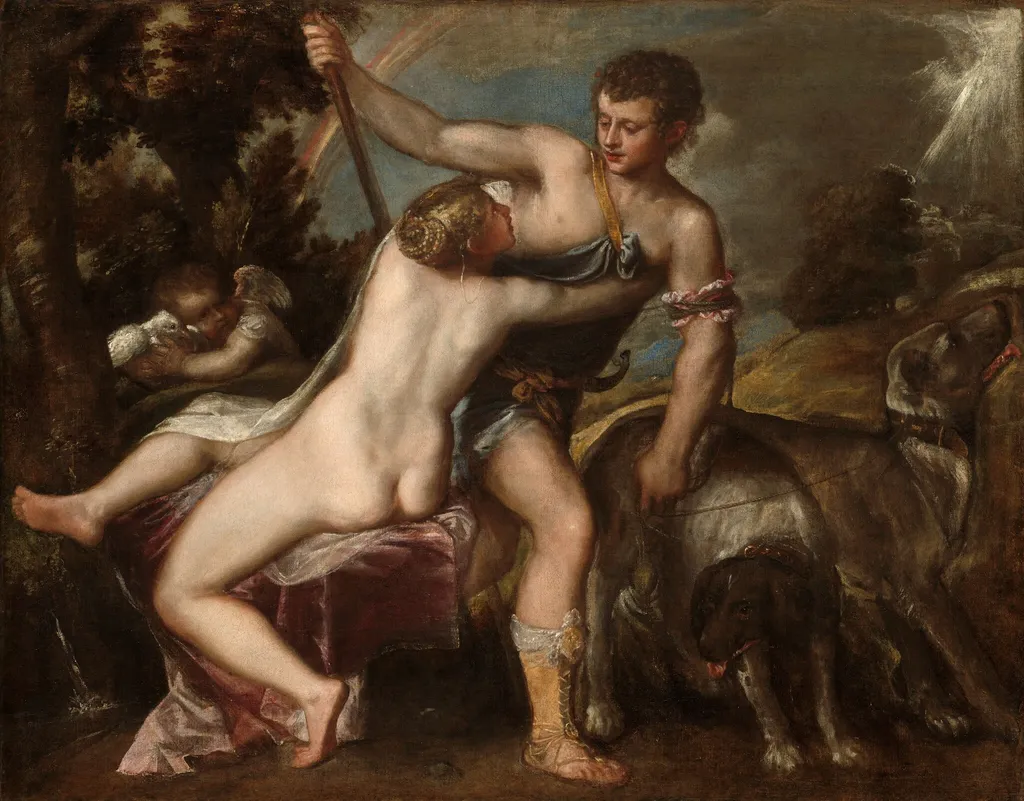
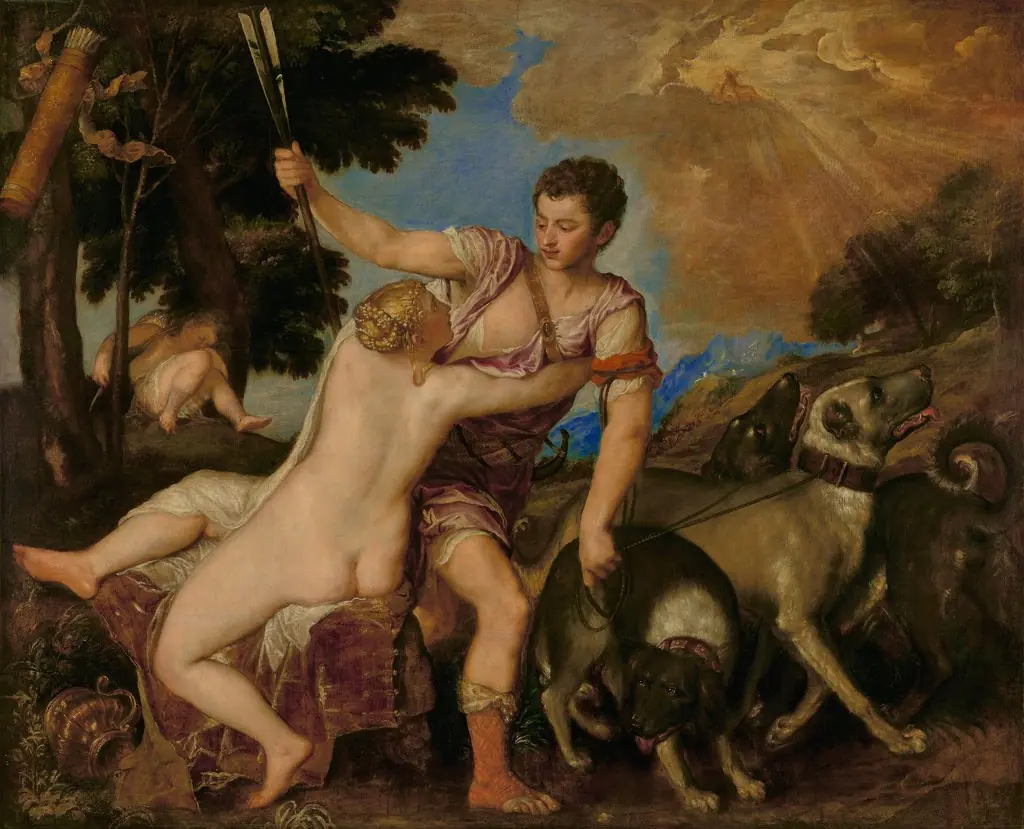
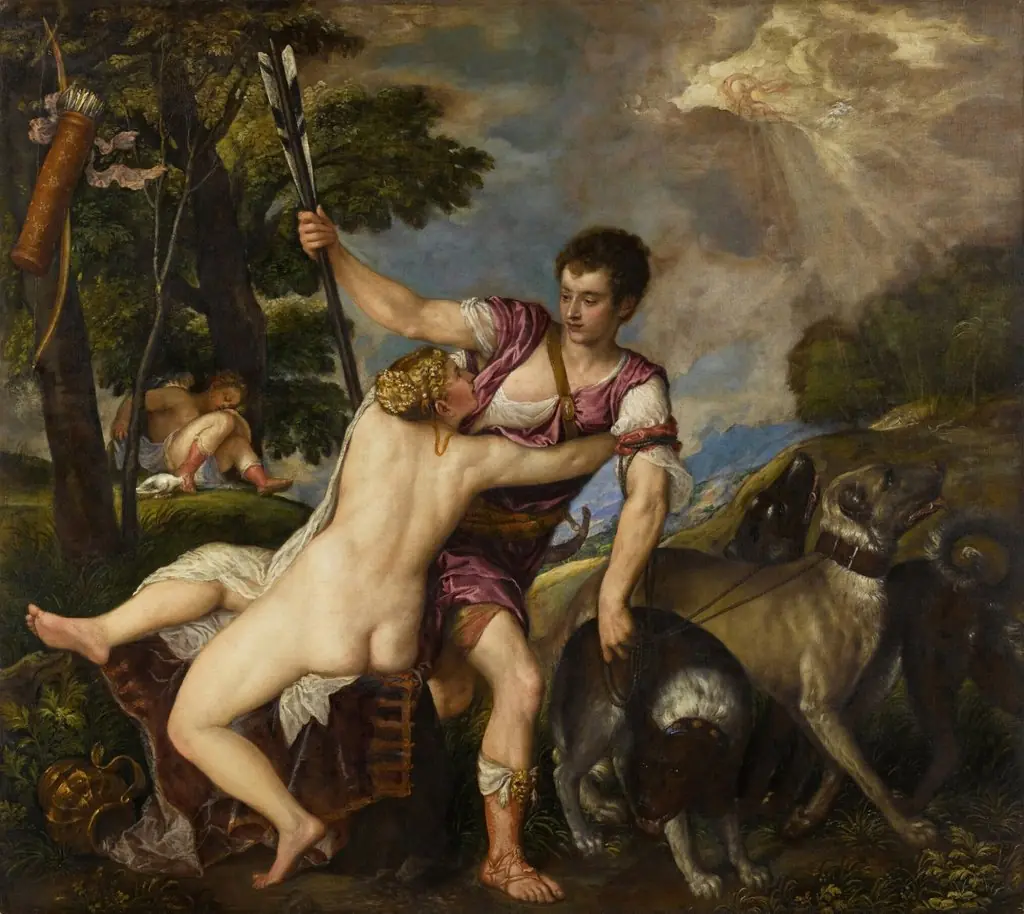
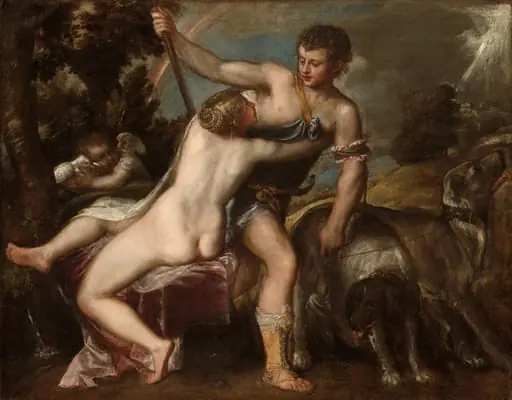
Venus and Adonis is an oil painting by the Mannerist artist Titian. It dates from 1544 and is held in the collection of the National Gallery of Art.
About this work
Subject & Meaning
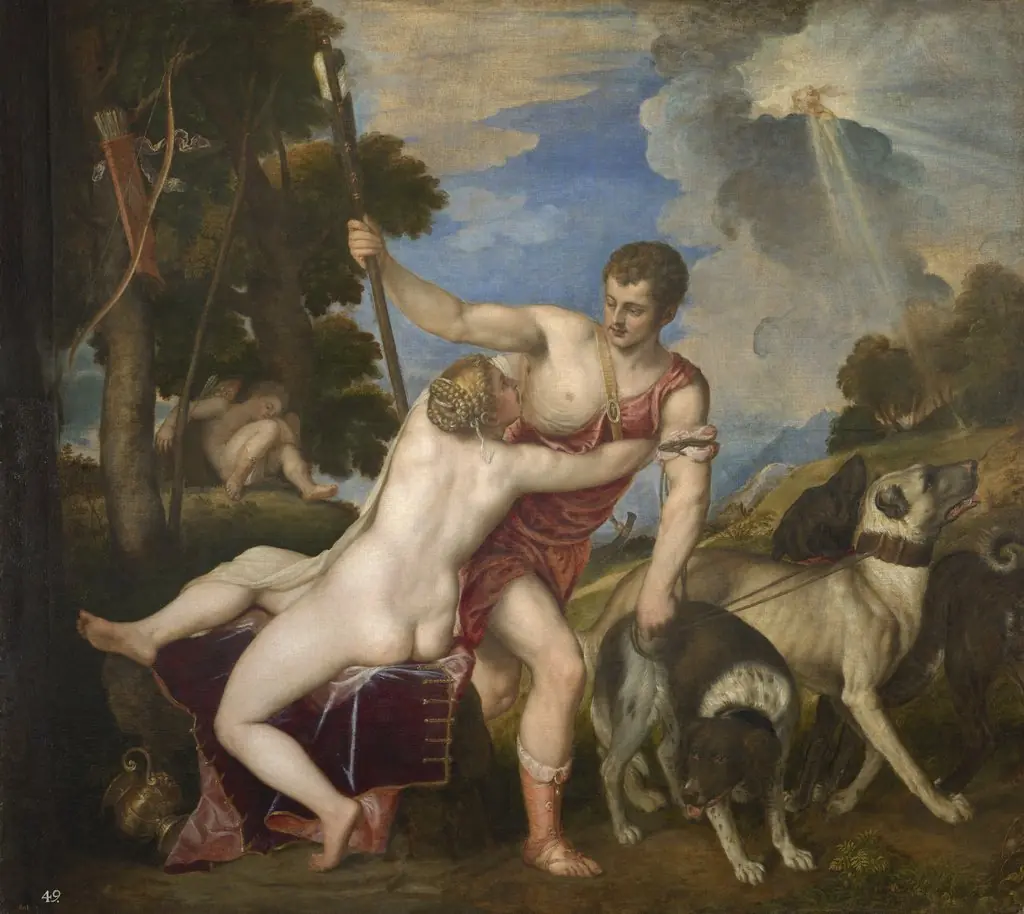
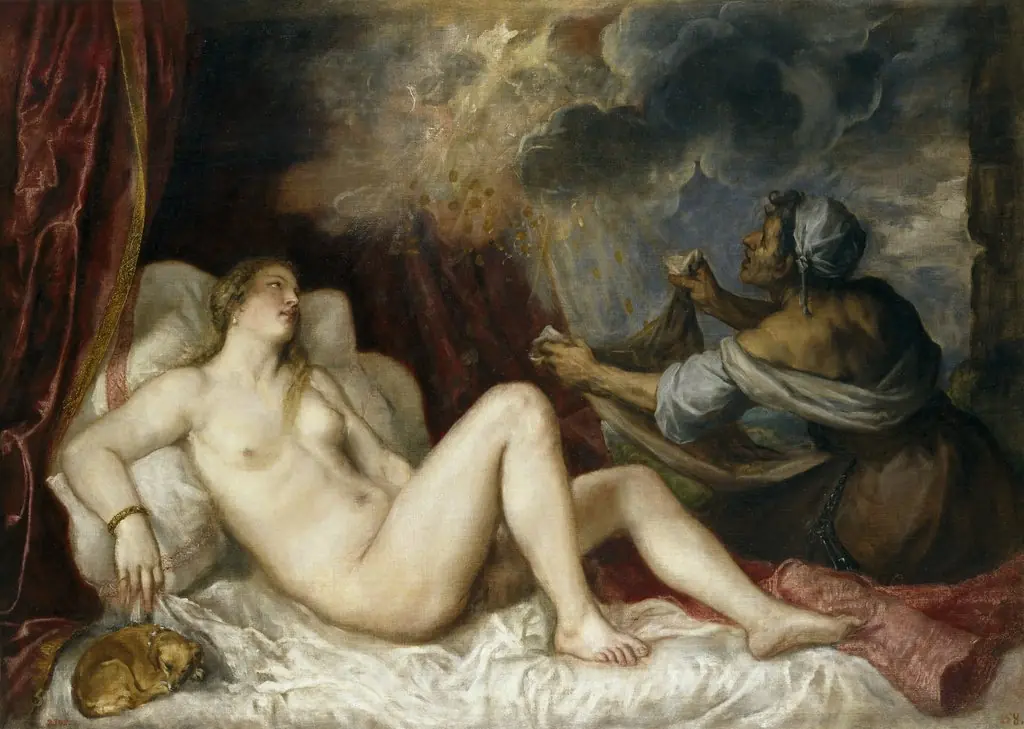
The composition was designed to complement Danaë, offering contrasting rear and front views of Venus to heighten eroticism.
The painting depicts the parting of Venus and Adonis at dawn, derived from Ovid's Metamorphoses. Adonis, in classical hunting attire with a feathered spear, pulls away from the seated Venus, who tries to hold him back. Cupid sleeps beneath a tree, indicating love has been set aside for the hunt.
A chariot in the sky (Venus, Apollo, or Sol) signals dawn. Titian innovated by showing Adonis leaving first, unlike Ovid where Venus departs. The composition was designed to complement Danaë, offering contrasting rear and front views of Venus to heighten eroticism.
The scene symbolizes the tragic inevitability of Adonis's death by boar and conveys a melancholic moral: mortals who consort with gods bring disaster upon themselves.
Technique & Style
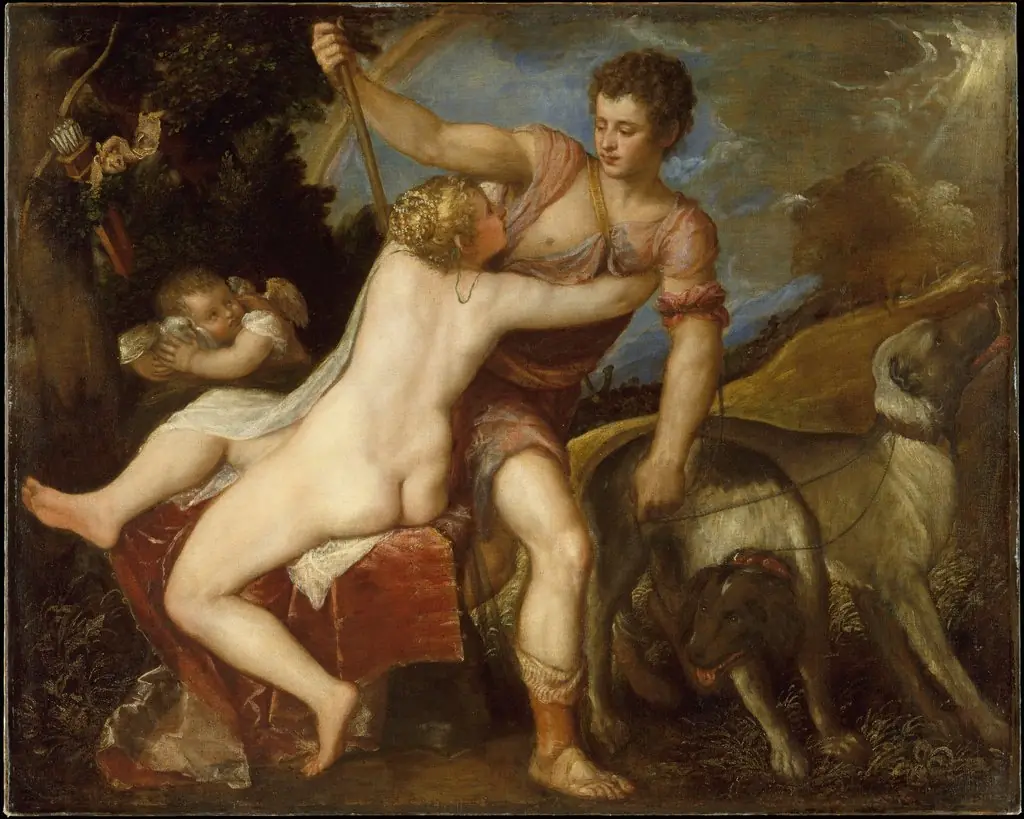
Executed in oil on canvas around 1560, this version of Venus and Adonis measures 106.8 × 136 cm. Belonging to Titian’s late ‘Farnese’ group, it displays a freer handling typical of his final period: broad, rapid, and luminous brushstrokes with indistinct contours and minimal underdrawing. Form is built from masses of colour rather than line, creating a soft, atmospheric effect. The composition is tighter than the earlier Prado type, with the figures more closely cropped and Cupid awake.
The painting’s technique reflects Titian’s move toward a more suggestive, colorito-based style, where oil paint is applied in varied strokes to model flesh and drapery.
History & Provenance
The painting was created around 1560 by Titian and his workshop. It is first recorded in 1679 at the Chelsea house of Anne Russell Digby, Countess of Bristol. From her it passed to the Spencer family, the Earls of Sunderland and Spencer, at Althorp, where it remained for over two centuries.
In 1924 the Spencers sold it to Thos. Agnew & Sons; the following year it was acquired by Arthur J. Sulley and Co. Later that year it was purchased from the estate of Peter A.B. Widener and eventually gifted to the National Gallery of Art in Washington in 1942. No specific commission for this version is documented.
The painting is held at the National Gallery of Art in Washington, D.C., as part of the Widener Collection (accession number not specified in the sources). It entered the museum in 1942 as a gift from the estate of Peter A.B. Widener, via Joseph E. Widener. Prior to this, the work was in the Spencer family collection at Althorp until 1924, when it was sold through dealers and subsequently purchased in 1925 using Widener funds. No exhibition history is documented in the provided sources.
Context
Titian's Washington Venus and Adonis belongs to his late series of poesie for Philip II of Spain, designed to complement Danaë by offering a contrasting rear view of the nude Venus. The composition inverts Ovid's narrative, showing Venus physically restraining Adonis, an invention criticized by Renaissance writer Borghini. The Venetian critic Lodovico Dolce praised the Prado version's erotic realism, noting the 'marvellous piece of dexterity' in the seated Venus's flesh.
Scholarly debate continues over the primacy of surviving versions, with the Washington canvas characterized by a tighter 'Farnese-type' composition and a more melancholic, pessimistic spirit reflecting Titian's late style. The work remained in the Spencer family until the 20th century before entering the National Gallery of Art.
Legacy
The composition of Venus and Adonis became one of Titian’s most repeated and influential designs, with some thirty versions produced during the 16th century, a popularity driven by the nudity of the goddess. The painting was conceived as part of Titian’s poesie series for Philip II, where it was meant to be viewed alongside Danaë to offer contrasting front and rear views of the nude Venus, a strategy Titian argued allowed painting to compete with sculpture. Contemporary commentators such as Lodovico Dolce marveled at the lifelike eroticism of the figure, while later writers like Raffaello Borghini criticized Titian’s departure from Ovid’s narrative.
The version now in Washington, after centuries in the Spencer collection, continues to be studied as a key example of Titian’s late style and mythological invention.
Overview
Titian, a prominent Venetian Renaissance painter, created multiple compositions depicting Venus and Adonis, a subject drawn from Ovid's Metamorphoses. The National Gallery of Art's oil on canvas, executed by Titian and his workshop between the 1540s and 1560s, is one of approximately thirty known sixteenth-century versions. These numerous iterations attest to the composition's popularity, likely due in part to the depiction of the nude goddess.
Own this work as a print
Artist & collection

Artist
Tiziano Vecellio (Italian:; c. 1488/1490 – 27 August 1576), Latinized as Titianus, hence known in English as Titian ( TISH-ən), was an Italian Renaissance painter. The most important artist of Renaissance Venetian…

 Studied in the Mythology in Art course