Artwork
The Young Bather
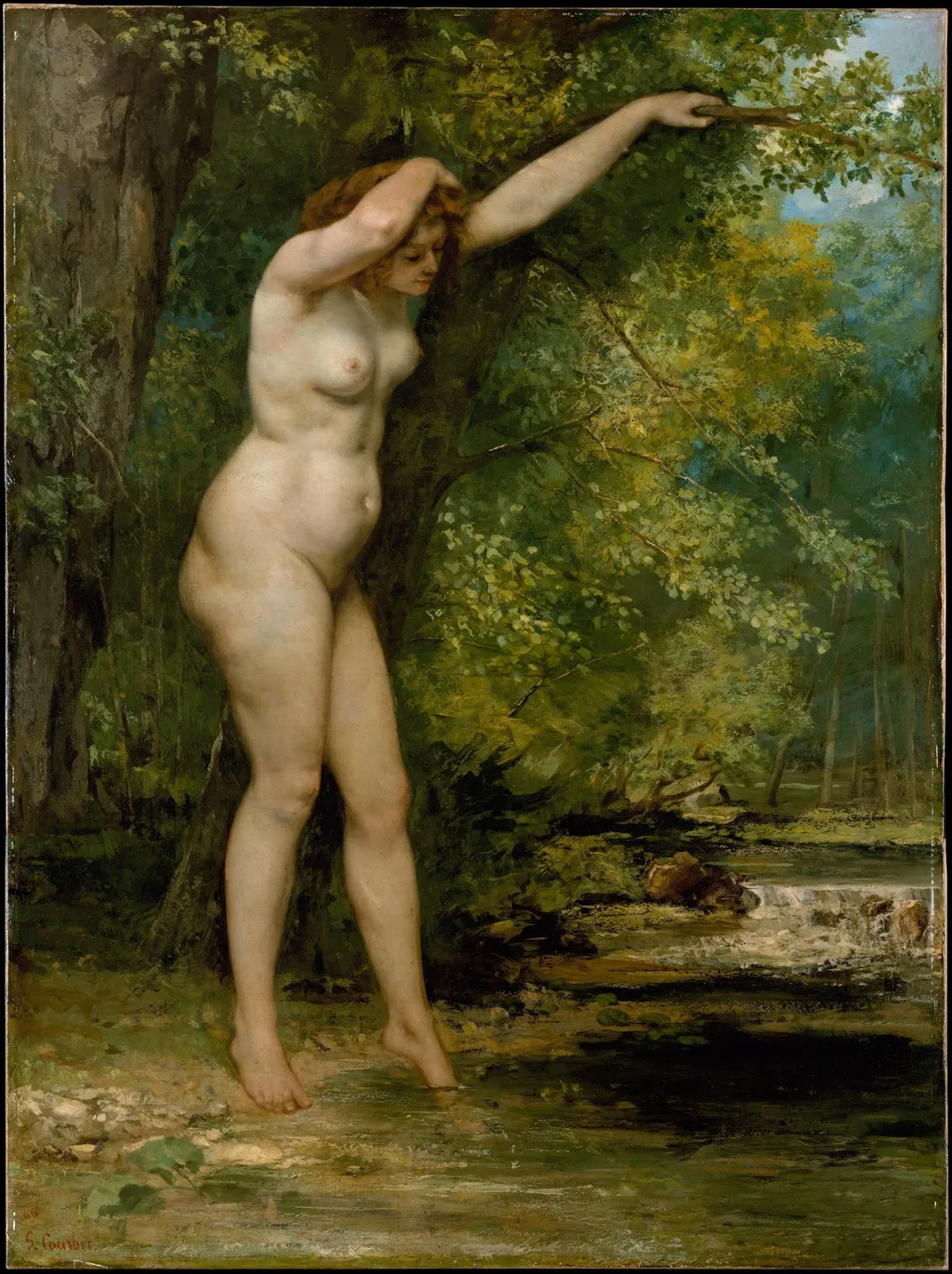
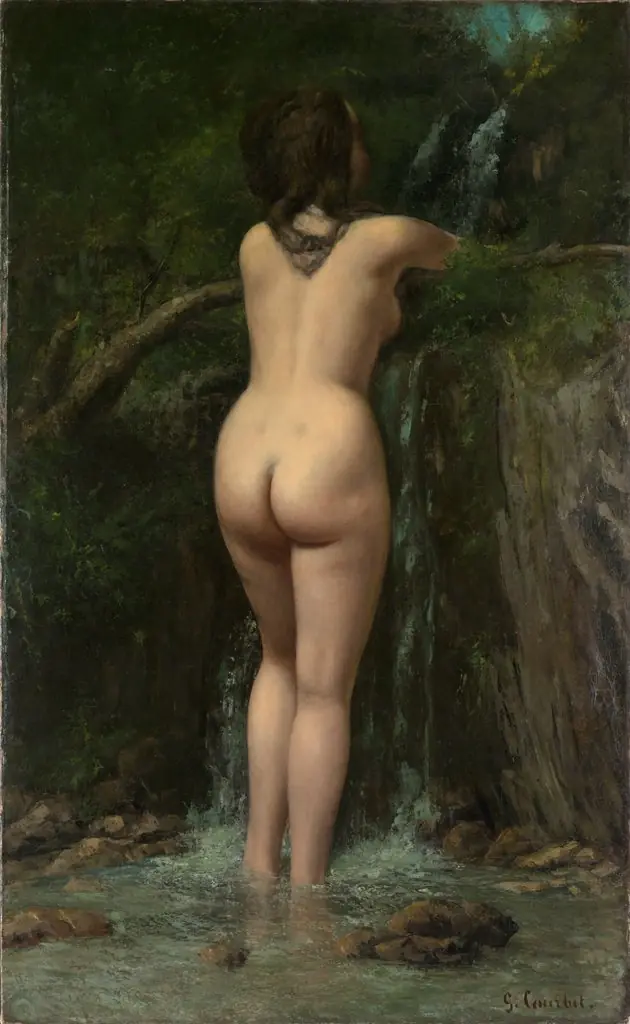
The Young Bather is an oil painting by the Realist artist Gustave Courbet. It dates from 1866 and is held in the collection of the Metropolitan Museum of Art.
About this work
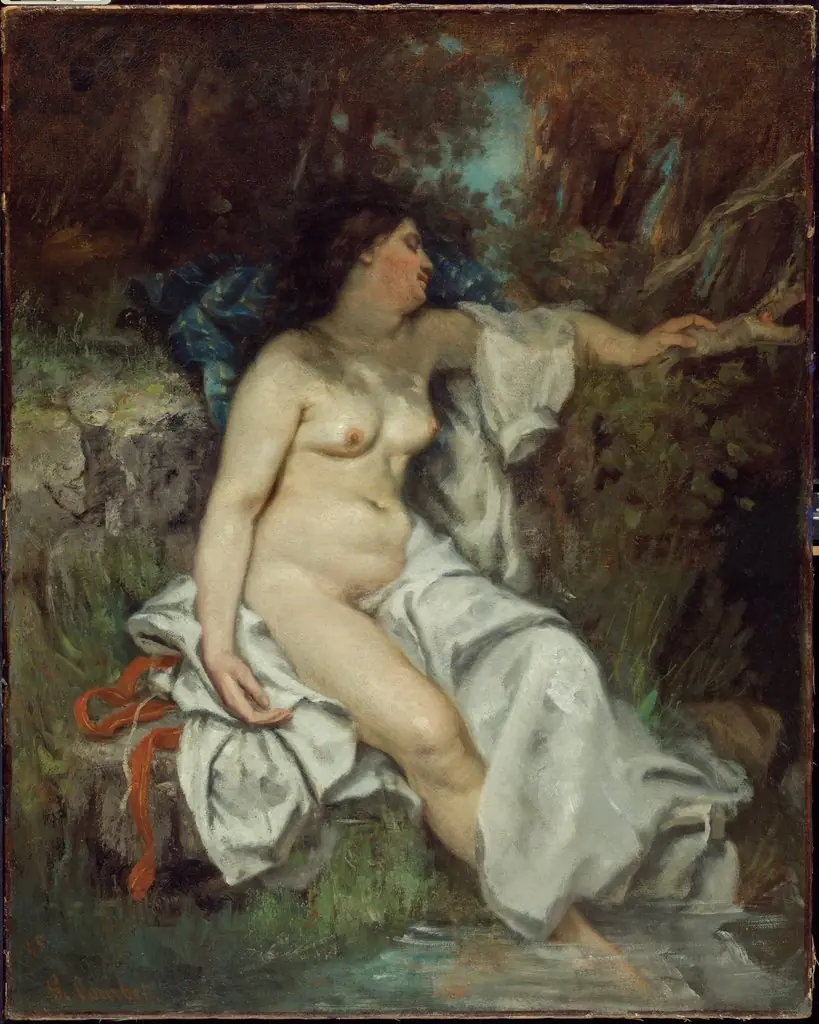
A nude woman stands at the edge of a woodland stream in Courbet's 1866 canvas, her full figure painted with the unidealized directness that made the Realist notorious. One critic called the bather "health itself." The work entered the Metropolitan Museum of Art in 1929 through the bequest of Louisine Havemeyer.
Overview
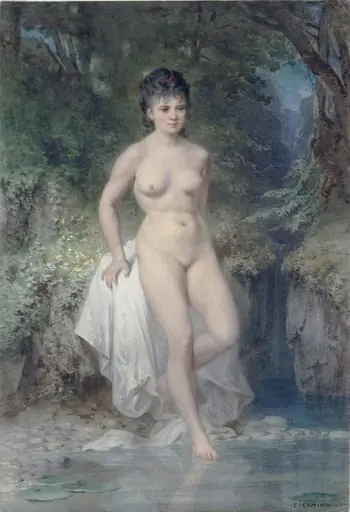
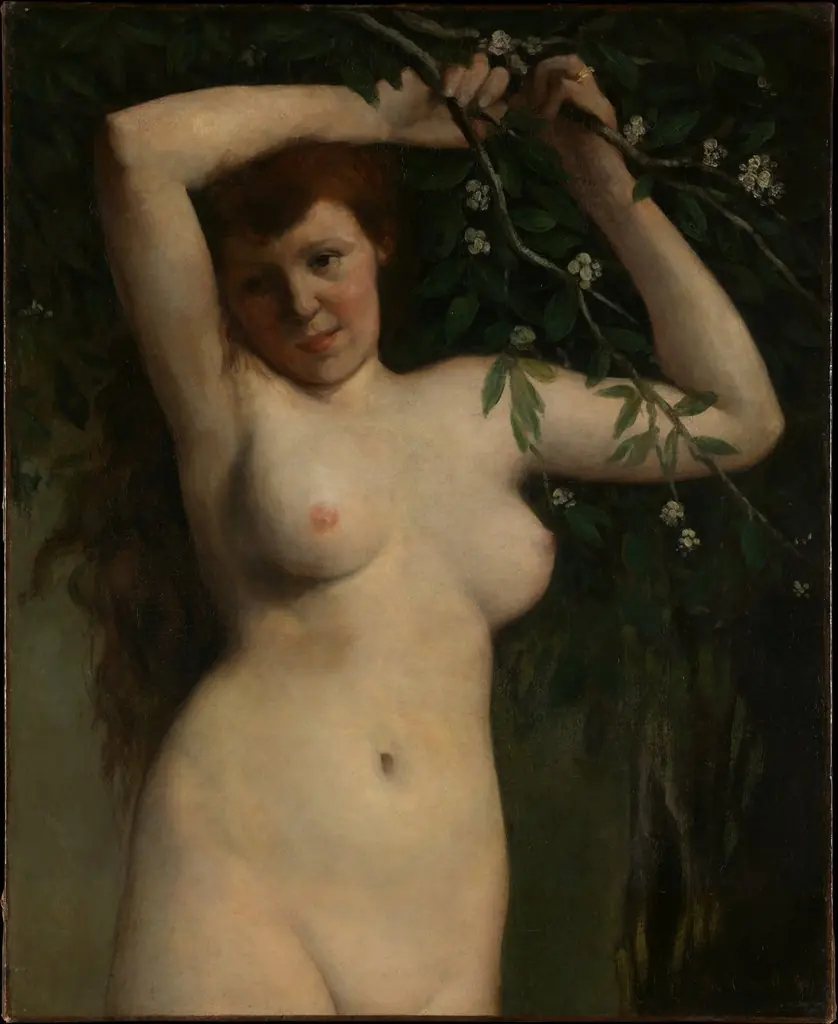
Gustave Courbet's 1866 oil painting, "The Young Bather," presents a nude woman at the edge of a woodland stream.
Gustave Courbet's 1866 oil painting, "The Young Bather," presents a nude woman at the edge of a woodland stream. This work exemplifies the artist's Realist commitment to portraying observable reality without idealization, a characteristic that often challenged academic conventions of the time. The painting revisits a theme Courbet explored earlier in his career, by which point the public had grown somewhat more accustomed to his frank depictions of the human form.
Subject & Meaning
The canvas features a solitary female figure standing amidst dense foliage, her gaze directed toward the running water, with one arm slightly raised. Courbet deliberately rendered the bather with a naturalistic, ample physique, rejecting the idealized bodies typically found in Neoclassical art. This unembellished portrayal of a woman in a natural setting was central to his Realist agenda, emphasizing the tangible and the everyday.
Technique & Style
Courbet employed a rich palette and meticulous attention to textural details in "The Young Bather." He carefully depicted the softness of the bather's flesh, contrasting it with the intricate play of light and shadow across the surrounding leaves and ground. This detailed execution underscores his commitment to capturing the material world with a high degree of verisimilitude, a hallmark of his distinctive Realist style.
Context
The subject of women bathing was a recurring motif for Courbet, having provoked controversy in the 1850s due to its unvarnished realism. By the mid-1860s, however, public reception had become somewhat more accepting of such portrayals. "The Young Bather" reflects Courbet's ongoing challenge to the prevailing artistic norms that favored mythological or highly idealized subjects, asserting the validity of depicting contemporary life and unadorned reality.
History & Provenance
This oil on canvas, measuring 51 1/4 x 38 1/4 inches (130.2 x 97.2 cm), is held within the European Paintings department at the Metropolitan Museum of Art. The institution acquired the artwork in 1929 as a significant part of the H. O. Havemeyer Collection. It entered the museum's holdings through the bequest of Mrs. H. O. Havemeyer, a notable collector of her era.
Own this work as a print
Artist & collection
Artist
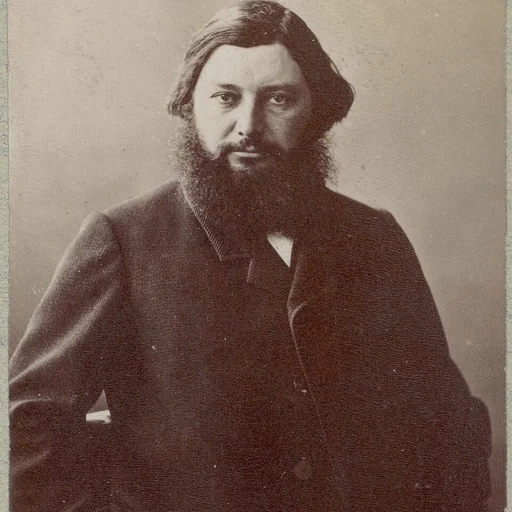
Jean Désiré Gustave Courbet (UK: KOOR-bay; US: koor-BAY; French:; 10 June 1819 – 31 December 1877) was a French painter who led the Realism movement in 19th-century French painting.




 Studied in the How to Look at a Painting course
  Studied in the Impressionism course