Artwork
Woman in a Cape (La femme à la pèlerine)
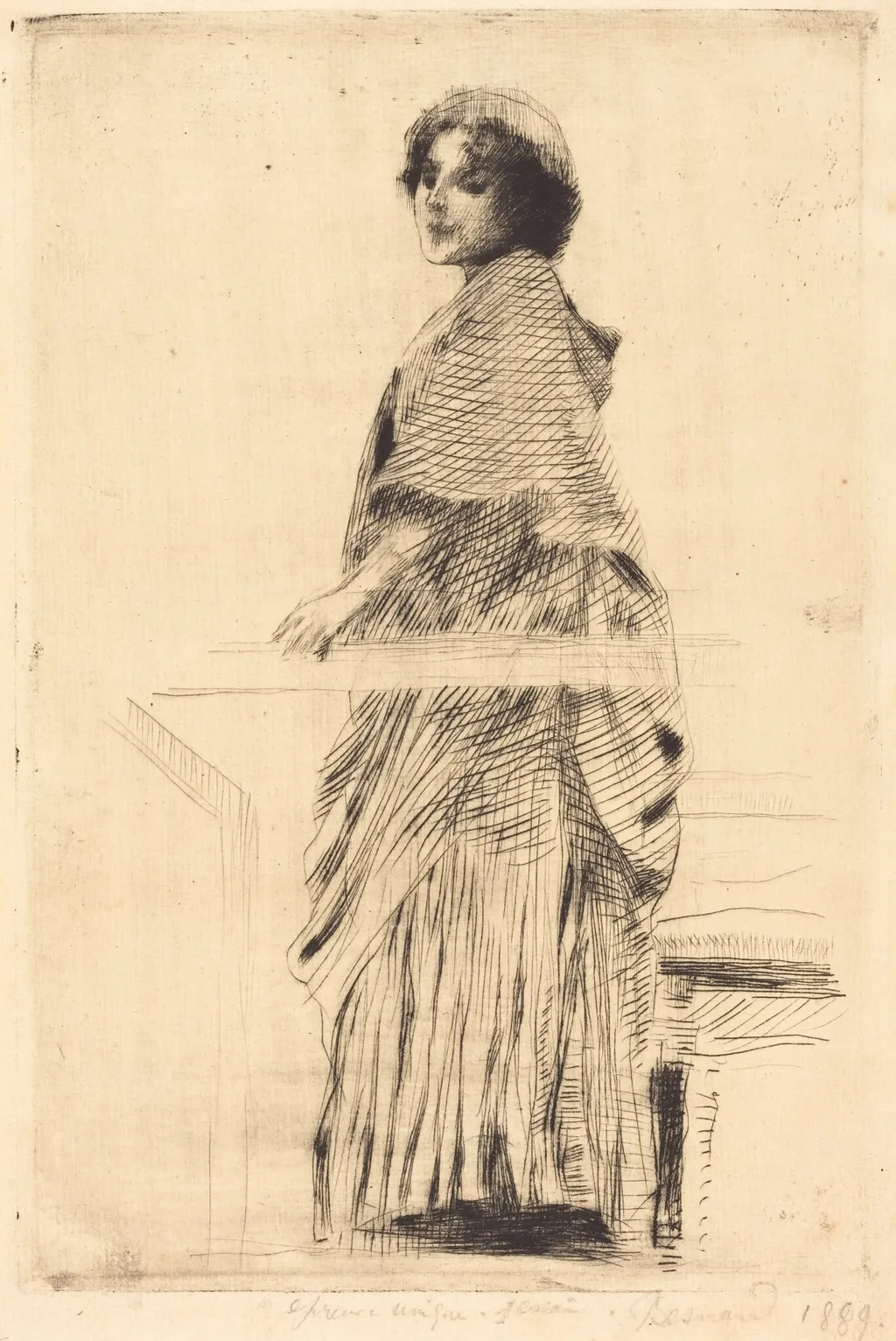
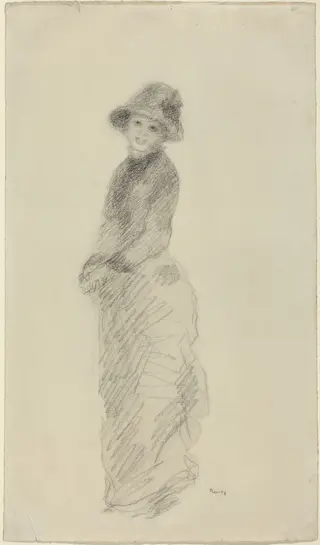
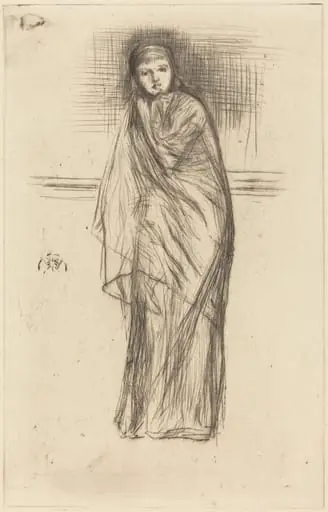
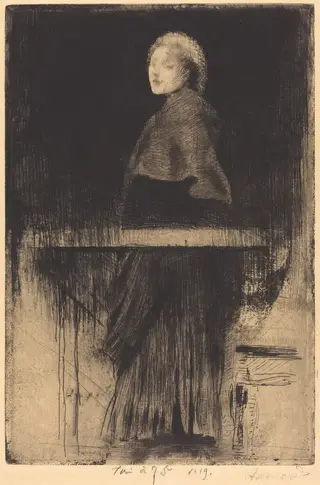
Woman in a Cape (La femme à la pèlerine) is an ink print by the Impressionist artist Albert Besnard. It dates from 1889 and is held in the collection of the National Gallery of Art.
- Inscription
- Inscribed:"Besnard 1889" lower right margin, graphite, artist's hand. "epreuve unique-1 essai" lower center margin, graphite, artist's hand. "1er etat" lower left margin, graphite, artist's hand. "M26502" verso, lower left margin, graphite, unknown hand. "2" verso, lower left margin, graphite, unknown hand. "19826" verso, lower center margin, graphite, unknown hand. "12685/3000" verso, lower right margin, graphite, unknown hand.
- Markings
- Marked:"LRJ" verso, black stamped ink, stamped twice, (Lugt 1760b). "National Gallery of Art" verso, black stamped ink, (Lugt 1932d).
About this work
Overview
The composition is rendered with fluid, expressive lines that convey the movement of the fabric and a restrained suggestion of facial features.
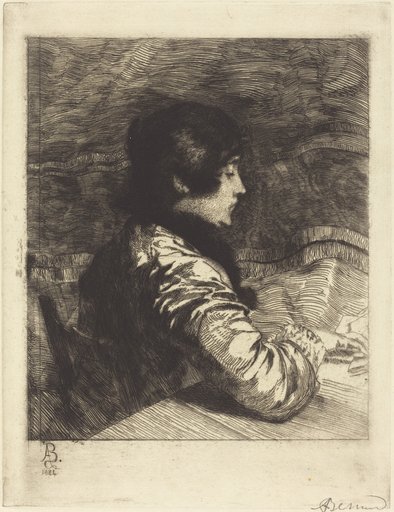
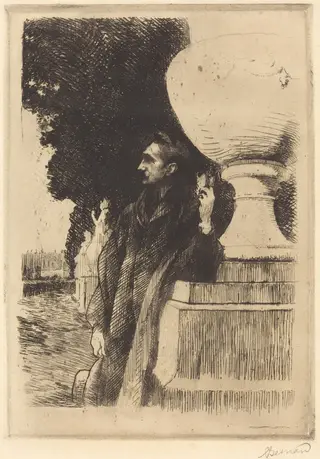
Albert Besnard’s 1889 print, titled Woman in a Cape (La femme à la pèlerine), combines etching, drypoint, and aquatint on laid paper. The work presents a solitary female figure draped in a billowing cape, captured in a side profile with one hand resting on a chair. The composition is rendered with fluid, expressive lines that convey the movement of the fabric and a restrained suggestion of facial features.
Subject & Meaning
The figure appears contemplative, her posture and the flowing garment suggesting a moment of quiet pause. The minimal facial detail invites viewers to focus on the interplay of drapery and gesture rather than a specific narrative, emphasizing the universal quality of a woman caught in a fleeting gesture.
Technique & Style
Besnard employed a layered approach: the primary outlines were etched, while drypoint added a scratchy, velvety texture to the cape’s folds. Aquatint provided tonal washes that create soft shadows and highlights, contrasting with the smoother, polished areas of the paper. This combination yields a nuanced surface where line and tone coexist without reliance on color.
History & Provenance
Created in the late nineteenth century, the print reflects Besnard’s exploration of mixed intaglio methods during a period when French artists were expanding the expressive possibilities of printmaking. The work has been documented in several catalogues of Besnard’s oeuvre and remains in the collection of a European museum, though its exact acquisition history is not widely published.
Context
The late 1880s saw a revival of interest in atmospheric effects within print media, with artists like Besnard experimenting beyond pure line work. Woman in a Cape aligns with contemporary trends that favored the depiction of movement and mood through subtle tonal variations, positioning the piece within the broader shift toward modernist sensibilities in French graphic art.
Own this work as a print
Artist & collection