Artwork
Untitled
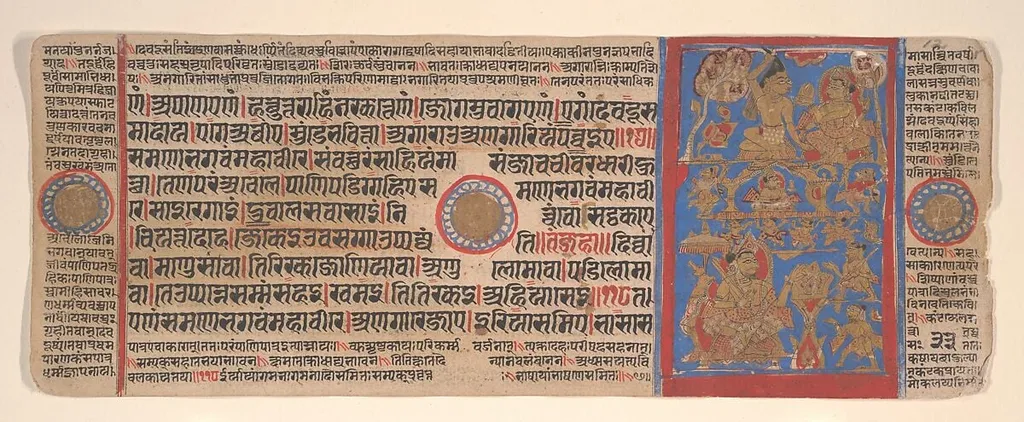
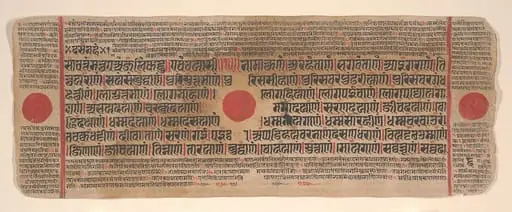
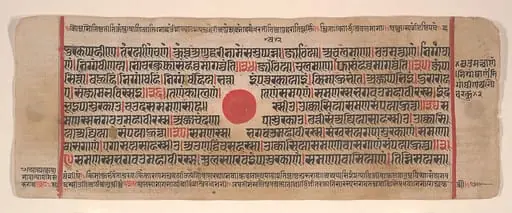
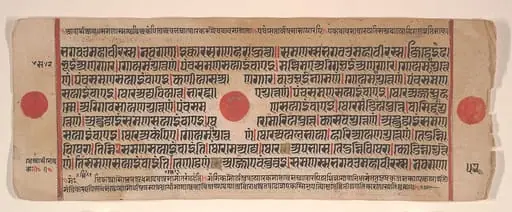
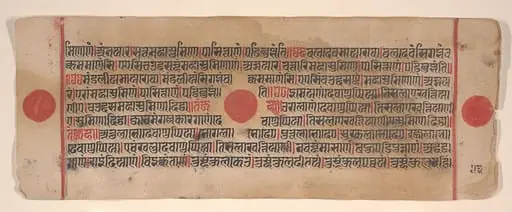
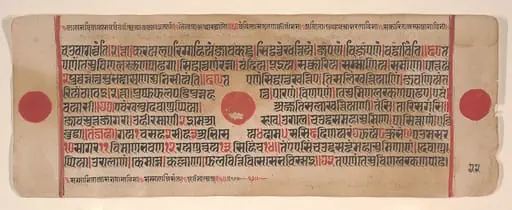
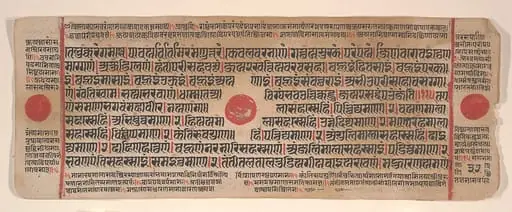
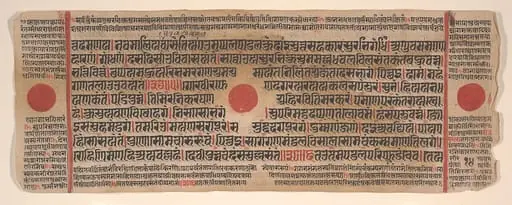
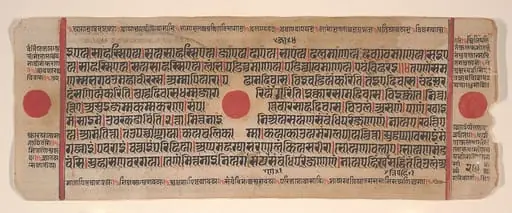
Untitled is a watercolor painting by the Indian Miniature artist Bhadrabahu. It dates from 1449 and is held in the collection of the Metropolitan Museum of Art.
About this work
Technique & Style
Created in 1449 by the artist Bhadrabahu, this religious painting employs ink, opaque watercolor, and gold applied directly onto a paper support.
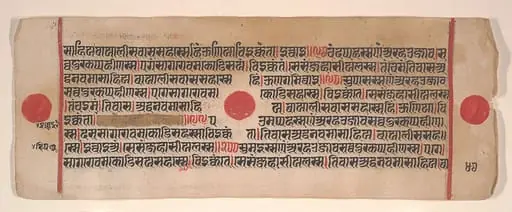
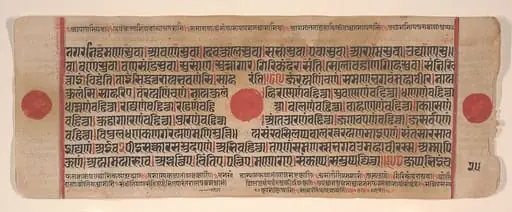
Created in 1449 by the artist Bhadrabahu, this religious painting employs ink, opaque watercolor, and gold applied directly onto a paper support. The work, classified within the genre of Jain religious art, measures 11.4 cm in height and 28.9 cm in width. The combination of gold with opaque watercolor and ink suggests a formal approach typical of devotional manuscripts from India during this period, emphasizing luminosity and detail.
The medium and materials indicate a delicate handling suited for a portable object, with the gold likely used to highlight sacred elements or figures within the composition. The physical dimensions and the use of paper as a support point to its function as a page or panel within a larger religious context, now held in the collection of the Metropolitan Museum of Art.
History & Provenance
The painting is attributed to the Jain monk-artist Bhadrabahu and dated to 1449 by internal curatorial records. It entered the collection of the Metropolitan Museum of Art as part of the Rogers Fund acquisition in 1957 (accession no. 57.51.38.12). The small devotional image depicts Jain themes and was produced in western India during the mid-15th century, consistent with contemporaneous manuscript practices.
Overview
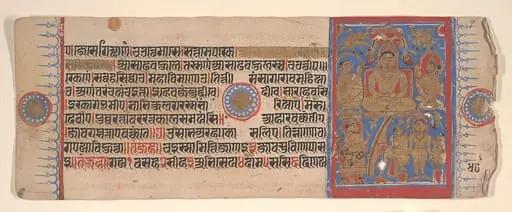
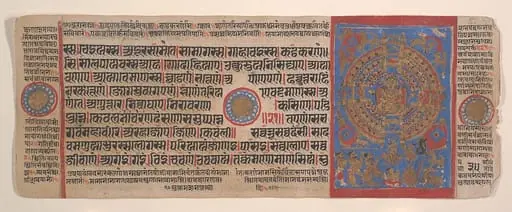
This untitled work, created by Bhadrabahu in 1449, is a religious painting executed with ink, opaque watercolor, and gold on paper. It depicts a central figure within the context of Jainism, a spiritual tradition emphasizing non-violence and self-control. The artwork's small scale suggests its original purpose as a page within a larger manuscript, intended for personal contemplation rather than public display.
Subject & Meaning
The painting features a monk seated cross-legged on a striped mat, holding a book, his expression serene and focused. This figure embodies the quiet devotion central to Jain practice. The luminous gold leaf swirling behind him signifies spiritual radiance or holiness.
This artistic choice allowed for the representation of sacredness without directly depicting deities in human form, adhering to specific religious conventions.
Context
Originating from a Jain manuscript, this small painting was designed to be held and studied closely, rather than displayed on a wall. Its compact size and intricate details reflect the tradition of illuminated religious texts, which served as aids for meditation and study. Such works provided a tangible connection to spiritual teachings, fostering a personal and immersive engagement with the depicted subject matter.
Artist & collection