Artwork
Untitled
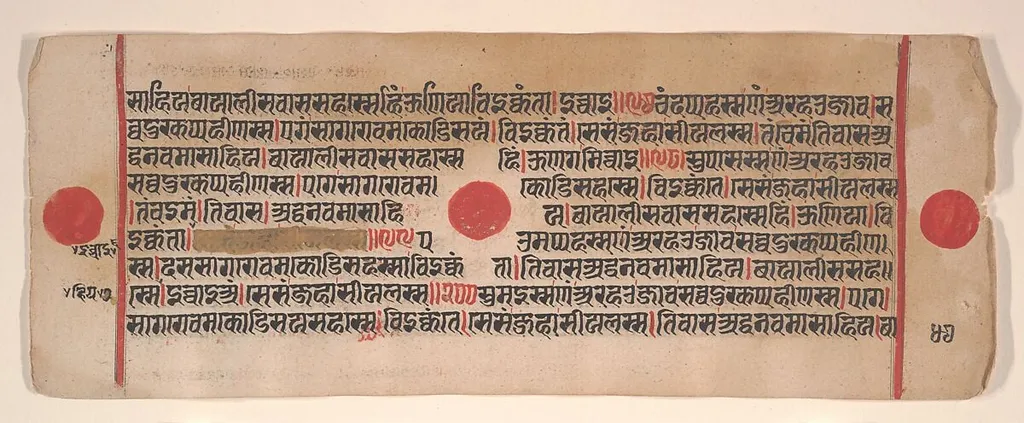
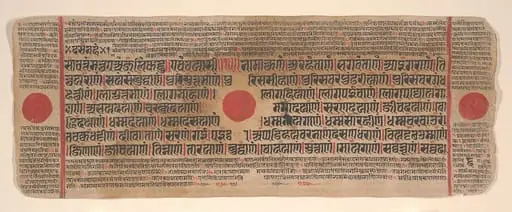
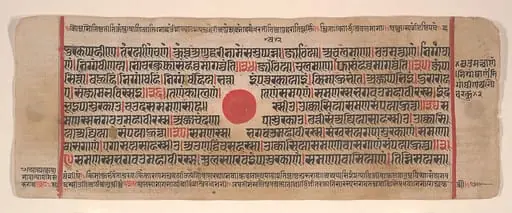
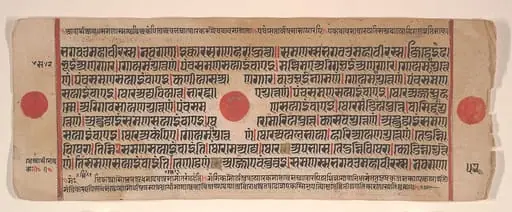
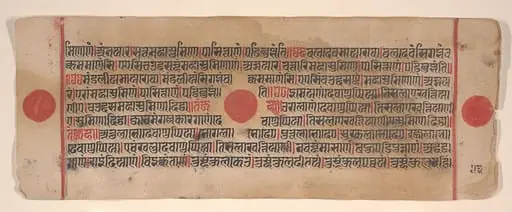
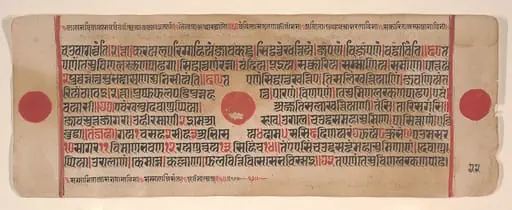
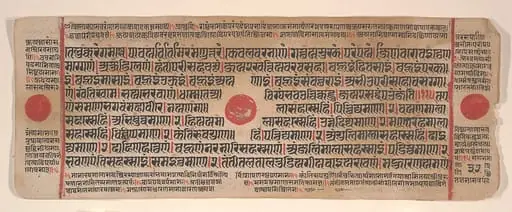
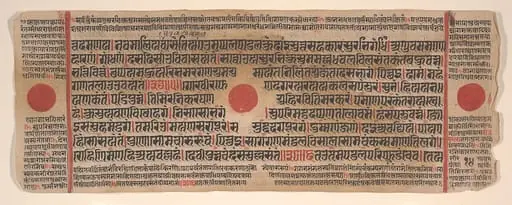
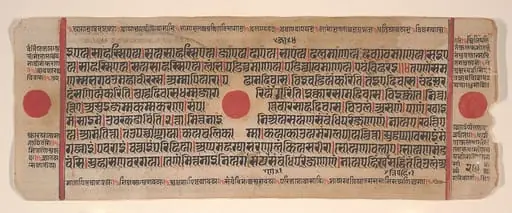
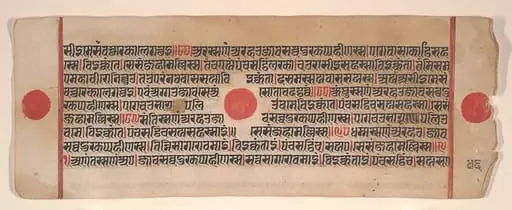
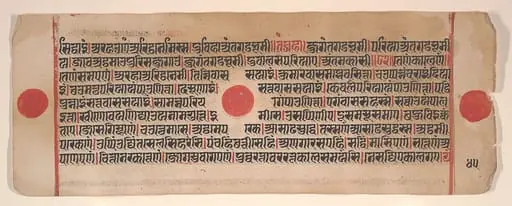
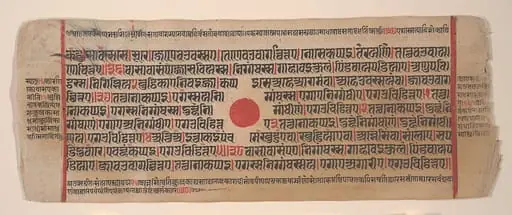
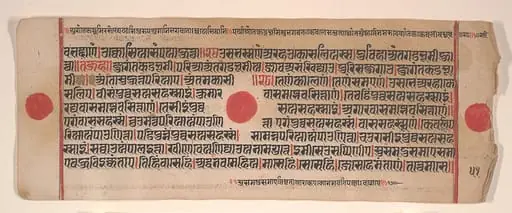
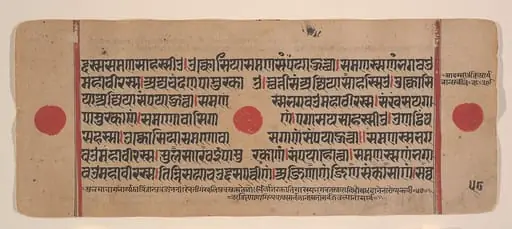
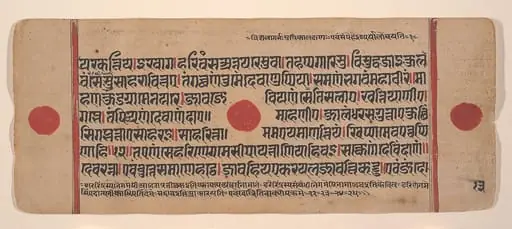
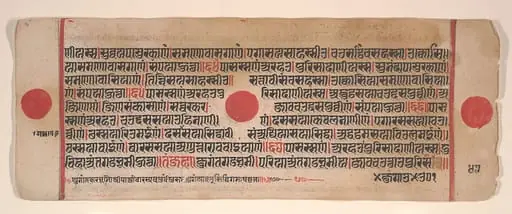
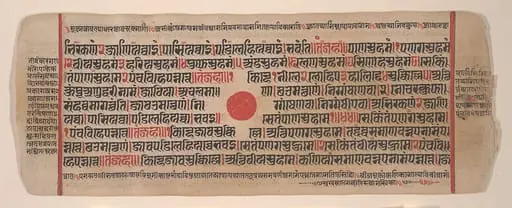
Untitled is a watercolor painting by the Indian Miniature artist Bhadrabahu. It dates from 1449 and is held in the collection of the Metropolitan Museum of Art.
About this work
Subject & Meaning
The inclusion of gold alongside traditional pigments suggests a devotional purpose, elevating the spiritual significance of the depicted subject.
Created in 1449 by the artist Bhadrabahu, this work is a religious painting executed in ink, opaque watercolor, and gold on paper. The subject matter is explicitly identified as Jainism, serving as a visual representation of the faith's spiritual themes. As a piece of religious art originating from India, the iconography functions to depict specific aspects of Jain doctrine or figures, although the generic title "Untitled" offers no further narrative specification.
The inclusion of gold alongside traditional pigments suggests a devotional purpose, elevating the spiritual significance of the depicted subject. The work currently resides in the Metropolitan Museum of Art, where it is classified within the museum's paintings collection as an example of Indian religious heritage.
Technique & Style
Created in 1449 by the artist Bhadrabahu, this religious painting exemplifies traditional Indian manuscript illumination techniques. The work is executed on a paper support using ink and opaque watercolor, with gold applied to enhance specific decorative or sacred elements. Physically, the sheet measures 11.4 cm in height and 28.9 cm in width, indicating a format likely intended for a horizontal manuscript or album page.
Stylistically, the composition serves a devotional function, visually depicting themes central to Jainism. The combination of mineral-based pigments and precious metal on paper reflects the material conventions of fifteenth-century Indian religious art, prioritizing luminosity and detail suitable for close inspection.
History & Provenance
This untitled religious painting was created in 1449 by the artist Bhadrabahu in India. The work, executed in ink, opaque watercolor, and gold on paper, depicts Jainism and belongs to the genre of religious art. The painting is held in the collection of the Metropolitan Museum of Art, where it is catalogued under the accession number MET 57.51.38.51.
The specific circumstances of its commission and prior ownership history before its acquisition by the museum are not documented in the available sources.
Overview
This untitled painting, created by Bhadrabahu in 1449, is rendered with ink, opaque watercolor, and gold on paper. It is a religious work depicting a scene central to Jainism. The small-scale composition features a Jain monk, identifiable by his white robes, seated beneath a tree while instructing two disciples. This piece exemplifies the devotional art produced for Jain communities during the 15th century.
Context
This painting emerged from a period when Jainism flourished in western India. In the 1400s, the region of Gujarat was a significant center for Jain communities, which actively commissioned and supported the creation of religious artworks. Such paintings served as visual aids for devotion and instruction, reflecting the spiritual vitality and cultural prosperity of the Jain tradition in that historical and geographical setting.
Artist & collection