Artwork
Untitled
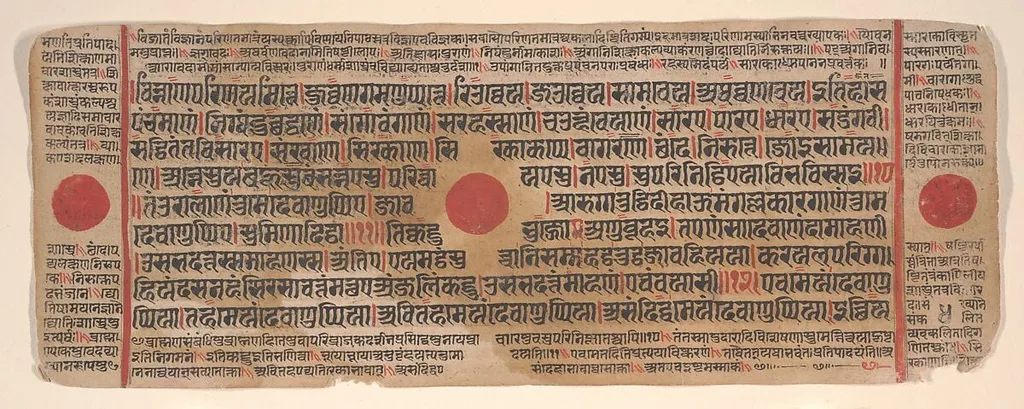
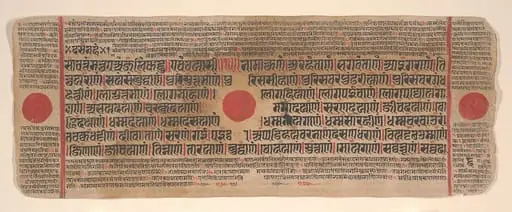
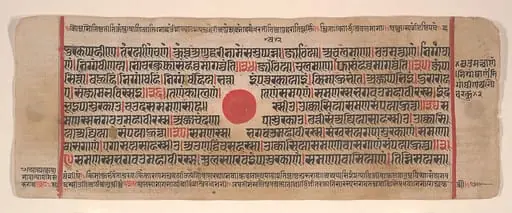
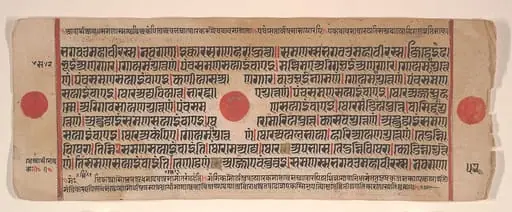
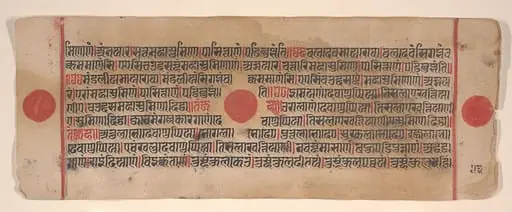
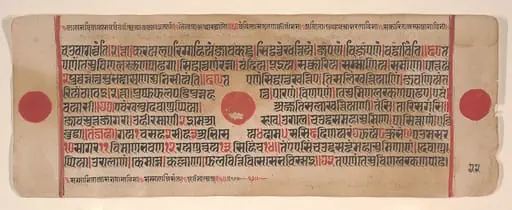
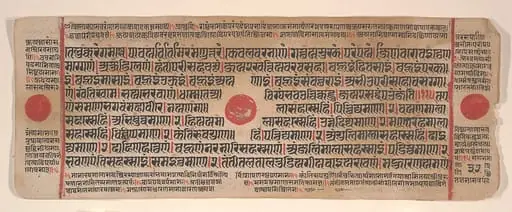
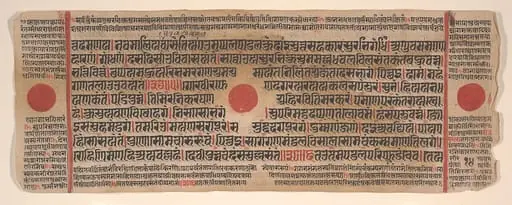
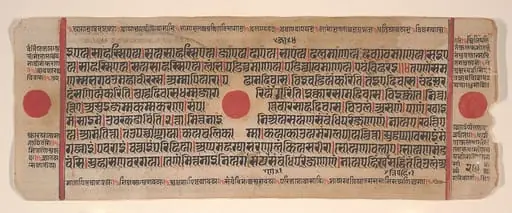
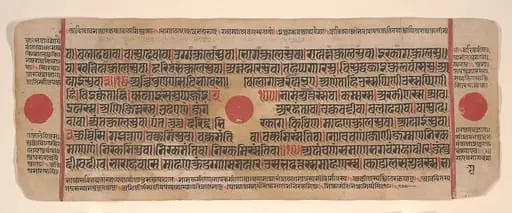
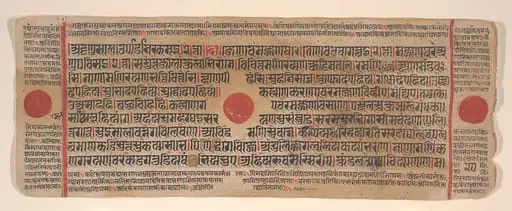
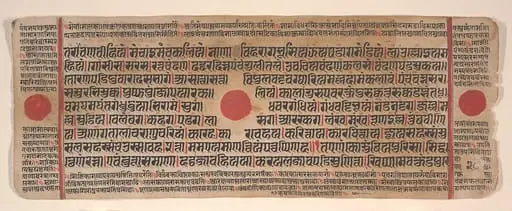
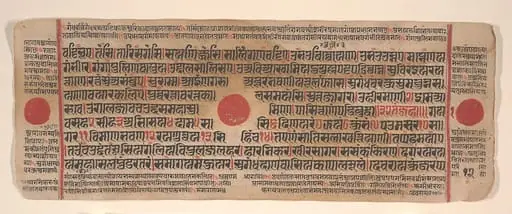
Untitled is a watercolor painting by the Indian Miniature artist Bhadrabahu. It dates from 1449 and is held in the collection of the Metropolitan Museum of Art.
About this work
Jain monks in the 15th century often traveled to Gujarat, where artists used bright colors and gold to show sacred moments.
This painting shows a Jain monk sitting under a tree, teaching two disciples in a garden.
The tree is covered in tiny gold leaves, and the monk’s robe is painted with thin, careful lines. Jain monks in the 15th century often traveled to Gujarat, where artists used bright colors and gold to show sacred moments. The gold isn’t just decoration, it’s meant to remind viewers of the purity of the teacher’s words.
To see more works like this, look up the subject Jainism.
Subject & Meaning
Created in 1449 by the artist Bhadrabahu, this work functions as a religious painting rooted in the Jain tradition. The subject matter explicitly depicts Jainism, serving as a visual representation of the faith's iconography and spiritual themes. Executed in ink, opaque watercolor, and gold on paper, the piece originates from India and is classified within the genre of religious art.
While the specific narrative scene or individual figures are not detailed in the available records, the work's primary meaning lies in its dedication to Jain religious subjects, reflecting the devotional practices and artistic expressions of fifteenth-century India. The use of gold and specific pigments likely underscores the sacred nature of the depicted content, aligning with standard conventions for manuscript illumination or devotional panels of this period and region.
Technique & Style
The work Untitled by Bhadrabahu, dated 1449, is executed in ink, opaque watercolor and gold pigment applied to paper support. The medium combines line drawing with layered washes, allowing fine detailing of Jain iconography while gold leaf accents highlight sacred motifs. Measured at 11.4 × 28.9 cm, the piece originates from India and belongs to the Metropolitan Museum of Art collection (MET 57.51.38.19).
Its formal composition employs a horizontal format that guides the eye across narrative scenes, while the restrained palette and delicate brushwork convey a contemplative, devotional atmosphere typical of 15th‑century Jain manuscript painting.
History & Provenance
Created in 1449, this religious painting titled Untitled was executed by the artist Bhadrabahu in India. The work, which depicts themes related to Jainism, was produced using ink, opaque watercolor, and gold on paper. While specific details regarding its original commission or intermediate ownership history are not provided in the available records, the piece is currently held in the collection of the Metropolitan Museum of Art, where it is cataloged under the accession number 57.51.38.19.
The physical dimensions of the sheet are recorded as 11.4 cm in height and 28.9 cm in width.
The work titled Untitled, executed by Bhadrabahu in 1449, is housed in the Metropolitan Museum of Art in New York. Its accession number in the museum’s catalogue is MET 57.51.38.19, and it is listed under the collection of the Metropolitan Museum of Art. The painting, rendered in ink, opaque watercolor and gold on paper, depicts Jain religious subjects.
According to the documented provenance, it was created in India and entered the museum’s holdings at an unspecified date. Exhibition records are not mentioned in the sources consulted.
Overview
This untitled work, created by Bhadrabahu in 1449, is rendered with ink, opaque watercolor, and gold on paper. It portrays a central figure of Jainism, a monk, engaged in teaching. The painting offers a glimpse into the spiritual practices and visual traditions associated with the faith during the 15th century, emphasizing the transmission of knowledge within a sacred setting.
Context
During the 15th century, the region of Gujarat became a significant center for Jain monastic travel and artistic patronage. This environment fostered a distinctive painting style, where local artists frequently incorporated brilliant colors and gold to illustrate sacred narratives and spiritual figures. The use of precious materials like gold was not merely decorative but served to elevate the depicted moments, aligning with the reverence accorded to religious subjects within the community.
Artist & collection