Artwork
A Hundred Birds and the Three Friends
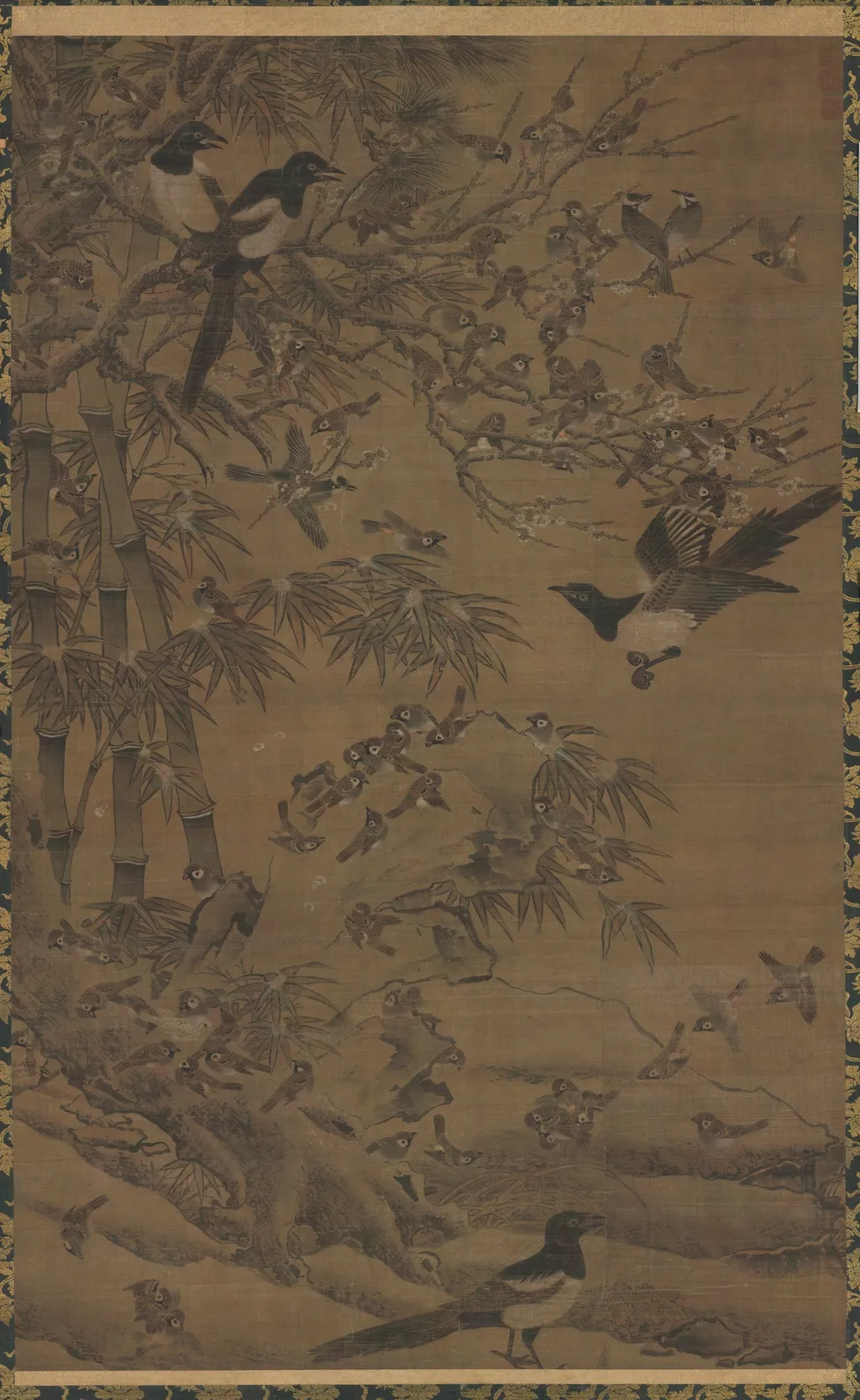
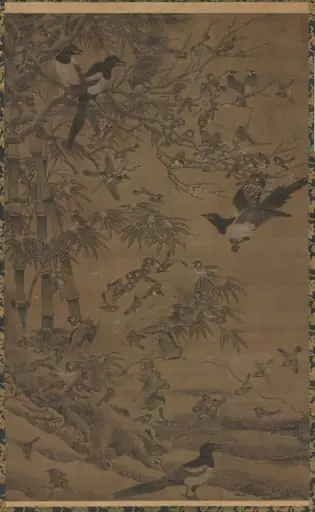
A Hundred Birds and the Three Friends is an unspecified painting by the Ming dynasty painting artist Bian Jingzhao. It dates from 1414 and is held in the collection of the Cleveland Museum of Art.
About this work
Subject & Meaning
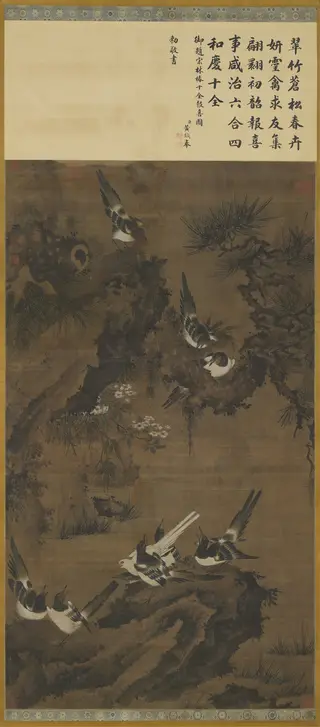
Among them, three birds perch together on a branch, signaling the work’s title and its principal theme of camaraderie and harmony.
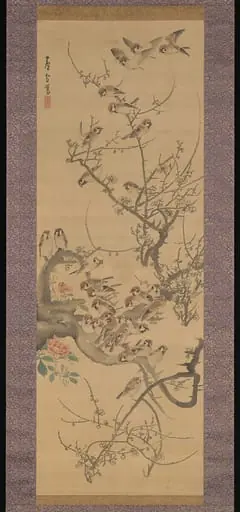
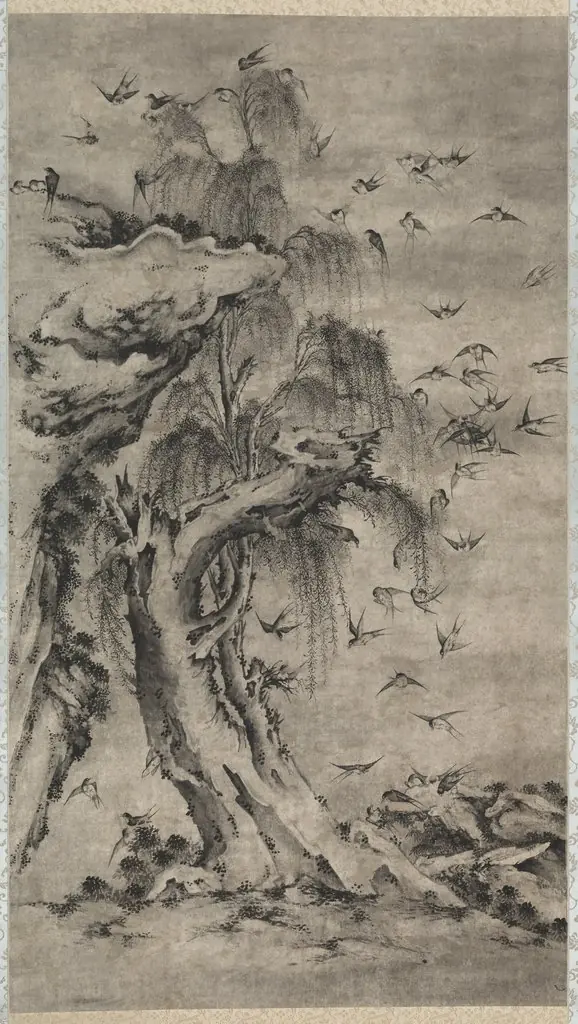
The painting depicts a hundred birds in flight above a winter landscape of bare trees and rocky outcrops. Among them, three birds perch together on a branch, signaling the work’s title and its principal theme of camaraderie and harmony. The image of multiple birds in flight commonly symbolizes scholarly or official circles in Chinese art, while the trio on a single branch emphasizes friendship and mutual support.
The contrast between the dispersed flock and the closely grouped trio underscores ideals of unity amid diversity, a Confucian virtue often celebrated in literati painting.
History & Provenance
The painting A Hundred Birds and the Three Friends is dated to 1414 and attributed to the Chinese artist Bian Jingzhao, who worked in China during the early fifteenth century. According to the available records, the work entered the collection of the Cleveland Museum of Art, where it is presently housed. No specific commission or earlier ownership history is documented in the sources. The inception date recorded for the work is 1414-01-01, confirming its creation in the early Ming period.
A Hundred Birds and the Three Friends, painted by Bian Jingzhao in 1414, is held by the Cleveland Museum of Art. Its inventory designation at the museum is 1980.12.
The work has not been documented in any exhibitions within the provided sources.
Overview
Created in 1414, A Hundred Birds and the Three Friends is a hanging scroll painted by Bian Jingzhao, an early‑Ming artist who signed his works with the style name Wenjin. The composition clusters a multitude of birds among stylized bamboo, plum, and pine, the traditional “three friends” of resilience. The work is part of the Cleveland Museum of Art’s Asian collection.
Technique & Style
Bian employs fine brushwork and layered ink washes to render each bird with distinct posture and plumage, ranging from dark brown to lighter tones. The birds are positioned on bamboo shoots in the lower left and in mid‑air, creating depth against a warm, unadorned background. The meticulous detailing reflects the literati tradition of the early Ming, emphasizing observation and controlled spontaneity.
Own this work as a print
Artist & collection
Artist
Bian Jingzhao (simplified Chinese: 边景昭; traditional Chinese: 邊景昭), styled Wenjin (Chinese: 文進), was a famed Chinese painter in the early Ming dynasty.