Artwork
Untitled
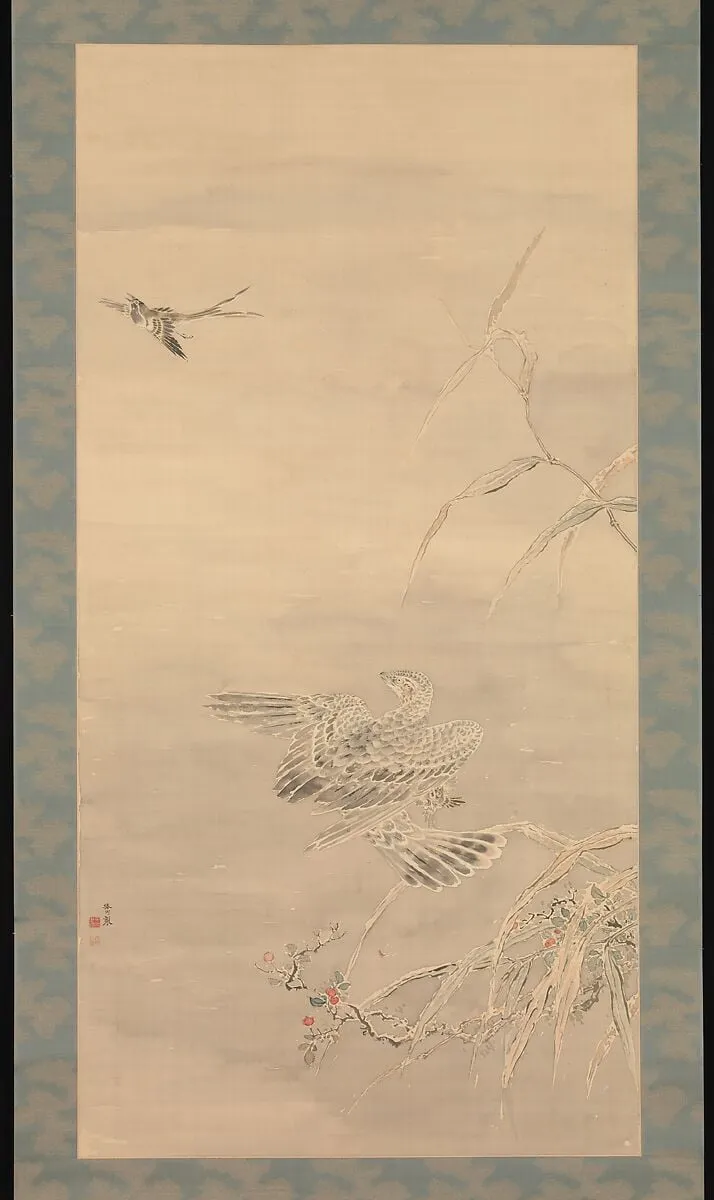
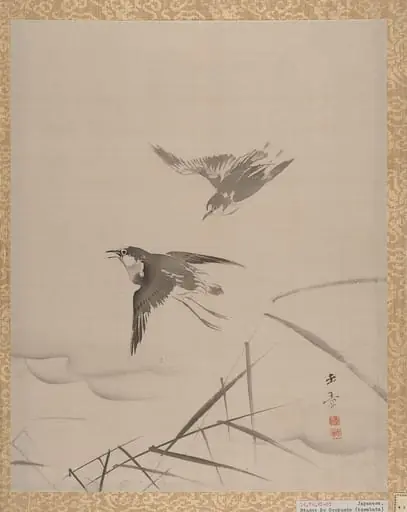
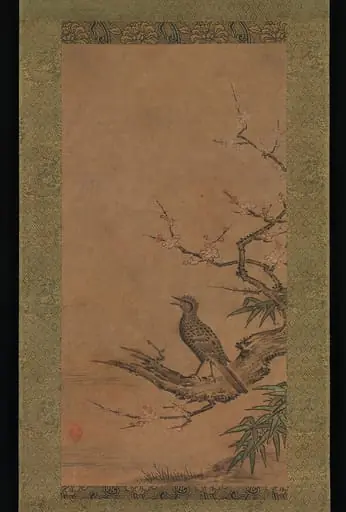
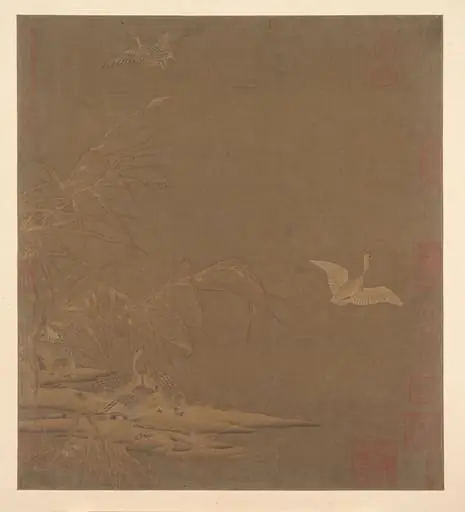
Untitled is an ink painting by the Nihonga artist Tsubaki Chinzan. It dates from 1827 and is held in the collection of the Metropolitan Museum of Art.
About this work
Technique & Style
It depicts a bird, specifically a hawk, rendered in a manner typical of early nineteenth-century Japanese bird-and-flower painting.
The work is a hanging scroll painted in ink with subtle color washes on paper, measuring about 167.3 cm in height and 84.4 cm in width. It depicts a bird, specifically a hawk, rendered in a manner typical of early nineteenth-century Japanese bird-and-flower painting. Created by Tsubaki Chinzan in 1827 in Japan, the scroll is now held in the collection of the Metropolitan Museum of Art.
The vertical format and the restrained use of color emphasize the delicate line work and the atmospheric quality of the scene.
History & Provenance
The hanging scroll was created in 1827 by the Japanese artist Tsubaki Chinzan, executed in ink and color on paper and depicting a hawk. It was produced in Japan and is classified as a painting.
The work is held in the collection of the Metropolitan Museum of Art. No further details regarding commissioning, intermediate ownership, or chain of custody prior to its acquisition by the museum are documented in the available sources.
Overview
Created in 1827 by Tsubaki Chinzan, this hanging scroll depicts a dramatic avian encounter rendered in ink and color on paper. The composition centers on a large hawk perched on a bare, gnarled branch, its wings partially spread and gaze fixed with intensity. Below, two smaller birds flutter in apparent alarm, creating a dynamic tension between predator and prey.
Chinzan executed the work with quick, confident brushstrokes that capture the vitality of the birds without the use of erasure, a technique characteristic of his style. Produced during the Edo period when Japan maintained a policy of national isolation, this piece exemplifies the artist's mastery of the bird-and-flower genre within the Nanga (literati) tradition. The work highlights Chinzan's ability to infuse natural subjects with immediate energy and psychological presence.
As an early work from 1827, it reflects the artist's developing command of expressive ink wash and color application before his later, more mature period. The piece stands as a significant example of mid-Edo period Japanese painting, demonstrating how literati artists adapted Chinese models to create distinctively Japanese interpretations of nature.
Subject & Meaning
The painting portrays a hawk poised on a stark, bare branch, its wings partially extended and its gaze intently focused. Below, two smaller birds react with visible alarm, their movements suggesting an imminent threat or escape. This dynamic interaction between predator and prey creates a sense of tension, highlighting the raw realities of the natural world within a carefully composed landscape.
Context
Tsubaki Chinzan created this work during a period when Japan maintained a policy of national isolation, known as sakoku. This meant that while the artist engaged with traditional Japanese artistic conventions, his practice developed largely independent of direct Western influences. His art reflects the aesthetic values and subject matter prevalent within Japan's self-contained cultural landscape of the early 19th century.
Artist & collection

Artist
Tsubaki Chinzan, originally Tasuku was a Japanese painter in the nanga style. His other art names include Hekiin Sambō, Kyūan (休庵), Shikyūan (四休庵) and Takukadō (琢華堂).

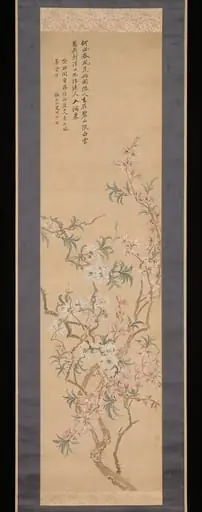
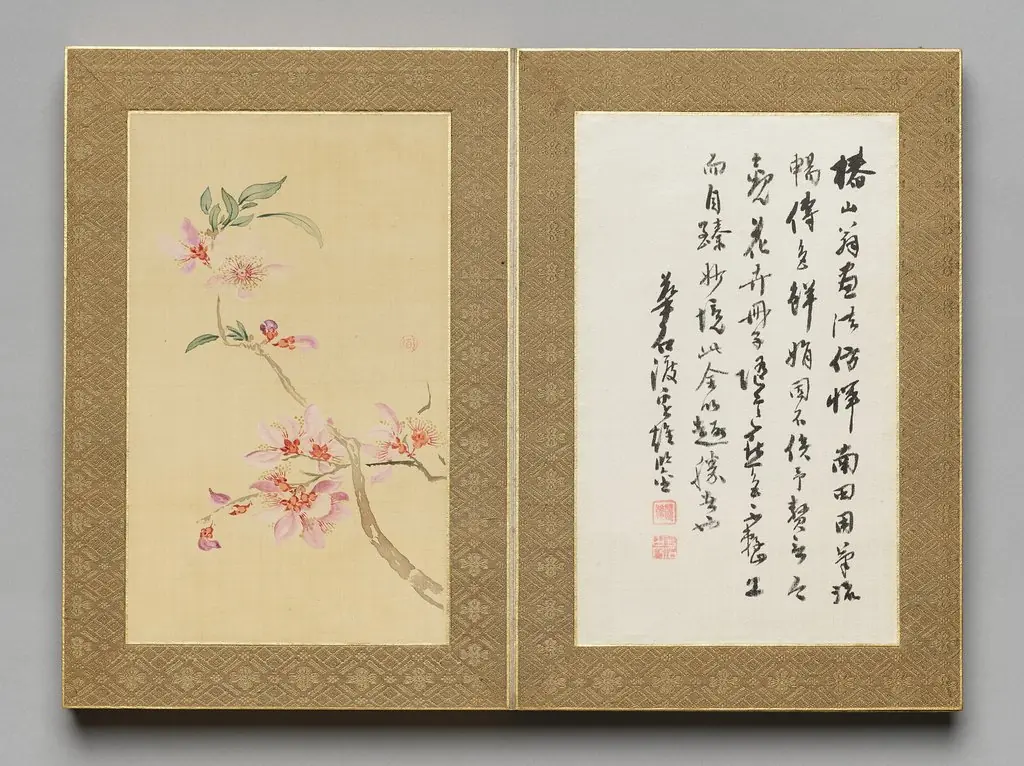
- A Hundred Birds and the Three Friends
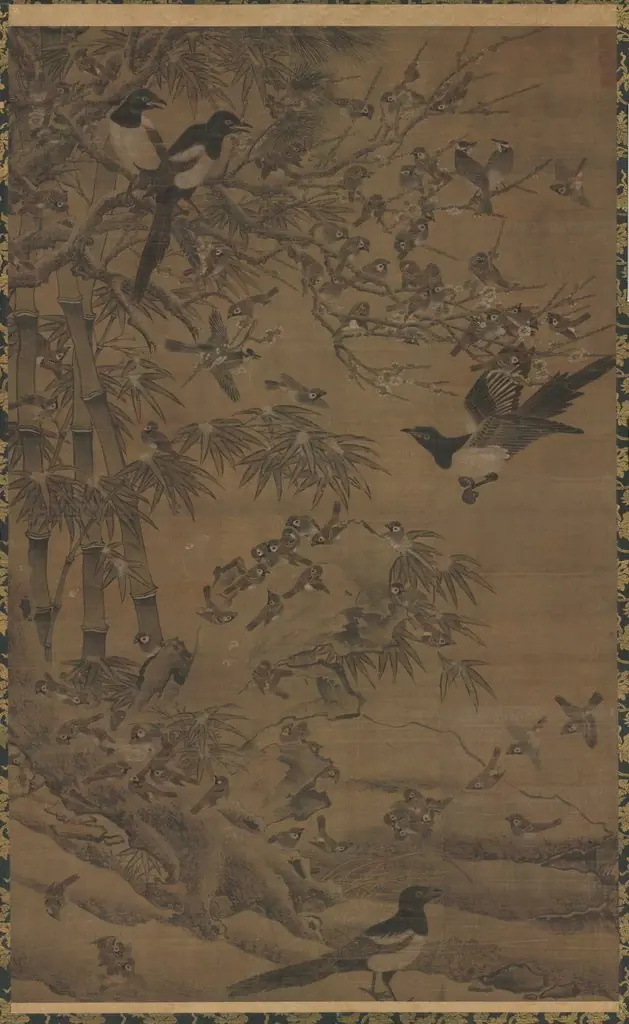 A Hundred Birds and the Three Friends
 Untitled
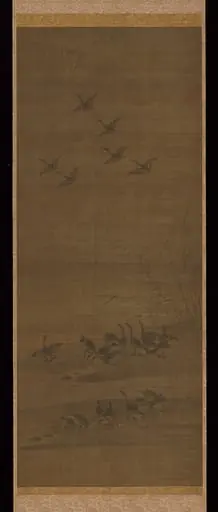 芦雁図|Reeds and Geese
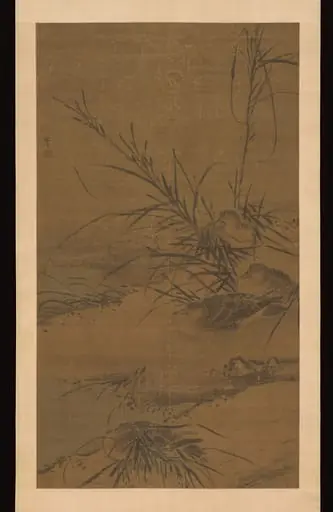 明 倣林良 蘆鴨圖 軸|Ducks and Reeds
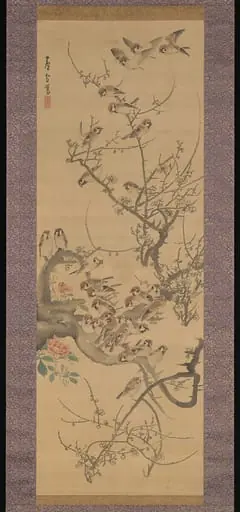 梅雀図|Sparrows in a Plum Tree
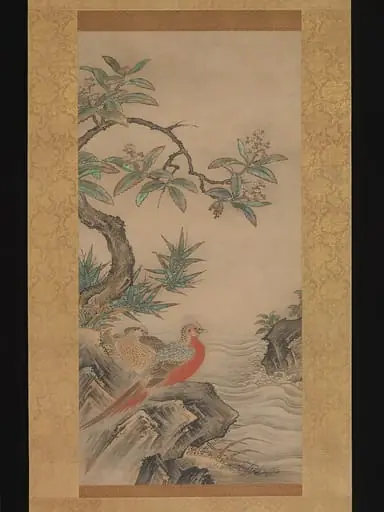 狩野松栄筆 四季花鳥図|Pheasants among Trees: Flowers of the Four Seasons
 狩野松栄筆 梅鵯図|Brown-Eared Bulbul (Hiyodori) on a Branch of Plum
 宋林椿十全報喜 軸
 One Hundred Birds
 Withered Lotuses and Mandarin Ducks
 Untitled