Artwork
Trompe l'Oeil: Old Prints, a Torn Envelope with Horn-rimmed Glasses, and a Housefly
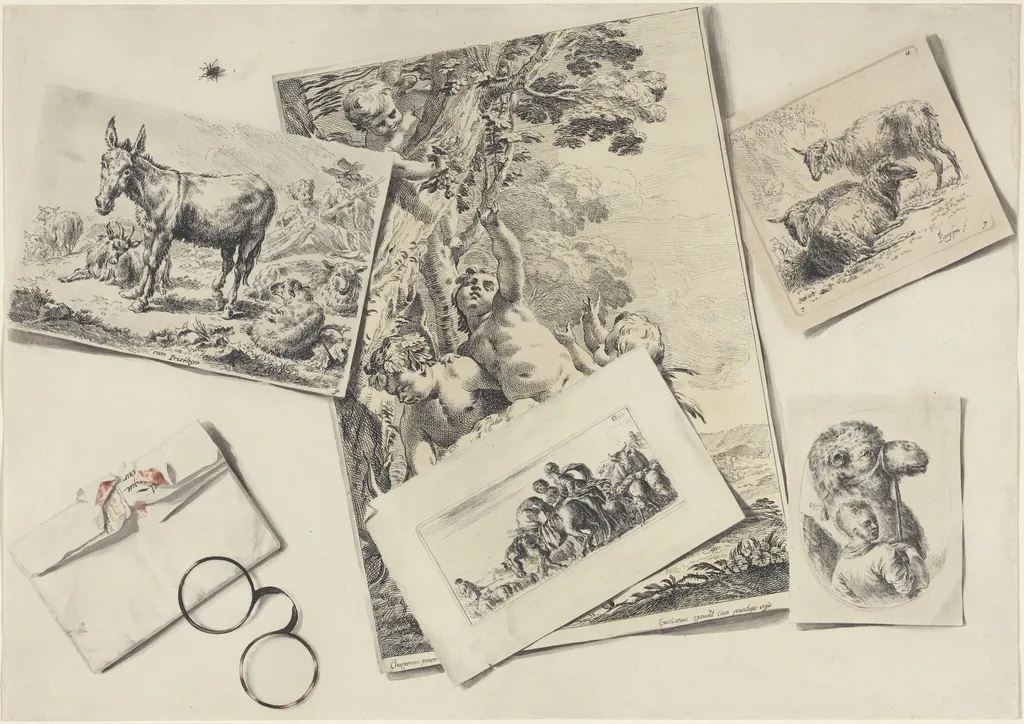
Trompe l'Oeil: Old Prints, a Torn Envelope with Horn-rimmed Glasses, and a Housefly is an ink drawing by the Romanticist artist Jean-Pierre-Xavier Bidauld. It dates from 1763 and is held in the collection of the National Gallery of Art.
- Inscription
- Inscribed:upper left: cum privilegio; upper right: 7 Berchem f.; lower center: Chapperon pinx; S. Bella; lower right: Guerineau excudit cum privilegio regio; lower right: SBella 1599; on envelope: Bidauld / delinavit and 1763 / Lugduni
About this work
Overview
Jean‑Pierre‑Xavier Bidauld’s 1763 drawing, titled Trompe l’Oeil: Old Prints, a Torn Envelope with Horn‑rimmed Glasses, and a Housefly, presents a tabletop arrangement rendered in pen, black ink, brush work, and washes of gray, red, and brown. The composition combines printed images, a fragmented envelope, spectacles, and an insect, arranged to challenge the viewer’s perception of two‑dimensional representation.
Subject & Meaning
The work depicts a collection of antiquated prints, featuring animals such as donkeys and sheep, as well as a shepherd with his flock, scattered across a surface. Adjacent objects, a torn envelope and round glasses, suggest a moment of casual study or correspondence, while the housefly perched in the corner introduces a fleeting, everyday element, underscoring the illusion of reality.
Technique & Style
Bidauld employs fine cross‑hatching and delicate line work to render the prints with convincing texture and depth. The application of gray, red, and brown washes adds tonal variation, enhancing the three‑dimensional illusion characteristic of trompe‑l’oeil. Brushstrokes blend with ink lines to differentiate surfaces, from the crisp edges of the paper to the soft sheen of the glasses.
History & Provenance
Created in 1763, the drawing belongs to the late‑Baroque period when trompe‑l’oeil enjoyed renewed interest among French artists. While specific ownership records are scarce, the piece reflects Bidauld’s engagement with illusionistic genre scenes, a practice that circulated among collectors of decorative drawings in the eighteenth century.
Own this work as a print
Artist & collection


 Untitled
 Nymphs Bathing in a Cave
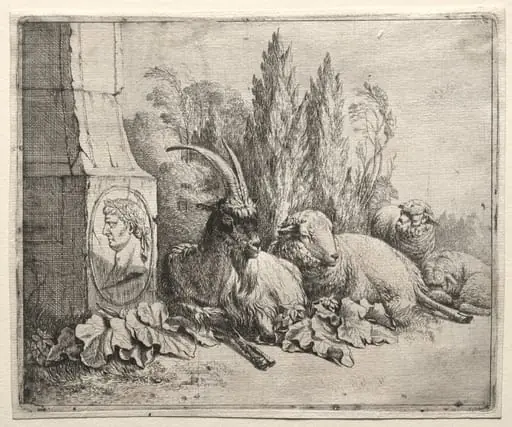 Bust at the Bottom of a Pyramid
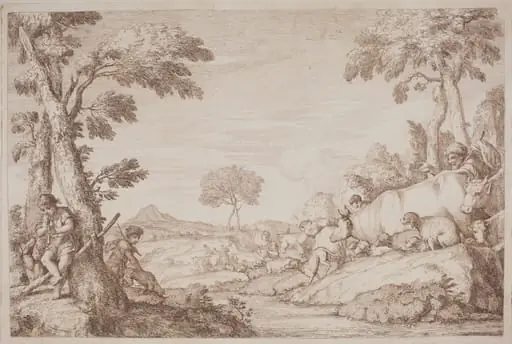 A Pastoral Journey with a Boy Playing His Flute by a Tree
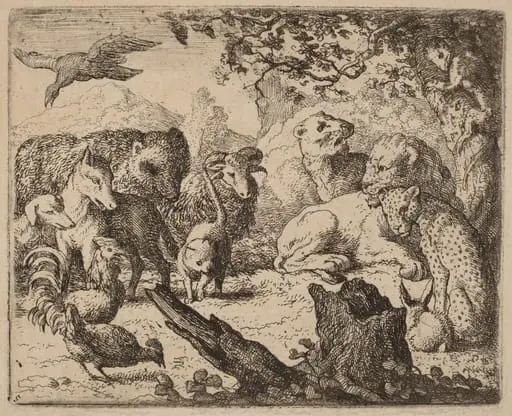 The Lion Announces a Peace
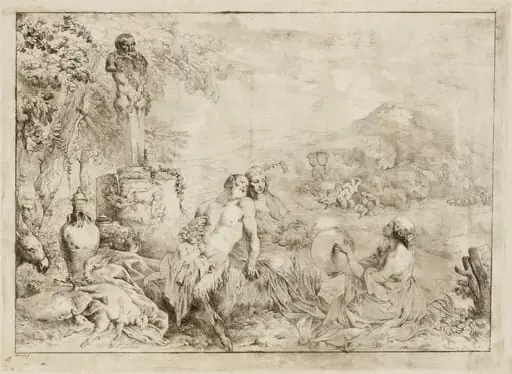 Landscape with a Satyr Family and Classical Sculpture
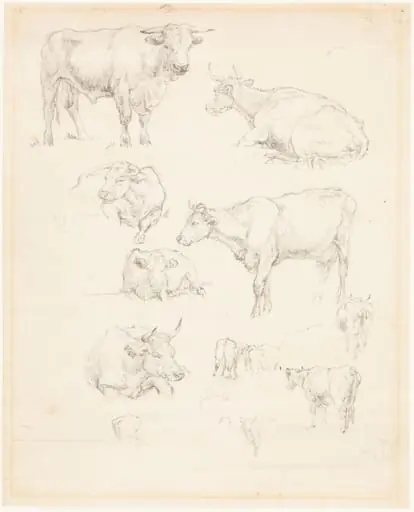 Studies of Cattle
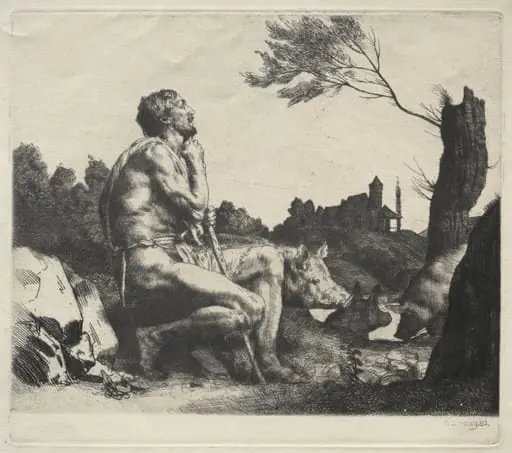 The Prodigal Son
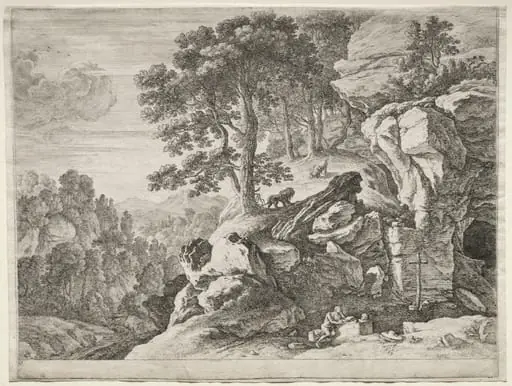 The Penitents: St. Jerome in the Desert
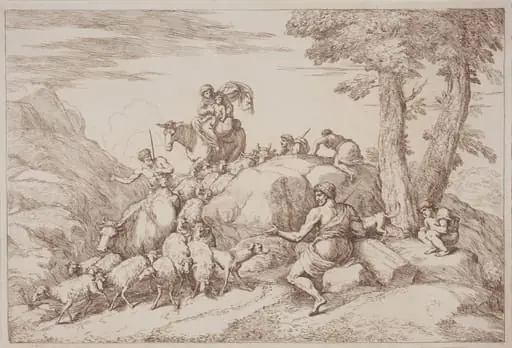 A Pastoral Journey with a Mother and Child on Horesback and an Elderly Shepherd Seated