Artwork
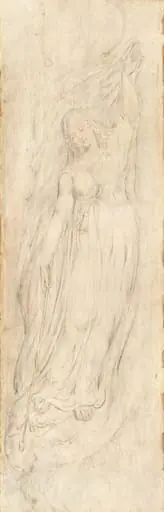
Sketch for the Title-Page of the Engraved Illustrations to the Book of Job
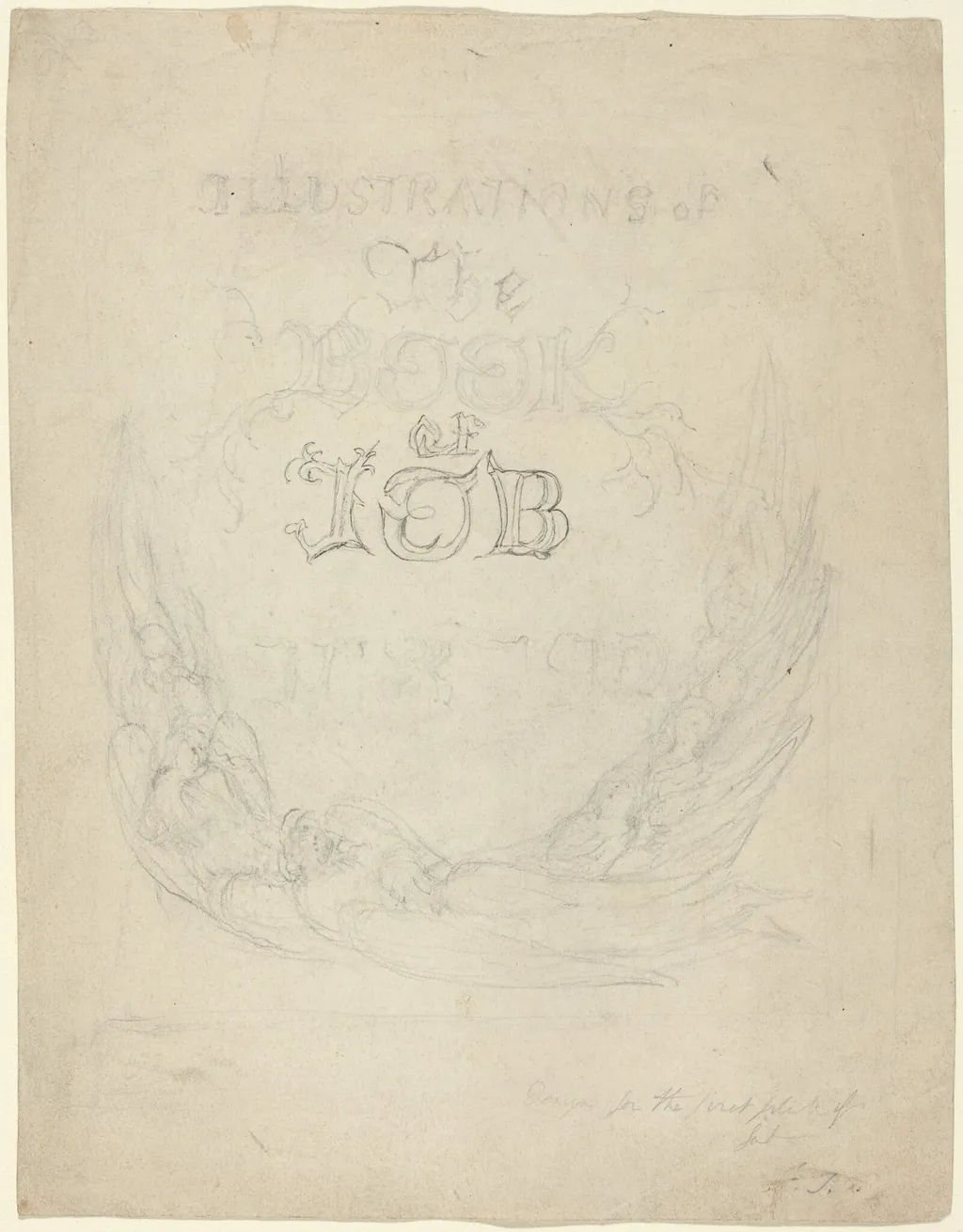
Sketch for the Title-Page of the Engraved Illustrations to the Book of Job is a graphite drawing by the Romanticist artist William Blake. It dates from 1824 and is held in the collection of the National Gallery of Art.
- Inscription
- Inscribed:by Tatham lower right: Design for the first plate of / Job / F.T.; by W.M. Rosetti center verso: This is Blake's original Design for the Frontispiece to his Job / As engraved, the Frontispiece is similar, but by no means / identical / The penciling at foot of draw ing / is by Fred.k Tatham, who knew/ Blake personally
About this work
Overview
This preparatory drawing, executed in graphite with pen and ink, was created by William Blake around 1824 as a study for the title page of his engraved edition of the biblical Book of Job. The work remains a modest, unfinished sketch that records Blake’s initial compositional ideas before the final plate was cut.
Subject & Meaning
The composition centers on a title block that reads “Illustrations of the Book of Job” in irregular, hand‑drawn lettering. Beneath the text a simple crown crowns the initials “L B,” while faint silhouettes suggest a human figure and a tree branch, hinting at themes of authority, identity, and the natural world that recur in Blake’s Job illustrations.
Technique & Style
Blake employed loose graphite shading to outline the overall layout, then reinforced key elements with pen‑and‑ink strokes. The drawing’s uneven lettering and sketchy figures illustrate his experimental approach, using the medium to explore typographic and symbolic arrangements without the precision of a finished engraving.
History & Provenance
The sketch was produced during Blake’s later years in London, a period when he was revisiting biblical subjects. It functioned as a working model for the engraved title page that would appear in his limited edition of Job, a project that remained unpublished in his lifetime. The drawing has since entered the catalog of Blake studies as evidence of his creative process.
Context
Created in the Romantic era, the work reflects Blake’s integration of poetry, visual art, and mysticism. His interest in the Book of Job aligns with contemporary concerns about suffering and divine justice, while the sketch’s informal hand mirrors the broader Romantic valorization of individual imagination over academic convention.
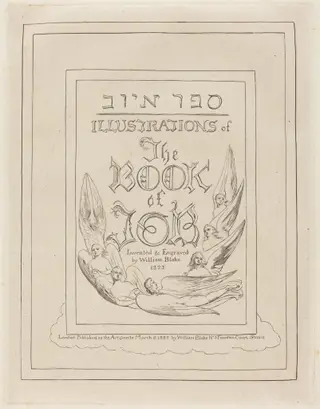
Own this work as a print
Artist & collection
Artist
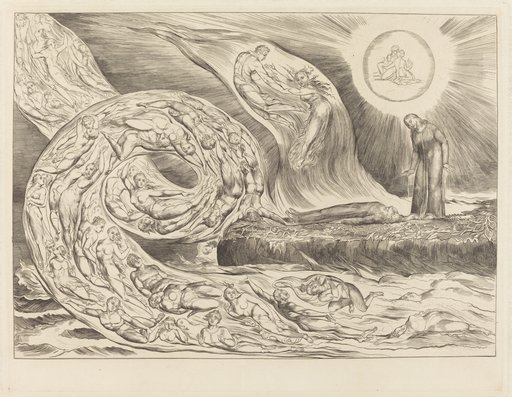
William Blake (28 November 1757 – 12 August 1827) was an English poet, painter and printmaker.

![Sheet of Studies [recto and verso], by John Flaxman](https://artifactworldgallery.com/img/john-flaxman--sheet-of-studies-recto-and-verso--624ac0ec758f08e5-w320.webp) Sheet of Studies [recto and verso]
Sheet of Studies [recto and verso]![An Armed Man Spurning a Woman [recto], by William Blake](https://artifactworldgallery.com/img/william-blake--an-armed-man-spurning-a-woman-recto--1c6f4d8e0f65d2b6-w320.webp) An Armed Man Spurning a Woman [recto]
An Armed Man Spurning a Woman [recto]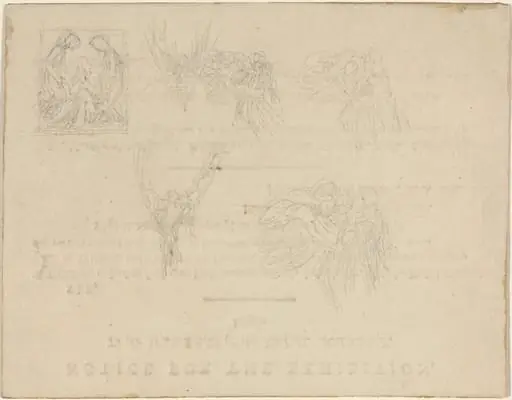 Sheet of Studies
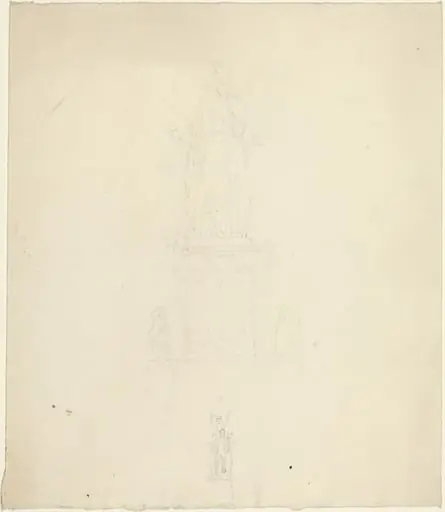 Design for Monument or Metalwork
![Sheet of Studies [recto and verso], by John Flaxman](https://artifactworldgallery.com/img/john-flaxman--sheet-of-studies-recto-and-verso--3a0de97c6f7386d1-w320.webp) Sheet of Studies [recto and verso]
Sheet of Studies [recto and verso]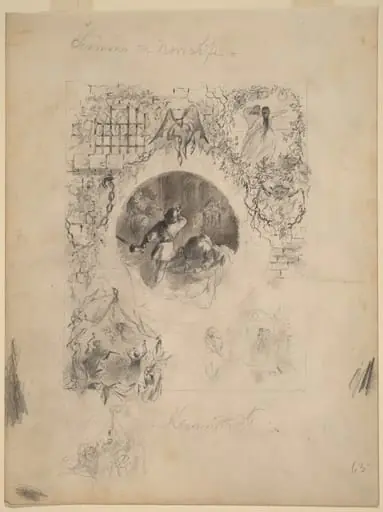 Title Page for Kensworth
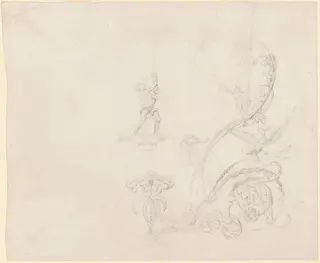 Studies of Fountain Decorations
![Sheet of Studies [recto and verso], by John Flaxman](https://artifactworldgallery.com/img/john-flaxman--sheet-of-studies-recto-and-verso--f6a63f702efb4c37-w320.webp) Sheet of Studies [recto and verso]
Sheet of Studies [recto and verso]![Studies of Crowing Rooster and Reclining Figures [recto and verso], by John Flaxman](https://artifactworldgallery.com/img/john-flaxman--studies-of-crowing-rooster-and-reclining-figures-recto-and-v--6ae88f69b8f5a01b-w320.webp) Studies of Crowing Rooster and Reclining Figures [recto and verso]
Studies of Crowing Rooster and Reclining Figures [recto and verso]