Artwork
Madame Bergeret
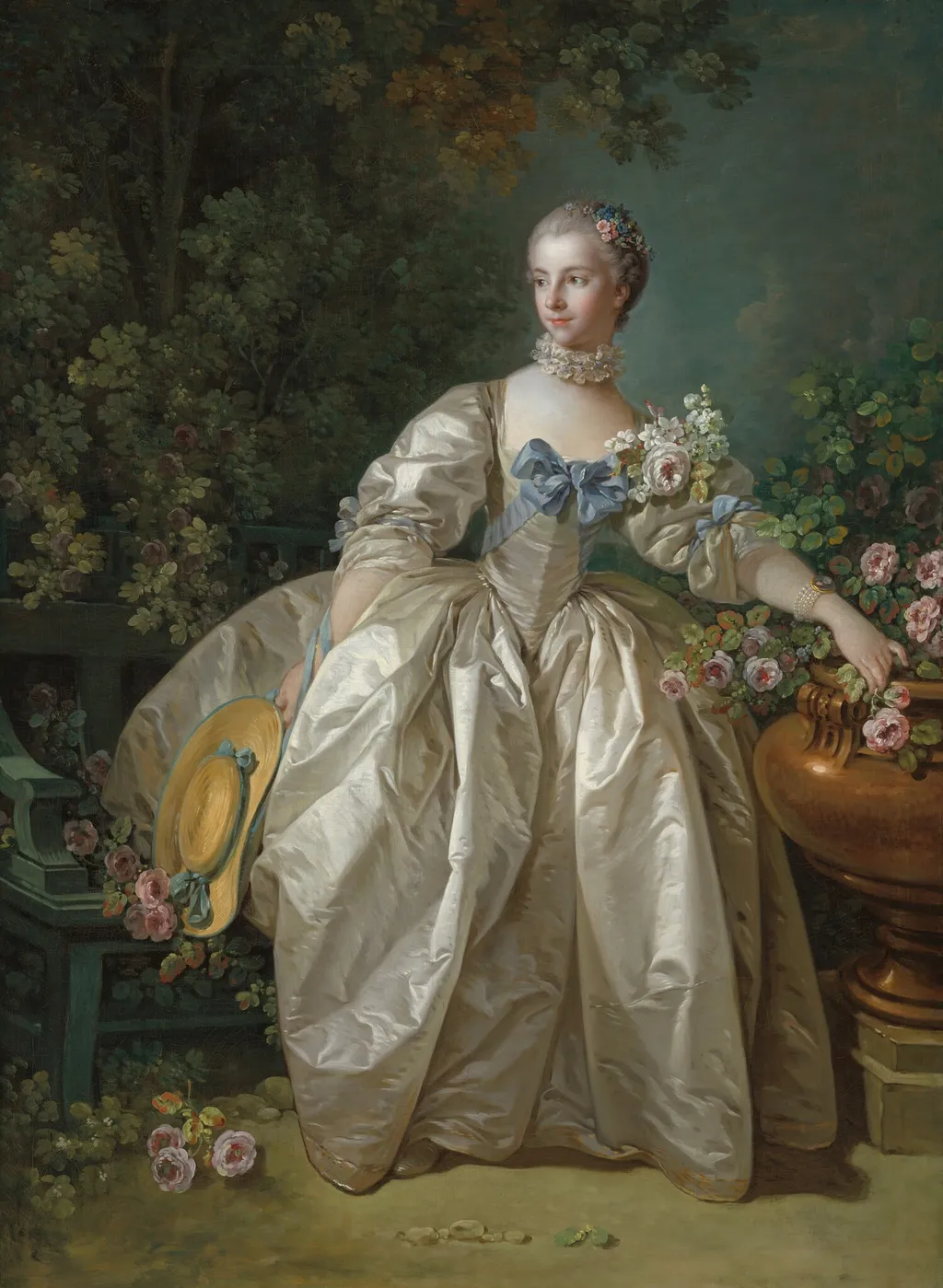
Madame Bergeret is an oil painting by the Rococo painting artist François Boucher. It dates from 1766 and is held in the collection of the National Gallery of Art. Created in 1766, this oil on canvas depicts a seated woman surrounded by a lush garden setting.
About this work
Technique & Style
The brushwork remains largely invisible beneath the refined modeling of light and shadow, producing the silky sheen of silk and the soft fall of drapery.
The painting is executed in oil on canvas and measures 143.5 cm in height by 105.4 cm in width.
Technically, Boucher’s handling is evident in the smooth, blended transitions between flesh and fabric, particularly around the sitter’s face and the delicate lace of her fichu. The brushwork remains largely invisible beneath the refined modeling of light and shadow, producing the silky sheen of silk and the soft fall of drapery. The palette is restrained yet luminous, with pearlescent whites and pale blues harmonizing with deeper rose tones in the costume and chair upholstery.
The overall condition is stable, with no significant losses reported; the surface retains its original delicacy of modeling and subtle glazing typical of Boucher’s mature style.
History & Provenance
Painted by François Boucher in 1766, Madame Bergeret was commissioned for Pierre Jacques Onésyme Bergeret de Grancourt, the husband of the sitter. Following the artist's completion, the work remained within the Bergeret family, passing by inheritance to their elder son, Pierre Jacques Bergeret de Grancourt. The ownership chain subsequently transferred to the sitter's stepson, Ange Philibert de la Girennerie, before moving through a series of maternal relatives: his aunt Barbe Françoise Victoire Poisson de la Chabeaussière Cotillon de Torcy, her daughter Françoise Julie Cotillon de Torcy Le Bos de Sainte Croix, and finally her daughter Angélique Le Bos de Sainte Croix, comtesse Fontaine de Resbecq.
The painting remained with the Resbecq family until it was sold to Wildenstein & Co. by 1920. The Samuel H. Kress Foundation acquired the work in 1942, and it was gifted to the National Gallery of Art in 1946.
The painting is held by the National Gallery of Art, Washington, as part of the Samuel H. Kress Collection. Its accession number is 1946.1.10.
It was first acquired by Wildenstein & Co. by 1920, then sold to the Samuel H. Kress Foundation in 1942, and subsequently gifted to the National Gallery of Art in 1946.
Legacy
The painting Madame Bergeret remained in private French collections until 1920, when it entered the market through Wildenstein & Co. and was acquired by the Samuel H. Kress Foundation in 1942. Its donation to the National Gallery of Art in 1946 solidified its presence in a public collection, where it continues to be studied as part of the Kress Collection.
The work is frequently cited in scholarship on Boucher’s late Rococo style, particularly regarding its compositional influence on 19th-century decorative arts and the reevaluation of French aristocratic portraiture in the century after its creation. Its inclusion in major exhibitions, such as the 1986 retrospective at The Metropolitan Museum of Art, Detroit Institute of Arts, and Galeries nationales du Grand Palais, has reinforced its reputation as a representative example of Boucher’s mature portraiture.
Overview
Created in 1766, this oil on canvas depicts a seated woman surrounded by a lush garden setting. The composition combines a delicate palette of pastel greens, pinks, and whites, emphasizing the lightness typical of mid‑eighteenth‑century French painting. The figure’s pose on a green bench, her attire, and the ornamental flora convey the refined domestic elegance favored by the period.
Subject & Meaning
The sitter, identified as Madame Bergeret, is shown in a white dress accented by a blue bow, holding a straw hat tied with a matching ribbon. A pearl necklace and bracelet adorn her, while a single flower crowns her hair. The surrounding blossoms and trees suggest a connection to nature and leisure, reflecting contemporary ideals of feminine grace and genteel recreation.
Context
The painting belongs to a broader trend in 18th‑century France that celebrated intimate, garden‑scene portraits of elite women. Such images combined personal likeness with idealized settings, aligning with the era’s taste for decorative elegance and the cultural emphasis on refined domestic spaces.
Own this work as a print
Artist & collection

Artist
François Boucher was a French painter, draughtsman and etcher, who worked in the Rococo style.



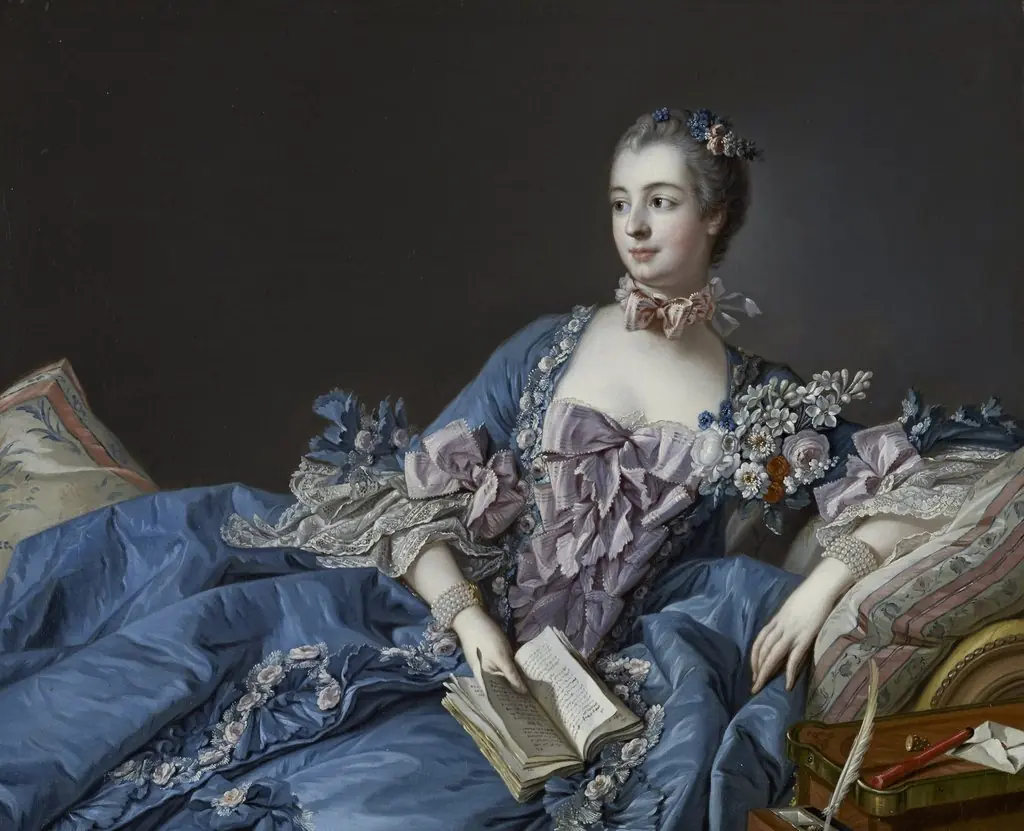 Madame de Pompadour
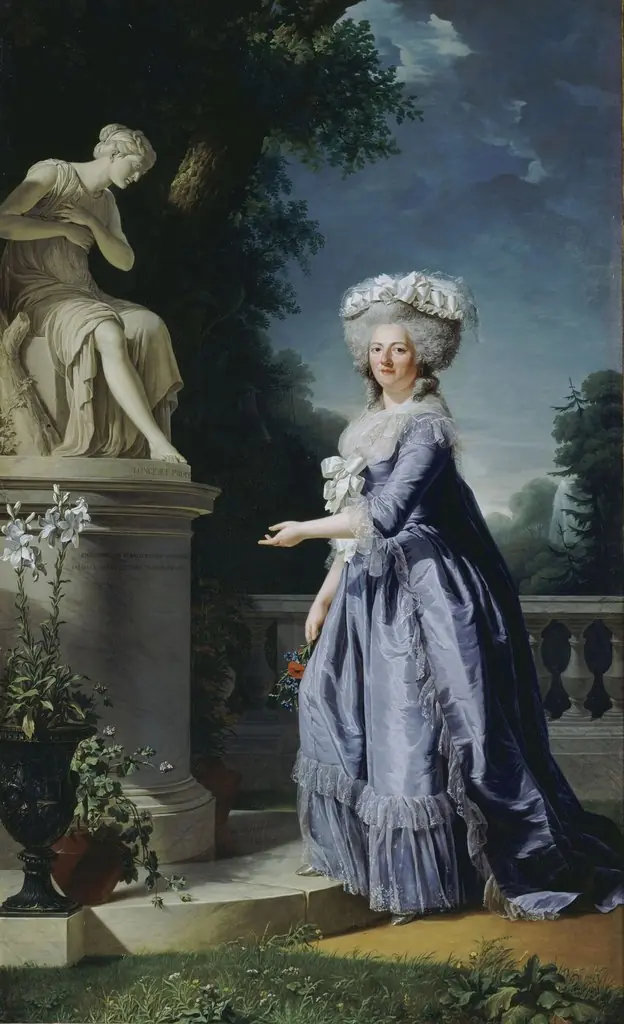 Madame Victoire of France
 Portrait of Charlotte Beatrix Strick van Linschoten
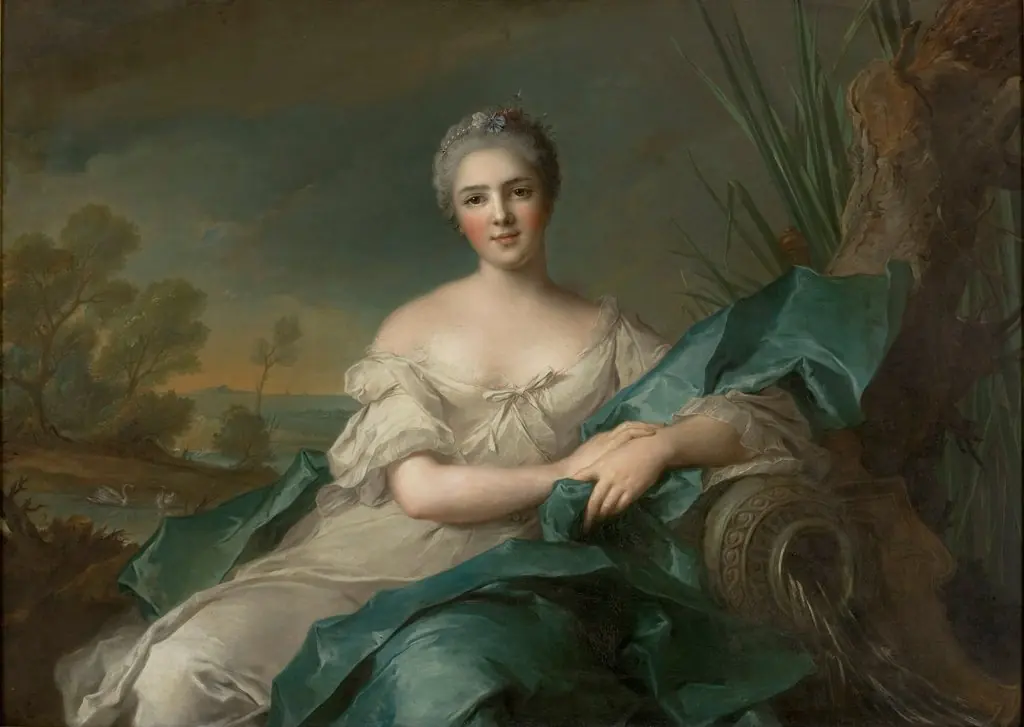 Princess Victoire of France - The Water
 The Queen Dowager Juliane Marie
 The Queen Dowager Juliane Marie
 Portrait of Grand Duchess Maria Fiodorovna
 Louise Margarethe (1730-1820) Prinzessin Arenberg, Dreiviertelporträt
 Henriette of France as Flora
 The Marquise de Pompadour as a Gardener