Artwork
Baveno
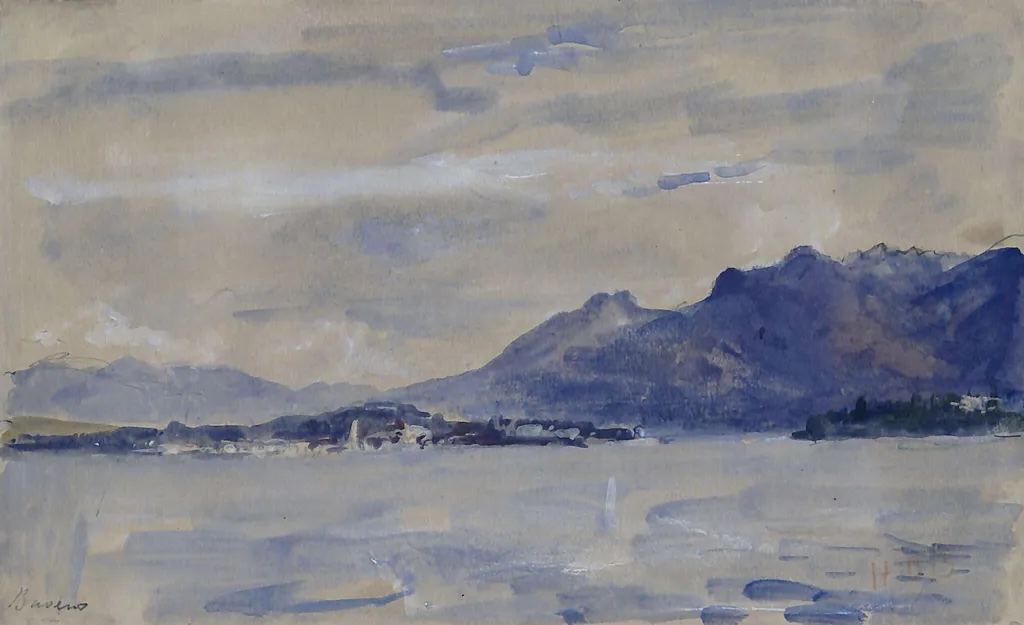
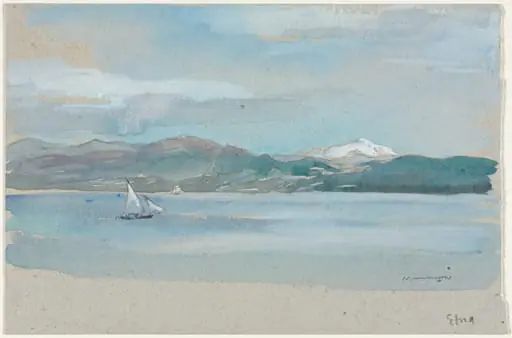
Baveno is a watercolor work on paper by the Plein Air artist Hercules Brabazon Brabazon. It dates from 1850 and is held in the collection of the Victoria and Albert Museum.
About this work
Overview
The work is part of the Victoria and Albert Museum’s collection, where it exemplifies the artist’s affinity for atmospheric effects and spontaneous brushwork.
Hercules Brabazon Brabazon created Baveno around 1850 as a watercolour landscape, reflecting his engagement with the British tradition of outdoor painting. The work is part of the Victoria and Albert Museum’s collection, where it exemplifies the artist’s affinity for atmospheric effects and spontaneous brushwork. Its modest scale and delicate execution align with the intimate character of 19th-century watercolour studies.
Subject & Meaning
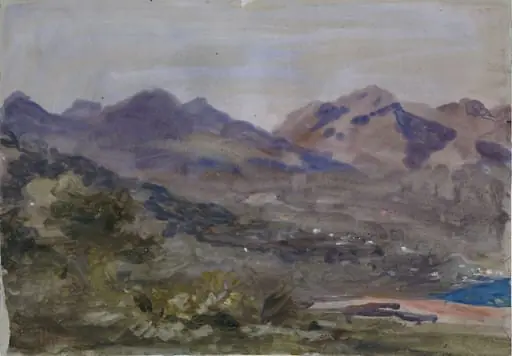
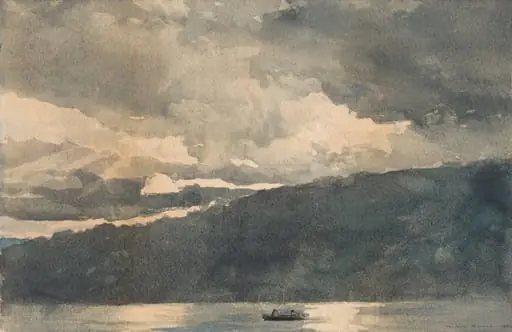
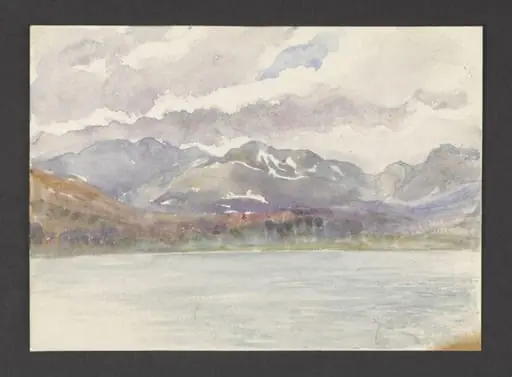
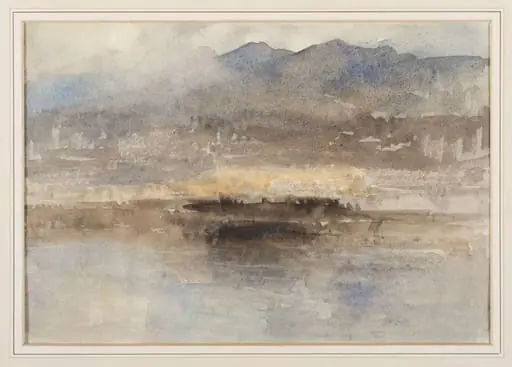
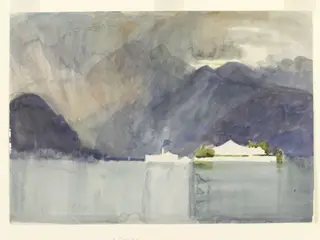
The painting portrays a tranquil lakeside in Baveno, Italy, with distant mountains softened by haze and a still, reflective surface of water. There are no figures or architectural elements, emphasizing nature’s quiet presence. The scene conveys a sense of stillness and transient light, suggesting a moment observed rather than constructed, an expression of the artist’s sensitivity to natural ambiance.
Technique & Style
Brabazon employed loose, fluid washes to suggest form without definition, avoiding sharp contours in favor of tonal gradations. The palette is restrained, dominated by pale blues, greys, and off-whites, enhancing the misty atmosphere. His technique reveals the immediacy of plein air practice, with watercolour’s transparency allowing underlying paper to contribute to luminosity and airiness.
History & Provenance
Created during Brabazon’s travels in northern Italy, Baveno was likely painted on-site, consistent with his practice of sketching landscapes directly from nature. It entered the Victoria and Albert Museum’s collection in the 19th century, among other watercolours by British artists associated with the Turner tradition. Its preservation reflects institutional interest in watercolour as a serious medium.
Context
In mid-19th century Britain, watercolour was gaining recognition as a legitimate artistic medium, distinct from oil painting. Artists like Brabazon, influenced by Turner, sought to capture fleeting effects of light and weather. Baveno fits within this trend, embodying the shift toward direct observation and emotional resonance over idealized composition.
Legacy
Though not widely known today, Brabazon’s work contributed to the development of British watercolour landscape traditions. Baveno remains a quiet example of how artists used the medium to convey mood through economy of means. Its presence in the V&A underscores the historical value placed on such intimate, observational works within institutional collections.
Artist & collection
Artist
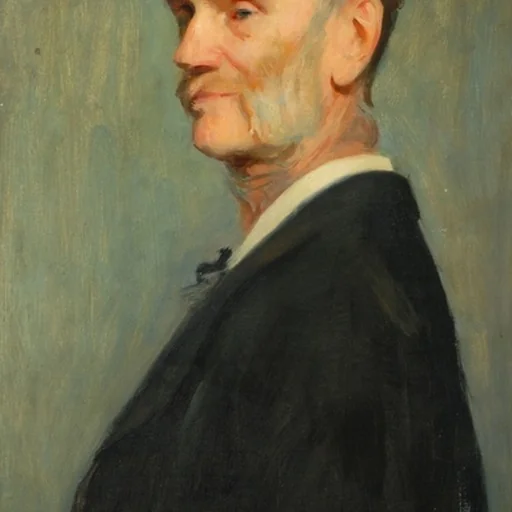
Hercules Brabazon Brabazon (born Hercules Brabazon Sharpe; 27 November 1821 – 14 May 1906) was an English artist, accomplished in Turner-manner watercolours.

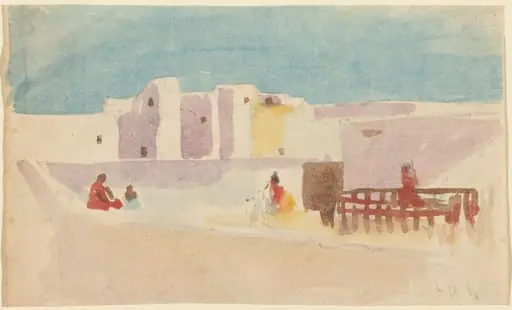 Walls of a North African City
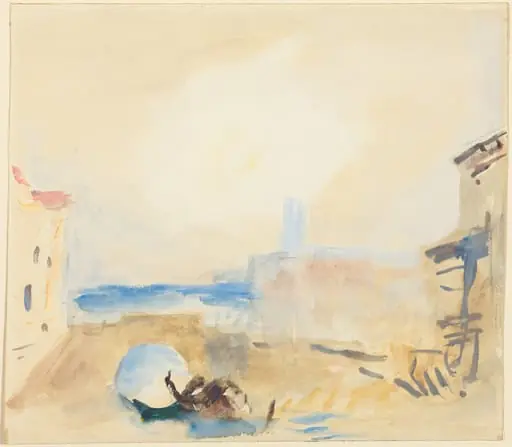 A Gondola Passing Under a Bridge in Venice
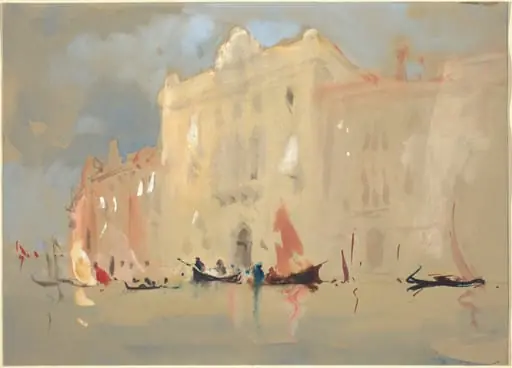 Gondolas Before a Palace on the Grand Canal in Venice
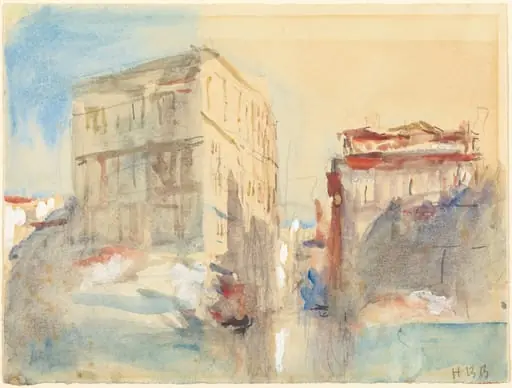 Palaces on the Grand Canal in Venice
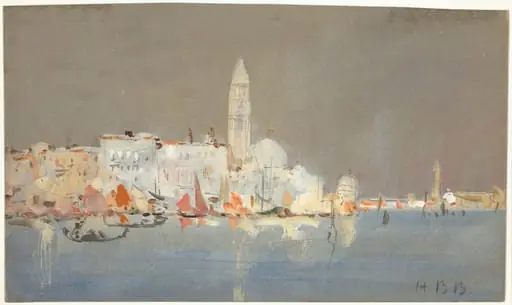 Venetian Capriccio with a Campanile
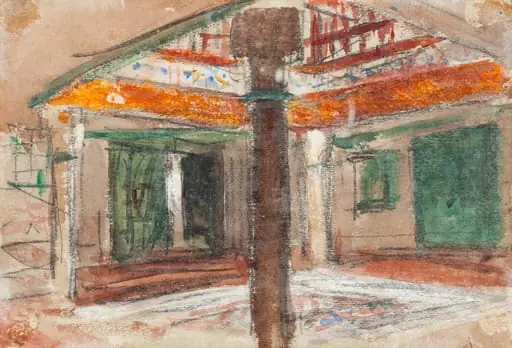 Interior of an Exotic Palace
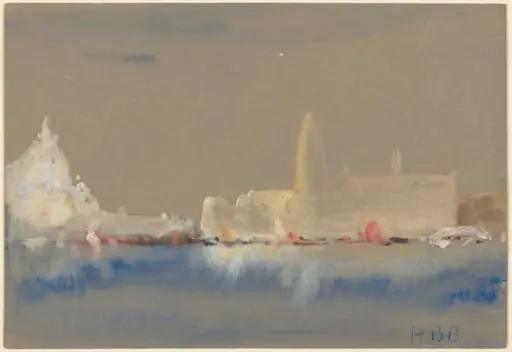 The Salute and the Palazzo Ducale from the Bacino di San Marco
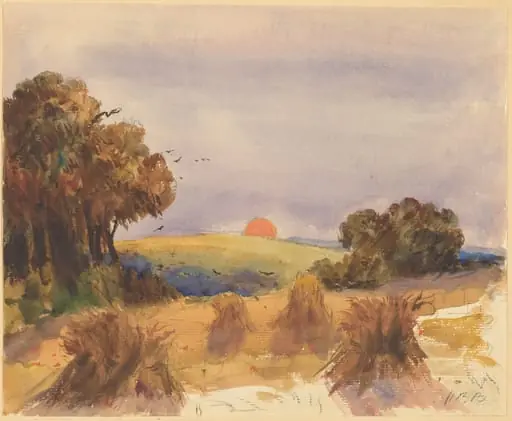 A Cornfield at Sunset