Artwork
The Hon. Sir Francis Burton Conyngham
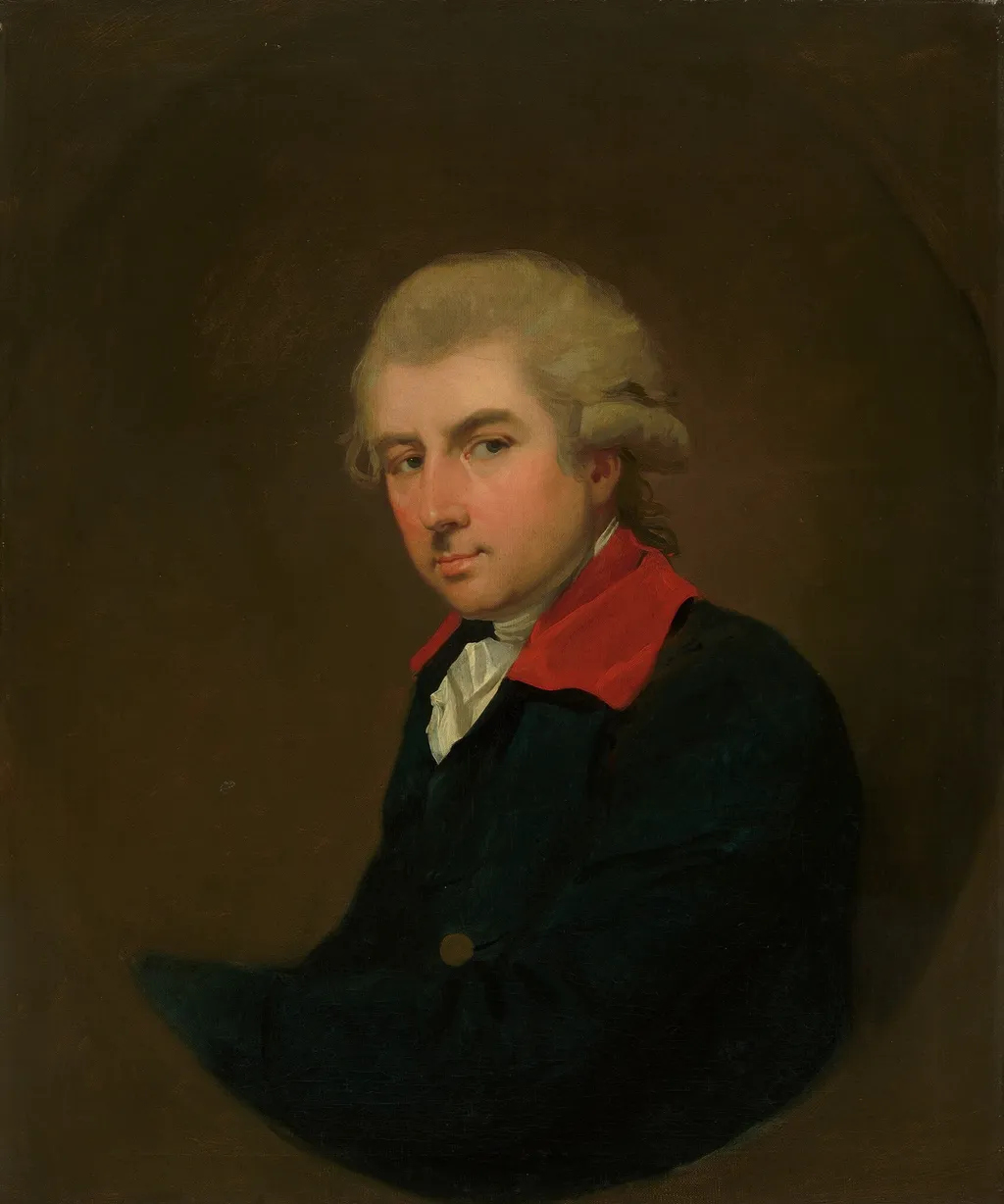
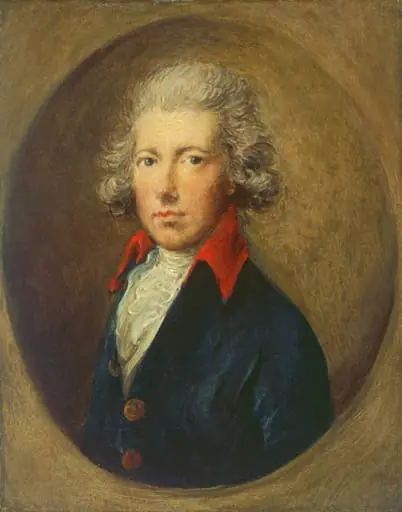
The Hon. Sir Francis Burton Conyngham is an oil painting. It is held in the collection of the National Gallery of Art. The work is an oil painting on canvas portraying a gentleman dressed in a dark blue coat with a vivid red collar.
About this work
Subject & Meaning
The work shows a man of English-Irish heritage in formal attire, reflecting the cultural and political context of Anglo-Irish elites in the late 18th century.
The Hon. Sir Francis Burton Conyngham was painted in 1792 for the sitter himself, depicting a member of an Irish aristocratic family. The work shows a man of English-Irish heritage in formal attire, reflecting the cultural and political context of Anglo-Irish elites in the late 18th century. Its provenance traces a clear lineage from the sitter to his descendants, then through several private collectors before its acquisition by the National Gallery of Art in Washington, D.C., in 1947 as part of the Clarke collection.
The painting's symbolism is rooted in conventional portraiture of the period, emphasizing status and lineage rather than narrative or allegorical meaning. Its creation by an anonymous British artist in 1792 aligns with the neoclassical tradition of capturing the appearance and implied virtue of the British gentry, particularly those connected to colonial territories like Ireland.
Technique & Style
The Hon. Sir Francis Burton Conyngham is executed in oil paint on a canvas support, a standard medium for British portraiture of the late 18th century. Created in 1792, the work measures 75.9 cm in height and 63.9 cm in width. As a formal portrait, the painting adheres to the stylistic conventions of the period, focusing on the likeness of the sitter within a three-quarter length format typical of the era's courtly representation.
History & Provenance
Executed in 1792, this oil on canvas was originally commissioned by its subject, the Hon. Sir Francis Nathaniel Pierpont Burton Conyngham. The work remained within the Conyngham family by descent, passing to the sitter's grandson, William Conyngham Vandeleur Burton, at Carrigaholt Castle. Although the painting likely traversed the holdings of William's father and elder brother during the mid-to-late nineteenth century, it was definitively sold from William's estate to the London dealers Tooth Brothers.
On March 16, 1920, the American collector Thomas B. Clarke acquired the piece in New York through agent G.S. Sedgwick, at which time it was attributed to Gilbert Stuart. Following Clarke's death, his executors sold the work to M. Knoedler & Co. The A.W. Mellon Educational and Charitable Trust purchased the painting from Knoedler on January 29, 1936, as part of the Clarke collection, subsequently presenting it to the National Gallery of Art in 1947.
The painting is held by the National Gallery of Art in Washington, D.C., where it was gifted in 1947 by the A.W. Mellon Educational and Charitable Trust. Its accession number is not specified in the provided sources.
Exhibition history includes a showing at the National Gallery of Art in 1928 as part of the Clarke collection, documented in a catalog annotated by M. Knoedler & Co. and referenced in NGA curatorial records and library holdings.
The work was painted in 1792 for the sitter, the Hon. Sir Francis Nathaniel Pierpont Burton Conyngham, and passed through several owners by descent before being sold by the estate of William Conyngham Vandeleur Burton to Tooth Brothers in London. It was subsequently purchased by Thomas B. Clarke in 1920, then acquired from Clarke's executors by M. Knoedler & Co. in 1936, and finally gifted to the National Gallery of Art in 1947.
Overview
The work is an oil painting on canvas portraying a gentleman dressed in a dark blue coat with a vivid red collar. He is shown in three‑quarter view, his head turned slightly to the left, eyes directed downward, set against a deep, shadowy background that isolates the figure.
Context
Portraits of titled individuals in this period often served both as personal commemoration and as visual affirmation of lineage. The use of dark, dramatic lighting aligns the work with the broader European tradition of Baroque‑inspired portraiture, adapted to a later, more restrained aesthetic.
Artist & collection

 Kommandørkaptajn Henrik Gerner
 Portrait of Yakov Bilibin
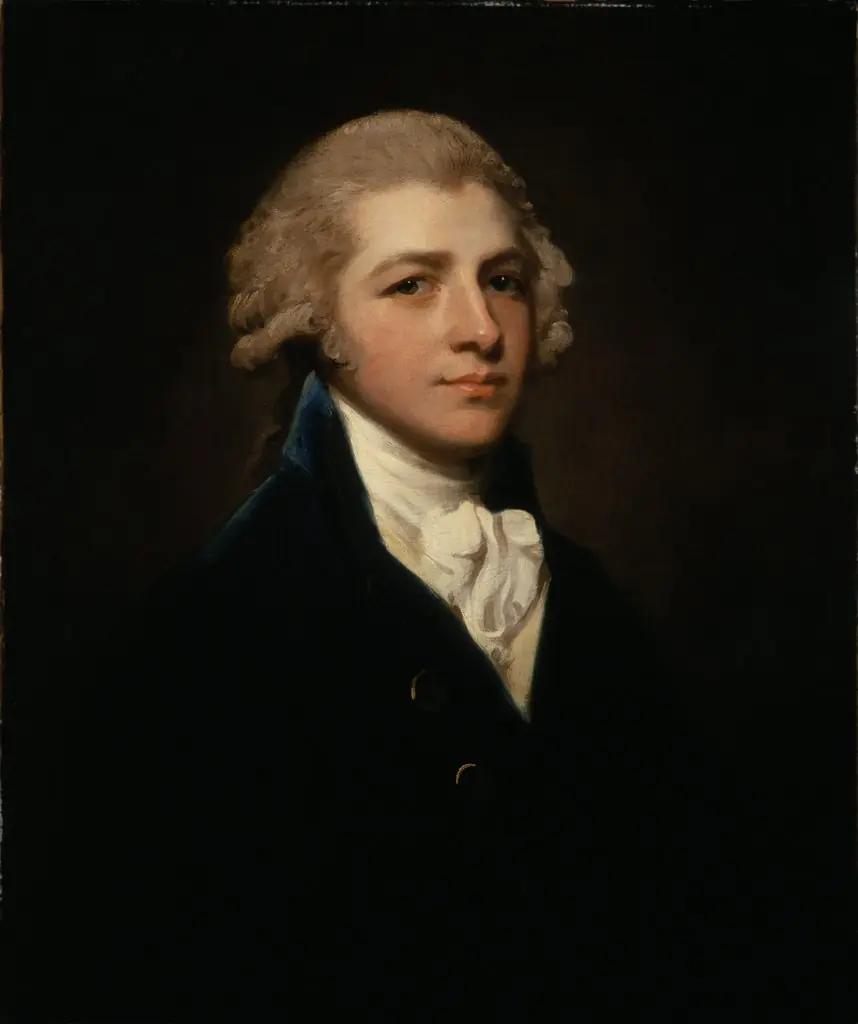 Portrait of Richard Palmer
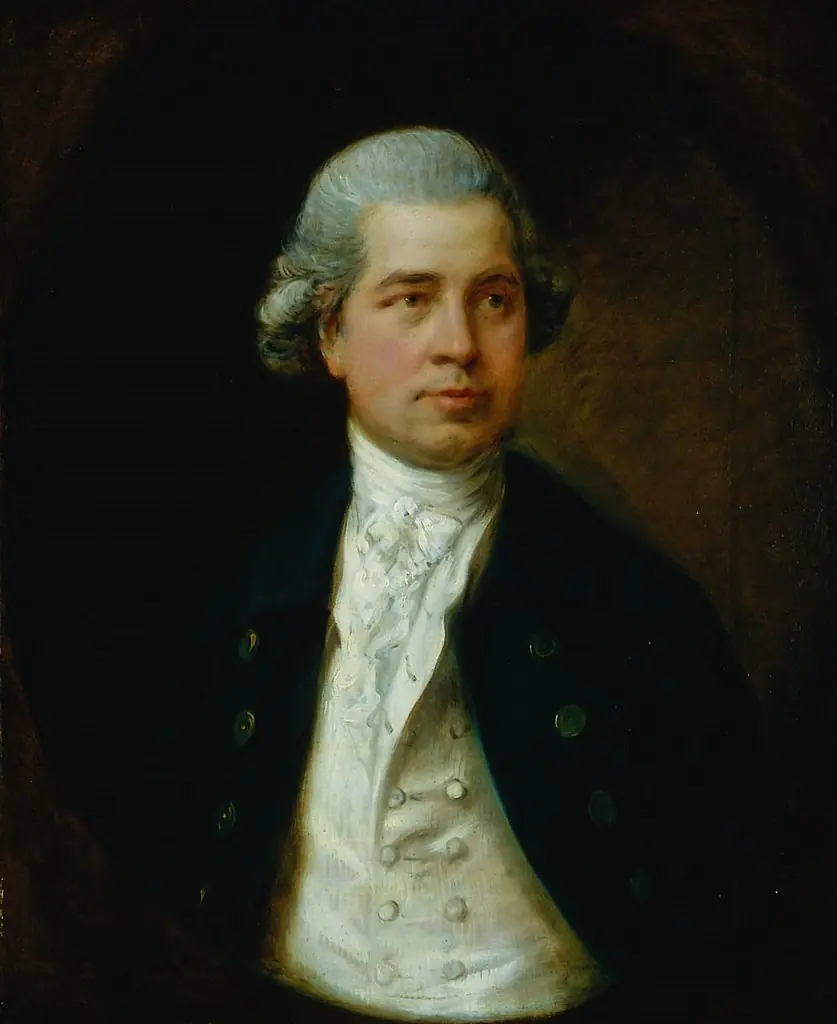 John Taylor (1738–1814)
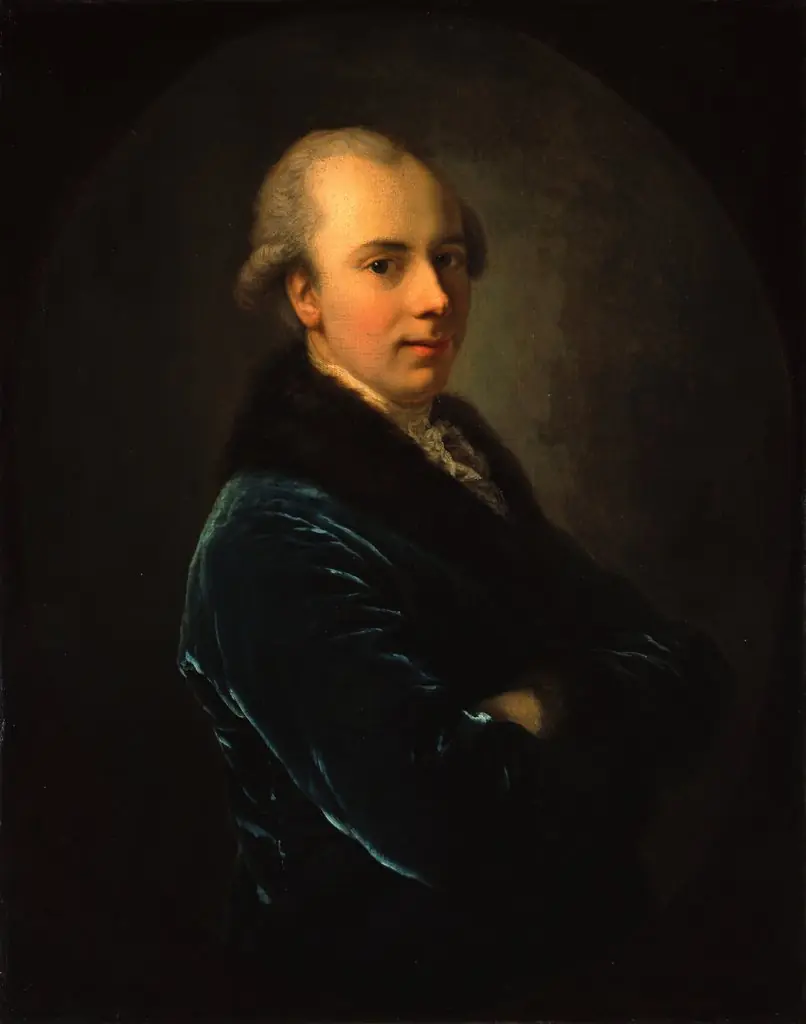 Portrait of Georg Friedrich von Martens
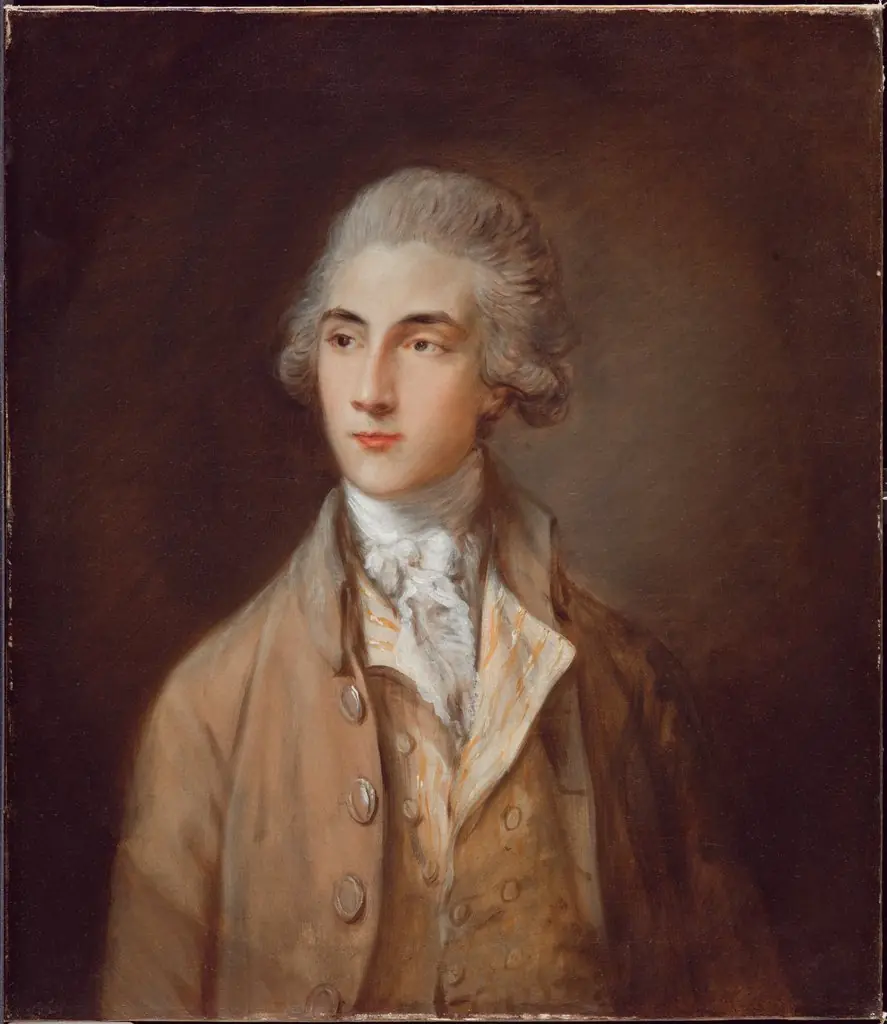 Edward Swinburne
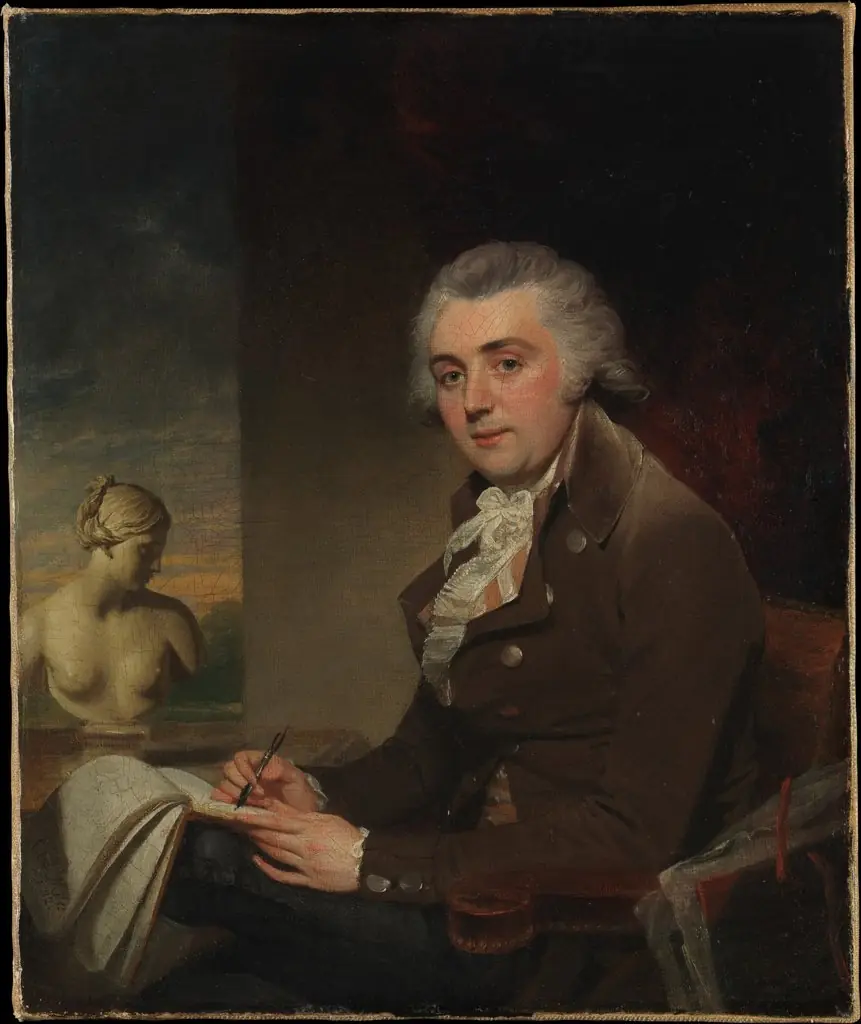 Edward Miles (1752–1828)
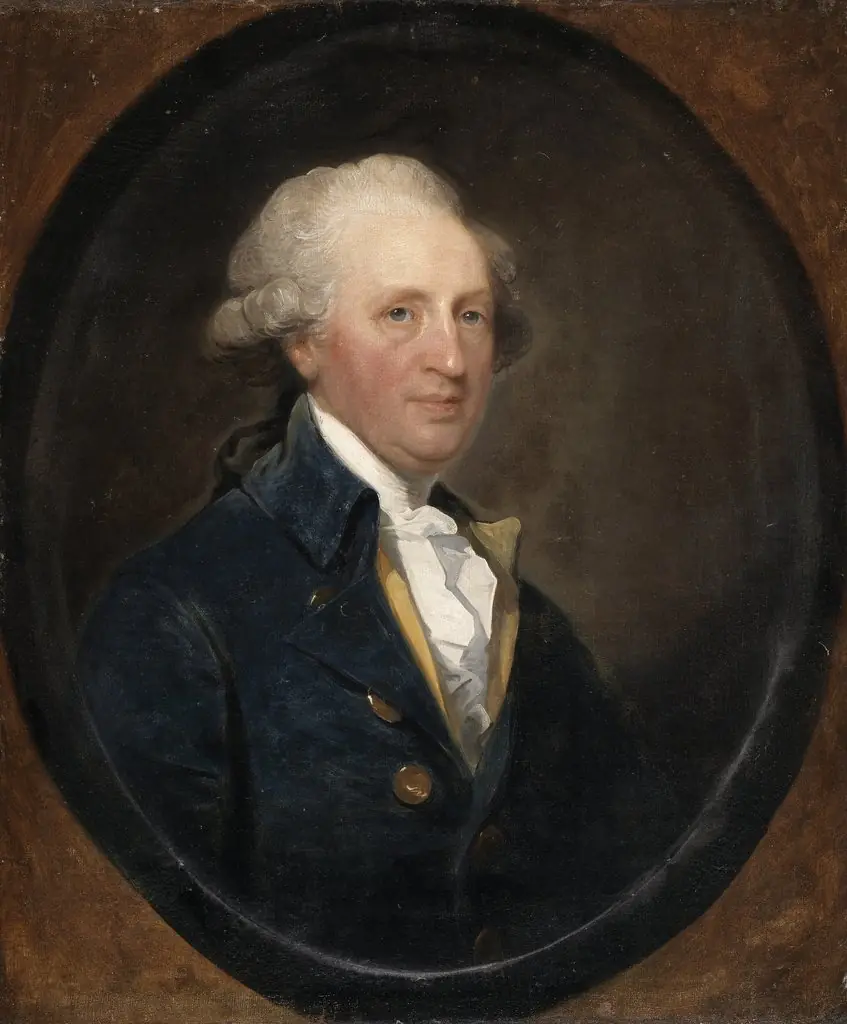 John Beresford (1738-1805), MP
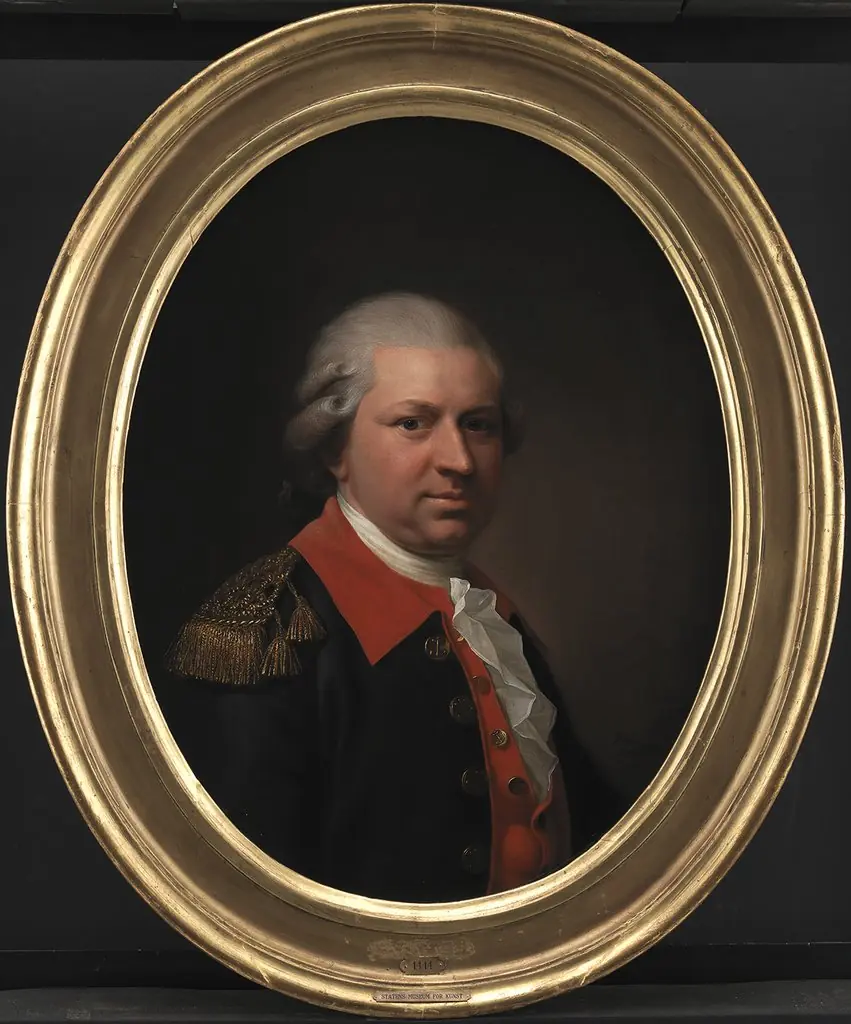 Kommandørkaptajn Henrik Gerner
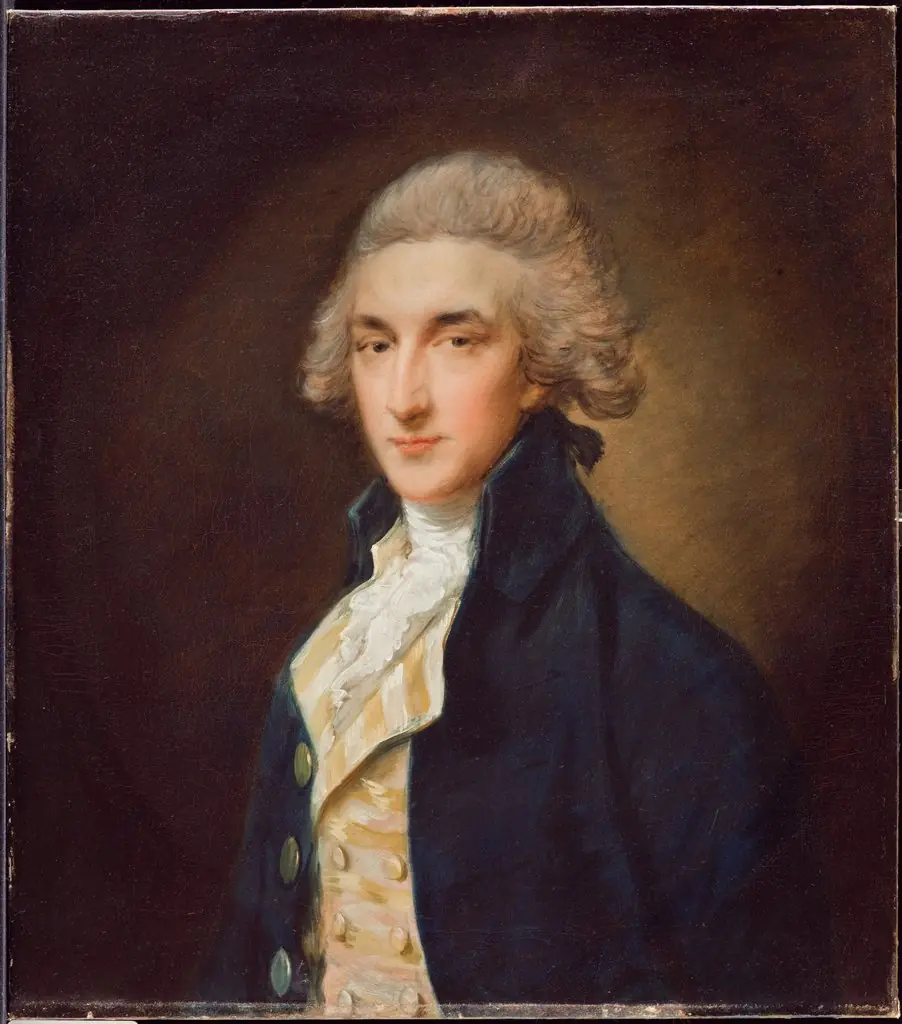 Sir John Edward Swinburne
 William Pitt
- Francis Basset, Lord de Dunstanville