Artwork
Francis Basset, Lord de Dunstanville
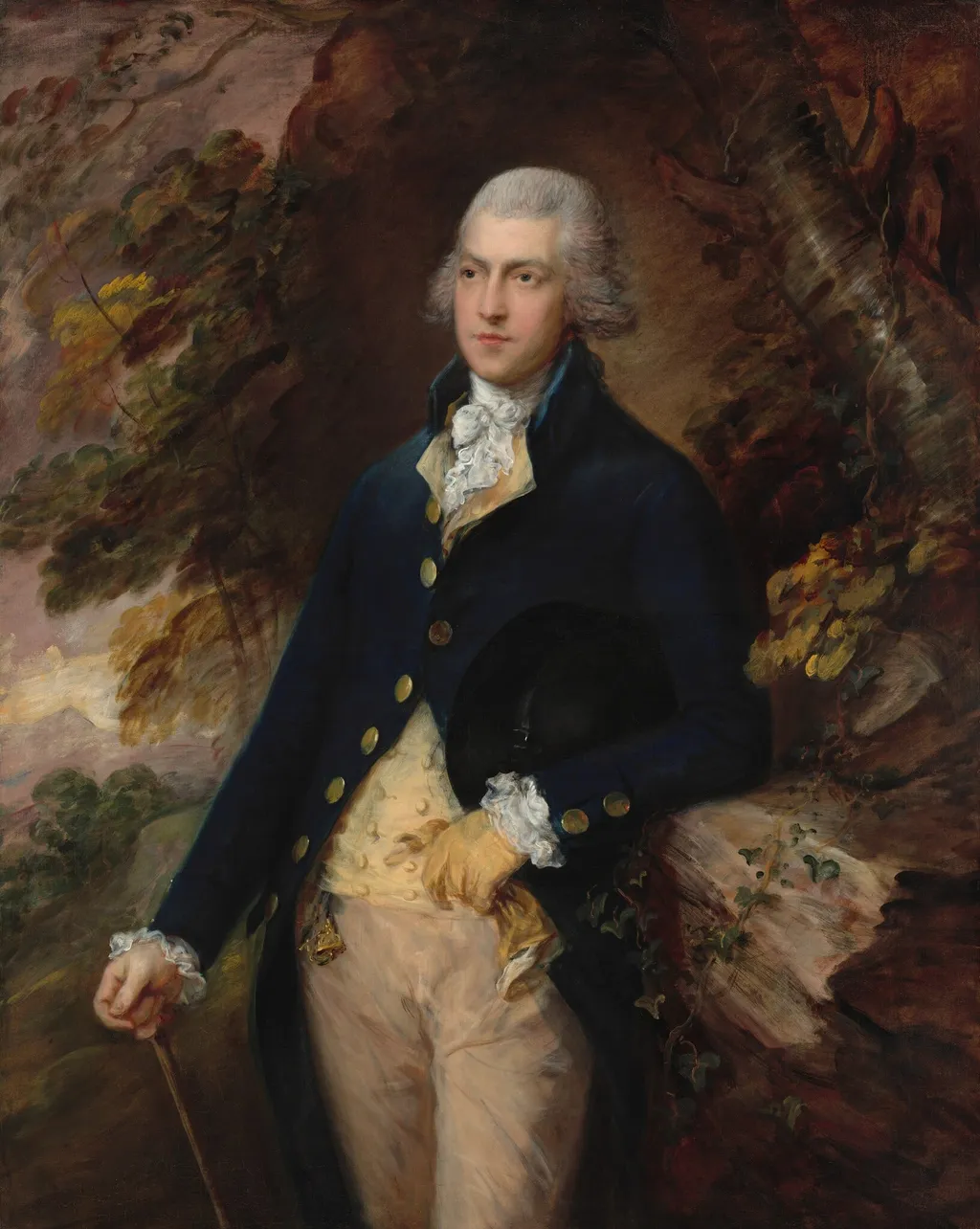
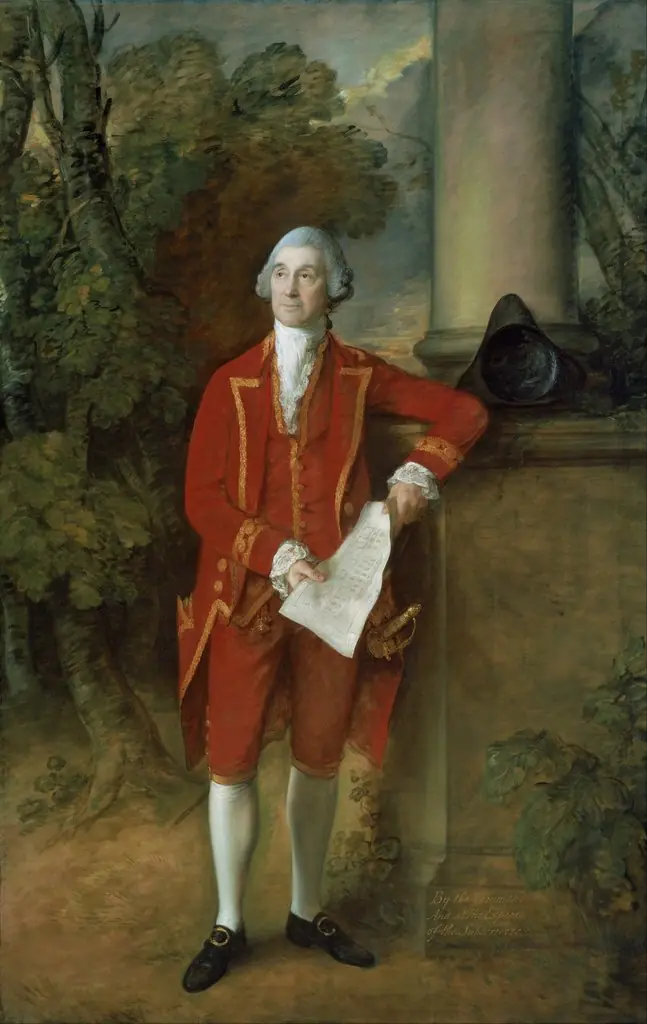
Francis Basset, Lord de Dunstanville is an oil painting by the Rococo painting artist Thomas Gainsborough. It dates from 1786 and is held in the collection of the National Gallery of Art.
About this work
Subject & Meaning
As a Gainsborough portrait, the work functions as a conventional representation of aristocratic status, using pose and attire to convey authority and lineage.
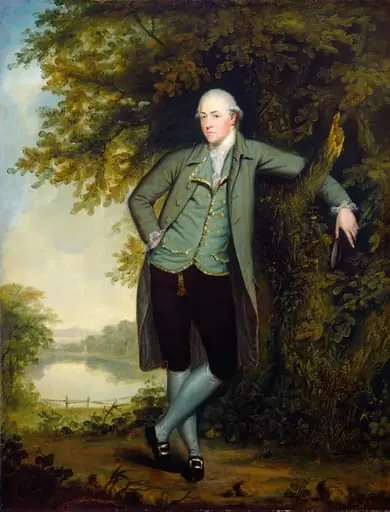
The painting is a full‑length portrait that renders Francis Basset, 1st Baron de Dunstanville, as its principal figure. It was commissioned by the sitter himself, indicating his active role in shaping his public image, and later passed through family ownership before entering public collections. As a Gainsborough portrait, the work functions as a conventional representation of aristocratic status, using pose and attire to convey authority and lineage.
The sitter’s title, created a decade after the painting, is reflected in the description of the subject as “1st Baron de Dunstanville and Basset,” a designation that the artwork helps to visualize. The portrait thus serves both as a record of identity and as a symbolic assertion of noble heritage.
Technique & Style
Thomas Gainsborough executed the portrait of Francis Basset, Lord de Dunstanville, in 1786 using oil paint on a canvas support. The work measures 127 cm in height and 101.6 cm in width. As a formal portrait, the painting depicts the sitter in a full-length format consistent with the genre conventions of the late 18th century.
The medium of oil on canvas allowed for the characteristic handling and textural qualities associated with Gainsborough's portraiture style from this period. The physical object has remained intact since its creation, having descended through the Basset family estate at Tehidy before entering major public collections. The painting is currently held by the National Gallery of Art in Washington, D.C., having been acquired in 2014.
History & Provenance
The portrait of Francis Basset, Lord de Dunstanville was commissioned by the sitter himself around 1786, when he held the title 1st Baron Basset of Stratton; he was created 1st Baron de Dunstanville a decade later, in 1796. The painting likely remained with his family, descending through successive owners of Tehidy, the family estate near Camborne, Cornwall, to Arthur Francis Basset, the fourth owner after the sitter. In 1907 the portrait was sold to Asher Wertheimer in London, and by 1908 it was with Thos.
Agnew and Sons. It subsequently entered the collection of Sir George Donaldson in London, who sold it to William Andrews Clark of New York by 1916. Clark bequeathed the work in 1926 to the Corcoran Gallery of Art in Washington, from which the National Gallery of Art acquired it in 2014.
The portrait is held by the National Gallery of Art, Washington, D.C., accessioned as 2014.79.705, where it entered the collection in 2014 following the Corcoran Gallery of Art’s holdings. It was previously in the collection of William Andrews Clark, New York, by 1916, and before that in the possession of Sir George Donaldson, London. Earlier, it descended within the sitter’s family at Tehidy, Cornwall, and was sold in 1907 to Asher Wertheimer, London, before passing through (Thos. Agnew and Sons, London) in 1908.
Legacy
After leaving the sitter's family collection, the portrait passed through several notable owners, including Asher Wertheimer, Sir George Donaldson, and William Andrews Clark, before being bequeathed to the Corcoran Gallery of Art in 1926 and later acquired by the National Gallery of Art in 2014. The work's provenance, documented in sales records and correspondence, illustrates its movement from a Cornish estate to major American institutions, reflecting changing attitudes toward British portraiture in the 20th century. Scholars have cited the painting in studies of Gainsborough's late style and in catalogues of British portraiture, underscoring its role in scholarship on 18th‑century aristocratic representation.
Its inclusion in the National Gallery of Art's collection has ensured continued public access and academic discussion of Gainsborough's legacy.
Overview
Painted in 1786, Thomas Gainsborough's portrait of Francis Basset, 1st Baron de Dunstanville, depicts the sitter seated in a landscape setting, a hallmark of the artist's late style. Basset is shown in a relaxed, informal pose, wearing a dark coat with a white waistcoat and breeches, his right hand resting on the arm of a chair while his left holds a walking stick. The composition balances the figure against a backdrop of rolling hills and trees, integrating the aristocrat with the natural environment rather than isolating him in a formal interior.
Gainsborough employs his characteristic loose, fluid brushwork to render the textures of the fabric and the atmospheric depth of the background. The work reflects the artist's mature approach to portraiture, where the status of the sitter is conveyed through elegance and connection to the land rather than rigid pomp. Created during the final years of Gainsborough's career, this painting exemplifies the English Rococo influence and the Romantic sensibility that prioritized individual character and the sublime qualities of the countryside.
It stands as a significant example of late 18th-century British portraiture, capturing the confidence of the landed gentry.
Context
The artistic approach seen in this portrait, particularly its elegant presentation of the sitter and the detailed rendering of textiles, aligns with broader trends in British painting. For those interested in exploring similar stylistic characteristics and an emphasis on refined portraiture, the works of Thomas Gainsborough offer a relevant comparison point within the period.
Own this work as a print
Artist & collection

Artist
Thomas Gainsborough (; 14 May 1727 (baptised) – 2 August 1788) was an English painter, draughtsman and printmaker who specialised in portrait and landscape painting.

 Lord Algernon Percy
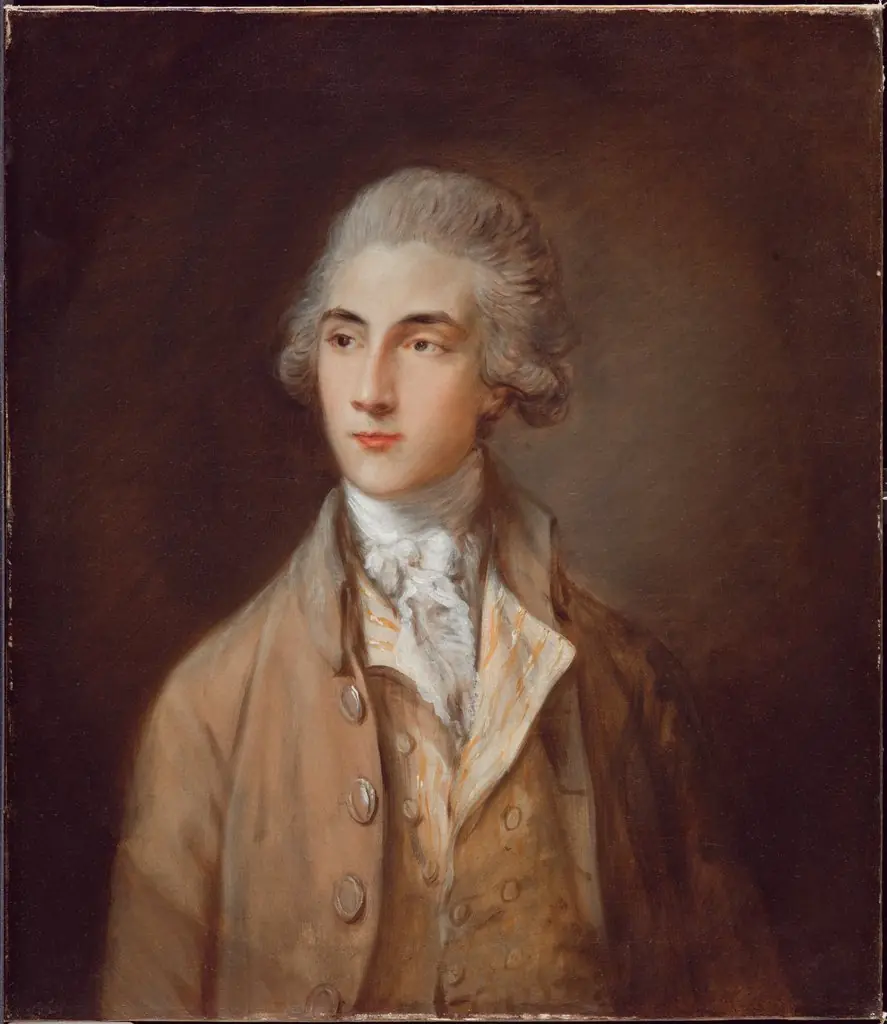 Edward Swinburne
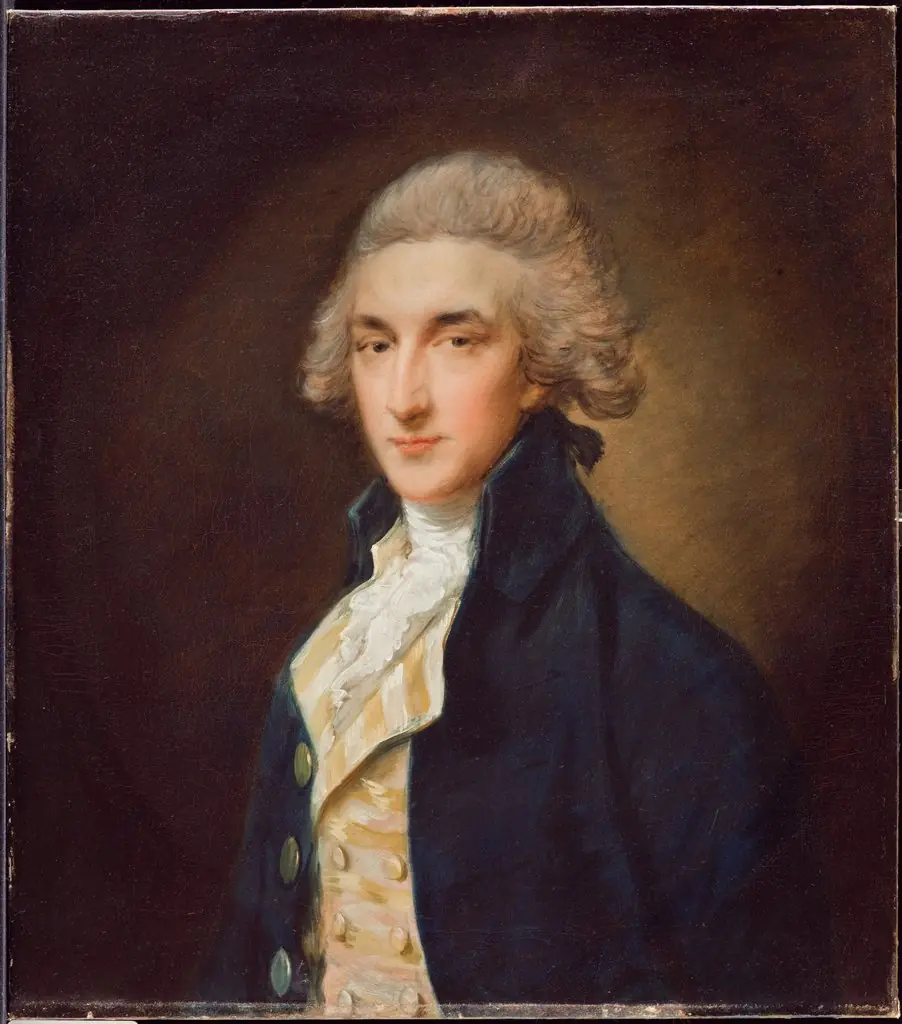 Sir John Edward Swinburne
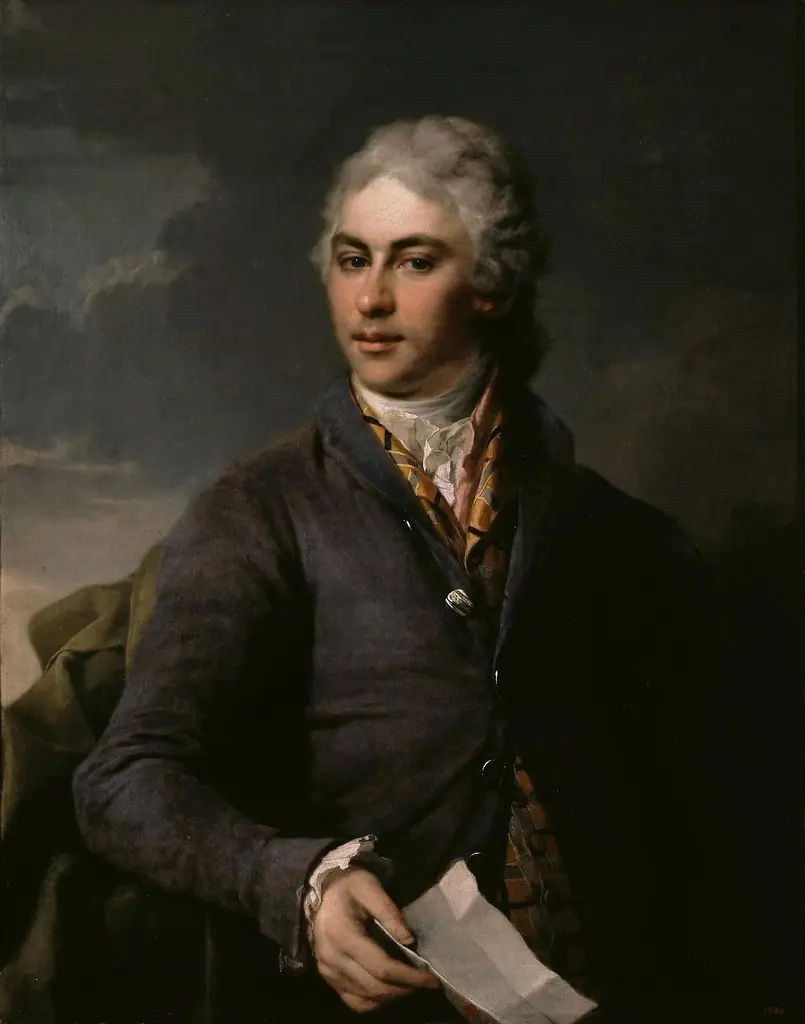 Portrait of Yakov Bilibin
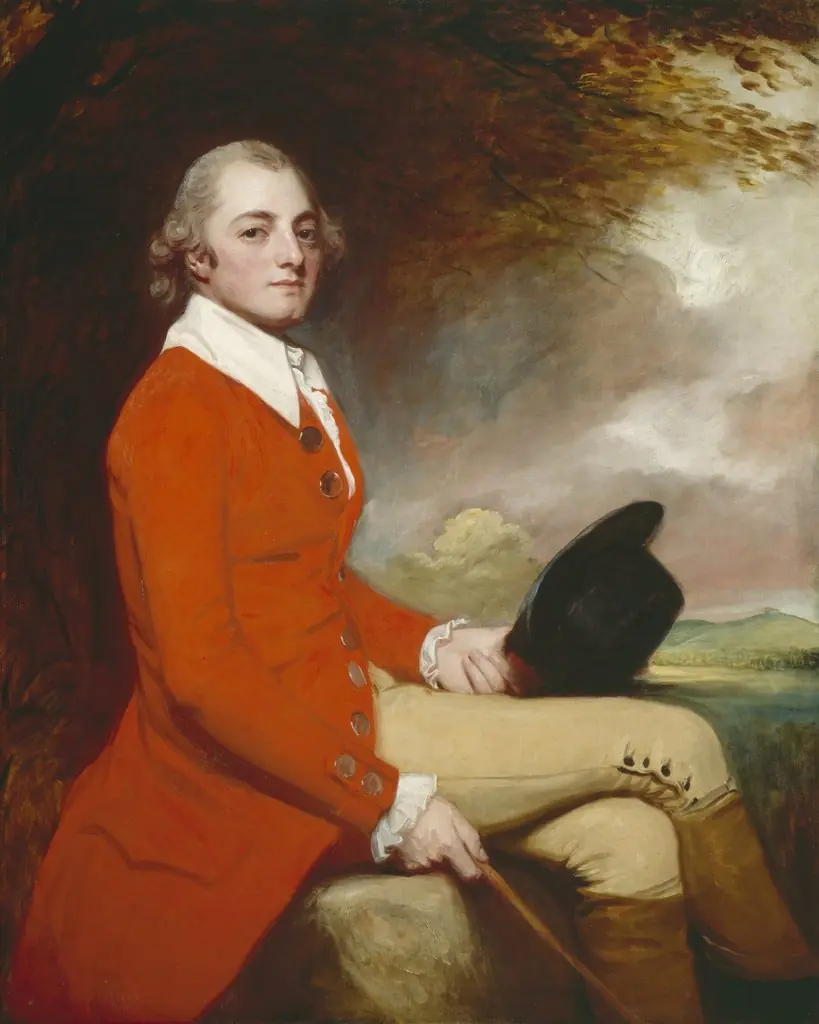 Thomas Grove of Ferne, Wiltshire
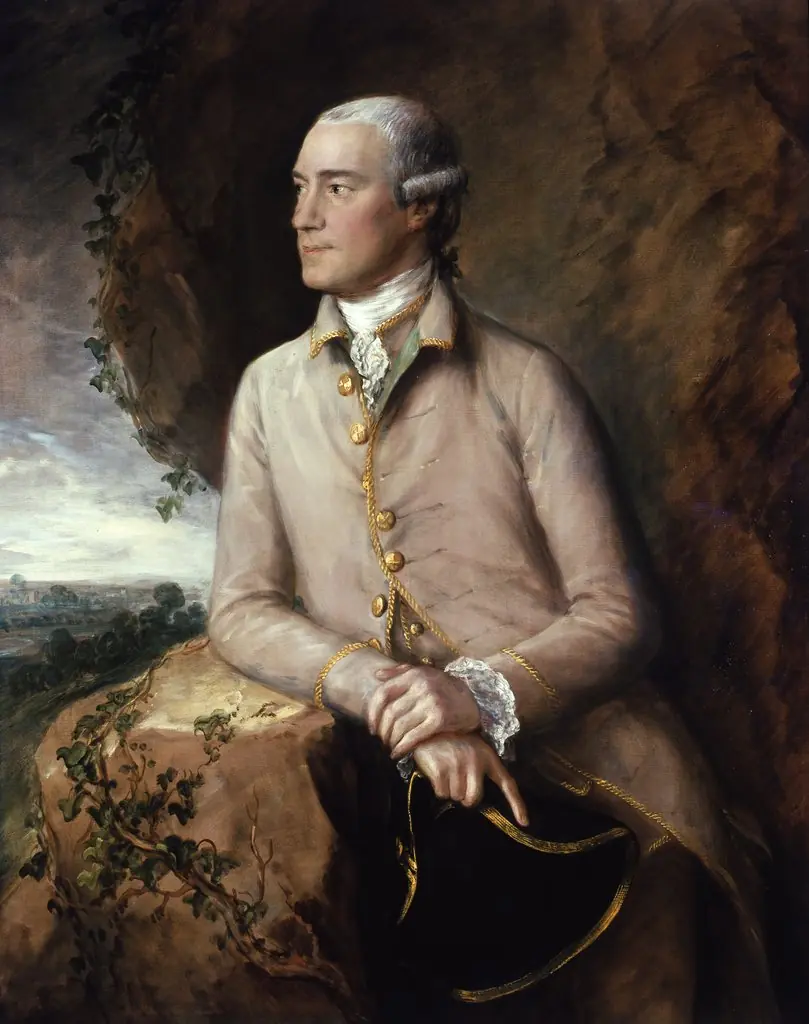 The lawyer Joshua Grigby III (1731-1798)
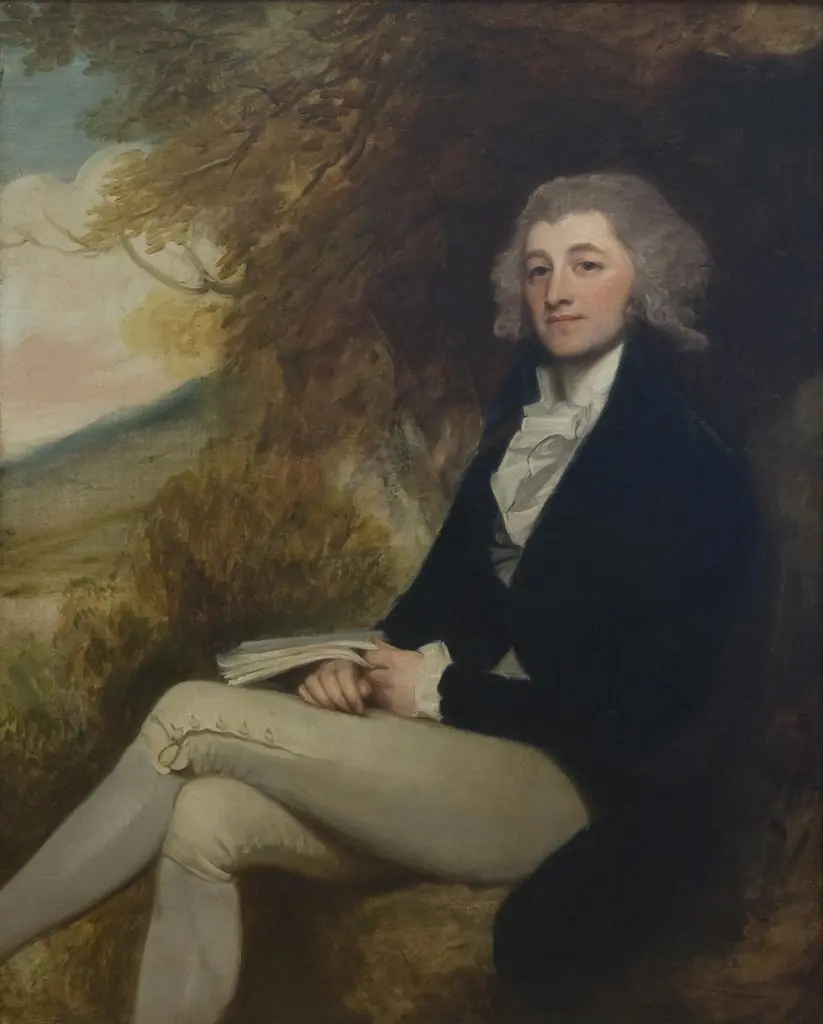 Portrait of Sir John Reade
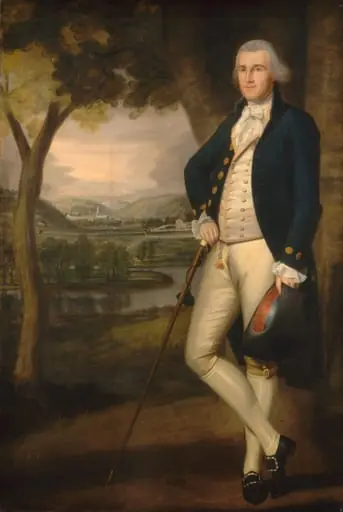 Daniel Boardman
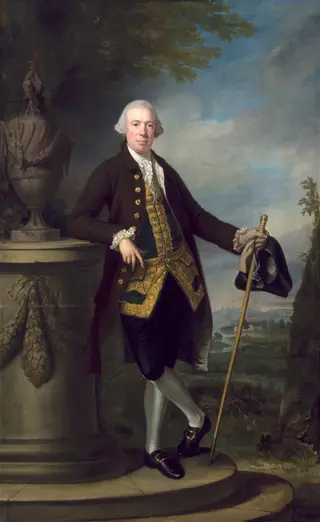 William Denison
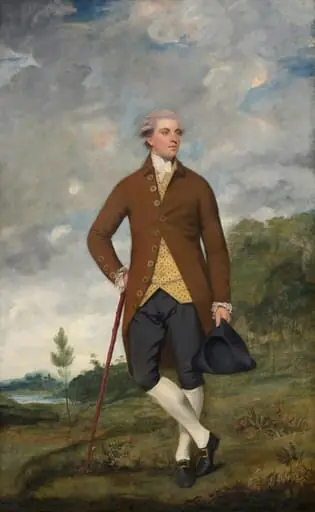 John Musters
 John Eld of Seighford Hall, Stafford
- Francis Basset, I Baron of Dunstanville