Artwork
Horse with Two Monkeys and a Dog
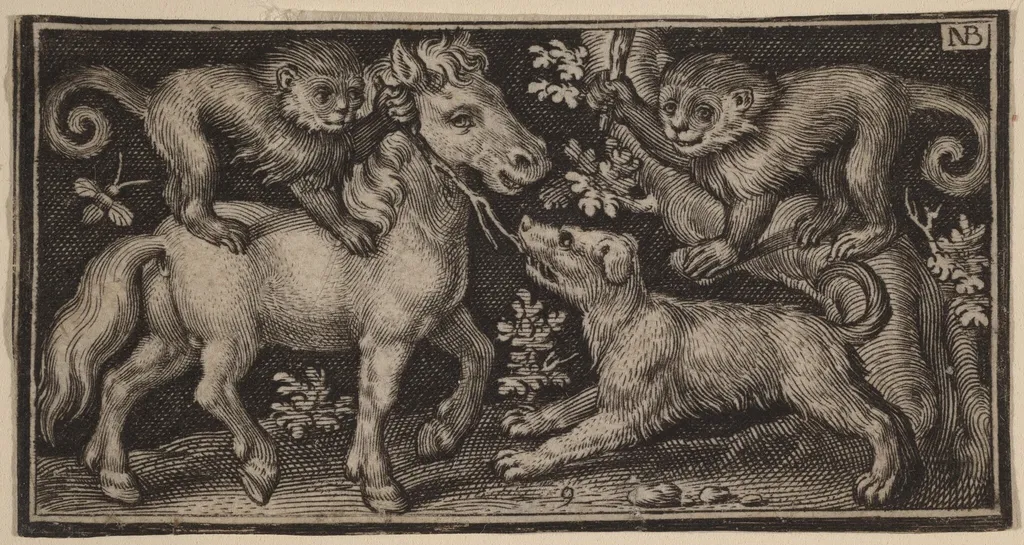
Horse with Two Monkeys and a Dog is an ink print by the Renaissance artist Nicolaes de Bruyn. It dates from 1594 and is held in the collection of the National Gallery of Art.
- Inscription
- Inscribed:upper right corner, in plate: NB; lower center, in plate: 9; verso, lower left, in graphite by a later hand: [indecipherable] 27242; verso, lower right, in graphite: B-32,241
- Markings
- Marked:verso, stamped in black ink: Lessing J. Rosenwald (Lugt 1760b)
About this work
Overview
Nicolaes de Bruyn, a Flemish engraver active in the late 16th century, produced the print Horse with Two Monkeys and a Dog in 1594. Executed on laid paper, the work presents a stationary horse surrounded by two climbing monkeys and a seated dog, rendered with the precise line work typical of de Bruyn’s prints.
Subject & Meaning
The composition centers on a horse, its back and flanks occupied by two monkeys, one clutching a leafy branch, the other reaching outward, while a dog sits on the ground, gazing upward. The empty background isolates the figures, emphasizing the interaction among the animals and inviting contemplation of their symbolic or allegorical roles.
Technique & Style
De Bruyn employed fine, closely spaced lines and delicate hatching to model volume and convey texture, giving the animals a solid, three‑dimensional presence. The engraving’s restrained palette of black ink on white laid paper highlights his meticulous approach, distinguishing his hand from that of his uncle Abraham and other contemporaries.
History & Provenance
Trained under his uncle Abraham de Bruyn in Antwerp, Nicolaes later worked in the Dutch Republic, where he developed an independent style. Although influenced by artists such as Lucas van Leyden, de Bruyn’s prints, including this 1594 engraving, were produced in modest editions and circulated among collectors of the period.
Context
The late 16th century saw a flourishing of animal imagery in Northern European prints, often used to convey moral or emblematic messages. De Bruyn’s inclusion of monkeys, a common symbol of folly or mimicry, alongside a noble horse and a loyal dog reflects contemporary visual conventions.
Artist & collection
Artist
Nicolaes de Bruyn (Antwerp, 1571 – Rotterdam, 1656) was a Flemish engraver, who after training in Antwerp was active in the Dutch Republic.

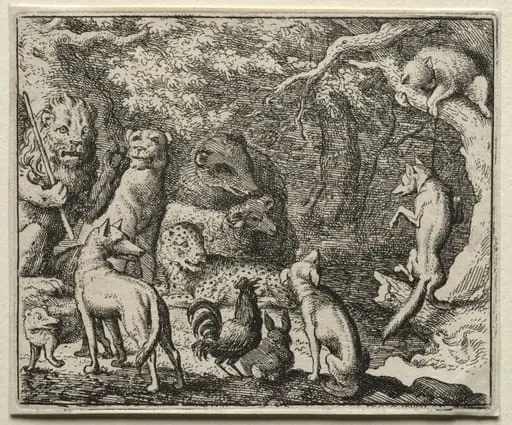 Reynard the Fox: Reynard Asks Permission to Confess
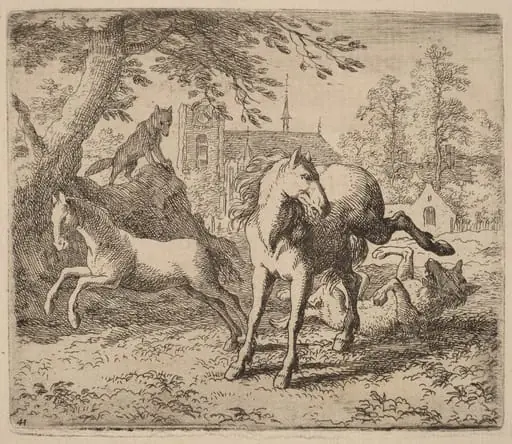 The Mare and the Wolf
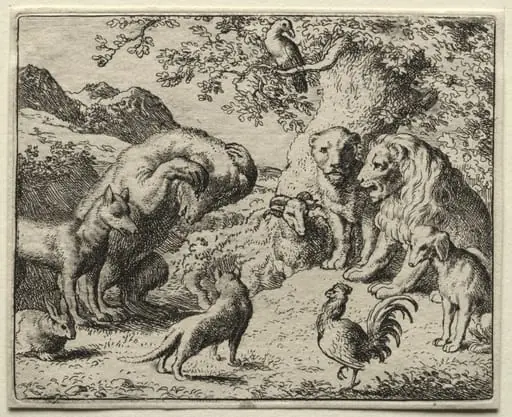 Reynard the Fox: The Complaint of the Bear
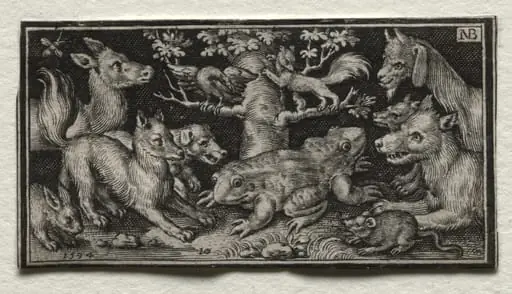 Two-headed Frog surrounded by Animals
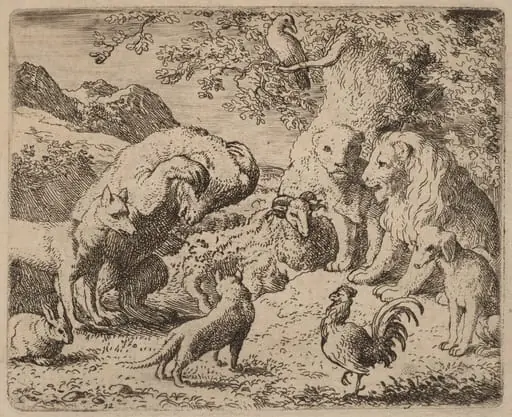 The Bear Beseeches the Lion for Justice
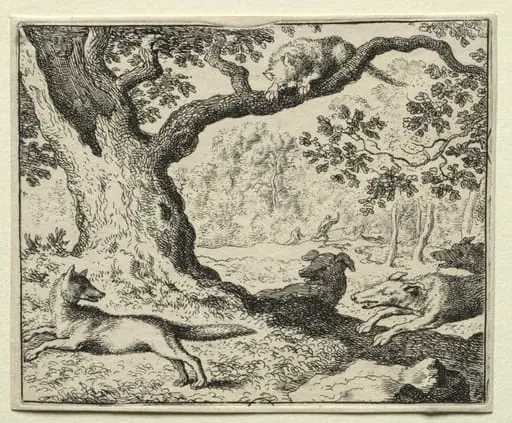 Reynard the Fox: The Disloyal Cat
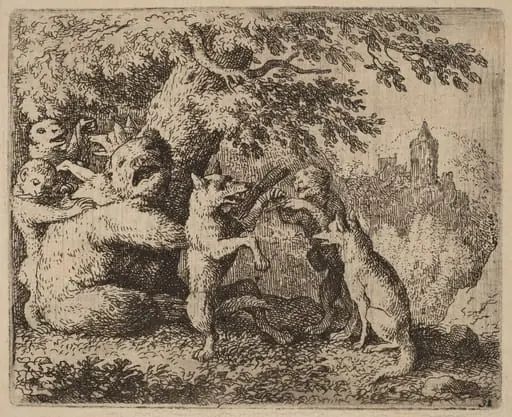 The Bear and the Wolf are Persecuted
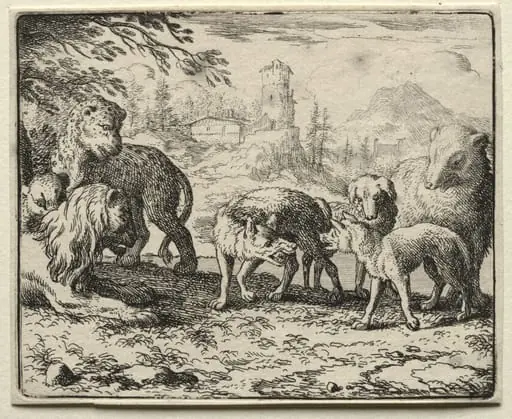 Reynard the Fox: The Condemnation of Reynard
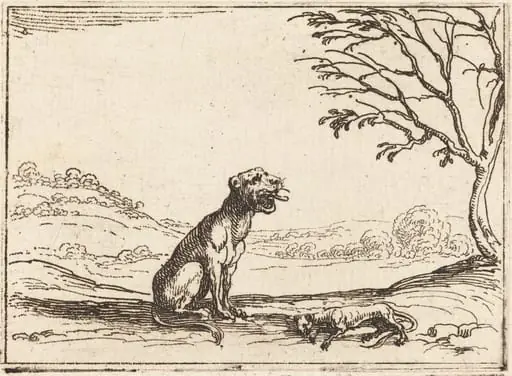 Lioness Mourning her Cub
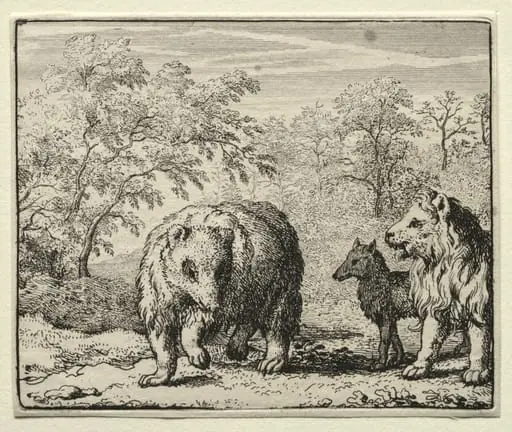 Reynard the Fox: The Freeing of the Wolf and the Bear