Artwork
Army Train and Death
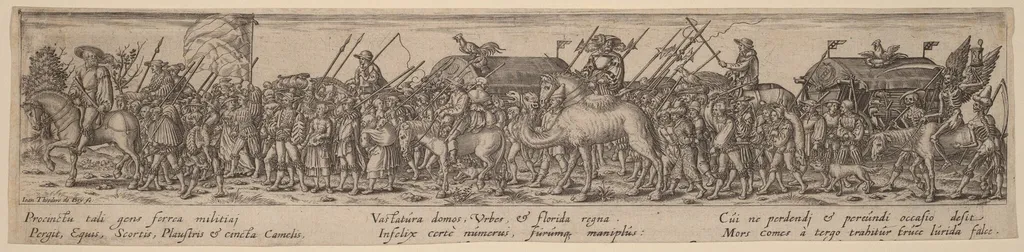
Army Train and Death is an ink print by the Renaissance artist Johann Theodor de Bry. It dates from 1592 and is held in the collection of the National Gallery of Art.
- Inscription
- Inscribed:In image, in plate, at lower left: Ioan Theodore de Bry fe:; below image, in plate: Procintu tali gens ferrea militiai / Pergit, Equis, Scortis, Plaustris & cincta Camelis, / Vastatura domos, Urbes, & florida regna. / Infelix certe numerus, furumque maniplus: / Cui ne perdendi & percundi occasio desit / Mors comes a tergo trahitur truce lurida falce. (Armed in this way, the pitiless soldiers sally forth / Accompanied by horses, whores, wagons, and camels. / They stand prepared to devastate houses, cities, and flourishing landscapes, / A troop of pernicious thugs and villians, / So that they lose no opportunity of killing others or of destroying themselves, / Death has been added to the end of their train, together with his corpse-creating scythe. [translation from Keith Moxey, "Peasants, Warriors, and Wives: Popular Imagery in the Reformation."(Chicago: University of Chicago Press, 1989), pp. 87-88])
About this work
Overview
Army Train and Death is an engraving created by Johann Theodor de Bry in 1592.
Subject & Meaning
The engraving depicts a chaotic battle scene with soldiers on foot and horseback, accompanied by a wagon laden with supplies or weapons. A skeleton on horseback, holding a spear, is juxtaposed with the soldiers, potentially symbolizing the presence of death in the midst of war.
Technique & Style
The work is an engraving, a printmaking technique that allows for detailed and intricate designs. The scene is densely populated with figures and objects, suggesting a high level of technical skill.
Context
The Latin text accompanying the image suggests that the engraving is not just a representation of a battle, but a commentary on the consequences of war.
Artist & collection


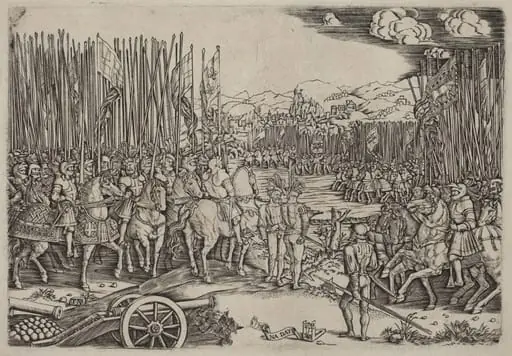 The Two Armies at the Battle of Ravenna
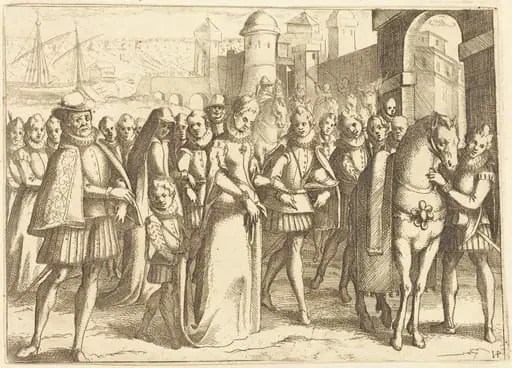 Arrival at Valencia
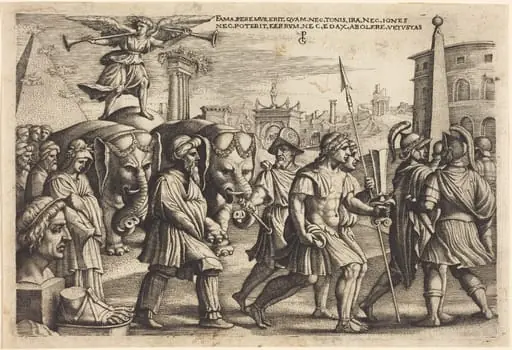 The Triumph of Fame
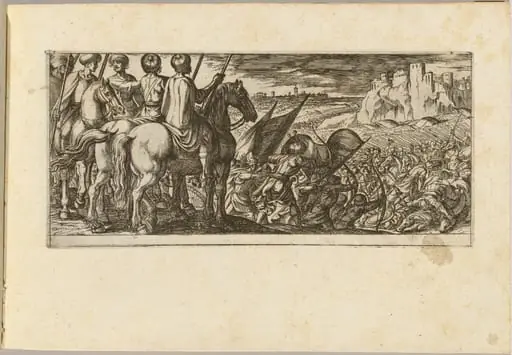 Battle Scene with Cavalry Observing from a Hill
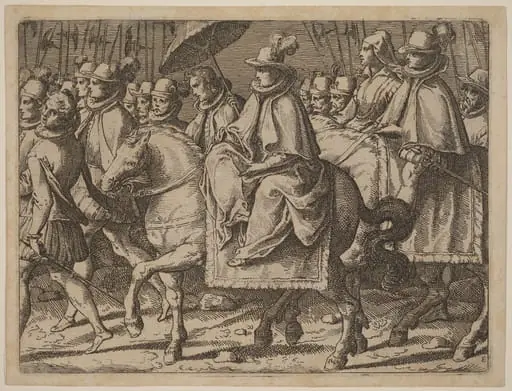 Margaret of Austria on Horseback
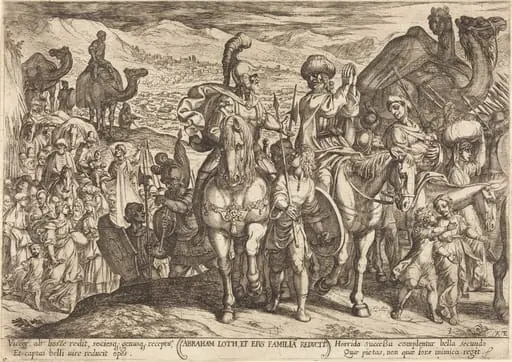 Lot and His Family recalled home by Abraham
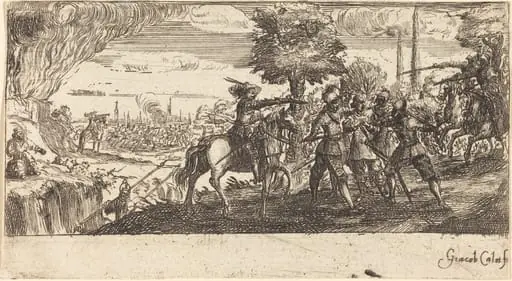 Landscape with Battle Scene
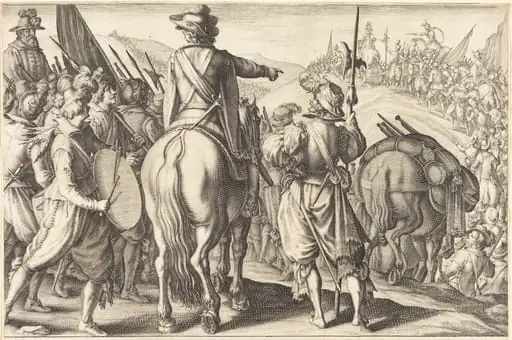 The Troops on the March
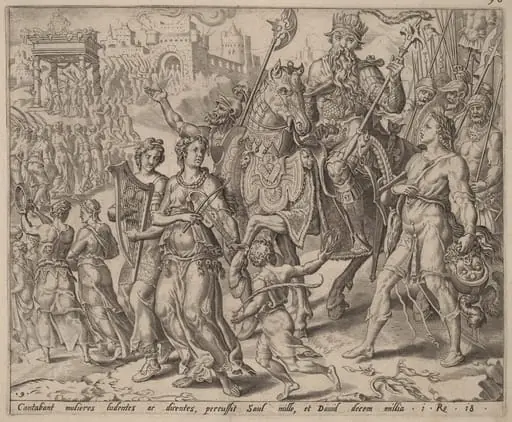 The Triumph of Saul and David
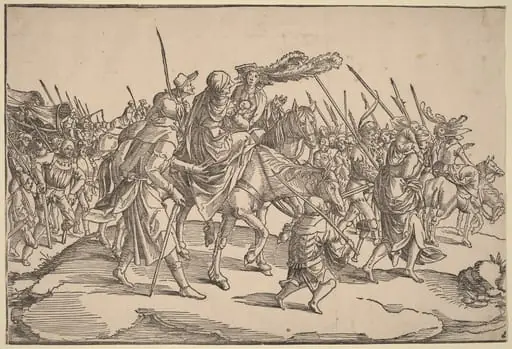 The Stragglers
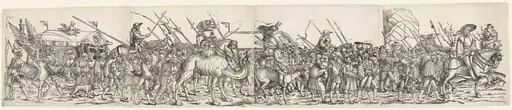 Army Train and Death