Artwork
The Golden Age
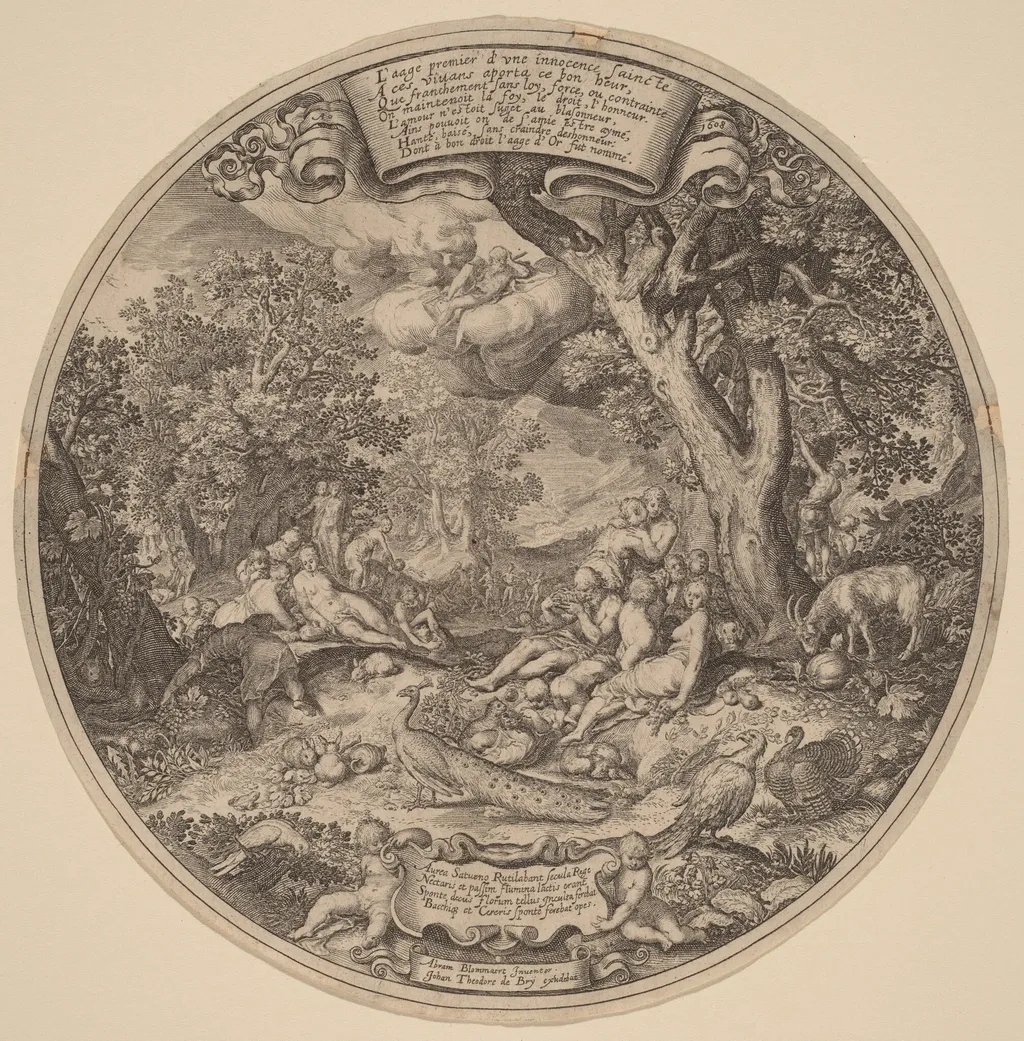
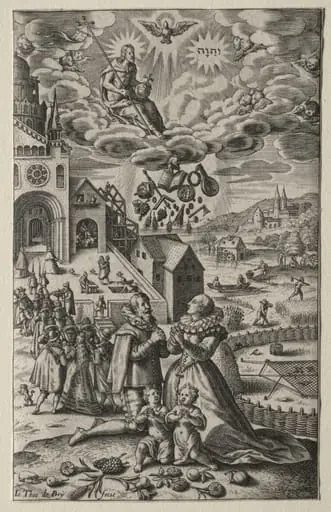
The Golden Age is an ink print by the Baroque artist Johann Theodor de Bry. It dates from 1608 and is held in the collection of the National Gallery of Art.
- Inscription
- Inscribed:on banderole at upper center, in plate: L'aage premier d'une innocence Saincte / A ces vivans a porta ce ben heur, / Que franchement sans loy, force, ou contrainte / On, maintenoit la foy, le droit, l'honneur. / L'amour n'es toit suget au blasonneur, / Ains pouuoit on de s'amie es tre aymé, / Hanté, baisé, sans craindre deshonneur: Dont a bon droit l'aage d'Or fut nommé.; on banderole at upper left, in plate: Ao; on banderole at upper right, in plate: 1608; on cartouche at bottom center, in plate: Aurea Saturno Rutilabant Secula Rege / Nectaris et passim flumina lactis crant / Sponte decus florum tellus inculta ferebat / Bacchiq[ue] et Cereris sponte ferebat opes.; on banderole at bottom center, in plate: Abram Blommaert Inventor. / Johan Theodore de Bry excudebat; on verso, at center, in graphite by a later hand: 140
- Markings
- Marked:verso, stamped in purple ink: Ernst Friederich Georg Otto von der Malsburg (Lugt 1849bis)
About this work
Overview
Johann Theodor de Bry’s engraving entitled The Golden Age was produced in 1608. Executed on laid paper, the print presents an allegorical scene populated by figures, animals and a prominent tree, all rendered through the artist’s intricate line work.
Subject & Meaning
The composition depicts an idealized pastoral setting that alludes to the mythic Golden Age, a period of harmony between humanity and nature. Central to the scene is a large tree bearing a partially legible banner, while a seated woman, a standing man, birds, a snake and other creatures suggest the coexistence of peace and latent danger within this utopian vision.
Technique & Style
De Bry employed cross‑hatching, layering closely spaced parallel lines to achieve tonal variation and texture. This method creates depth and a sense of realism across the foliage, figures, and animal forms, while the fine detail of the engraved lines highlights the artist’s mastery of the printmaking process on laid paper.
History & Provenance
The print originates from de Bry’s early 17th‑century output, a period when he was active in the production of illustrated books and standalone engravings. While specific ownership records are scarce, the work is documented in several early modern print catalogues, confirming its circulation among collectors of allegorical imagery during the Baroque era.
Own this work as a print
Artist & collection


 Venus and Adonis
 Christ Carrying the Cross
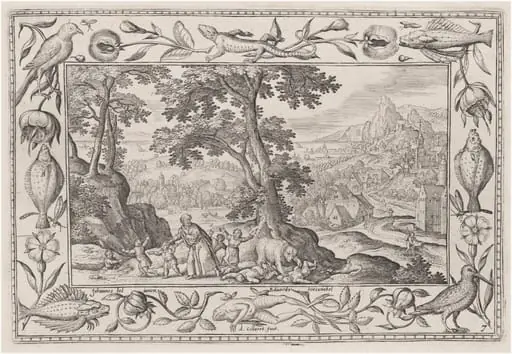 The Mocking Children Cursed by Elijah and Eaten by a She-Bear
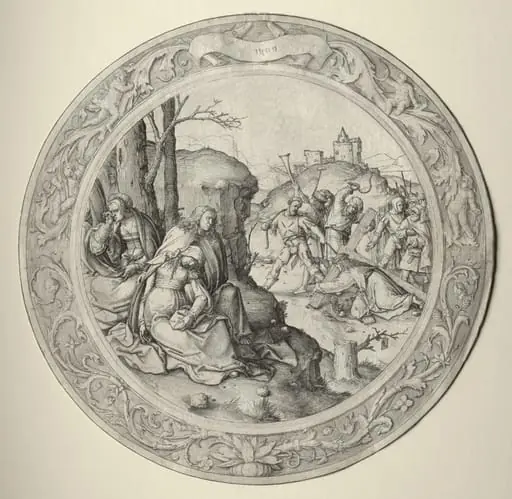 The Round Passion: Christ Carrying the Cross
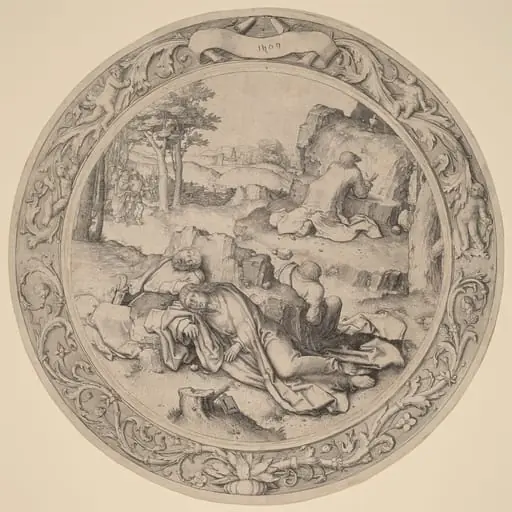 Christ in Gethsemane (Agony in the Garden)
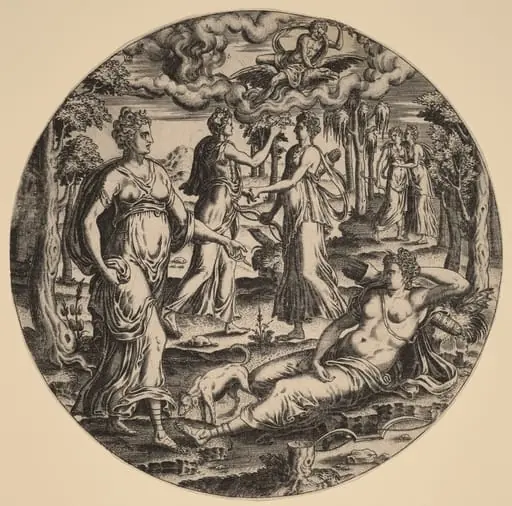 Diana and Her Nymphs in a Garden
 Mars's Revenge on Adonis
 The Baptism of Christ
 Clymene Urging Phaeton to Find Helios