Artwork
Trees by a River
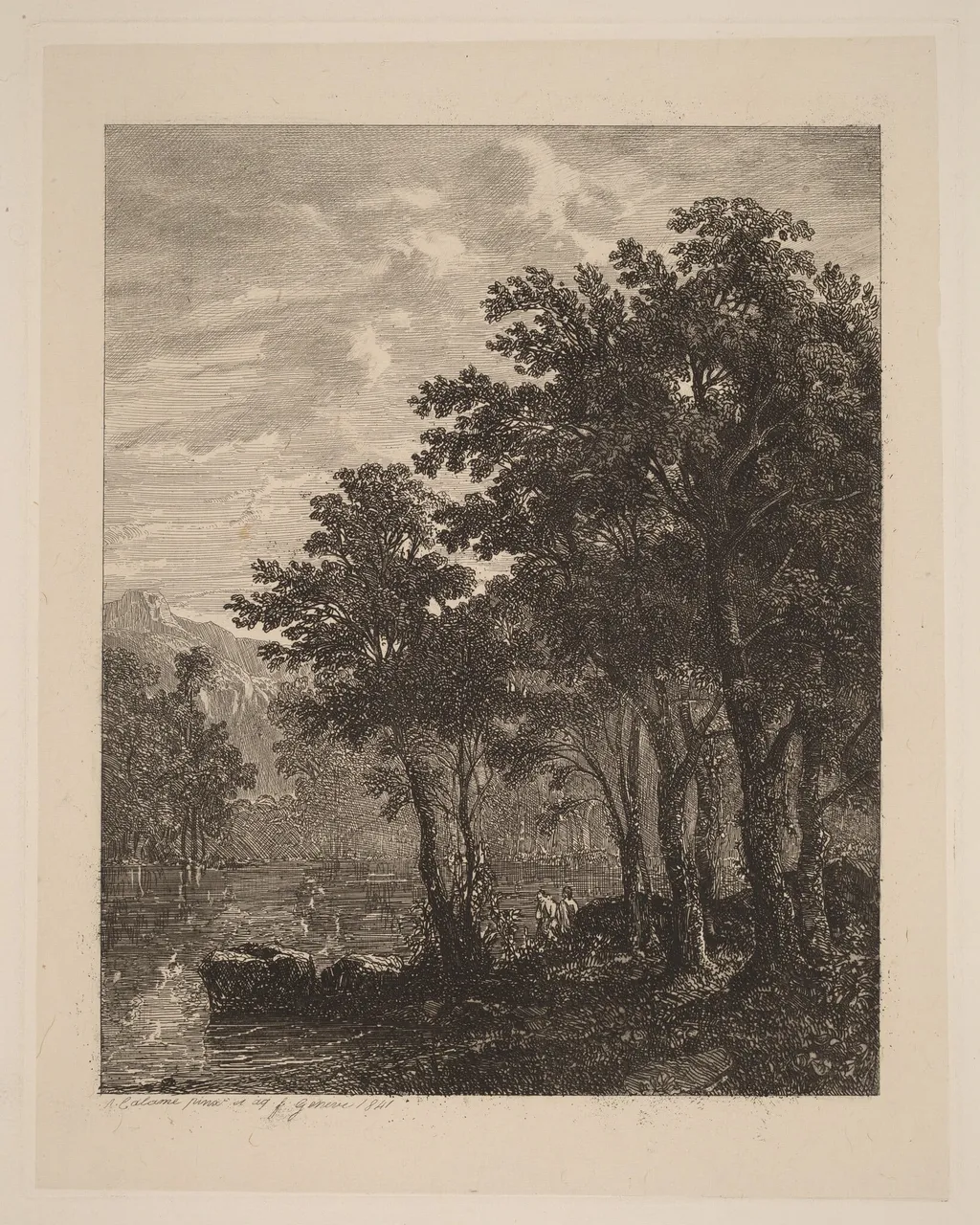
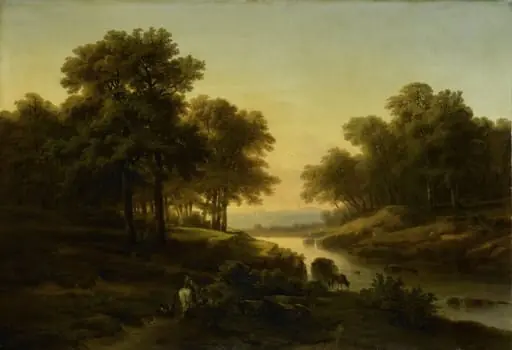
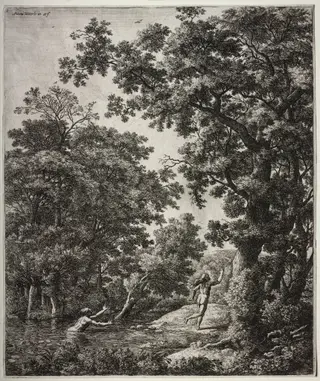
Trees by a River is an ink print by the Romanticist artist Alexandre Calame. It dates from 1841 and is held in the collection of the National Gallery of Art.
- Inscription
- Inscribed:lower left in plate: A. Calame pinz. et aq f Geneve 1841; by later hand, lower right verso in graphite: 1840 Calabi II, 22
About this work
Overview
Trees by a River, an etching by Alexandre Calame from 1841, depicts a serene riverside scene in black and white, characterized by tall, leafy trees, a small boat, distant figures, and a soft sky with pronounced shadows.
Subject & Meaning
The subject is a peaceful natural setting, emphasizing the interplay of light and shadow. The presence of a boat and distant people subtly introduces human presence without disrupting the serene atmosphere, suggesting a contemplative or idyllic interpretation.
Technique & Style
Calame employed fine etching lines to achieve deep texture, particularly in the trees' bark and leaves, creating a near three-dimensional effect. This level of detail was noteworthy for the period, highlighting the artist's skill in the medium.
History & Provenance
Created in 1841, the etching demonstrates Calame's proficiency in a technique that was valued for its ability to produce sharp, precise prints, a significant aspect of printmaking at the time.
Context
Produced during a time when detailed printmaking was highly regarded, 'Trees by a River' reflects the era's appreciation for intricate, high-quality etchings that could capture nuanced natural scenes.
Legacy
While specific legacy details of 'Trees by a River' are not provided, the work contributes to the broader legacy of 19th-century etching, showcasing the medium's capabilities in capturing detailed, serene landscapes.
Own this work as a print
Artist & collection

- Riders by a Pond
 Landscape with Alpheus and Arethusa
 Landscape with a Bending Tree
 Six large upright landscapes with scenes from Ovid's Metamorphoses
 Brook in the Val Mondois
 Landscape with Shepherds
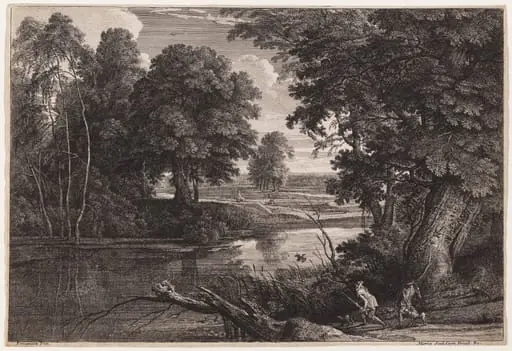 Landscape with Duck Hunters
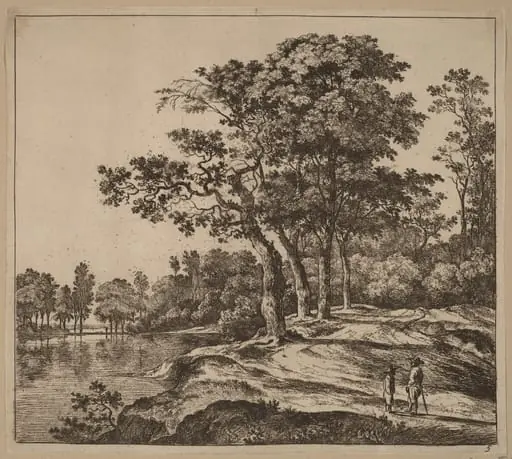 Landscape with Four Trees
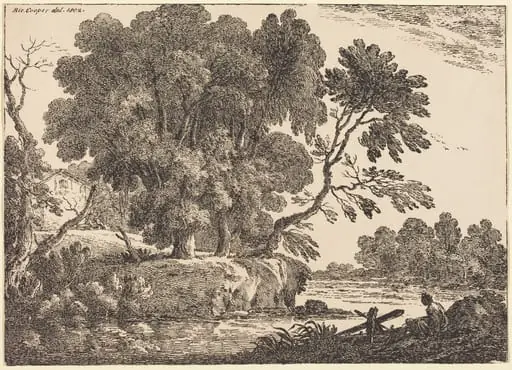 Landscape with Group of Trees Surrounded by Water
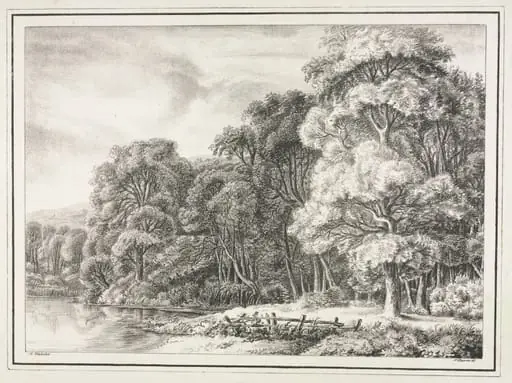 Woodland Scenery with Lake
 Six large upright landscapes with scenes from Ovid's Metamorphoses: Alpheus and Arethusa
 Classical Landscape with a Family by a River