Artwork
Enrique III el Doliente
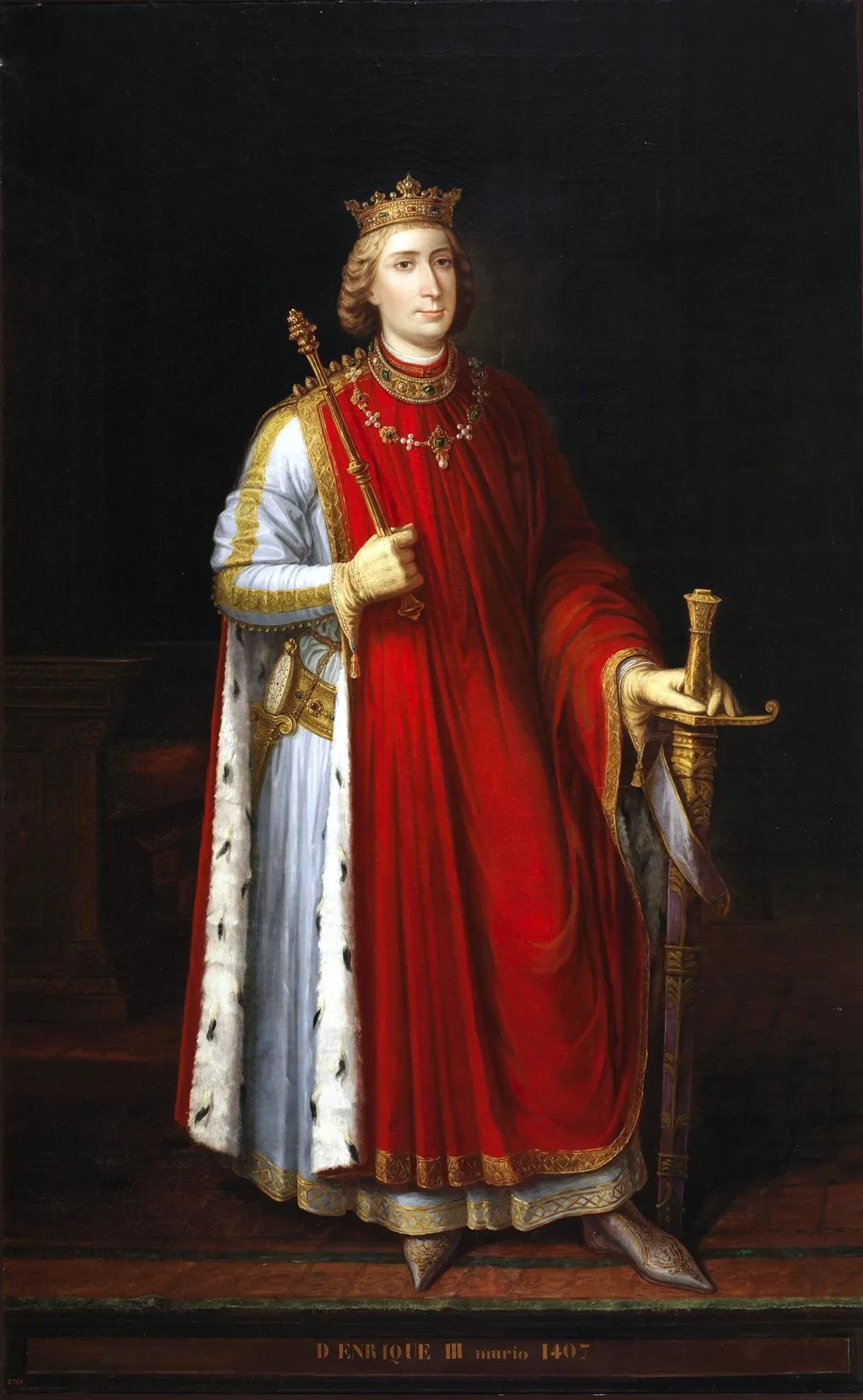
Enrique III el Doliente is an oil painting by Calixto Ortega. It dates from 1848 and is held in the collection of the Museo del Prado.
About this work
His right hand holds a golden sceptre, and his left rests on a sword with a fancy gold handle.
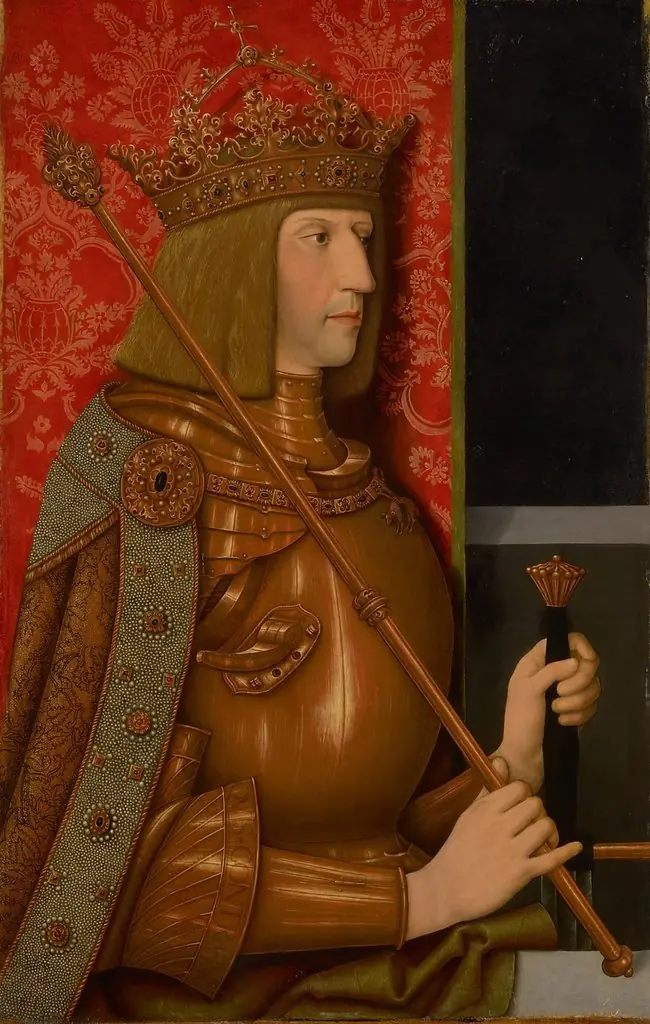
This painting shows a man dressed like a king. He wears a red robe with gold trim, a white fur-lined cape, and a crown. His right hand holds a golden sceptre, and his left rests on a sword with a fancy gold handle. The dark background makes his clothes stand out.
The painting was made in 1848 by Calixto Ortega. Notice how the light hits his face and robe, making them look almost three-dimensional.
Look up chiaroscuro to see how artists use light and shadow like this.
Subject & Meaning
The painting portrays King Henry III of Castile, known by the epithet "el Doliente" ("the Sufferer"), a Castilian monarch whose reign was marked by illness and political turbulence. The composition centers on a seated royal figure rendered in oil on canvas, with the subject's identity conveyed through the regalia of monarchy. According to the work's cataloguing, the depicted objects include a crown, a sceptre, and a sword, the three traditional emblems of sovereign authority in the Spanish crown.
Together these attributes identify the sitter unambiguously as a reigning king rather than a noble or courtier, while also signaling the dual nature of his office: the crown and sceptre denote legitimate rule and the administration of justice, whereas the sword alludes to the military defense of the realm.
The title's "el Doliente" epithet frames the portrait as a meditation on a king whose physical frailty coexisted with the burden of governance, lending the regalia an implicit pathos rather than triumphal force.
Technique & Style
The work is an oil painting executed on canvas, reflecting 19th-century Spanish academic practice in its handling of paint and composition. Calixto Ortega employed layered brushwork to render the dramatic chiaroscuro that emphasizes the figure’s regal yet tormented presence, while the limited palette of dark tones and highlighted accents creates a somber, almost theatrical atmosphere. These formal choices underscore the painting’s narrative intensity and its focus on symbolic regalia such as the sword, sceptre, and crown.
History & Provenance
The painting Enrique III el Doliente was created in 1848 by the artist Calixto Ortega. Executed in oil on canvas, the work measures 220 cm in height and 140 cm in width. The piece is currently held in the collection of the Museo del Prado, where it remains located.
No further details regarding its specific commission, intermediate ownership history, or provenance chain prior to its presence in the museum are provided in the available records.
The painting is housed in the Museo del Prado, where it is catalogued under inventory number P00967. It has been part of the museum's collection since its acquisition and was featured in the Prado's 19th‑century Spanish painting exhibition in 2005.
Context
Calixto Ortega's 1848 painting Enrique III el Doliente portrays a dramatic historical figure surrounded by symbols of royal authority including a sword and sceptre. Created during Spain's mid-19th century, the work reflects contemporary artistic engagements with historical narrative painting. The piece remains part of the Museo del Prado's collection, where it is displayed as an example of 19th-century Spanish academic art exploring regal and political themes.
Scholarship on the painting emphasizes its technical execution within the academic tradition while analyzing its symbolic program related to royal legitimacy. Art historical studies position it within broader 19th-century European trends that revived interest in historical portraiture, though specific critical reception details from contemporary sources remain unreferenced in available documentation. The work's current interpretation continues to inform discussions of Spanish artistic identity in the period.
Contextual analysis situates Enrique III el Doliente within Ortega's broader oeuvre focused on historical and allegorical subjects, demonstrating his contribution to institutional Spanish painting through precise draftsmanship and compositional rigor characteristic of academic standards.
Overview
Enrique III el Doliente is an oil on canvas executed in 1848 by the Spanish painter Calixto Ortega. The work portrays a regal figure adorned in a red, gold‑trimmed robe, a white fur‑lined mantle and a crown, holding a golden scepter in his right hand and a sword with an ornate hilt in his left. The composition is set against a deep, dark background that isolates the illuminated figure.
Own this work as a print
Artist & collection

 Fernando el Católico
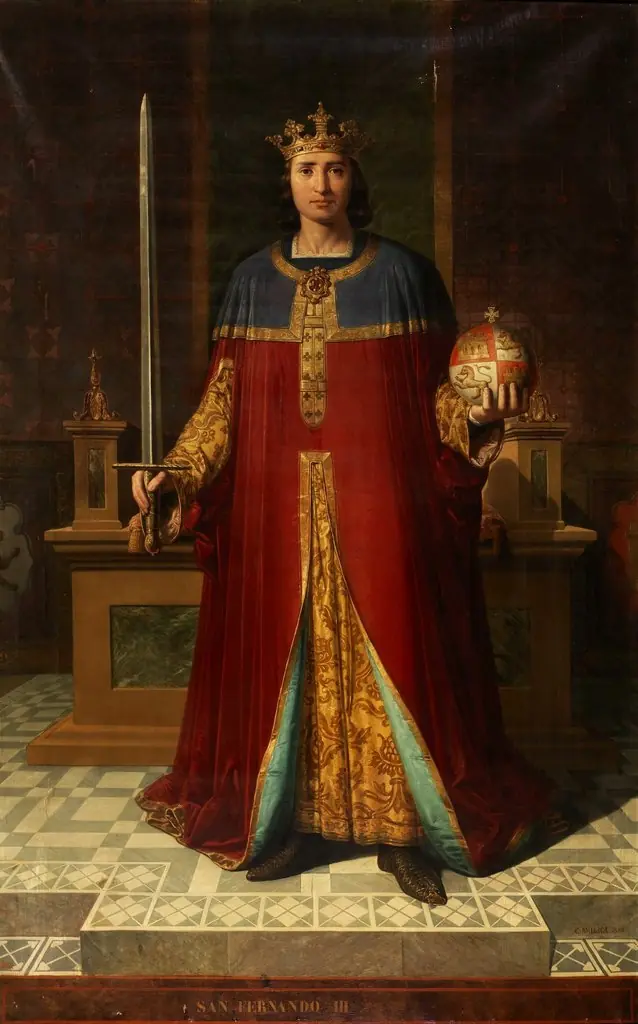 Fernando III El Santo
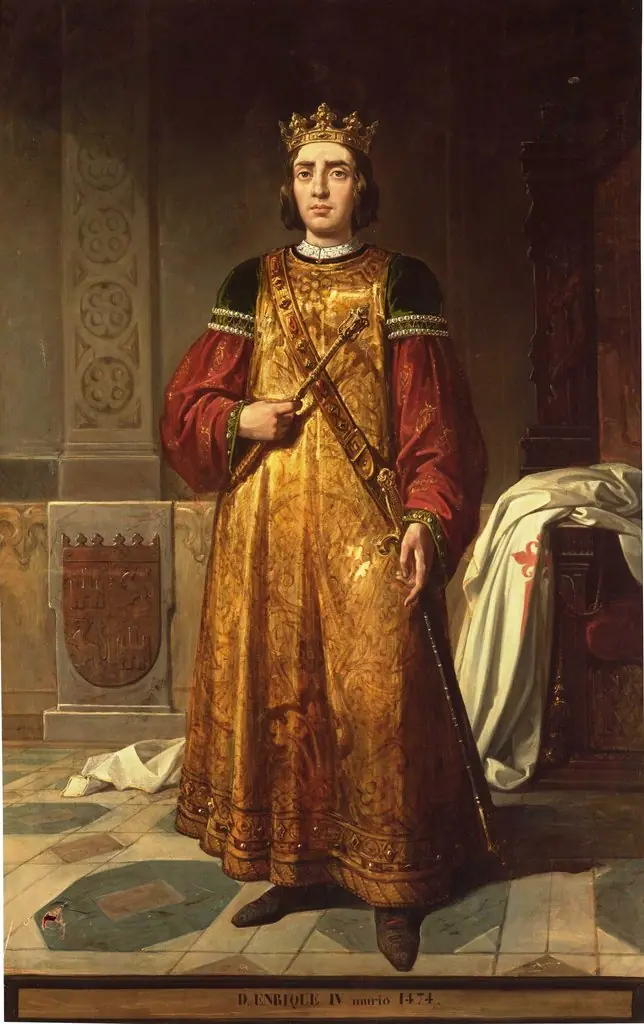 Enrique IV
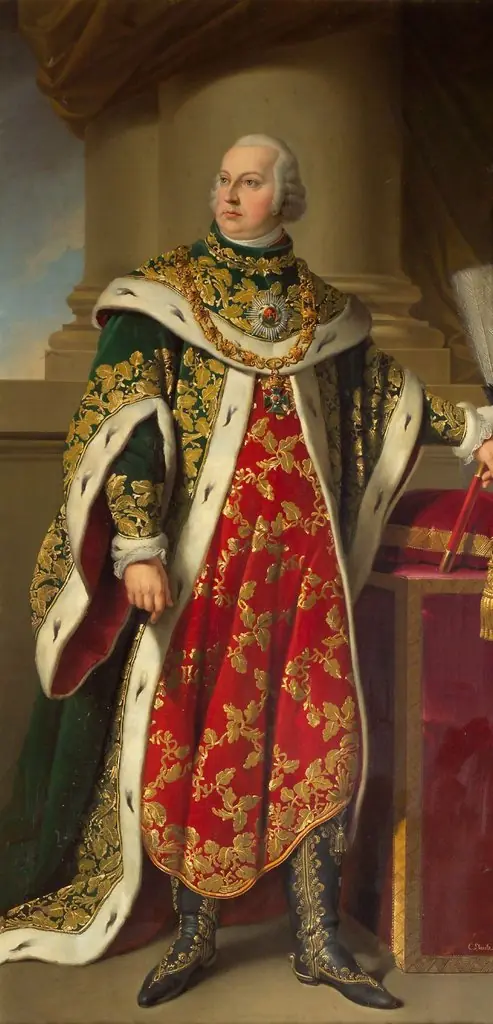 Archduke Ferdinand Karl d'Este (1754-1806) in St. Stephen's Cathedral
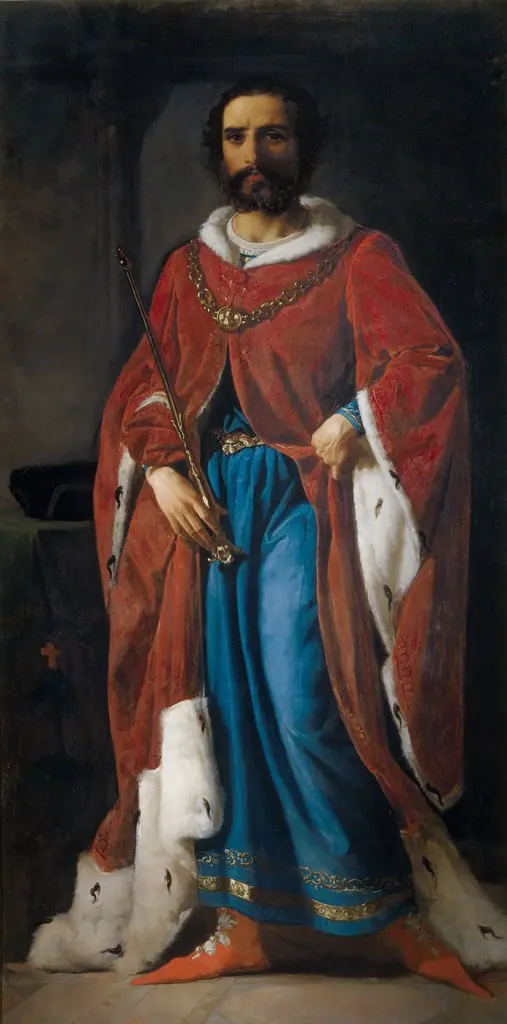 Don García Aznar; conde de Aragón
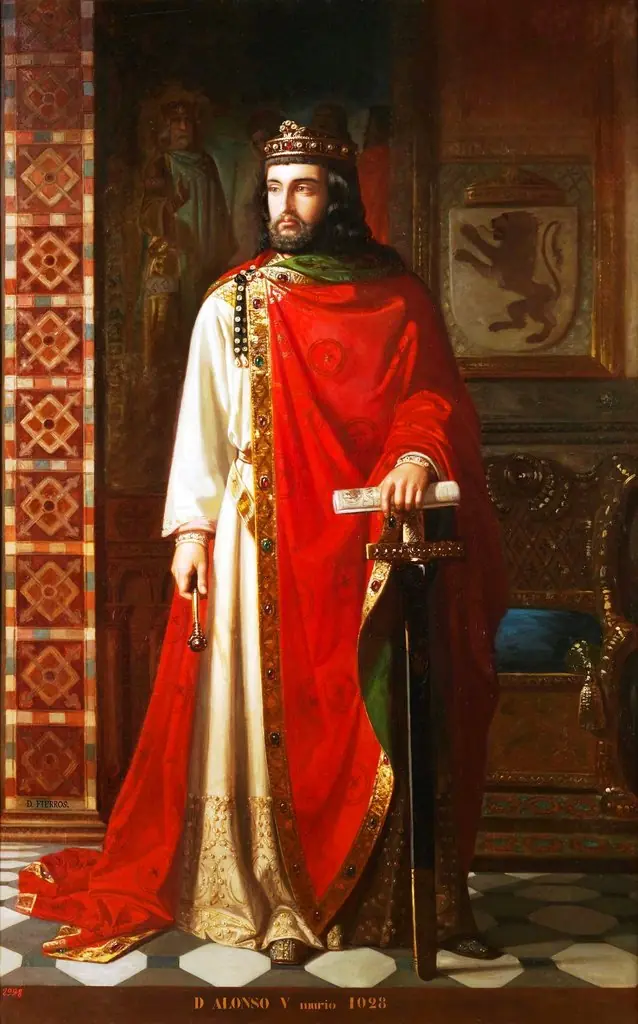 Alfonso V
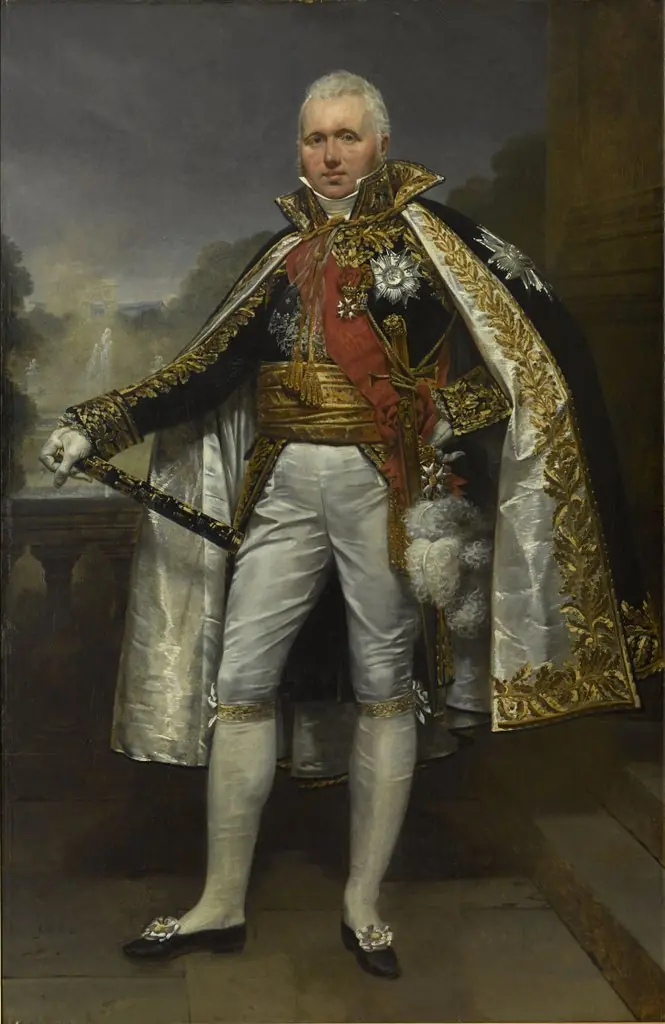 Claude-Victor Perrin, Duke of Bellune, Marshal of France
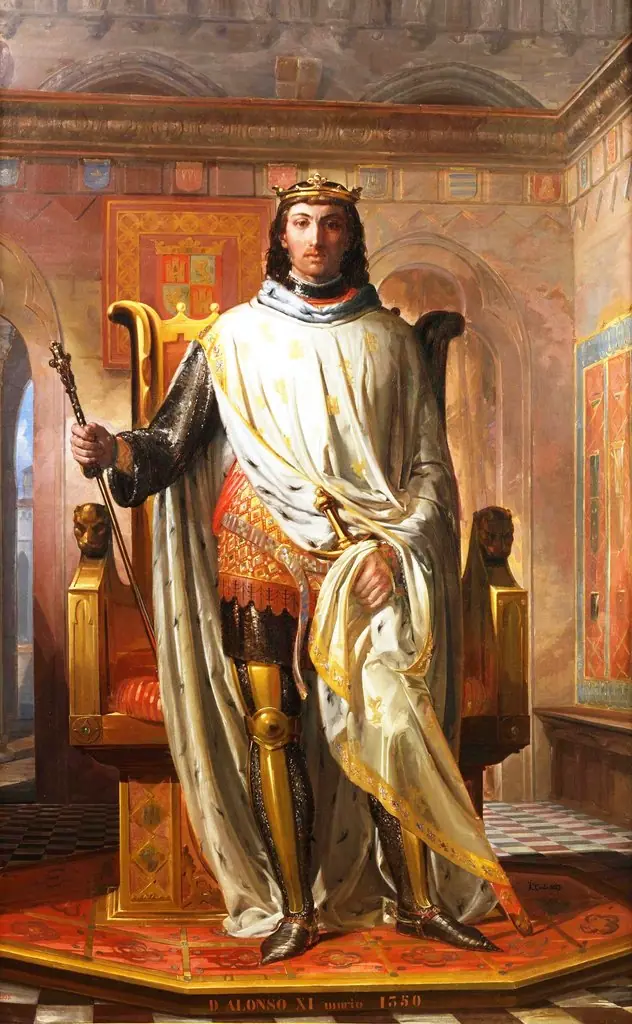 Alfonso XI
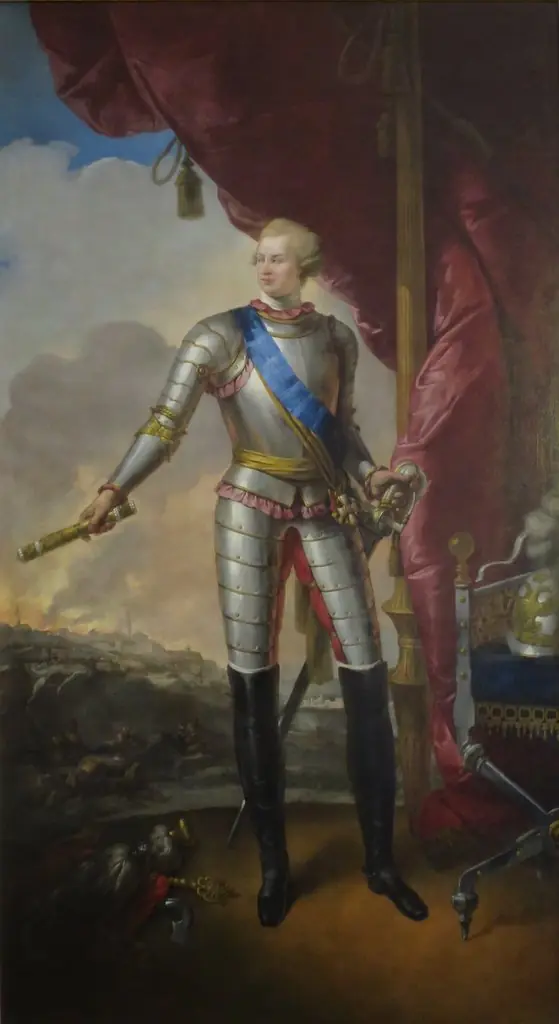 Portrait of Prince G. A. Potyomkin-Tavrichesky
 Portrait of Maximilian I, Holy Roman Emperor