Artwork
Jalais Hill, Pontoise
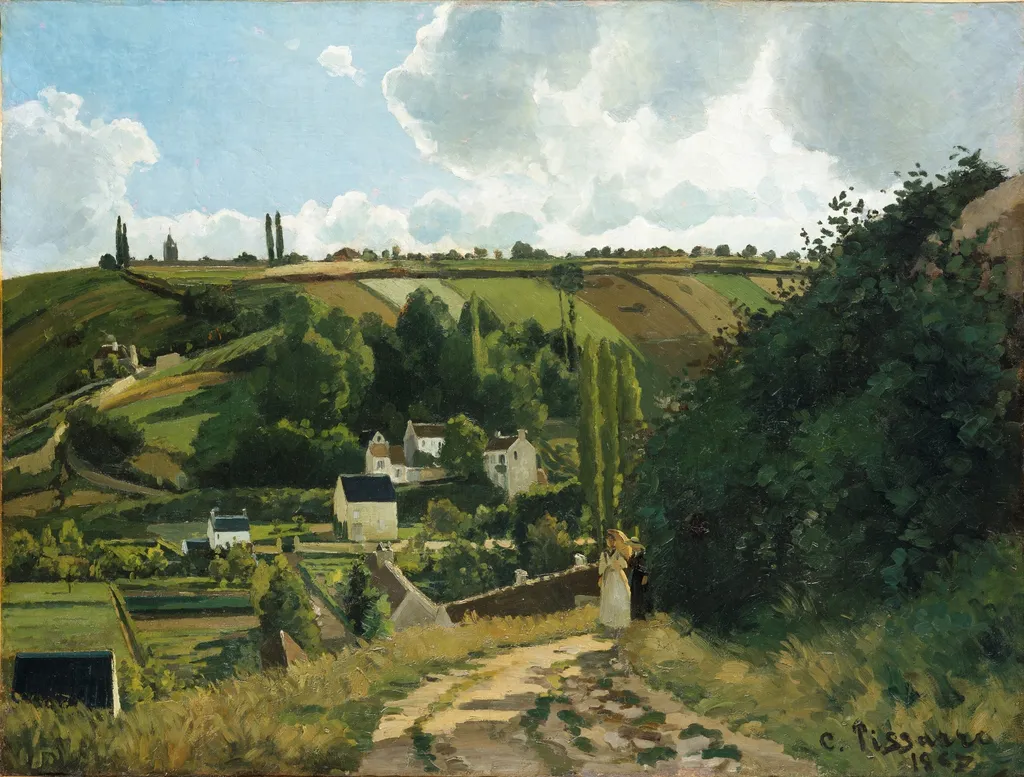
Jalais Hill, Pontoise is an oil painting by the Impressionist artist Camille Pissarro. It dates from 1867 and is held in the collection of the Metropolitan Museum of Art.
About this work
Subject & Meaning
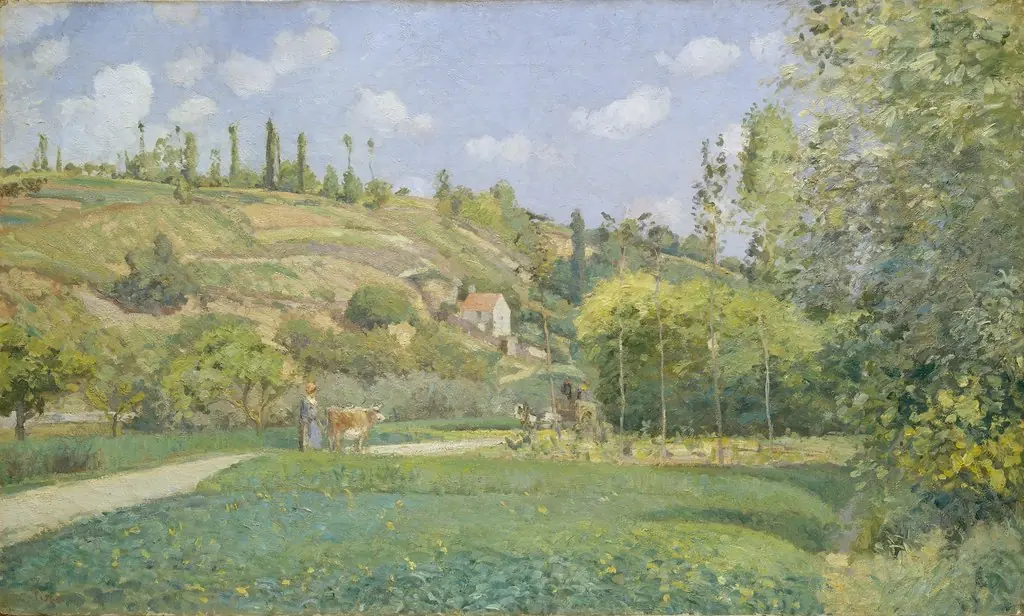
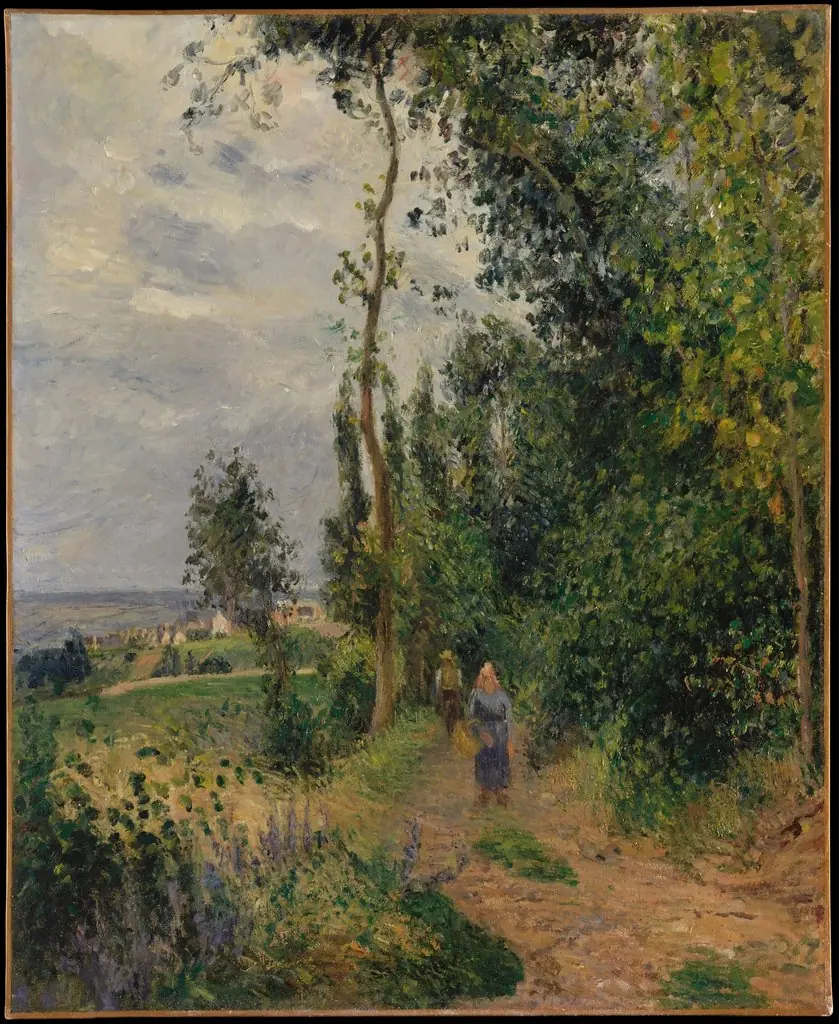
The painting depicts Jalais Hill, a rural locality near Pontoise, presenting a quiet village scene framed by trees, a winding road, and a farmstead.
The painting depicts Jalais Hill, a rural locality near Pontoise, presenting a quiet village scene framed by trees, a winding road, and a farmstead. The composition emphasizes the cultivated landscape, fields, hedges, and modest buildings, set against the gentle rise of the hill. By focusing on these everyday elements, the work conveys Pissarro’s interest in the simple, agrarian life of the French countryside, suggesting a harmonious relationship between human habitation and the natural environment.
Technique & Style
The work is an oil painting on canvas, measuring approximately 87 × 115 cm and dated 1867. It portrays a rural landscape that includes a village, a road, a tree and a farm. The technical record lists oil paint and canvas as the medium and support, and specifies the dimensions of 87 cm in height and 115 cm in width.
As a landscape genre work, it entered the collection of the Metropolitan Museum of Art via the ownership of William Church Osborn.
History & Provenance
Jalais Hill, Pontoise was created by Camille Pissarro in 1867, executed in oil on canvas and measuring 87 by 115 cm. The work entered the collection of William Church Osborn before being acquired by the Metropolitan Museum of Art, where it is currently held. No further details regarding commission circumstances, intermediate ownership, or early exhibition history are documented in the available sources.
Context
Camille Pissarro completed Jalais Hill, Pontoise in 1867, an oil-on-canvas landscape. The composition depicts a village, a road, a tree, a farm and surrounding countryside, characteristic of Pissarro’s rural subjects in the 1860s. As part of his early landscape output, it exemplifies his attention to naturalistic detail and compositional balance within the French landscape tradition.
Legacy
Jalais Hill, Pontoise (1867) exemplifies Camille Pissarro’s early mastery of rural landscape, combining precise topographical detail with atmospheric light. It entered the Metropolitan Museum of Art collection through William Church Osborn, underscoring its significance within Pissarro’s oeuvre and the broader Impressionist movement. The painting has been cited in scholarly discussions of Pissarro’s early development, reinforcing his reputation as a pivotal figure in 19th-century French landscape painting.
Overview
Jalais Hill, Pontoise is an oil painting that captures a tranquil landscape scene. The composition features undulating hills and a curving road, populated by two figures in the foreground. The artist employs a distinctive approach to color and illumination, which contributes to the painting's sense of depth and atmospheric quality. The work is characterized by its vibrant brushwork, imbuing the surface with both texture and dynamism.
Own this work as a print
Artist & collection