Artwork
Pont Boieldieu in Rouen, Rainy Weather
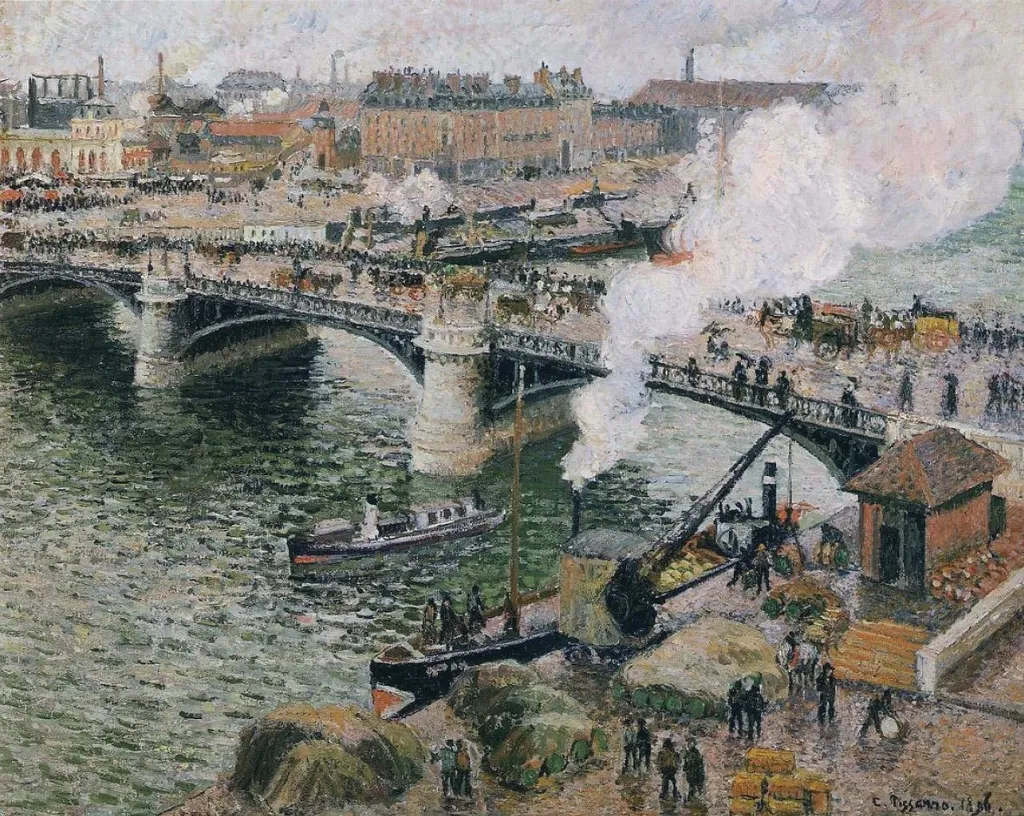
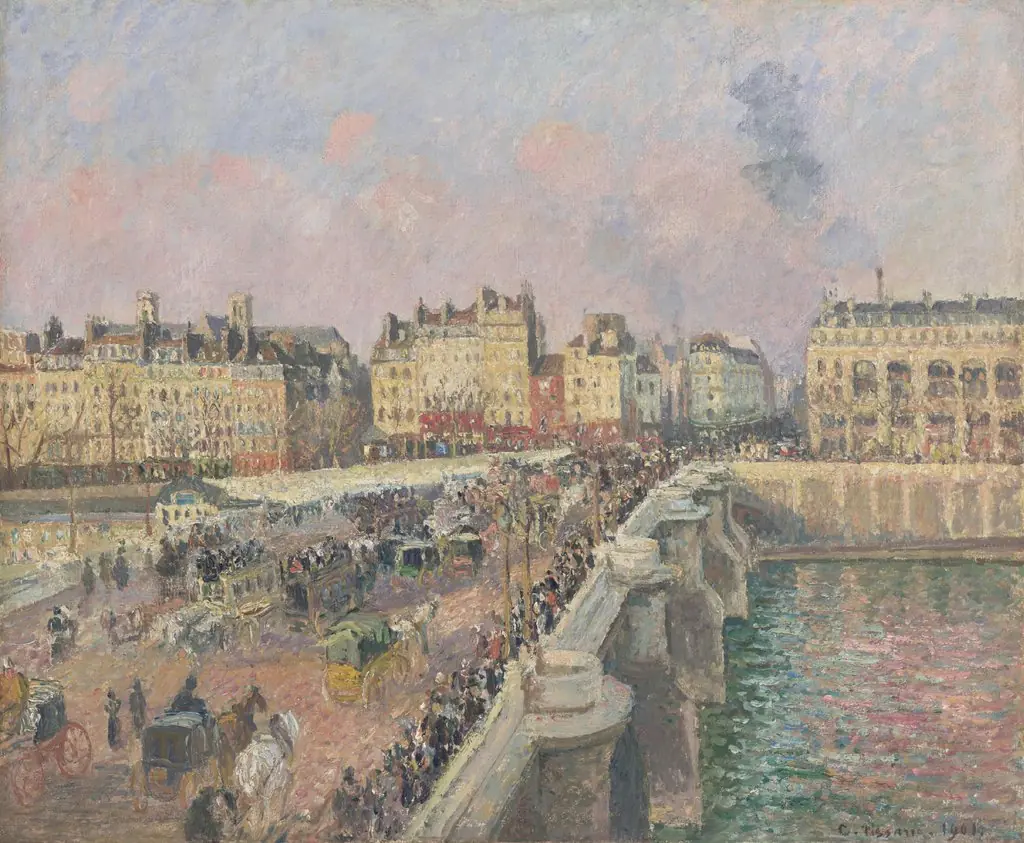
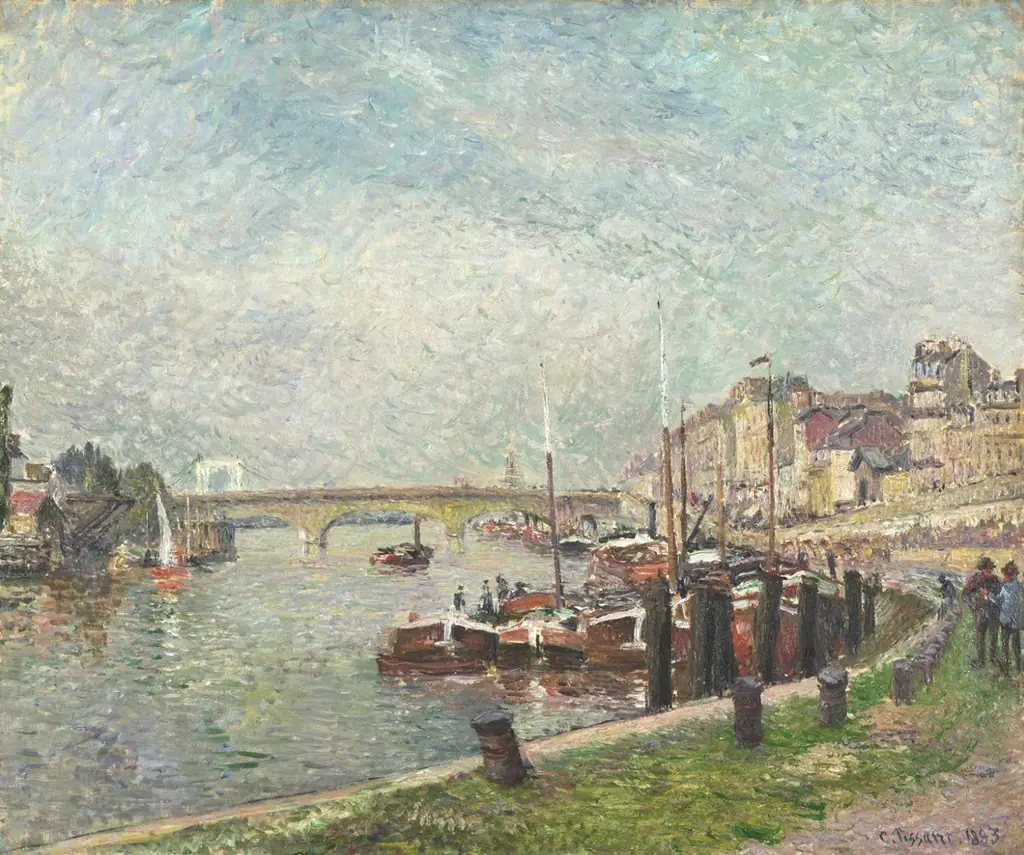
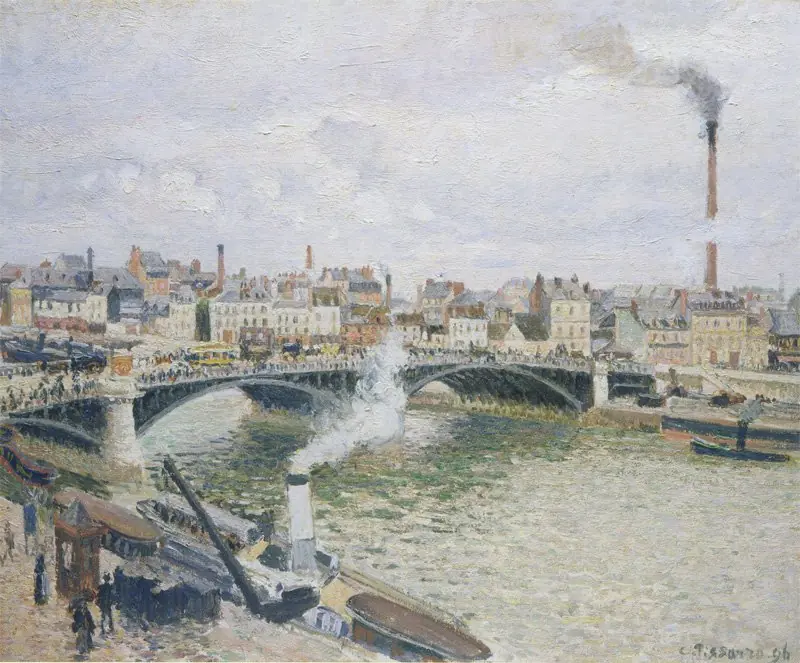
Pont Boieldieu in Rouen, Rainy Weather is an oil painting by the Impressionist artist Camille Pissarro. It dates from 1898 and is held in the collection of the Art Gallery of Ontario.
About this work
This painting is called Pont Boieldieu in Rouen, Rainy Weather. It's a work by Camille Pissarro.
The painting is from 1896 and is made with oil paint. It's part of a collection at a museum, which is interesting because it shows how Pissarro's work has been preserved and shared.
To learn more about the style and methods used in this painting, look up the technique of glazing.
Overview
It belongs to a group of urban scenes Pissarro created during a stay in Rouen, capturing the city’s industrial waterfront under overcast skies.
Painted in 1896, Pont Boieldieu in Rouen, Rainy Weather is an oil on canvas work by Camille Pissarro, now held by the Art Gallery of Ontario. It belongs to a group of urban scenes Pissarro created during a stay in Rouen, capturing the city’s industrial waterfront under overcast skies. The painting reflects his renewed focus on modern city life after years of exploring alternative styles, returning to the observational approach of Impressionism.
Subject & Meaning
The painting depicts the newly constructed Pont Boieldieu, an iron railway bridge spanning the Seine, flanked by the Gare d'Orléans station and Place Carnot. Rather than idealizing nature, Pissarro emphasized the rhythms of urban industry, steam, traffic, and architecture, rendering the scene with quiet activity. The rain-slicked surfaces and muted tones convey a sense of daily life in a transforming French city, free from romanticized nostalgia.
Technique & Style
Pissarro employed loose, broken brushwork and layered glazes to capture the diffuse light of a rainy day. The wet pavement and misty air are suggested through subtle tonal shifts rather than sharp detail. This return to Impressionist methods followed a decade of Pointillist experimentation, yet the composition retains a structured clarity, balancing atmospheric effect with the geometric forms of the bridge and buildings.
History & Provenance
Pissarro rented a room at the Hôtel de Paris in Rouen from January to April 1896, from which he observed the bridge and surrounding quays. He produced multiple versions of the scene under varying weather and light conditions. This particular painting was completed during that period and remained in private collections before entering the Art Gallery of Ontario’s holdings, where it has been preserved as part of his late urban oeuvre.
Context
In the 1890s, French artists increasingly turned to industrial subjects as cities expanded. Pissarro’s Rouen series responded to this shift, documenting modern infrastructure like bridges and train stations. His earlier 1883 visit to Rouen had yielded rural views; the 1896 series marked a deliberate pivot toward the textures of urbanization, aligning with broader artistic interests in the changing face of France.
Legacy
The Rouen paintings, including this one, helped redefine landscape painting by centering urban environments as worthy subjects. Pissarro’s willingness to revisit Impressionism after experimental phases demonstrated its enduring capacity to capture contemporary life. These works influenced later artists who sought to portray modernity without idealization, anchoring his legacy in the documentation of everyday urban experience.
Artist & collection