Artwork
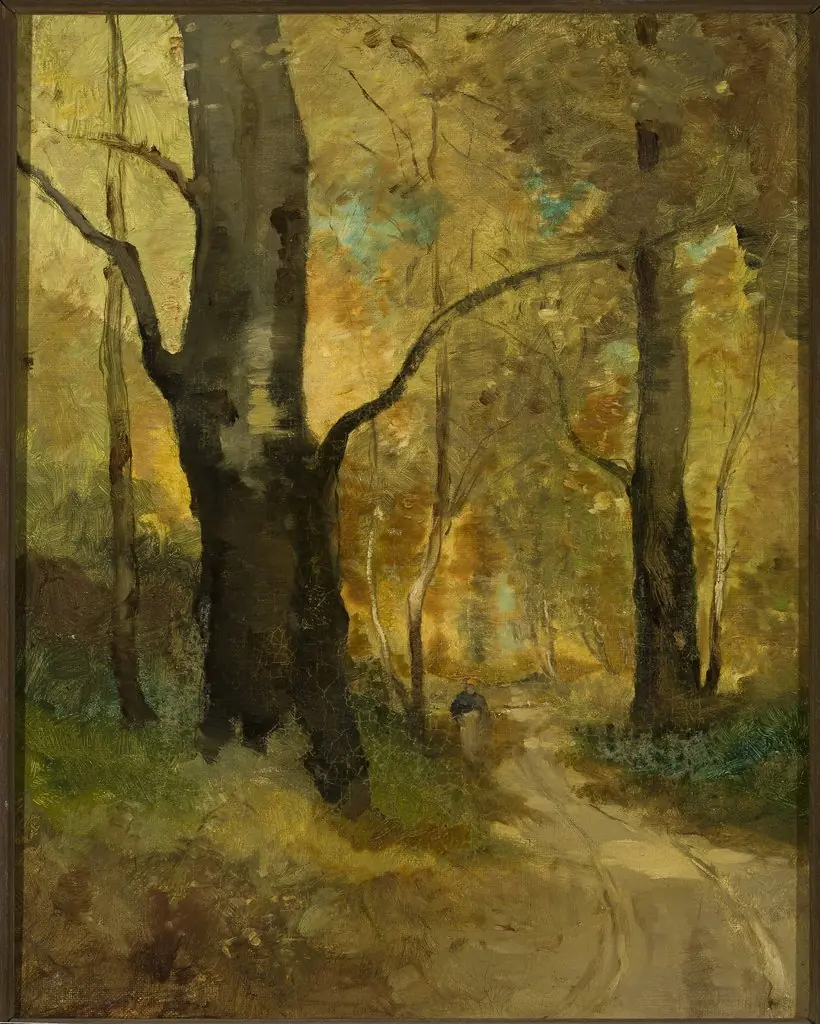
Woodland scene. Spring
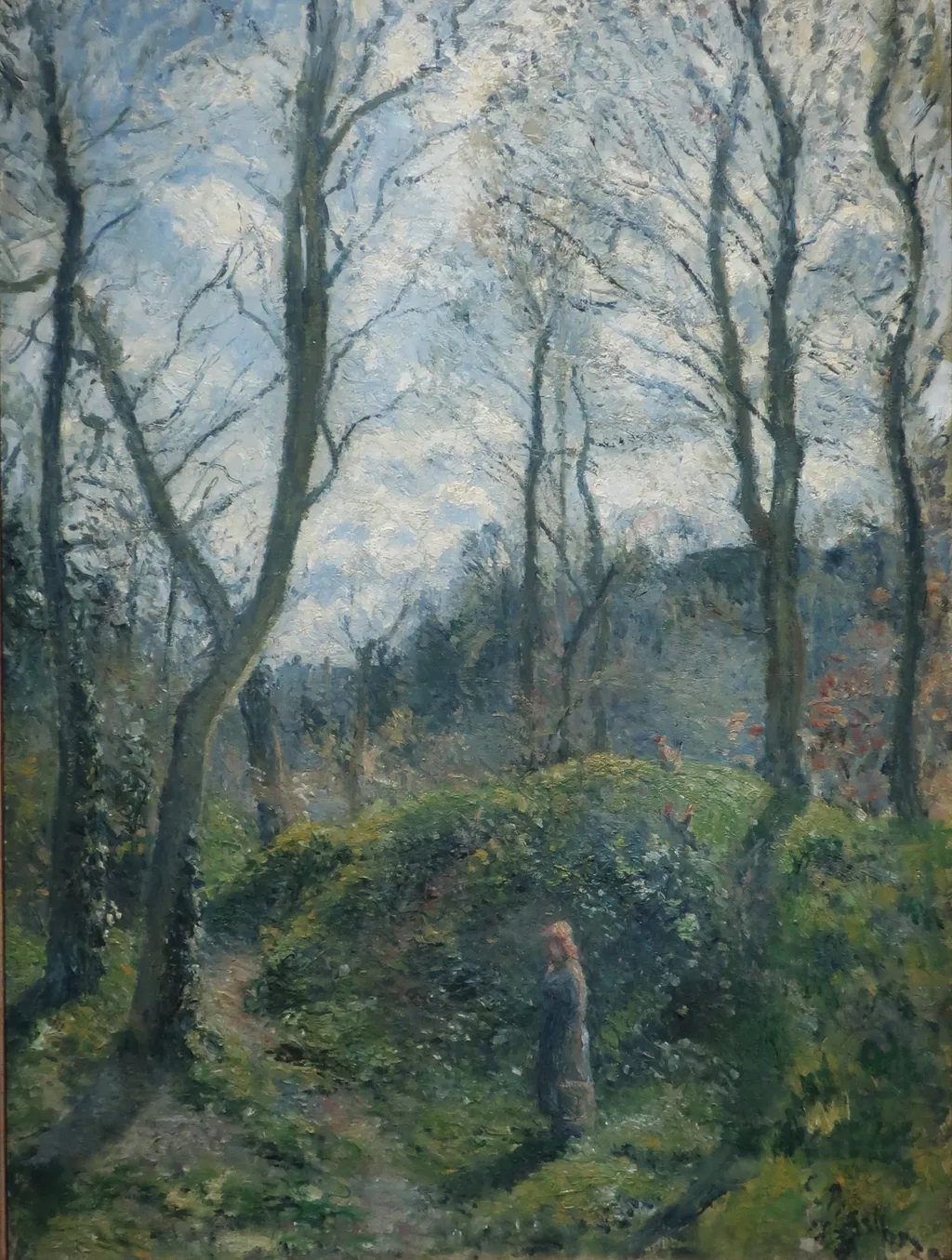
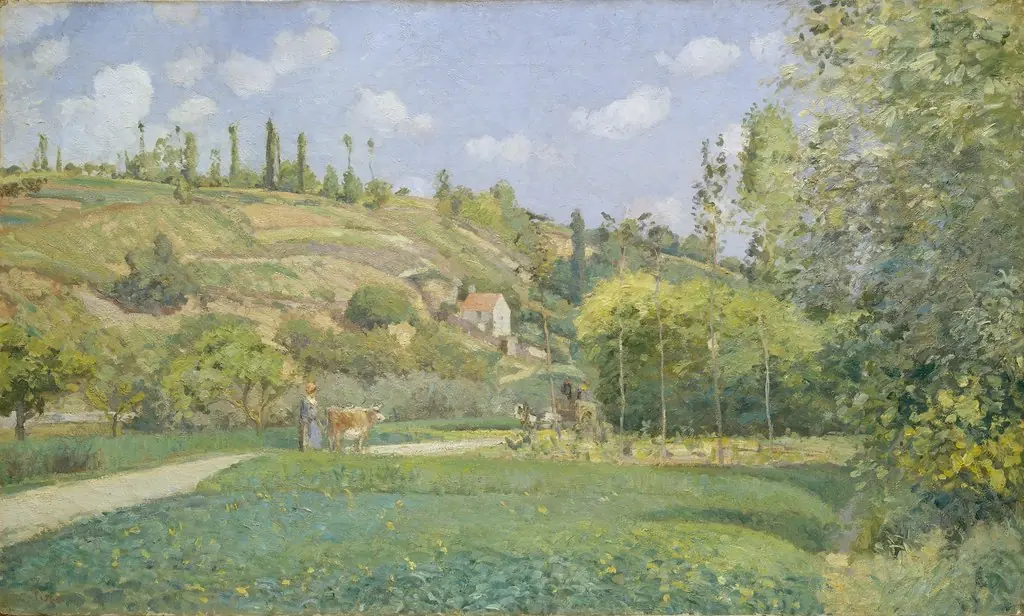
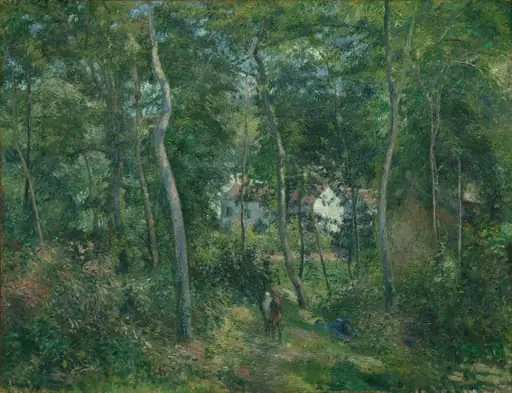
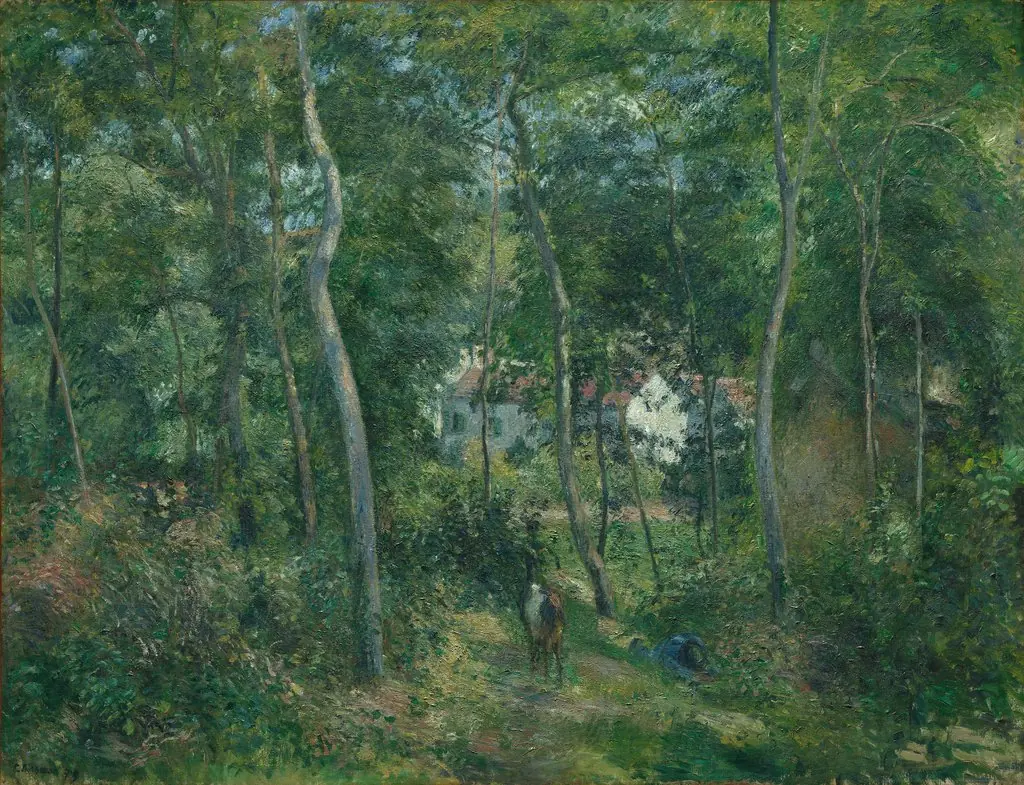
Woodland scene. Spring is an oil painting by the Impressionist artist Camille Pissarro. It dates from 1890 and is held in the collection of the Statens Museum for Kunst.
About this work
Subject & Meaning
The work functions as a landscape genre piece, capturing a specific springtime environment through the presence of trees and human figure within nature.
Camille Pissarro's 1878 oil painting depicts a woodland landscape featuring a forest setting with a solitary woman. The work functions as a landscape genre piece, capturing a specific springtime environment through the presence of trees and human figure within nature.
The inclusion of a female figure within the forest suggests a narrative element or a study of human interaction with the natural world, characteristic of Pissarro's approach to landscape painting during this period. The title explicitly identifies the season as spring, framing the iconography around themes of renewal and the outdoors.
Technique & Style
Camille Pissarro executed this 1878 landscape using oil paint on canvas. The work measures 73 by 54 cm. As a landscape painting, it stylistically aligns with Impressionist practices, depicting a forest scene that incorporates a female figure. The painting was included in the 4th Impressionist exhibition.
History & Provenance
Camille Pissarro created the oil painting Woodland scene. Spring in 1878. Executed on canvas, the work depicts a forest setting featuring a woman. The painting was exhibited during the 4th Impressionist Exhibition. It is currently held in the collection of the Statens Museum for Kunst and the Ny Carlsberg Glyptotek.
Woodland scene. Spring is an 1878 oil painting by Camille Pissarro, classified as a landscape. It measures 73 cm by 54 cm and depicts a forest with a woman.
The work is held in the collection of the Statens Museum for Kunst, Ny Carlsberg Glyptotek in Copenhagen. It was first shown at the 4th impressionist exhibition and is recorded with an inception date of 1878.
The painting entered the Ny Carlsberg Glyptotek collection and has been part of the museum's holdings since its acquisition. Its exhibition history includes presentation at the 4th impressionist exhibition, marking an early public showing of the work.
The artwork is cataloged with an accession number within the museum's inventory, though the specific identifier is not provided in the source documentation.
Context
Created in 1878, Camille Pissarro's landscape painting places him squarely within the Impressionist movement, a context concretely demonstrated by the work's inclusion in the 4th Impressionist exhibition. As a leading figure of the movement, Pissarro's focus on naturalistic, outdoor scenes aligns with the broader Impressionist dedication to capturing transient light and atmosphere. The painting's subject, a forest featuring a woman, reflects the era's interest in the human figure integrated within nature rather than dominating it.
The artwork's historical significance and critical validation are further underscored by its institutional provenance. Held in the collection of the Ny Carlsberg Glyptotek, the painting remains an accessible example of Pissarro's 1870s output, securing its place in the study of Impressionist landscapes.
Overview
Camille Pissarro’s 1890 oil painting Woodland Scene. Spring presents a quiet forest clearing in which a solitary woman stands centrally. Rendered in the Impressionist manner, the work captures a moment of stillness under a pale blue sky, with bare trees suggesting an early spring atmosphere.
Own this work as a print
Artist & collection