Artwork
Edge of the Woods Near L'Hermitage, Pontoise
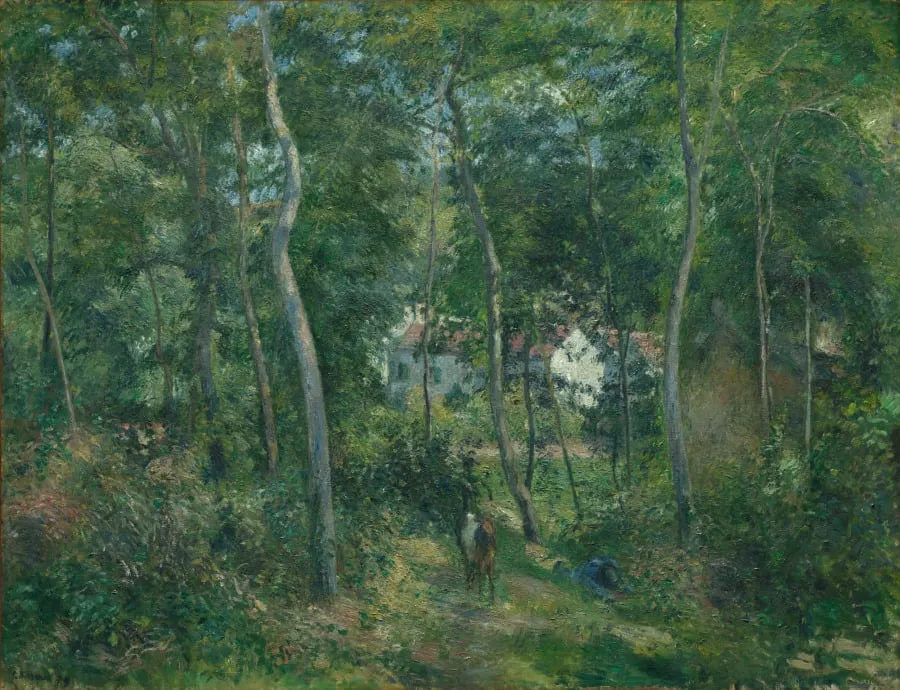
Edge of the Woods Near L'Hermitage, Pontoise is an unspecified painting by the Impressionist artist Camille Pissarro. It dates from 1879 and is held in the collection of the Cleveland Museum of Art.
- Accession no.
- 1951.356
- Credit line
- Gift of the Hanna Fund
About this work
Overview
Edge of the Woods Near L'Hermitage, Pontoise is a landscape painting by Camille Pissarro, created during his time in the rural village of L'Hermitage near Pontoise.
Subject & Meaning
The painting depicts a serene forest clearing with a man resting against a tree, surrounded by sun-dappled foliage and wildflowers, capturing a moment of everyday rural life.
Technique & Style
Pissarro employed a restricted palette of pure hues, applying paint in systematic diagonal brushstrokes, which he likened to knitting, to achieve a shimmering effect.
History & Provenance
The painting was exhibited in the fourth Impressionist exhibition in 1879, during a period when Pissarro was struggling financially and artistically.
Artist & collection


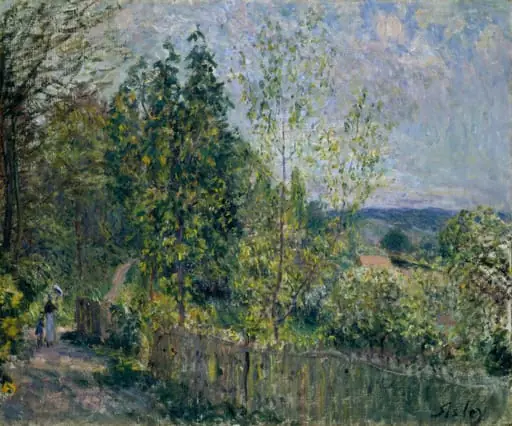 The Road in the Woods
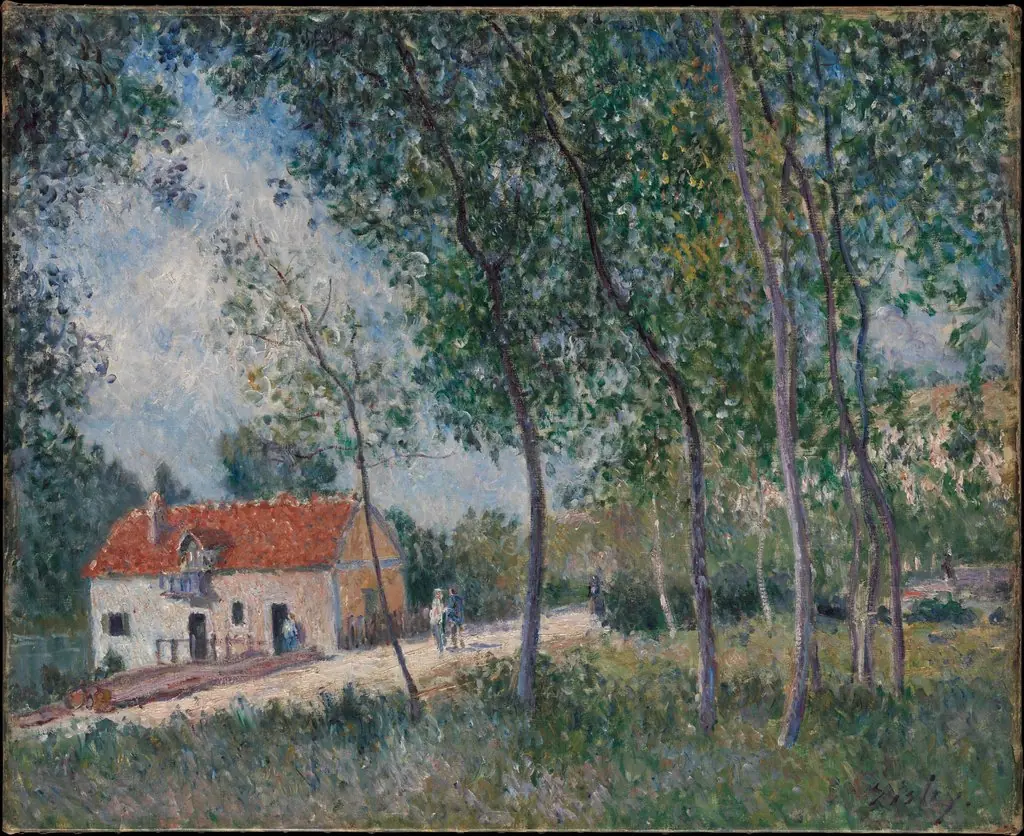 The Road from Moret to Saint-Mammès
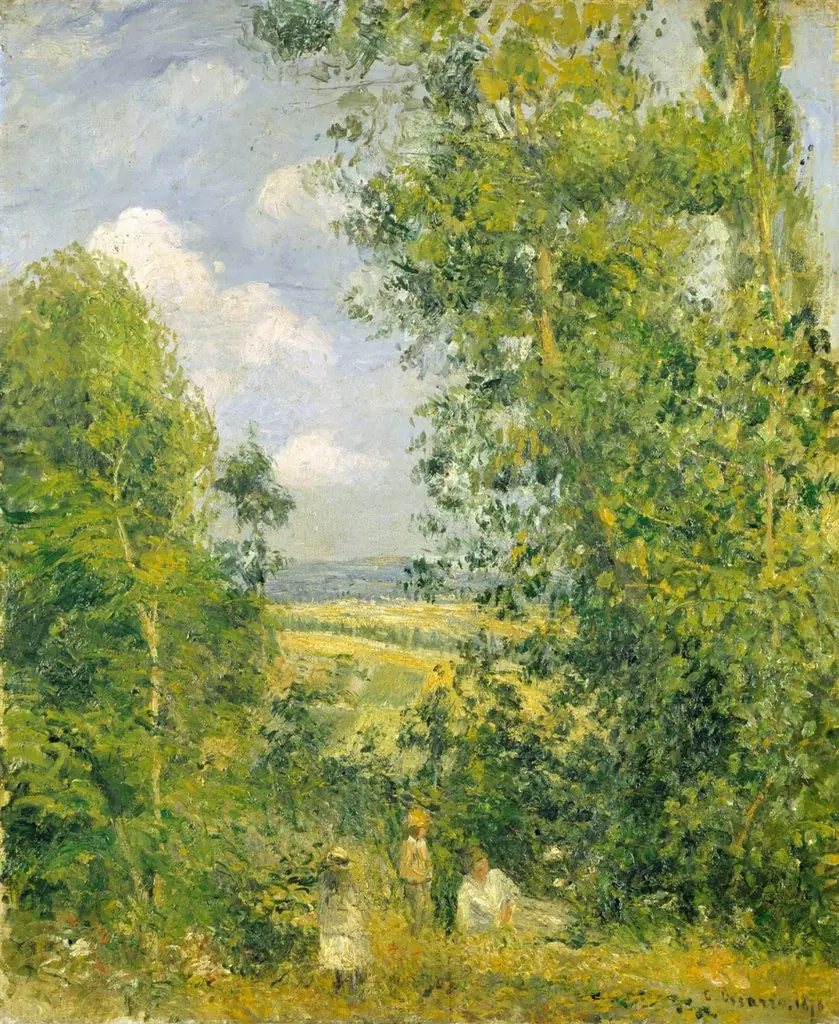 Resting in the Woods (côte des Grouettes), Pontoise
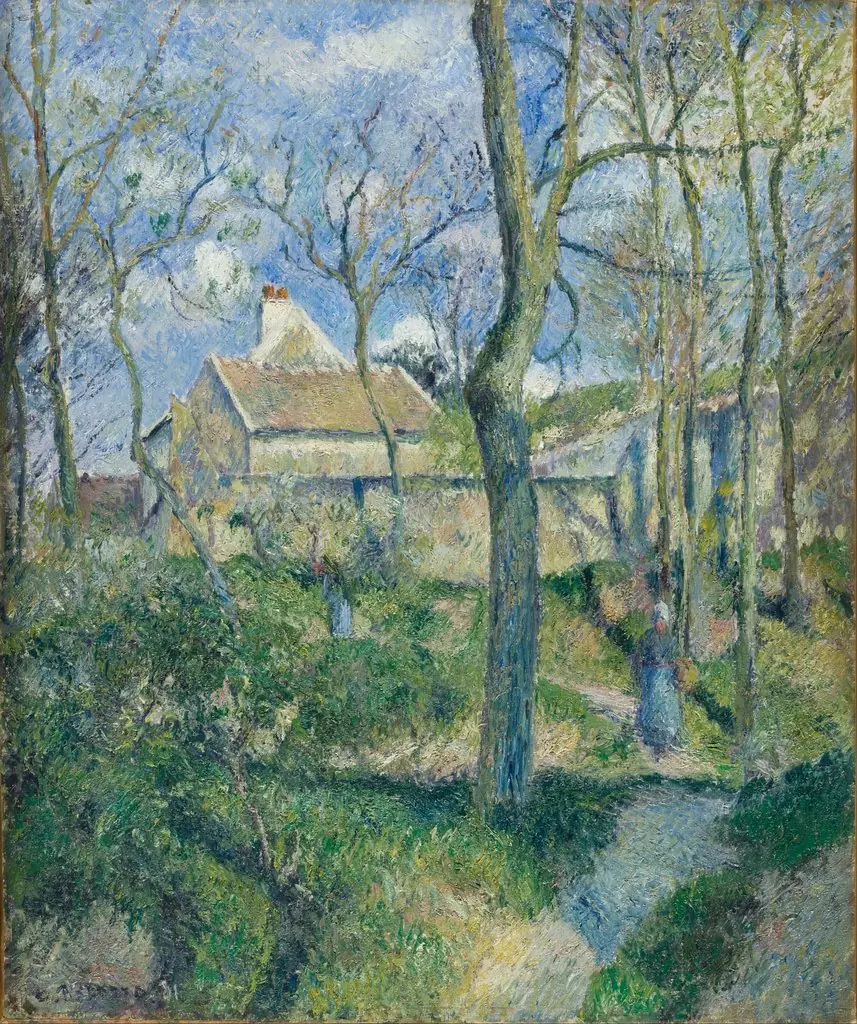 The Path to Les Pouilleux, Pontoise
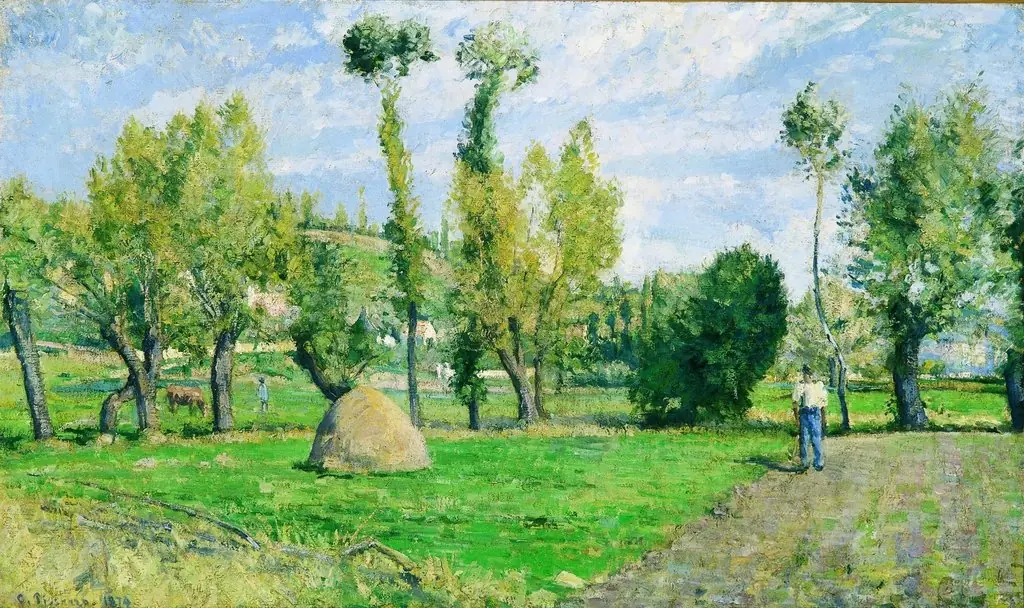 Meadows at Le Valhermeil, Auvers-sur-Oise
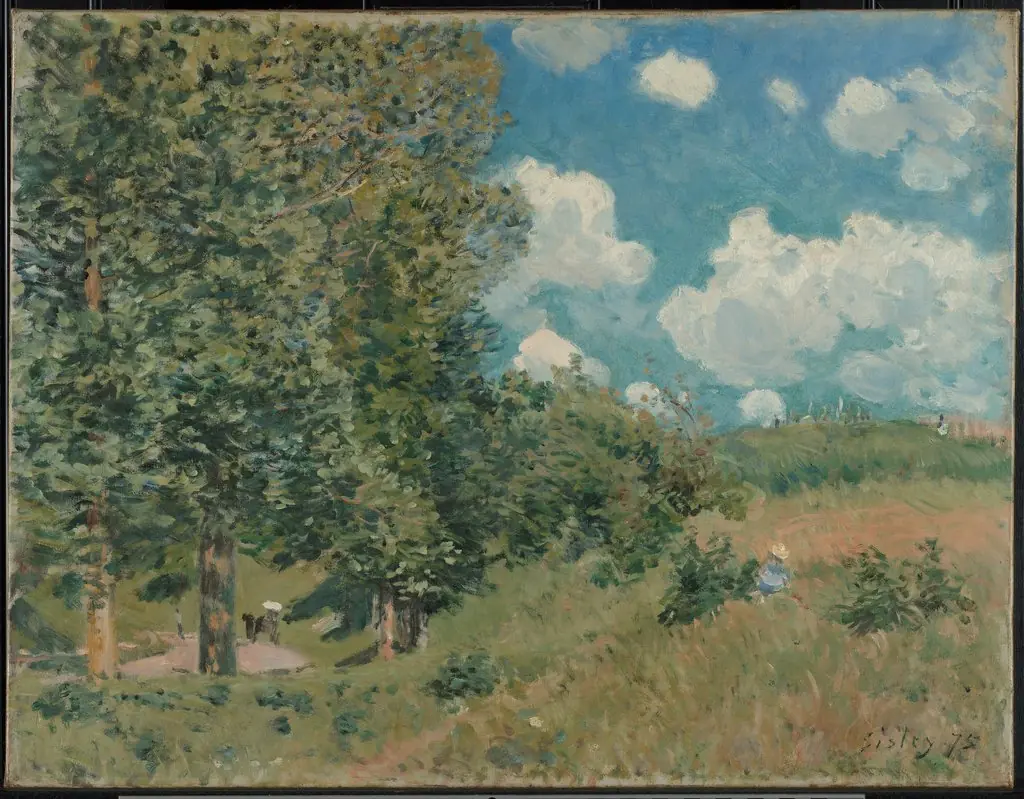 The Road from Versailles to Saint-Germain
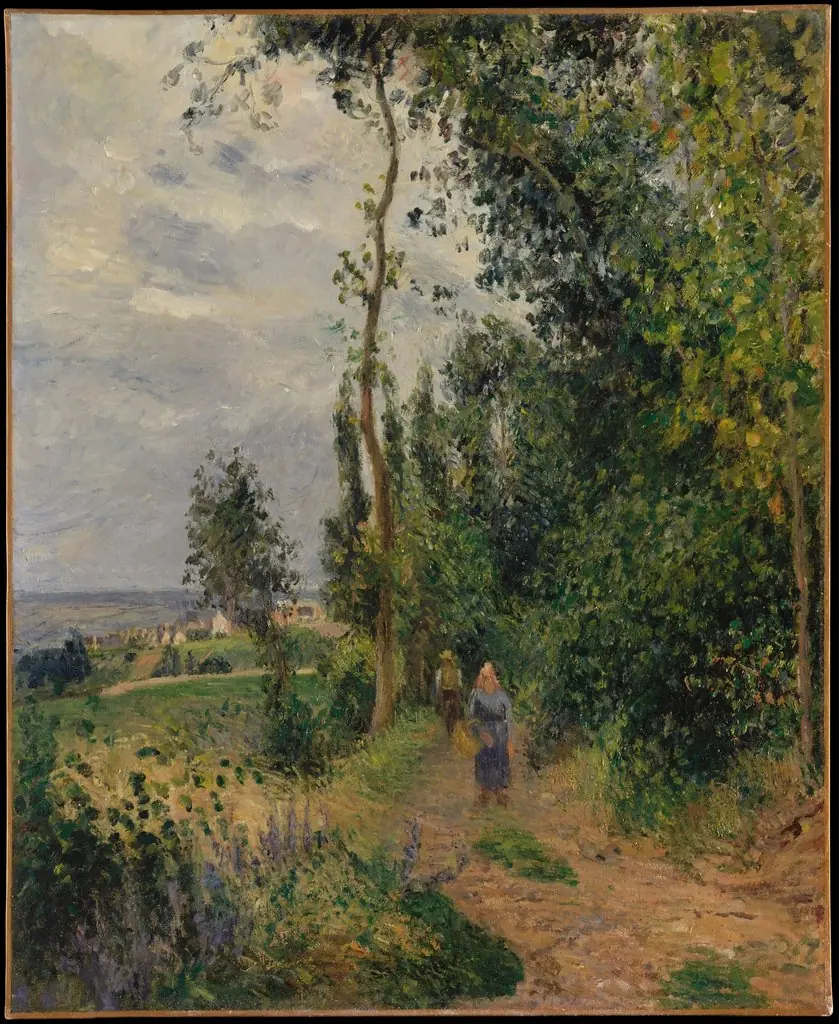 Côte des Grouettes, near Pontoise
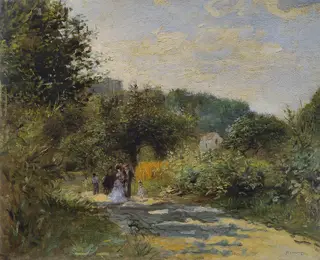 A Road in Louveciennes
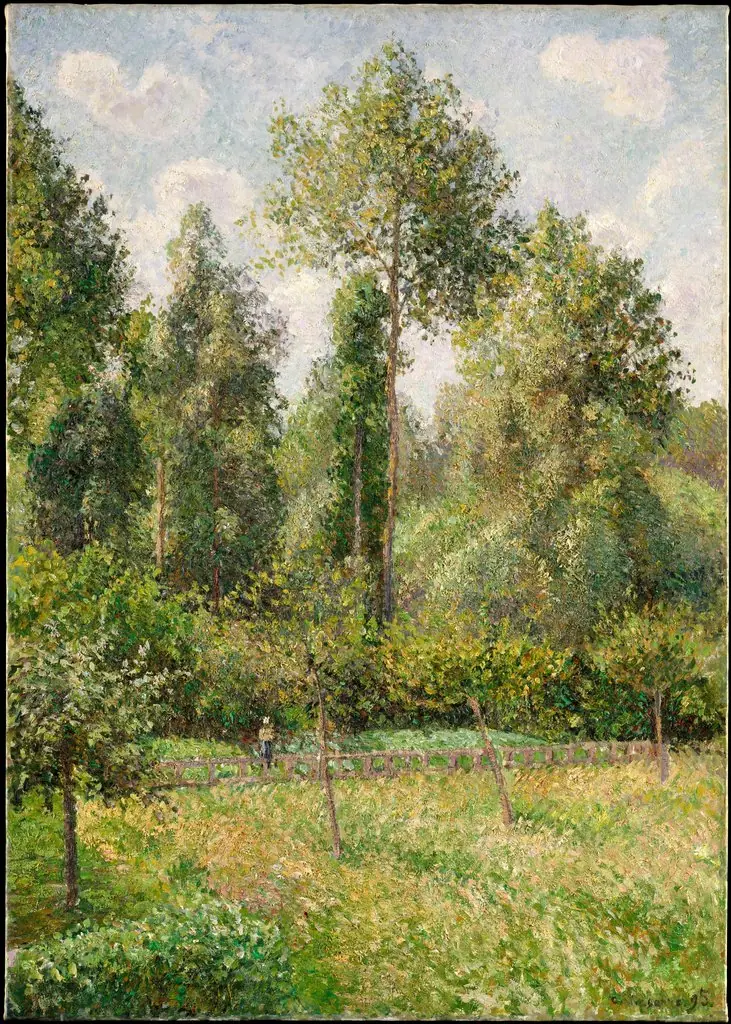 Poplars, Éragny
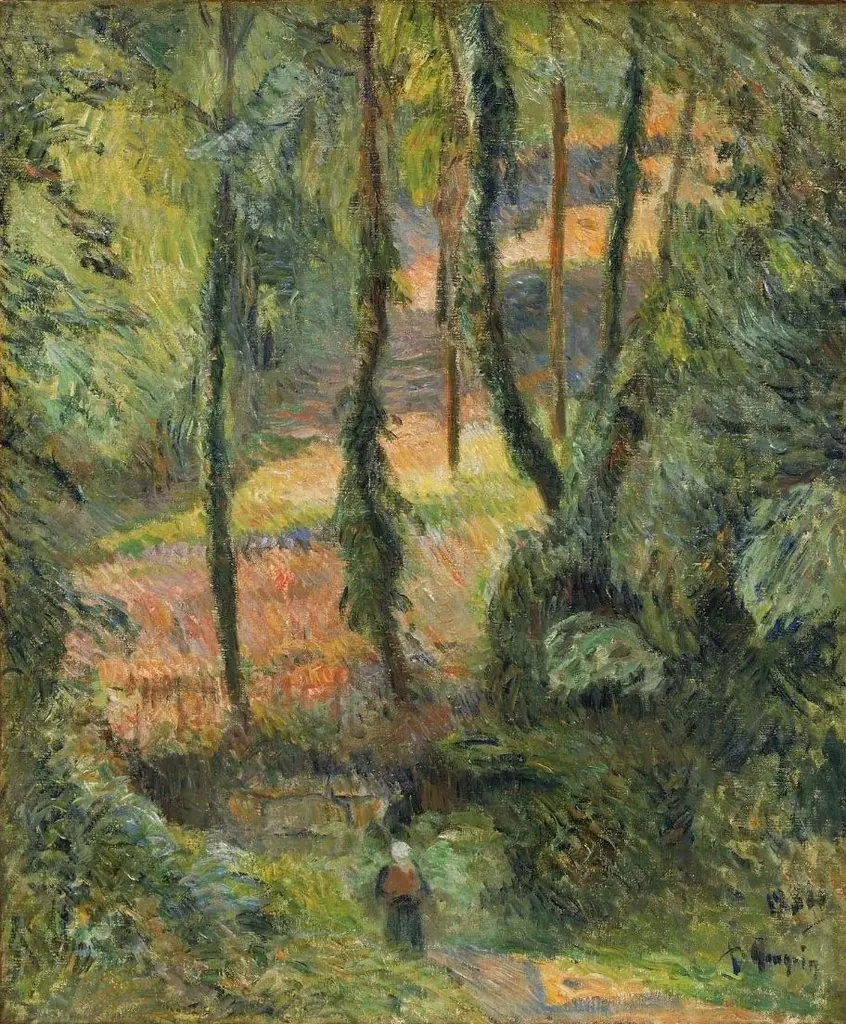 Forest Interior (Sous-Bois)
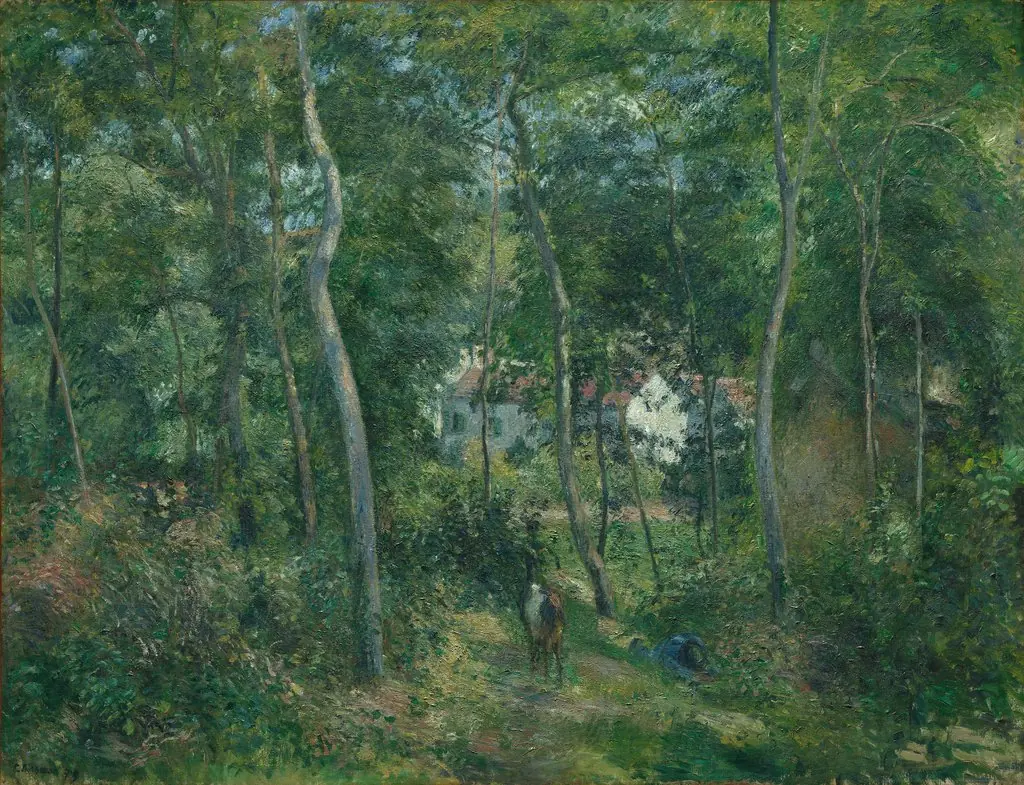 Edge of the Woods Near L'Hermitage, Pontoise
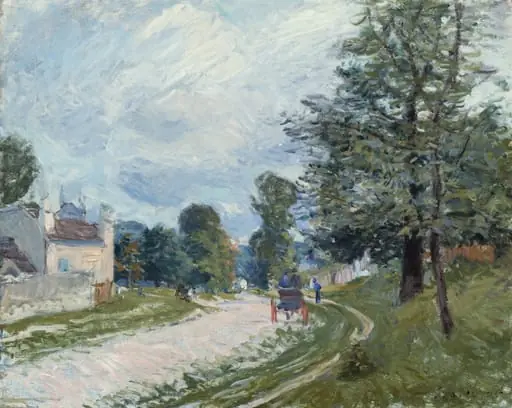 A Turn in the Road