Artwork
Campo Sant'Angelo
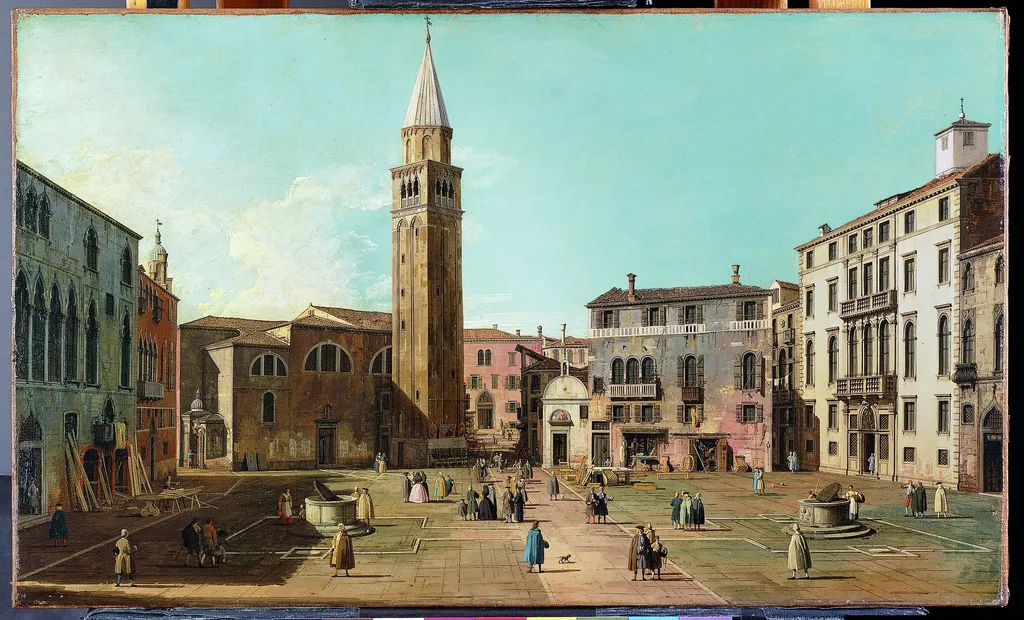
Campo Sant'Angelo is an oil painting by the Rococo painting artist Canaletto. It dates from 1734 and is held in the collection of the Metropolitan Museum of Art.
About this work
Subject & Meaning
The painting portrays Campo Sant'Angelo, a Venetian urban square, showing a prominent tower, surrounding town buildings, a stone water well and a small dog in the foreground. These elements together document the everyday architectural and social setting of 18th-century Venice, characteristic of Canaletto's vedute that functioned as visual records of the city's public spaces. The tower and well serve as civic landmarks, while the presence of the dog adds a note of daily life, together illustrating the square's role as a communal hub within the urban fabric.
Technique & Style
The paint handling is smooth and controlled, allowing fine architectural detail and a clear, luminous atmosphere that characterizes the artist's mature style.
Campo Sant'Angelo is executed in oil paint on a canvas support, a typical medium for Canaletto's vedute. The work belongs to the cityscape genre and is classified as a veduta, emphasizing precise topographical rendering of the Campo Sant'Angelo square with its tower, surrounding buildings, water well and a dog. The paint handling is smooth and controlled, allowing fine architectural detail and a clear, luminous atmosphere that characterizes the artist's mature style.
The composition employs a measured perspective that leads the eye across the piazza, reinforcing the sense of spatial depth typical of eighteenth-century Venetian view painting.
History & Provenance
Campo Sant'Angelo was painted by Giovanni Antonio Canal (Canaletto) in 1734, executed in oil on canvas. The cityscape depicts the Venetian square with its tower, surrounding town, a water well, and a dog. The work was previously held in a private collection and was acquired by the Metropolitan Museum of Art in 2019, where it is catalogued under accession number 2019.141.5.
It measures 46.7 cm in height and 77.5 cm in width. The sources do not contain information regarding specific exhibition history or dates of display.
Context
Canaletto's 1734 oil on canvas veduta titled Campo Sant'Angelo portrays a lively Venetian square framed by a tower, a water well and a small dog, demonstrating the artist's meticulous topographical interest. Held in a private collection before entering the Metropolitan Museum of Art in 2019, it stands as an example of 18th-century cityscape production. The work documents Venetian urban morphology and contributes to the veduta tradition that influenced later view painters, combining precise architectural rendering with a vivid sense of everyday street life.
Overview
This oil painting, titled Campo Sant'Angelo, depicts a bustling public square. The composition features prominent architectural structures framing a central, slender tower. Numerous figures populate the space, engaged in various activities, contributing to a sense of everyday life within the urban setting.
The artist uses the medium of oil paint to render the scene, capturing a specific moment within this Venetian campo.
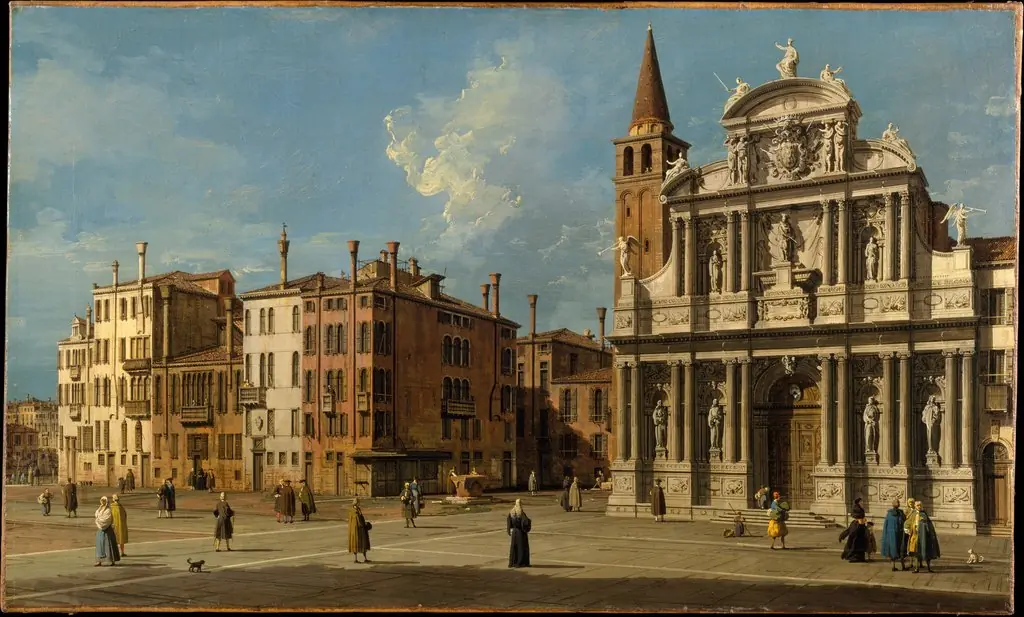
Own this work as a print
Artist & collection
Artist
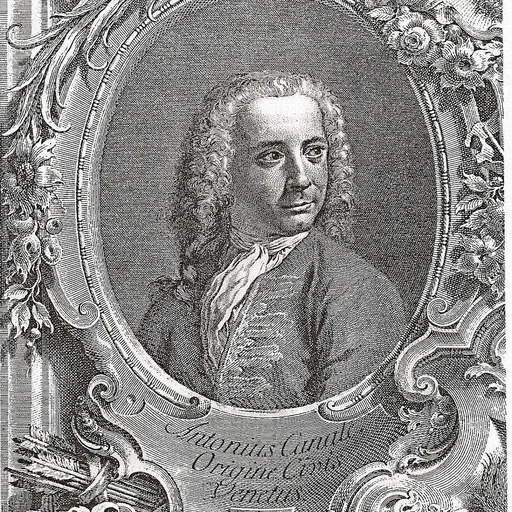
Giovanni Antonio Canal (18 October 1697 – 19 April 1768), commonly known as Canaletto (Italian: ), was an Italian painter from the Republic of Venice, considered an important member of the 18th-century Venetian school.

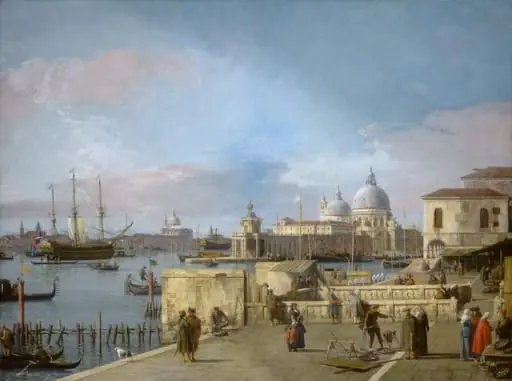 Entrance to the Grand Canal from the Molo, Venice
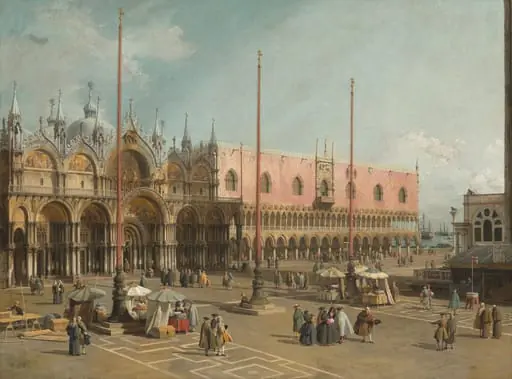 The Square of Saint Mark's, Venice
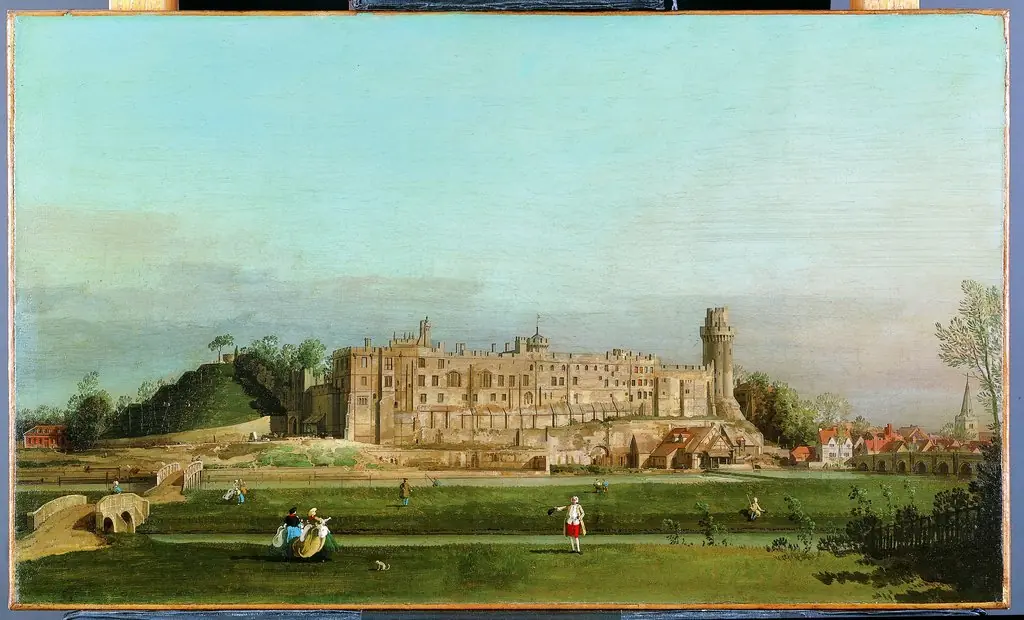 Warwick Castle
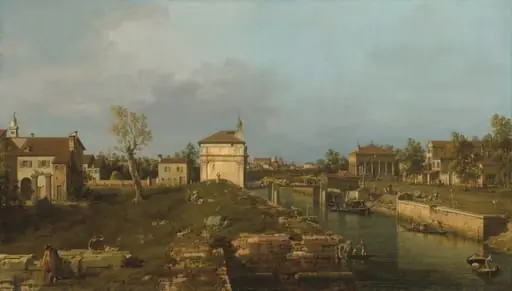 The Porta Portello, Padua
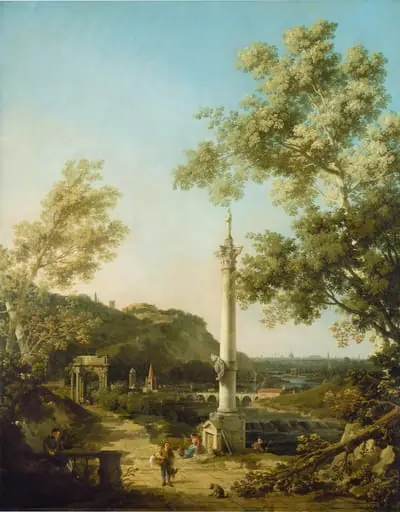 English Landscape Capriccio with a Column
- Campo Santa Maria Zobenigo, Venice
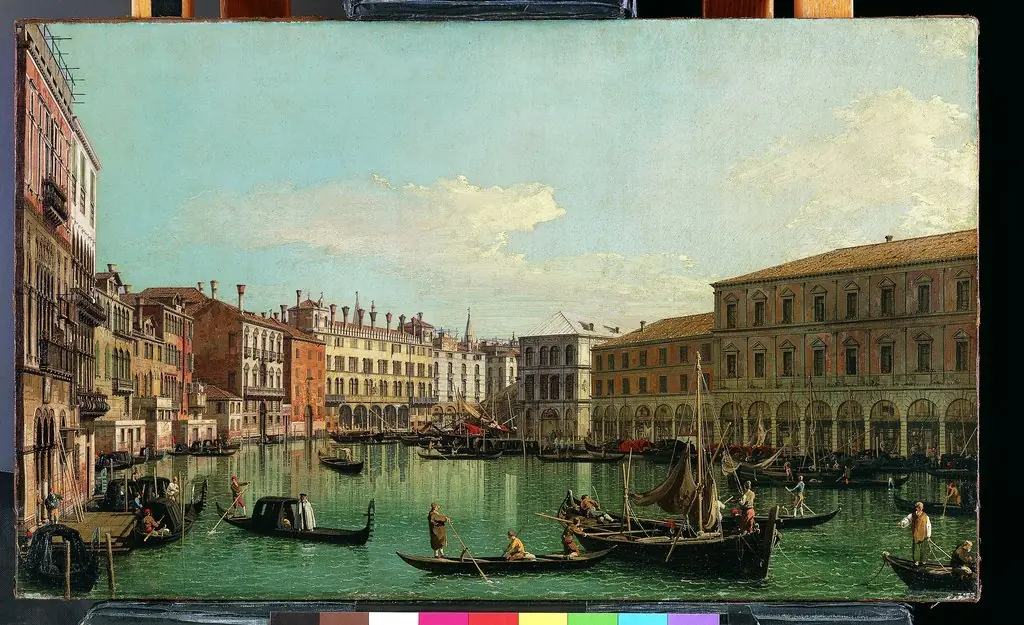 The Grand Canal, Venice, Looking South toward the Rialto Bridge
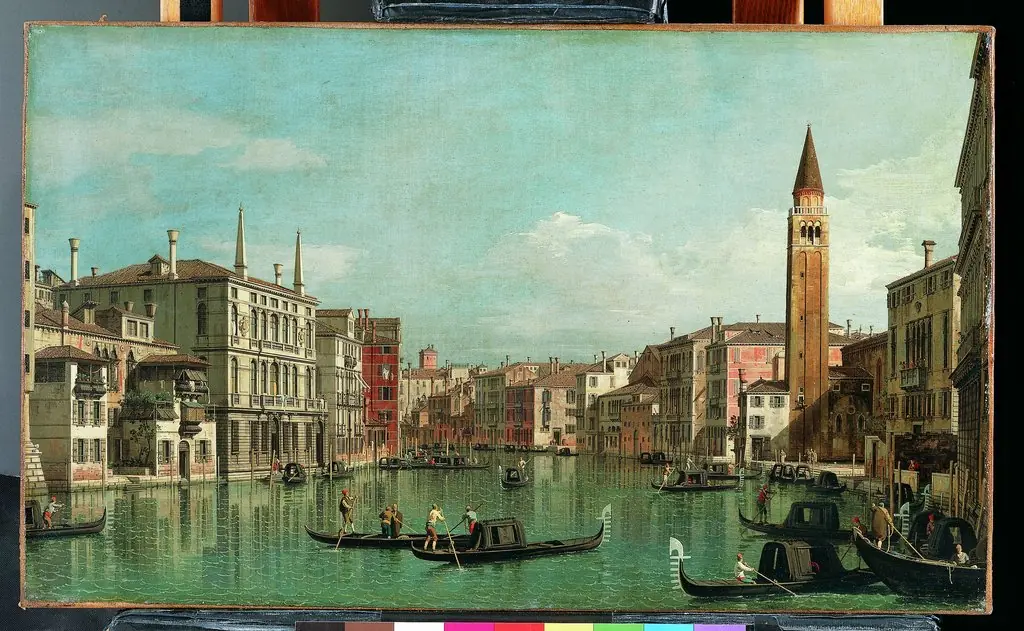 The Grand Canal, Venice, Looking Southeast, with the Campo della Carità to the Right
 The Square of Saint Mark's, Venice
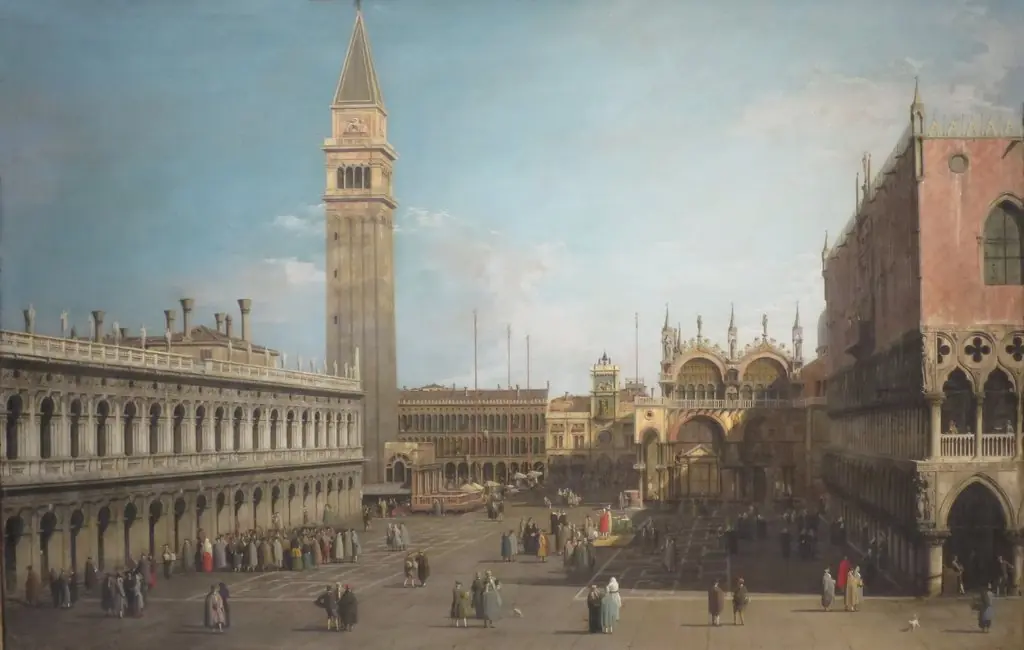 The Piazzetta, Venice, Looking North
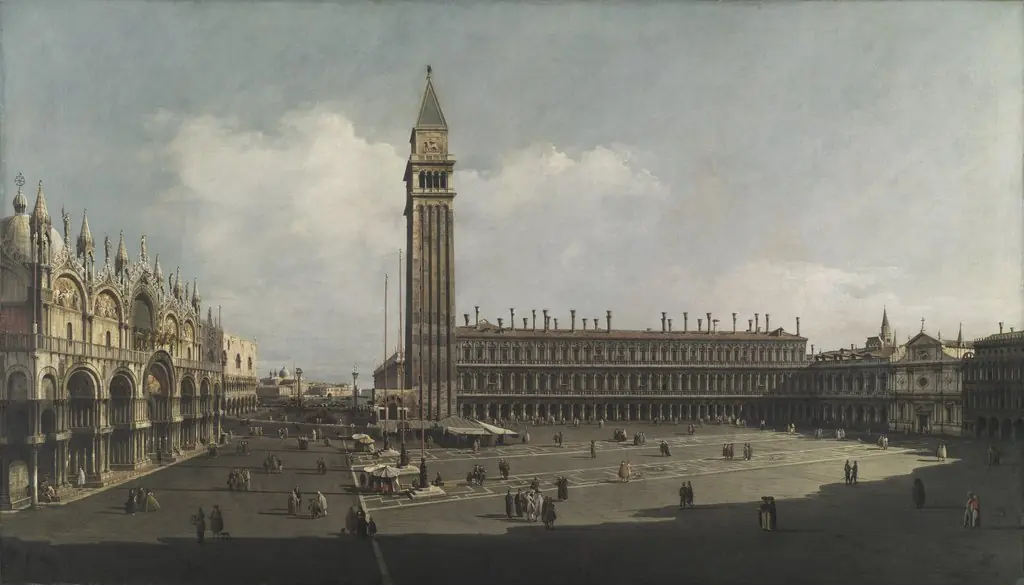 Piazza San Marco, Venice
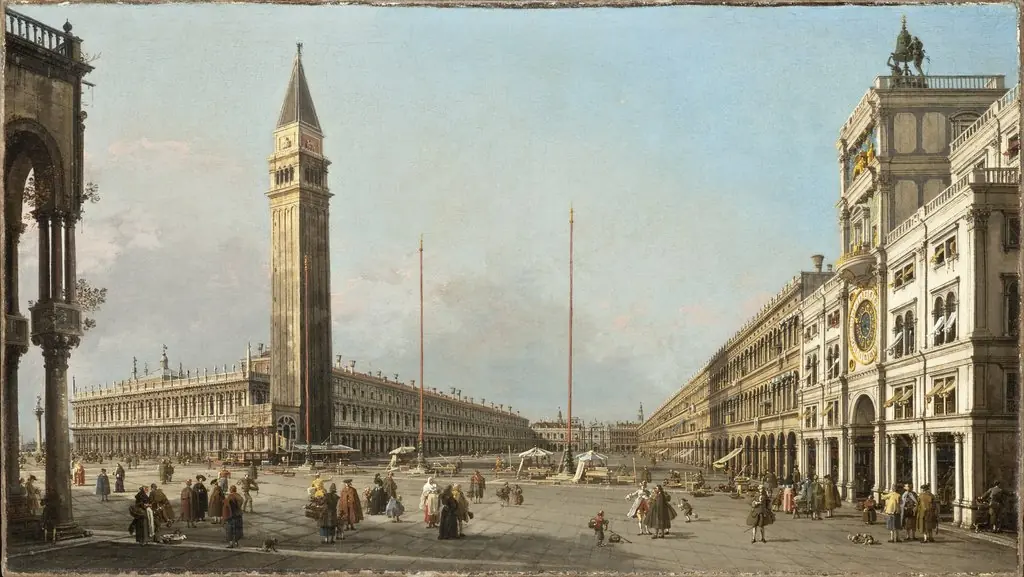 Piazza San Marco Looking South and West
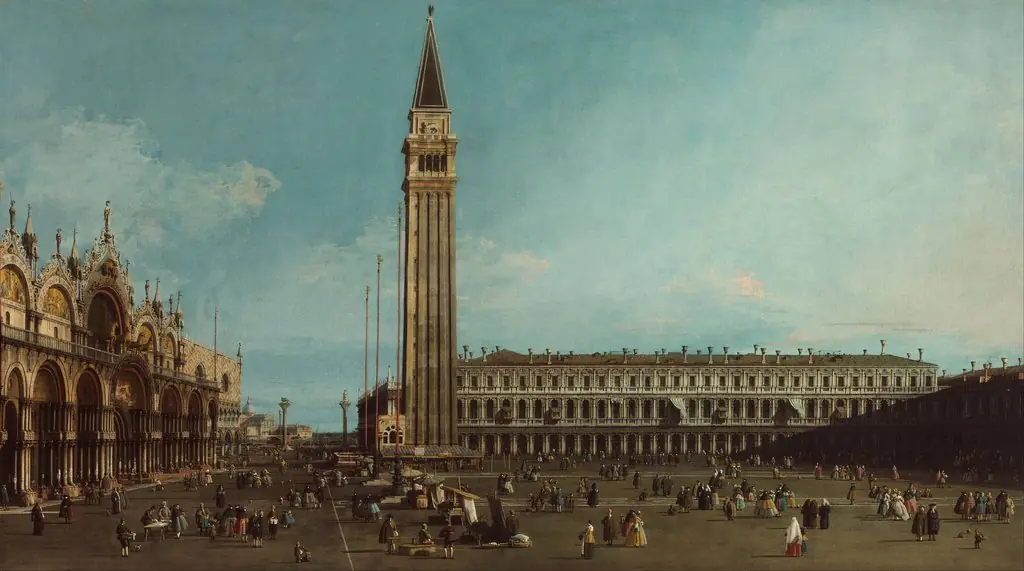 The Piazza San Marco, Venice
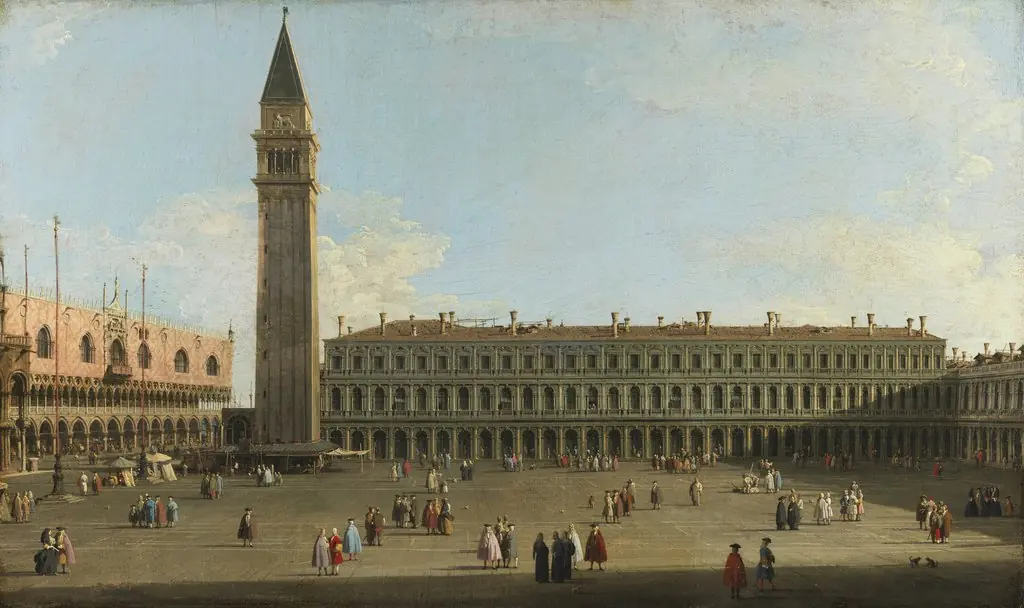 Saint Mark's Square, Venice
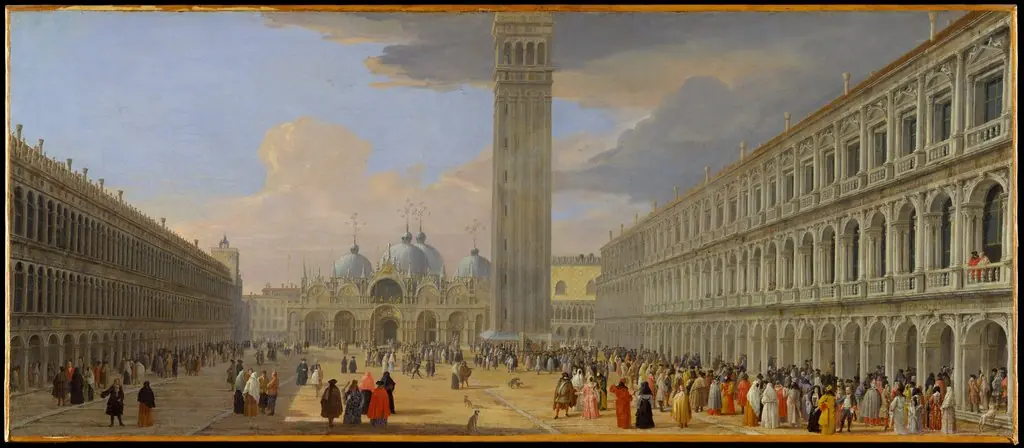 Piazza San Marco, Venice
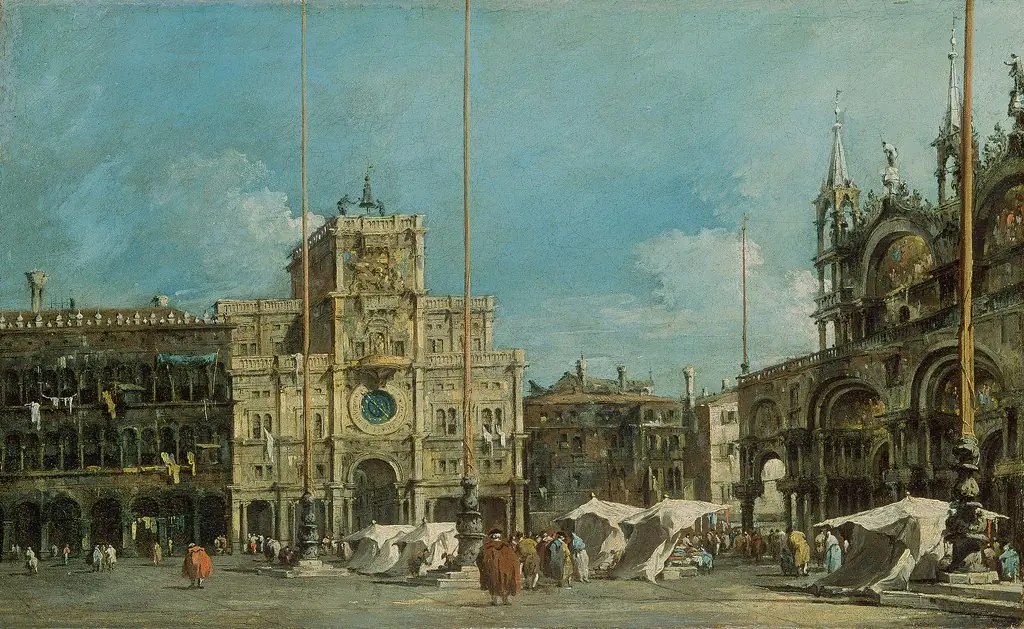 The Torre dell’Orologio in Piazza San Marco
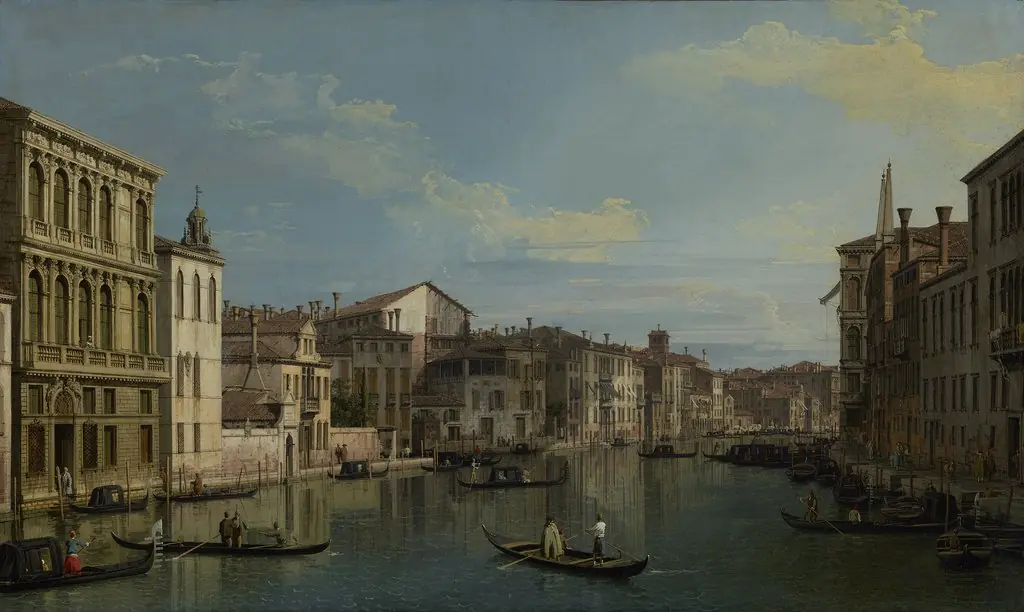 The Grand Canal in Venice from Palazzo Flangini to Campo San Marcuola
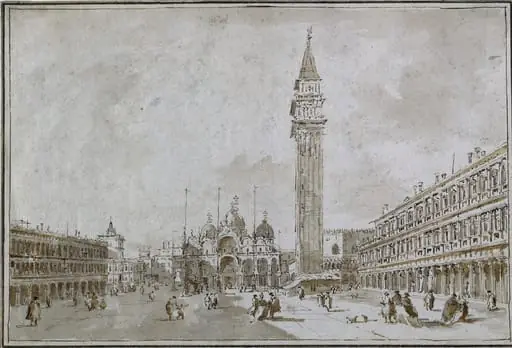 Piazza San Marco, Venice