Artwork
Warwick Castle
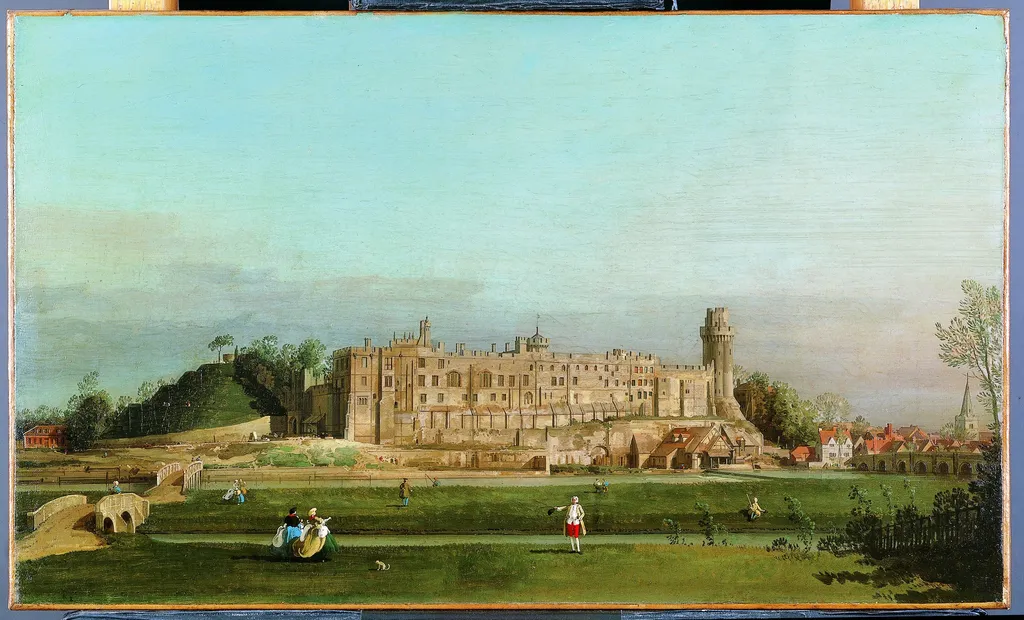
Warwick Castle is an oil painting by the Rococo painting artist Canaletto. It dates from 1748 and is held in the collection of the Metropolitan Museum of Art.
About this work
Subject & Meaning
Executed in oil on canvas in 1748, the painting belongs to Canaletto's veduta tradition and is classified as a cityscape.
The work shows Warwick Castle set beside a river, with a bridge and surrounding activity including fishing. Executed in oil on canvas in 1748, the painting belongs to Canaletto's veduta tradition and is classified as a cityscape. The castle functions iconographically as a symbol of enduring power and historical continuity, while the river and bridge suggest the passage of time and connections between past and present.
Technique & Style
Warwick Castle (1748) is an oil painting on canvas, executed in the Venetian veduta tradition, which emphasized topographically accurate yet picturesque urban views. The handling reflects Canaletto's characteristic precision, employing fine, controlled brushwork to delineate architectural details and atmospheric effects. The composition balances naturalistic light with subtle chiaroscuro, enhancing the castle's medieval silhouette and the river's reflective surface.
Oil paint allows for layered glazing, particularly in the sky and foliage, to achieve luminosity. Stylistically, the work exemplifies mid-18th-century Venetian landscape painting, combining topographical fidelity with a refined, almost theatrical compositional structure.
History & Provenance
Warwick Castle is an oil-on-canvas cityscape painted by Giovanni Antonio Canal, known as Canaletto, in 1748. The work belongs to the Metropolitan Museum of Art, which holds it in its collection as a veduta depicting a bridge, fishing activity, the castle, and a river. No earlier owners or sale records are documented in the available sources.
Context
Warwick Castle (1748), an oil on canvas cityscape by Giovanni Antonio Canal, known as Canaletto, exemplifies his mature veduta style and contributed to the development of topographical painting in the 18th century. The work, depicting a bridge, fishing scene, and the castle itself, was produced during a period when Canaletto’s precise architectural renderings influenced later landscape artists. Its inclusion in the Metropolitan Museum of Art’s collection reflects scholarly recognition of its historical and aesthetic significance within the artist’s oeuvre and the broader Venetian veduta tradition.
Overview
Giovanni Antonio Canal, known as Canaletto, completed Warwick Castle in 1748. This oil painting showcases the artist's characteristic attention to architectural detail within a broader landscape. As a prominent member of the Venetian school, Canaletto was renowned for his cityscapes and vedute.
The work is currently part of the collection at The Metropolitan Museum of Art, representing a notable example of his later career.
Own this work as a print
Artist & collection
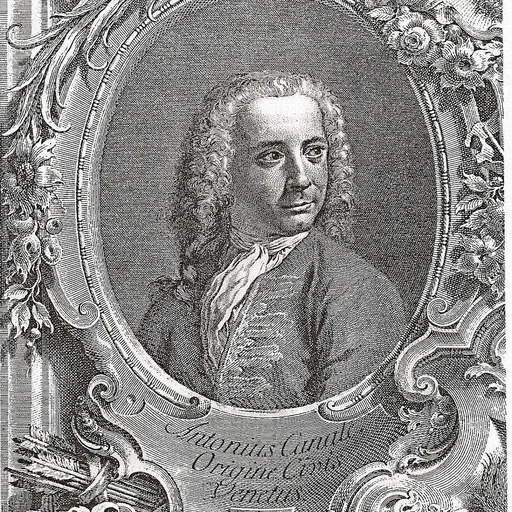
Artist
Giovanni Antonio Canal (18 October 1697 – 19 April 1768), commonly known as Canaletto (Italian: ), was an Italian painter from the Republic of Venice, considered an important member of the 18th-century Venetian school.

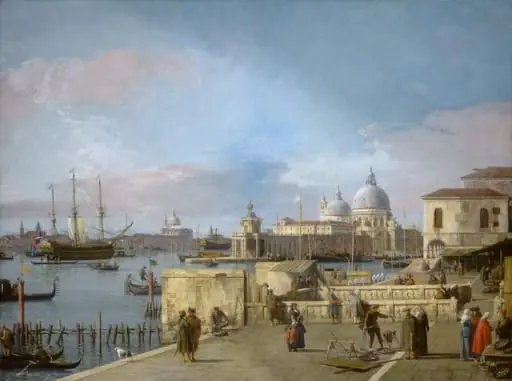 Entrance to the Grand Canal from the Molo, Venice
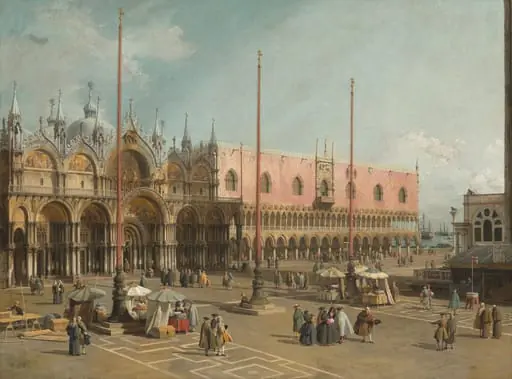 The Square of Saint Mark's, Venice
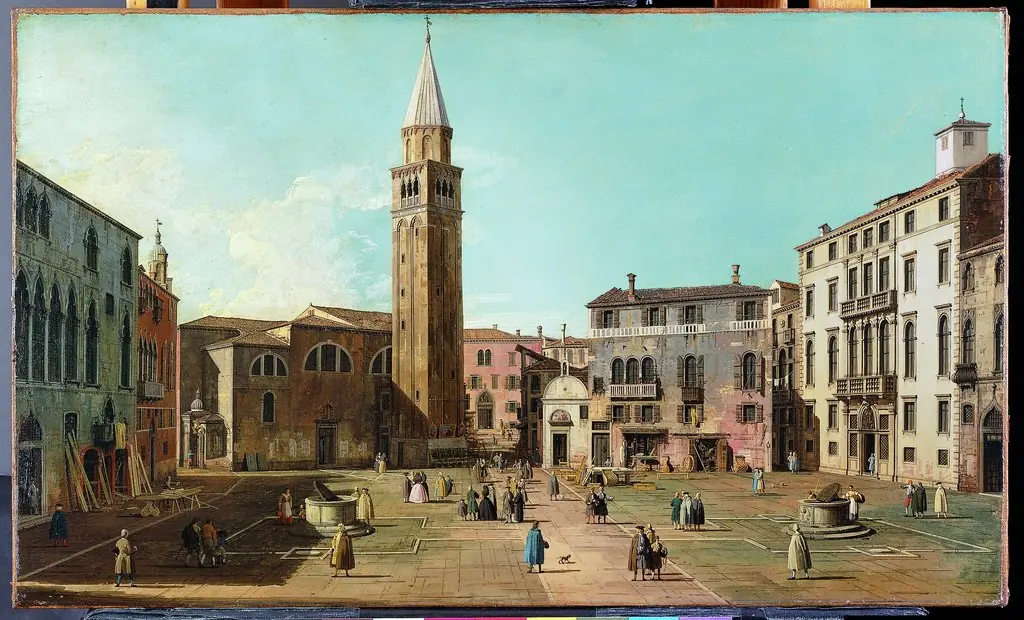 Campo Sant'Angelo
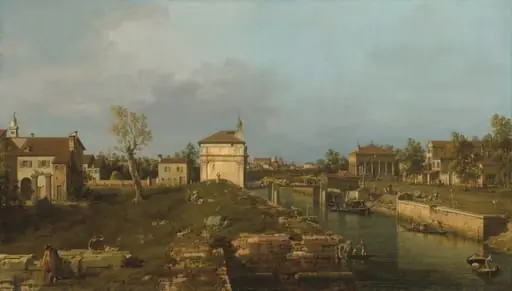 The Porta Portello, Padua
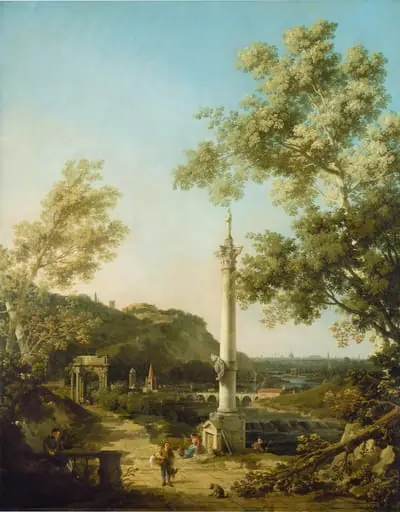 English Landscape Capriccio with a Column
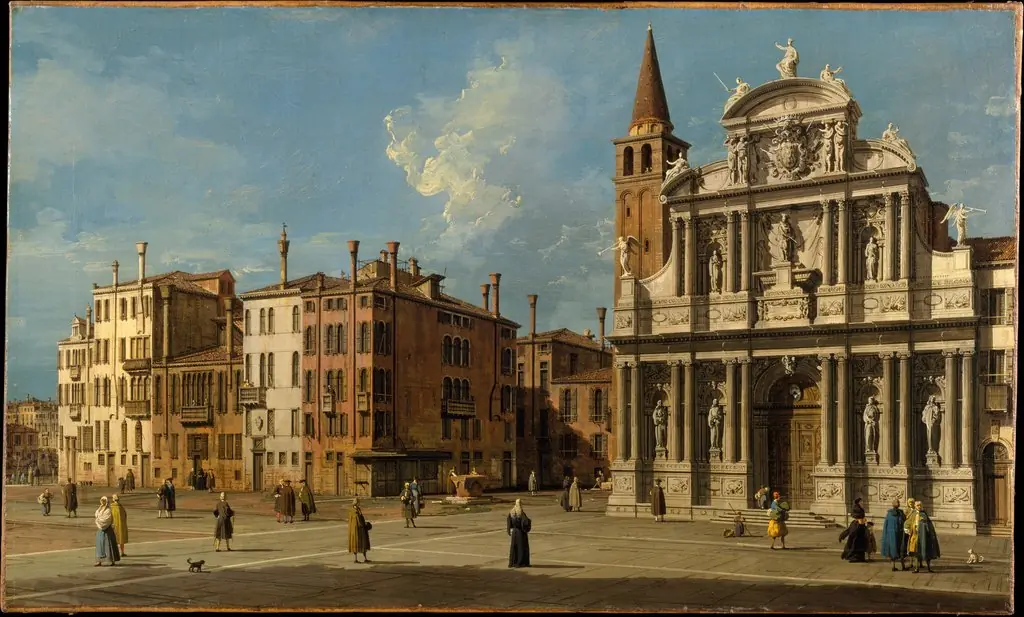 Campo Santa Maria Zobenigo, Venice
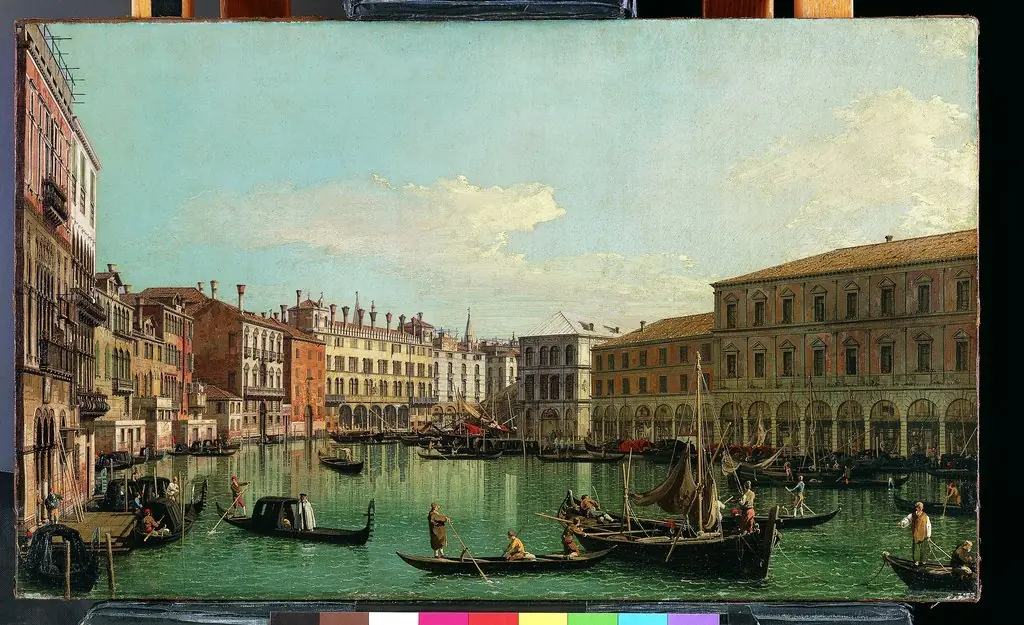 The Grand Canal, Venice, Looking South toward the Rialto Bridge
 The Grand Canal, Venice, Looking Southeast, with the Campo della Carità to the Right