Artwork
Campo Santa Maria Zobenigo, Venice
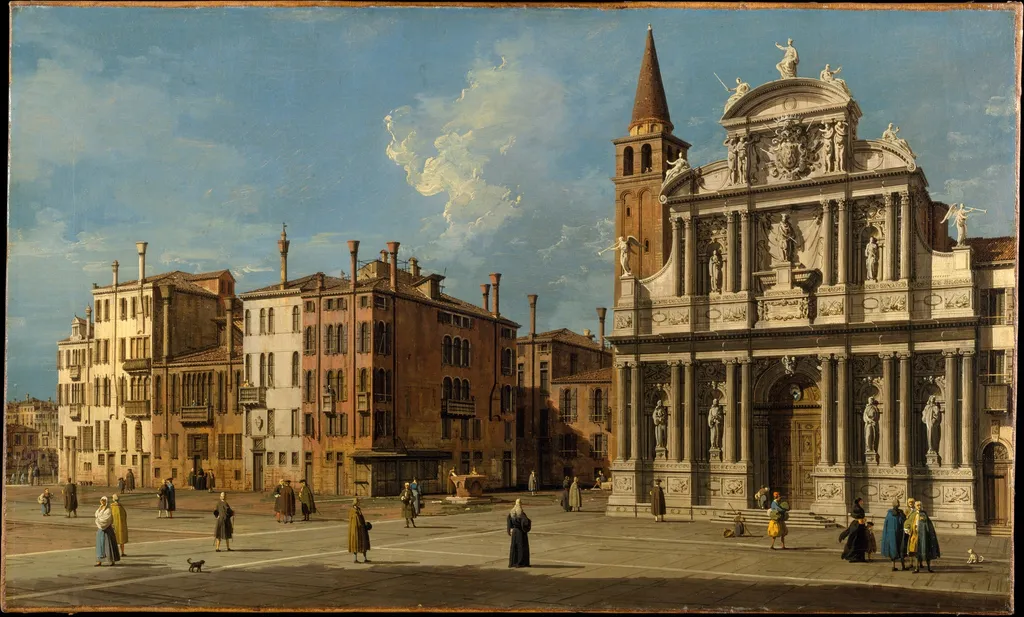
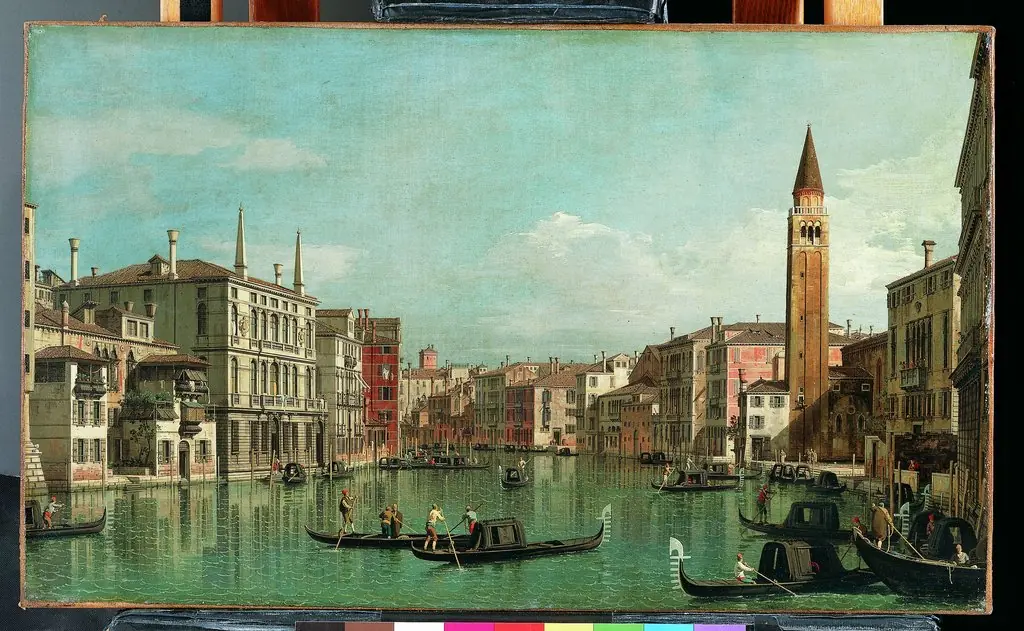
Campo Santa Maria Zobenigo, Venice is an oil painting by the Rococo painting artist Canaletto. It dates from 1734 and is held in the collection of the Metropolitan Museum of Art.
About this work
Subject & Meaning
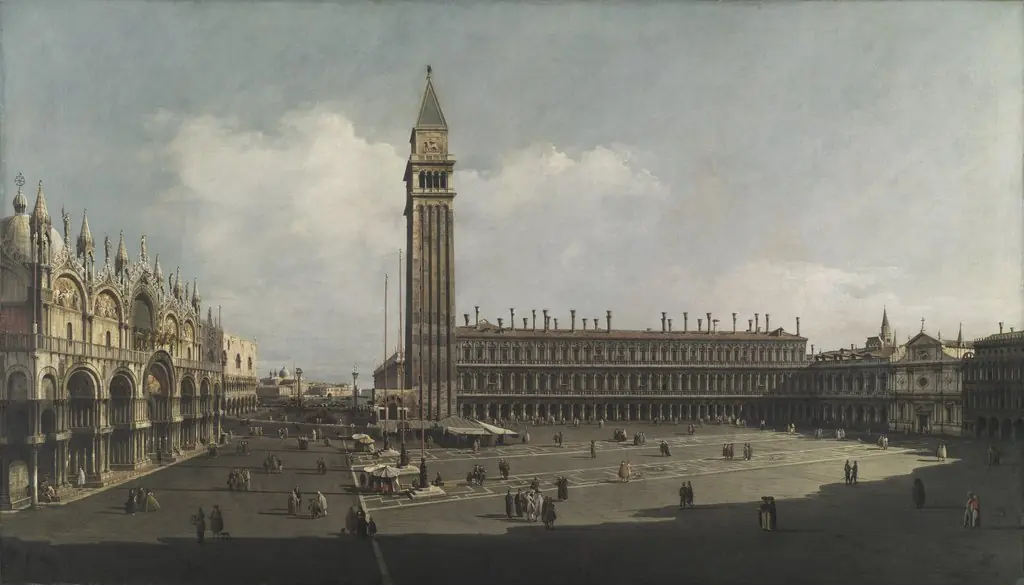
The work presents a topographical view of Campo Santa Maria Zobenigo, Venice, centered on a prominent tower flanked by surrounding structures.
The work presents a topographical view of Campo Santa Maria Zobenigo, Venice, centered on a prominent tower flanked by surrounding structures. Executed in oil on canvas in 1734, the composition exemplifies Canaletto’s veduta genre, emphasizing precise architectural detail and the spatial clarity of the Venetian urban environment. By capturing a recognizable public square, the painting functions as both a record of contemporary civic life and an idealized representation of Venice’s architectural heritage, reinforcing the city’s reputation for order and grandeur.
Technique & Style
Created in 1734, the work is an oil painting executed on canvas support. As a veduta, it employs the medium of oil paint to render a detailed cityscape of Venice, specifically depicting the Campo Santa Maria Zobenigo. The artist utilizes the fluidity and opacity of oil to capture architectural elements, including the tower and surrounding buildings, with precision characteristic of the genre.
The handling of the paint facilitates the realistic representation of light and structure within the urban environment. The formal qualities align with the cityscape classification, focusing on the depiction of the public square and its historic structures through the established conventions of eighteenth-century Venetian topographical painting.
History & Provenance
The painting titled Campo Santa Maria Zobenigo, Venice, was created by the Venetian artist Canaletto (Giovanni Antonio Canal) in 1734. Executed in oil on canvas, this work belongs to the veduta genre and depicts the tower and surrounding buildings of the specified square in Venice. While the precise commission details and initial ownership chain are not specified in the available records, the work is currently held in the collection of the Metropolitan Museum of Art.
The inception date is established as January 1, 1734, marking the beginning of its creation during Canaletto's prolific period of cityscape production.
Canaletto's 1734 oil painting, Campo Santa Maria Zobenigo, Venice, is held in the collection of the Metropolitan Museum of Art in New York. The work depicts a cityscape featuring a tower and buildings within the Venetian veduta genre. While the source material confirms the painting's current location and its creation date of 1734, it does not provide a specific inventory or accession number for the piece.
Furthermore, the available documentation offers no details regarding the artwork's exhibition history, listing only its general classification as a painting on canvas.
Legacy
The 1734 canvas Campo Santa Maria Zobenigo, Venice exemplifies Canaletto’s mastery of urban veduta and has come to symbolize the enduring appeal of 18th‑century Venetian scenery. Its inclusion in the Metropolitan Museum of Art’s collection has ensured continual public exposure and scholarly attention, reinforcing Canaletto’s reputation as a pivotal figure in veduta painting. As a benchmark of precision and atmospheric effect, the work influences contemporary interpretations of cityscape genre and informs exhibitions that trace the evolution of Venetian view painting.
Overview
Canaletto's Campo Santa Maria Zobenigo, Venice, painted in 1734, is an oil on canvas that captures a specific Venetian urban scene. This work exemplifies the artist's renowned vedute series, which presented detailed and atmospheric views of the city. As a leading figure of the Venetian school, Canaletto specialized in such topographical depictions, blending precise architectural rendering with vibrant street life. The painting is part of the collection at The Metropolitan Museum of Art.
Context
This veduta reflects the significant 18th-century demand for detailed and evocative depictions of Venice, particularly among Grand Tour travelers. Canaletto emerged as a preeminent artist in this genre, establishing himself as a key figure within the Venetian school. His works, including this one, were sought after for their ability to combine the picturesque charm of the city with a high degree of topographical fidelity, offering both a record and an idealized vision of Venice.
Own this work as a print
Artist & collection
Artist
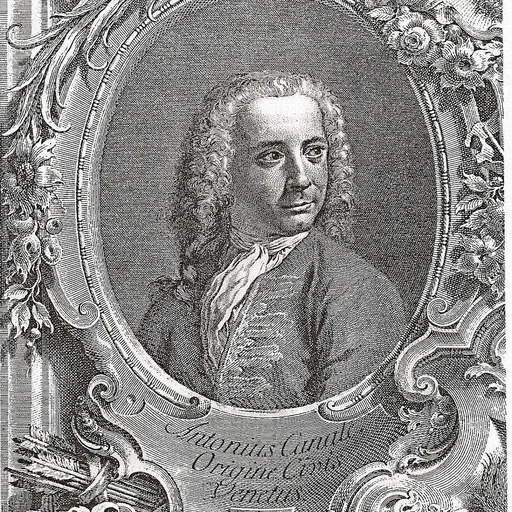
Giovanni Antonio Canal (18 October 1697 – 19 April 1768), commonly known as Canaletto (Italian: ), was an Italian painter from the Republic of Venice, considered an important member of the 18th-century Venetian school.

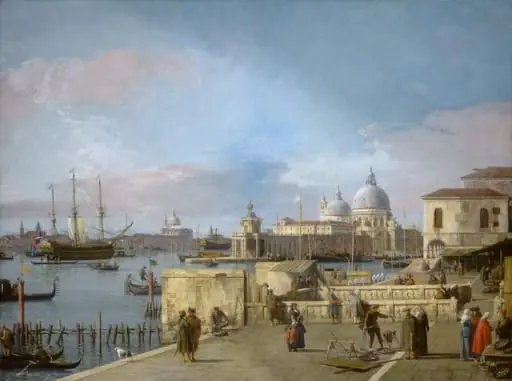 Entrance to the Grand Canal from the Molo, Venice
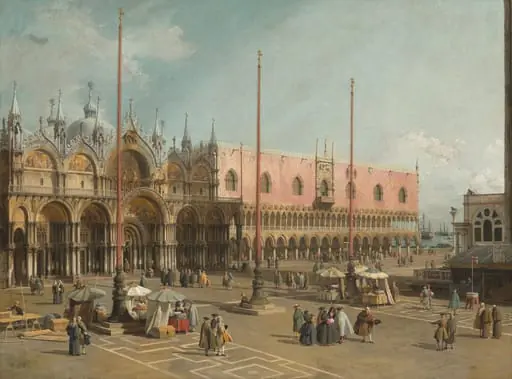 The Square of Saint Mark's, Venice
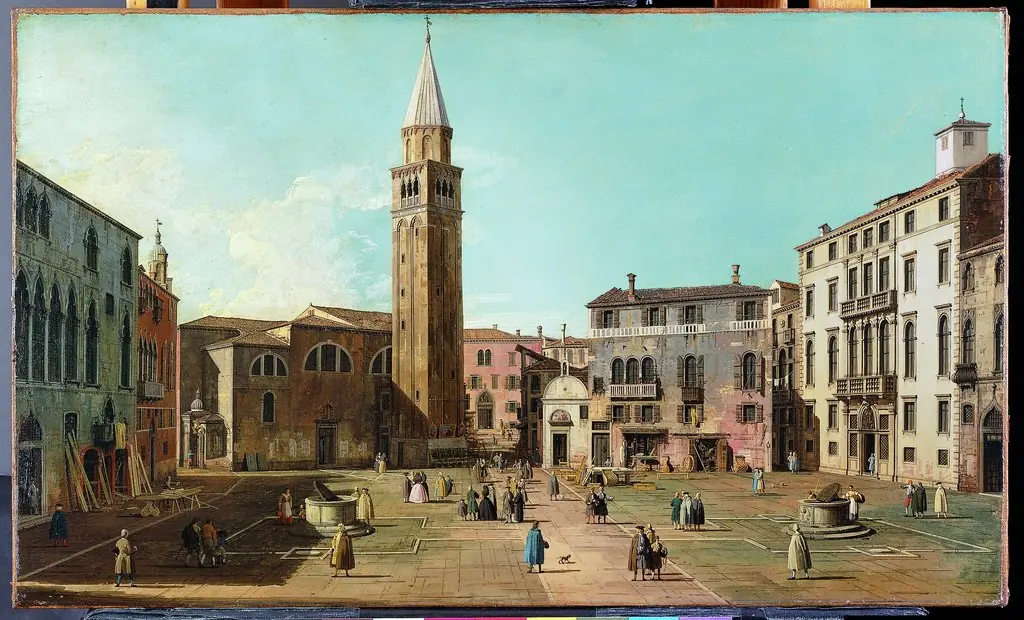 Campo Sant'Angelo
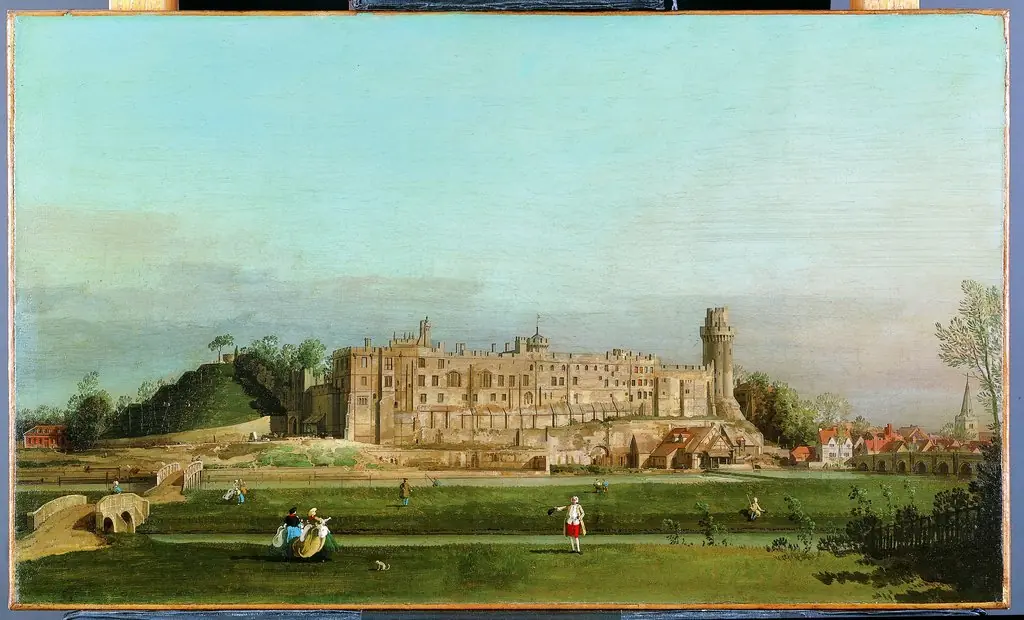 Warwick Castle
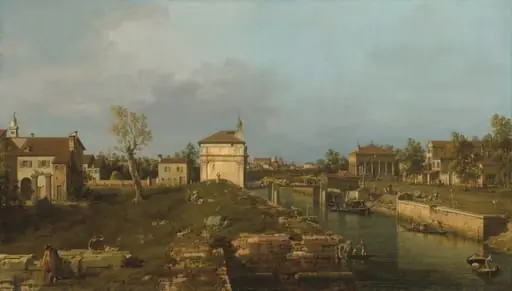 The Porta Portello, Padua
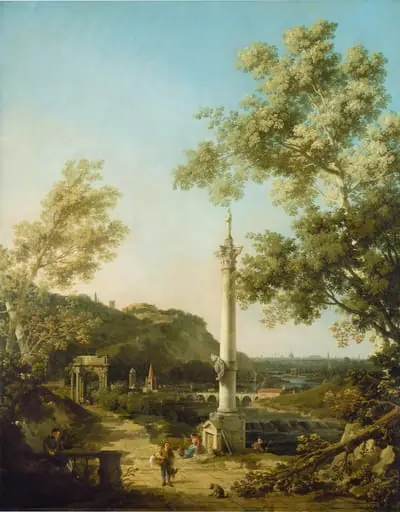 English Landscape Capriccio with a Column
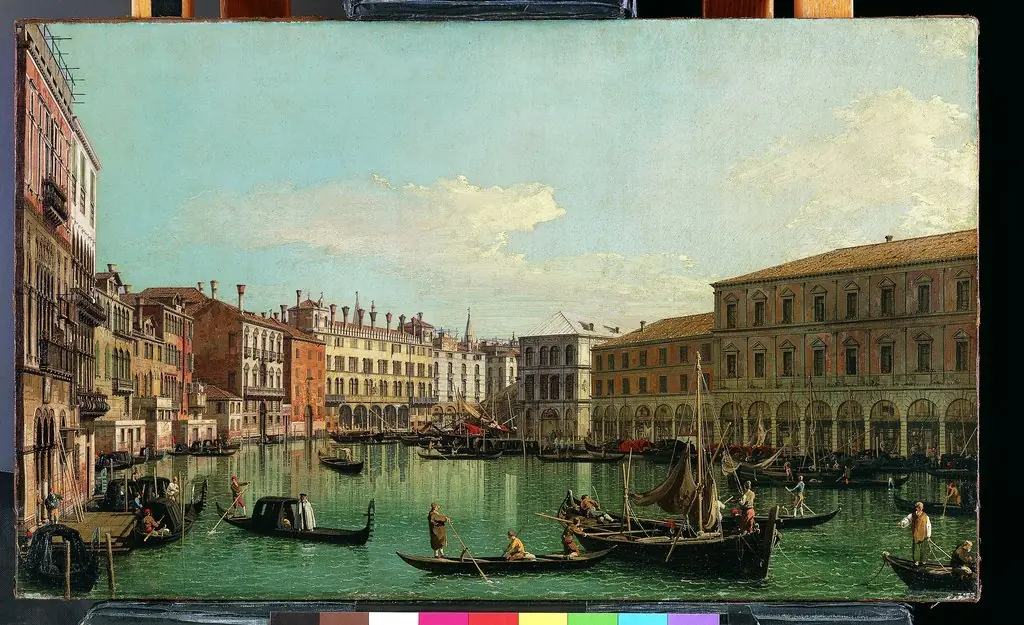 The Grand Canal, Venice, Looking South toward the Rialto Bridge
 The Grand Canal, Venice, Looking Southeast, with the Campo della Carità to the Right