Artwork
Die hll. Hieronymus, Maria Magdalena, Antonius und Franziskus (Kopie nach)
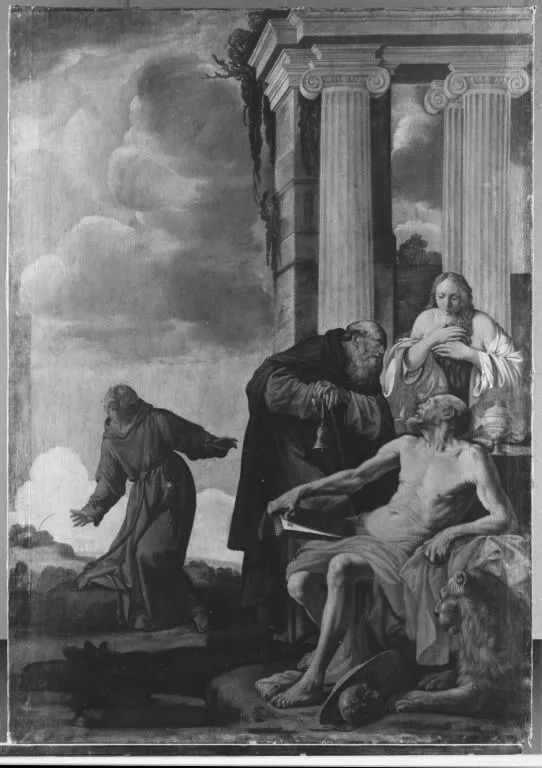
Die hll. Hieronymus, Maria Magdalena, Antonius und Franziskus (Kopie nach) is an unspecified painting by the Early Baroque Italian artist Carlo Saraceni. It dates from 1600 and is held in the collection of the Bavarian State Painting Collections.
About this work
Subject & Meaning
Francis of Assisi appears slightly separated on the left, oriented toward the heavens, signifying a more mystical form of piety distinct from the others.
The painting depicts a devotional scene uniting four central Christian saints: Jerome, Mary Magdalene, Anthony the Great, and Francis of Assisi. This grouping creates a typological representation of Christian holiness, integrating values of penance, scholarship, asceticism, and piety. Jerome, positioned centrally as a Church Father, is shown half-naked to signify his ascetic life as a penitent, while his open book references his scholarly status and the Vulgate translation.
The lion at his feet recalls the legend of him removing a thorn from the beast's paw. Mary Magdalene stands behind him with a salve jar, symbolizing her anointing of Christ and embodying repentance and redemption. Anthony the Great, holding a staff and bell, represents the founding of Christian monasticism and devout asceticism.
Francis of Assisi appears slightly separated on the left, oriented toward the heavens, signifying a more mystical form of piety distinct from the others.
History & Provenance
The painting is held within the Bavarian State Painting Collections. While one record associates the work with the Alte Pinakothek, it is exhibited at the State Gallery in the New Schleißheim Palace. The artwork entered the collection in 1803 following secularization, having been acquired from the Augustinian Church (Augustinerkirche) in Munich. No specific inventory number or further exhibition history is provided in the available sources.
Legacy
The painting has been cited as an early example of devotional group portraiture that anticipates later 17th-century configurations of saintly ensembles, influencing both religious narrative cycles and the spatial organization of multi-figure altarpieces. Its compositional strategy, placing a central, half‑naked figure of Saint Jerome in front of a monumental architectural backdrop while arranging complementary saints in secondary planes, has been repeatedly referenced in studies of Baroque devotional art as a model for integrating individual saintly attributes into a unified visual sermon. Contemporary records of its acquisition during the 1803 secularisation of the Augustinerkirche and its subsequent inclusion in the Bavarian State Painting Collections underscore its perceived cultural value, leading to repeated exhibitions in the Alte Pinakothek and later in the New Castle Schleißheim gallery, where it contributed to the canon of accessible sacred imagery for public audiences.
Overview
Created around 1600 by the Italian painter Carlo Saraceni, this early‑Baroque canvas brings together four saints, Jerome, Mary Magdalene, Anthony the Great and Francis of Assisi, set against a modest landscape. The work is part of the collection of the Alte Pinakothek in Munich and exemplifies Saraceni’s engagement with religious subject matter during the transition from Mannerism to Baroque.
Technique & Style
Saraceni employs a restrained chiaroscuro that models the bodies with soft contrasts of light and shadow, giving them a palpable three‑dimensionality. The background features a muted sky and distant terrain, while a columned architectural element frames the group, reinforcing the spatial depth typical of early Baroque painting.
Artist & collection
Artist
Carlo Saraceni (1579 – 16 June 1620) was an Italian early-Baroque painter, whose reputation as a "first-class painter of the second rank" was improved with the publication of a modern monograph in 1968.

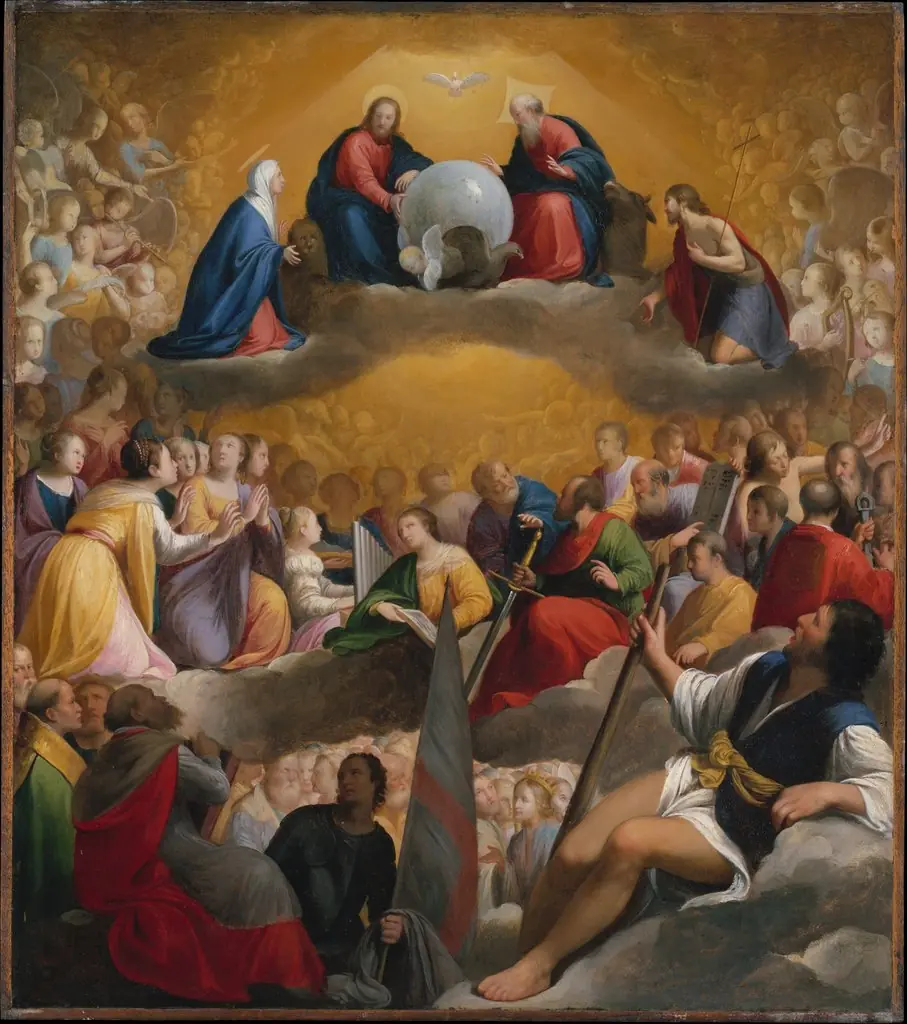
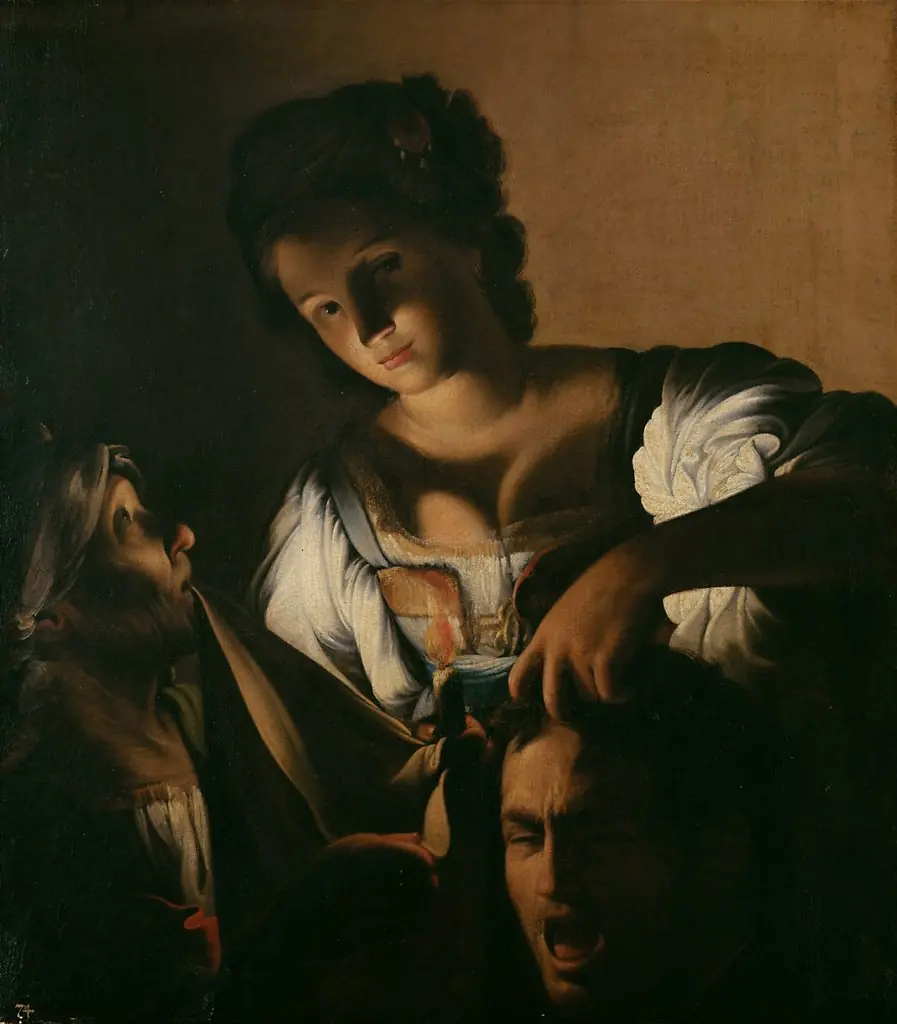
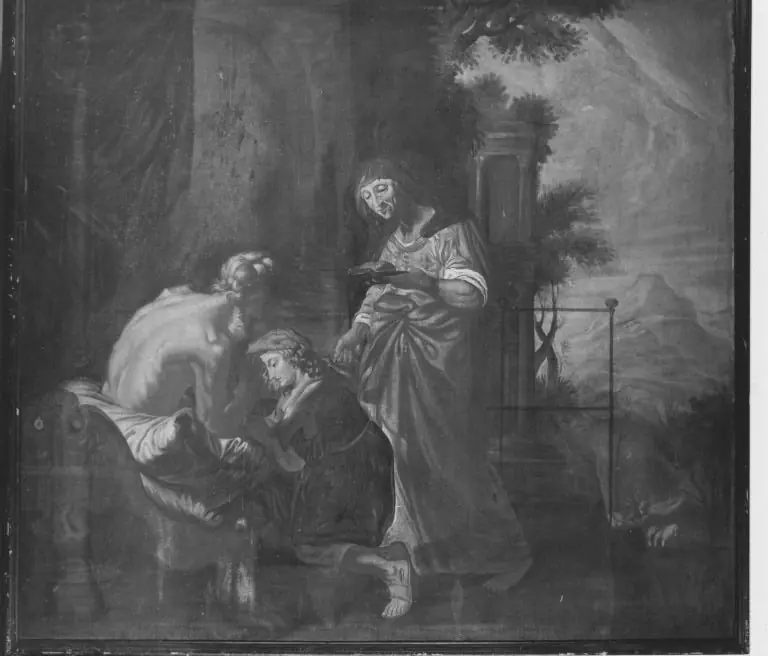 Isaak segnet Jakob (Kopie nach)
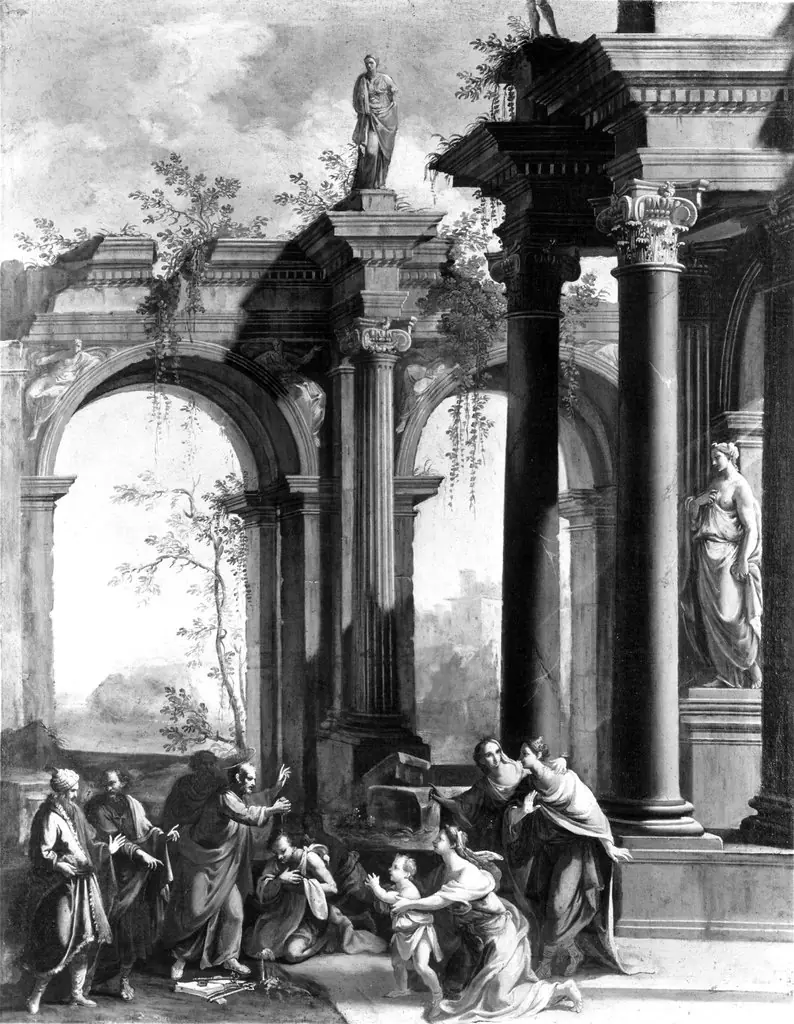 St. Peter Baptizing the Centurion, Cornelius
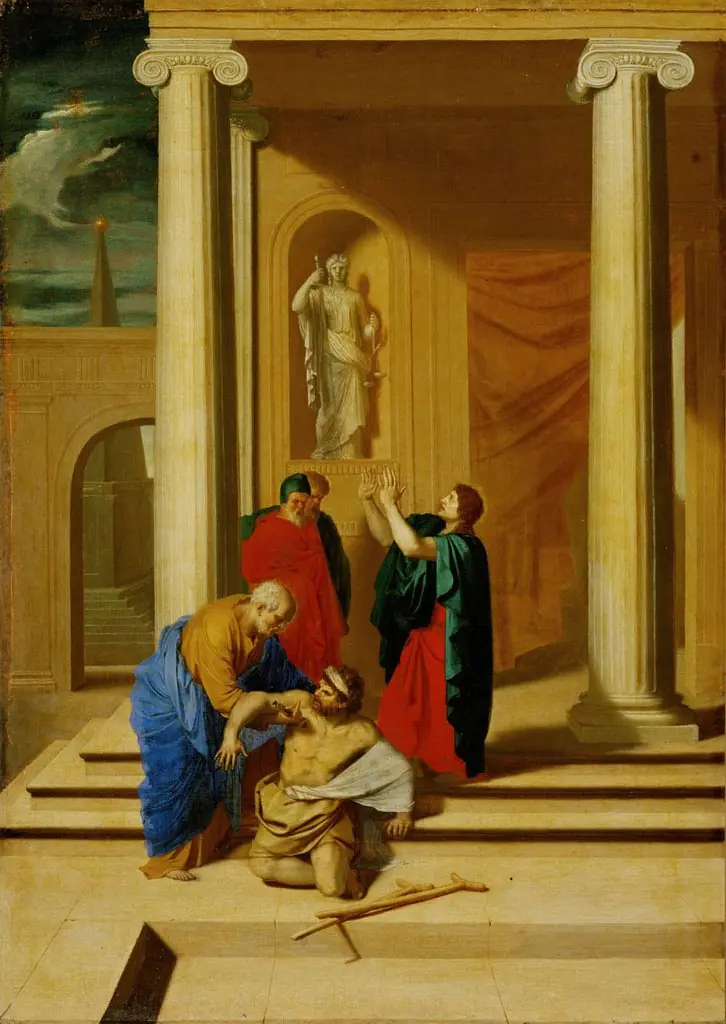 Peter and John heal a lame man in the temple
 Auferweckung des Lazarus
 Raising Lazarus from the Dead
 Jupiter und Merkur
 Dornenkrönung Christi
 Ein Engel verheisst der Frau des Manoah einen Sohn
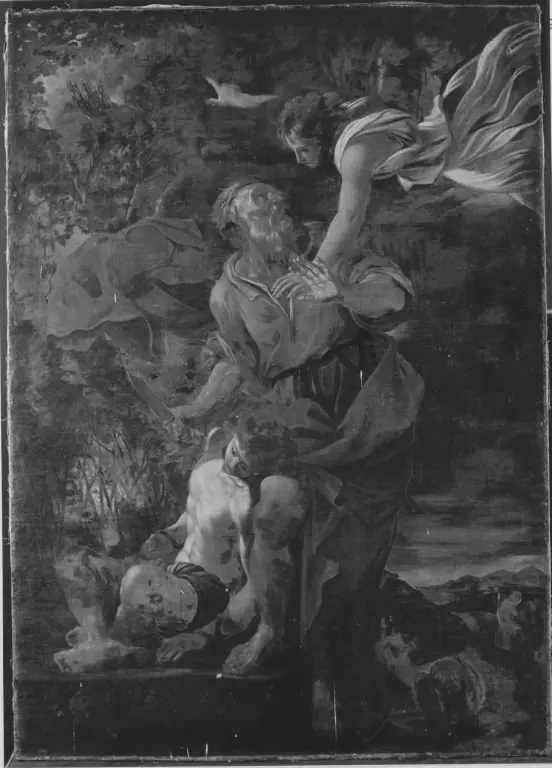
 Abraham opfert Isaak
 Heilung des Gichtbrüchigen
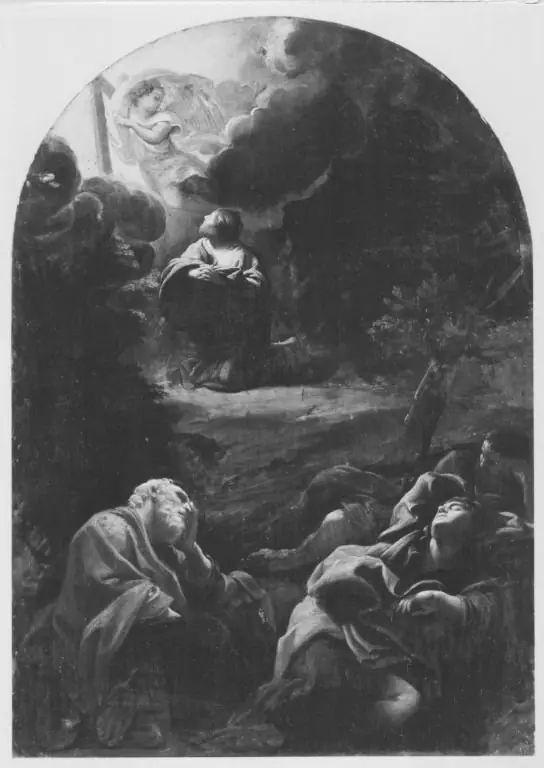 Christus am Ölberg
- Abrahams Opfer (zugeschrieben)