Artwork
The Dormition of the Virgin
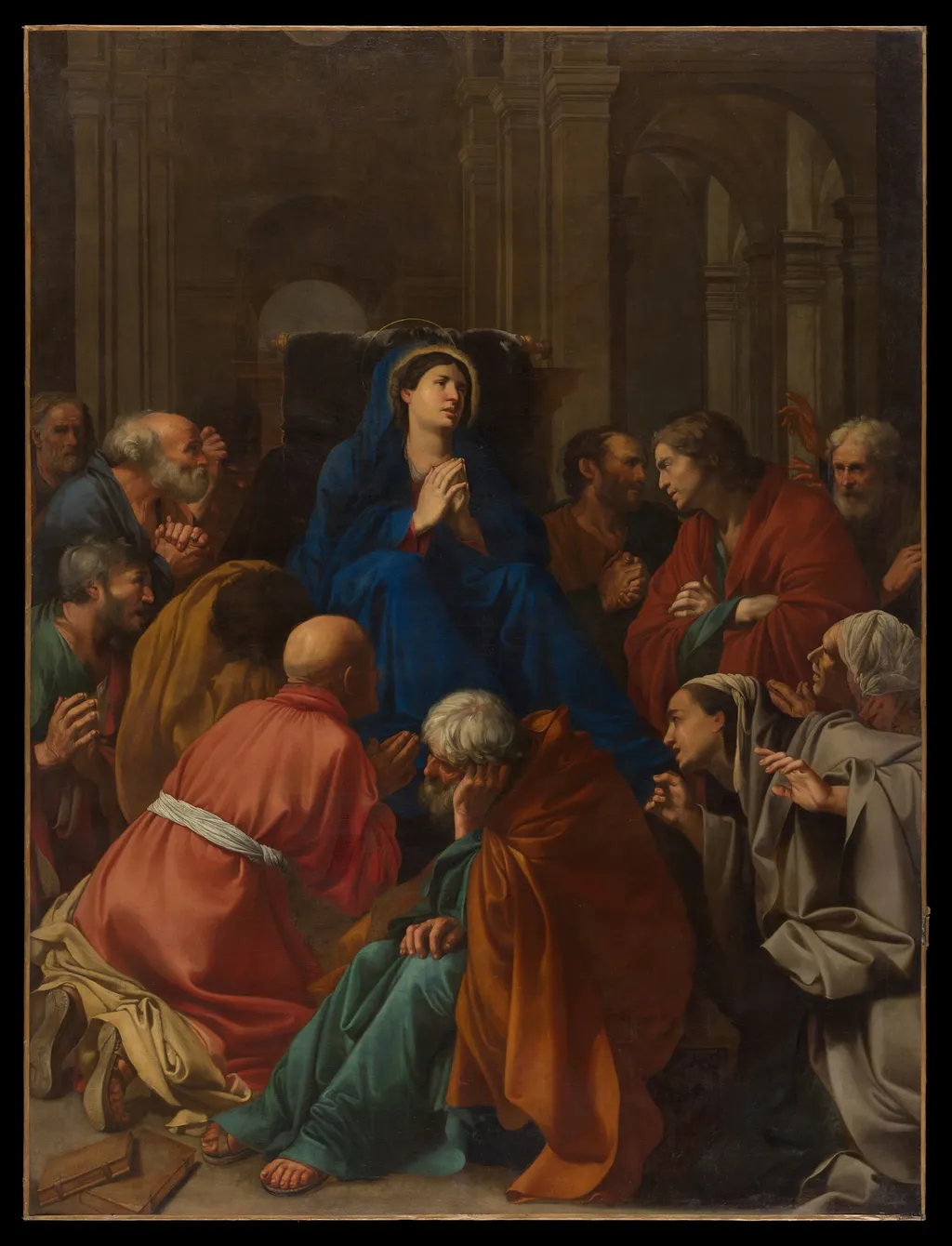
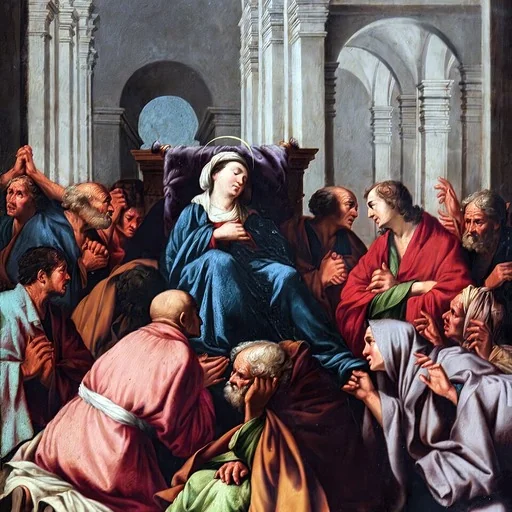
The Dormition of the Virgin is an oil painting by the Early Baroque Italian artist Carlo Saraceni. It dates from 1612 and is held in the collection of the Metropolitan Museum of Art.
About this work
Subject & Meaning
As a work of religious art, the piece focuses on the main subject of Mary's death, serving as a visual meditation on this pivotal event in Christian tradition.
Carlo Saraceni's 1612 oil painting depicts the Death of the Virgin, a central religious narrative also known as the Dormition. The composition centers on the Virgin Mary, portraying the moment of her passing. Surrounding her are figures identified as men and women, representing the apostles and other witnesses gathered at her bedside.
As a work of religious art, the piece focuses on the main subject of Mary's death, serving as a visual meditation on this pivotal event in Christian tradition. Created in the early seventeenth century, the painting utilizes the medium of oil on canvas to render the solemn scene, emphasizing the spiritual significance of the Virgin's transition rather than a purely historical account.
History & Provenance
Carlo Saraceni created the oil-on-canvas painting The Dormition of the Virgin in 1612. This religious work, measuring 305.1 cm in height and 231.1 cm in width, depicts the Death of the Virgin. The painting is currently held in the collection of the Metropolitan Museum of Art in New York.
It was accessioned by the museum in 2019 under the catalog number 2019.406. While the specific commissioning patron and the detailed chain of ownership prior to its acquisition by the museum are not detailed in the provided records, the work's creation date and current institutional home are firmly established.
Overview
This oil painting, titled The Dormition of the Virgin, depicts a solemn gathering around a central female figure. The composition draws the viewer into an intimate, dimly lit interior where a group of individuals observes a significant moment. The artist employs a focused narrative to convey a sense of quiet contemplation and shared emotion among the assembled figures.
Technique & Style
Executed in oil paint, the artist utilizes a dramatic interplay of light and shadow, known as chiaroscuro, to enhance the emotional intensity of the scene. This technique sculpts the faces of the mourners and defines the ancient stone architecture of the room, creating a somber atmosphere. The subdued palette of reds, greens, and browns, contrasted with the Virgin's blue garment, further contributes to the painting's poignant and contemplative mood.
Own this work as a print
Artist & collection
Artist
Carlo Saraceni (1579 – 16 June 1620) was an Italian early-Baroque painter, whose reputation as a "first-class painter of the second rank" was improved with the publication of a modern monograph in 1968.