Artwork
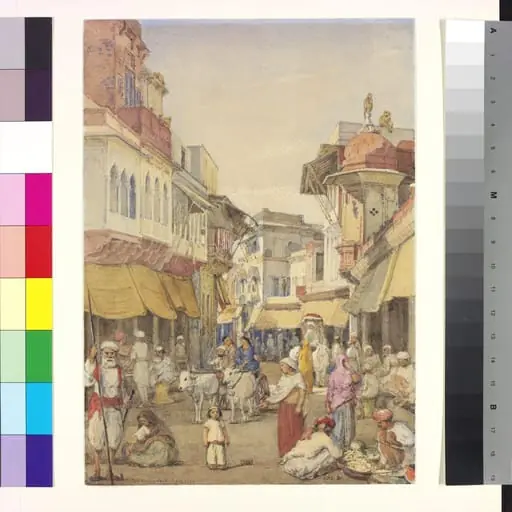
Street scene with gateway and a mosque, Lucknow
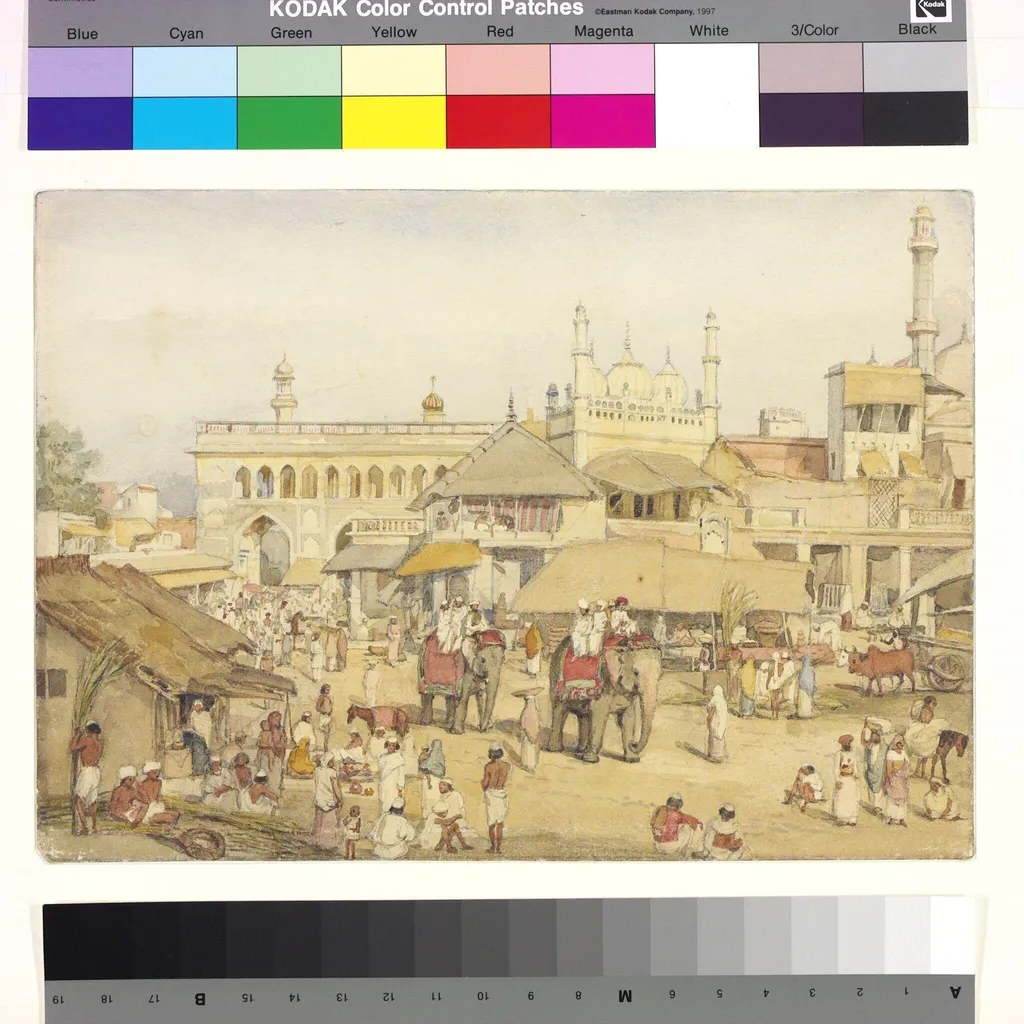
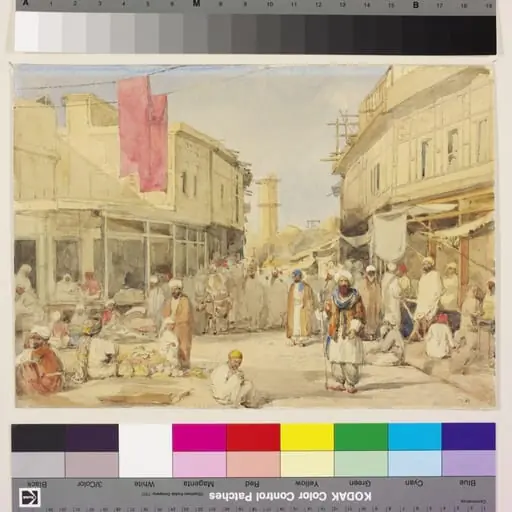
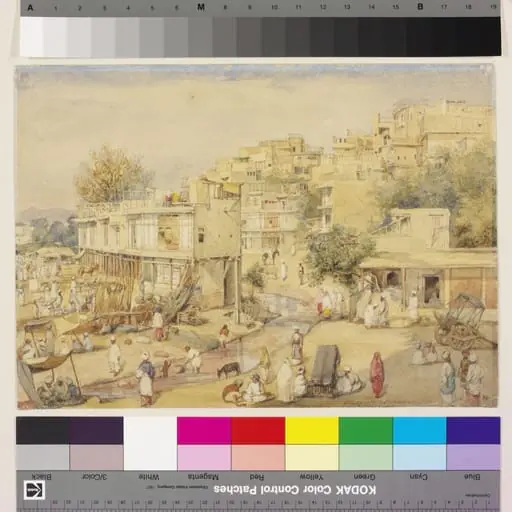
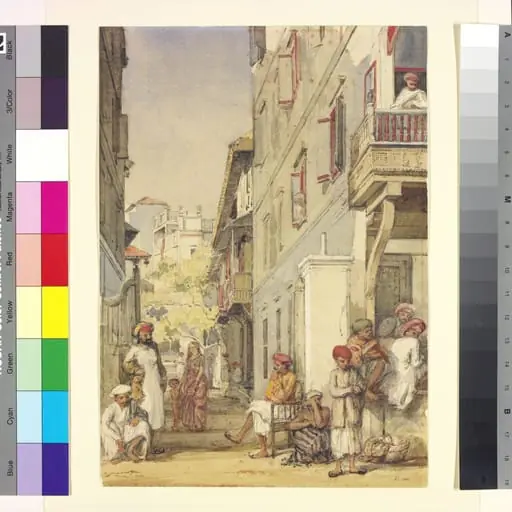
Street scene with gateway and a mosque, Lucknow is a paint painting by the Impressionist artist William Carpenter. It dates from 1856 and is held in the collection of the Victoria and Albert Museum. This painting depicts a bustling street scene in Lucknow, featuring a gateway, a mosque, and a crowd including two elephants with howdahs.
About this work
He was an English artist who traveled widely in India during the 1850s, often dressing in local clothing and painting portraits of rulers and landscapes.
William Carpenter painted a street scene with a gateway and a mosque in Lucknow around 1856. He was an English artist who traveled widely in India during the 1850s, often dressing in local clothing and painting portraits of rulers and landscapes. His work blends realism with impressionist touches.
Carpenter’s time in India lasted about six years. He arrived in Bombay in 1850 and returned to England in 1856, leaving behind scenes like this one.
If you like this style, look up the Victoria and Albert Museum.
Overview
This painting depicts a bustling street scene in Lucknow, featuring a gateway, a mosque, and a crowd including two elephants with howdahs. Created by English artist William Carpenter around 1856, it reflects his observations during his six-year journey through India.
Subject & Meaning
The scene captures everyday life in 19th-century Lucknow, highlighting local architecture, transportation (elephants with howdahs), and daily activities. Carpenter's focus on costume, agriculture, and local life is evident in the depiction of a vibrant, populated street.
Technique & Style
Carpenter's work in this piece blends realism, particularly in architectural details, with impressionist touches, likely capturing the immediacy of Indian life during his travels. His experience in portrait painting is also reflected in the rendering of the crowd.
History & Provenance
Painted during Carpenter's Indian sojourn (1850-1856), the work is a product of his extensive travels from Bombay to Kashmir, Punjab, Afghanistan, and Rajasthan. He later moved to Boston and then back to London, where he died in 1899.
Context
Created amidst the British colonial era in India, Carpenter's work, while influenced by his Western upbringing, shows a unique blend of outsider curiosity and insider's attention to detail, facilitated by his practice of wearing local dress.
Legacy
Though not as widely recognized as some contemporaries, Carpenter's Indian paintings, including this street scene, offer valuable glimpses into mid-19th-century Indian life. Comparisons can be drawn with holdings at the Victoria and Albert Museum, which showcases similar period pieces.
Own this work as a print
Artist & collection
Artist
William Carpenter (1818–1899) was an English watercolour artist. He travelled for six or seven years in the 1850s painting scenes of India, its people and its life. The Victoria and Albert Museum bought over 280 of his…

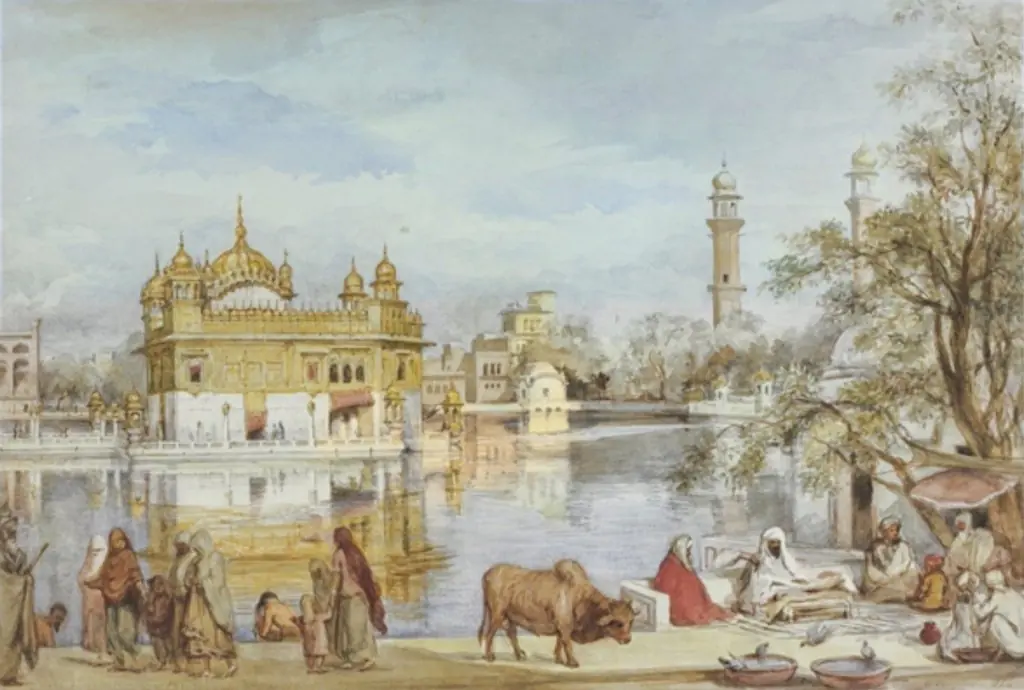 The Golden Temple, Amritsar
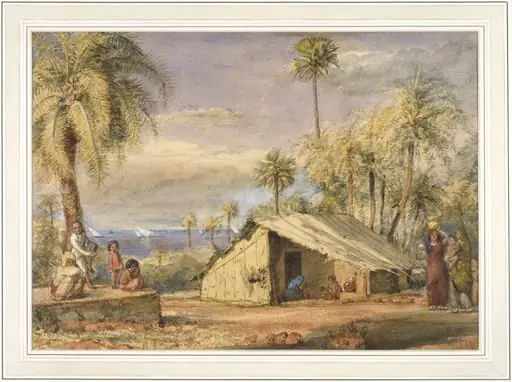 Toddywallah's hut in a grove of date palms near Breach Candy, Bombay
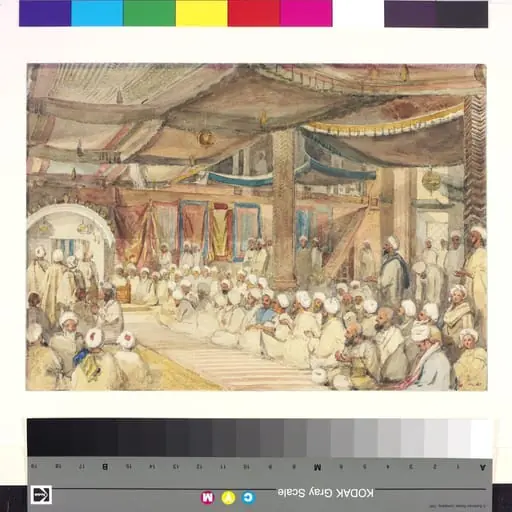 Interior of Shah Hamadan's Masjid during a religious ceremony
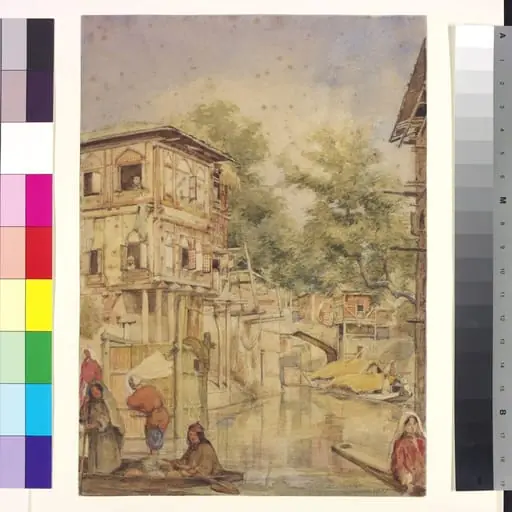 On the Mar Canal at Srinagar, Kashmir
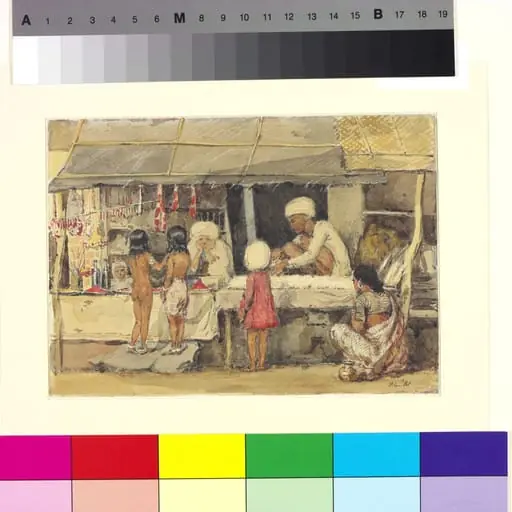 Shops for colours and flowers used at festivals, Sadr bazaar, Pune
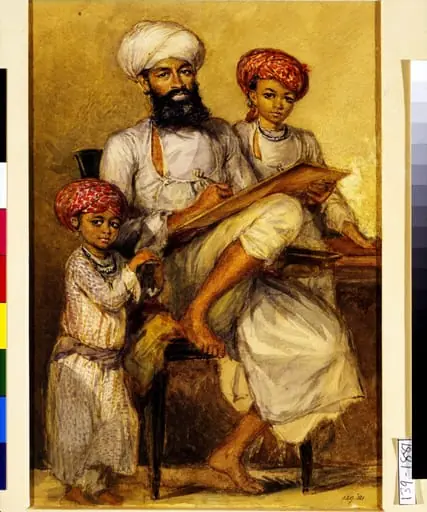 Portrait of Tara Chand, the court painter
 Study of a tamarind tree and date palms near Sir William Yardley's house at Breach Candy, Bombay
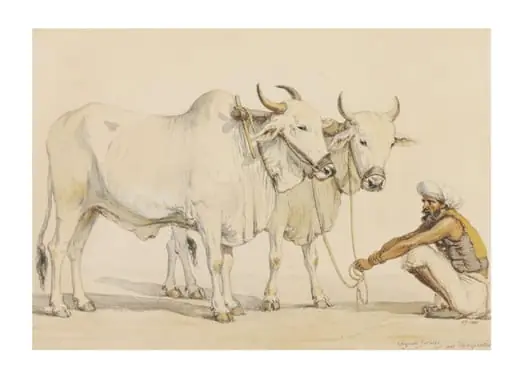 Two harnessed bullocks from Gujarat with their keeper