Artwork
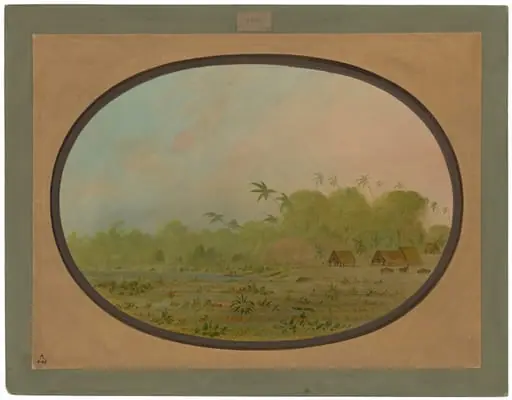
A Sepibo Village
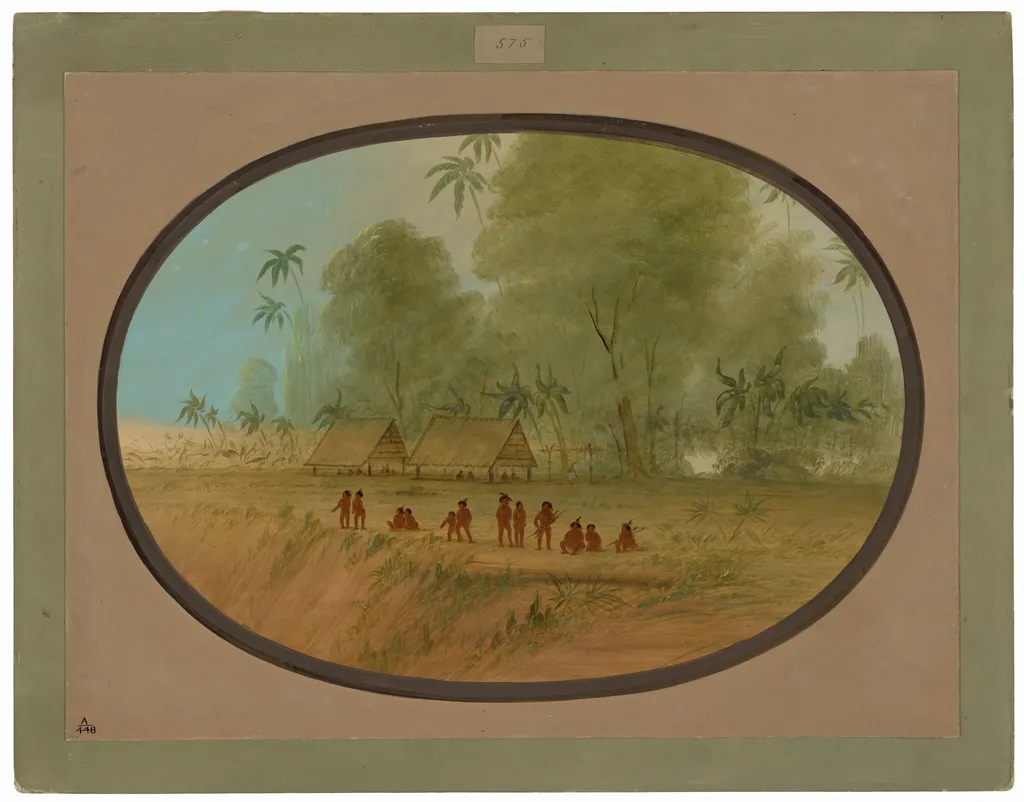
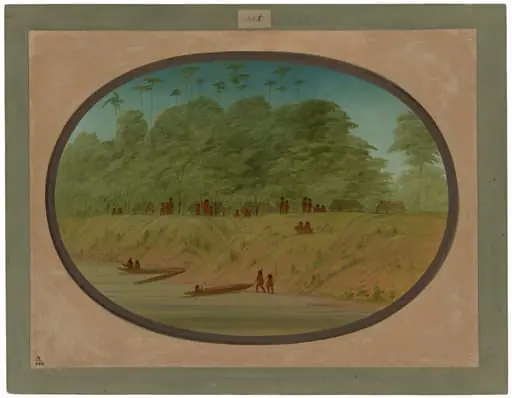
A Sepibo Village is an oil painting by the Impressionist artist George Catlin. It dates from 1862 and is held in the collection of the National Gallery of Art.
About this work
Technique & Style
The work is executed in oil on card mounted on paperboard, a support typical of Catlin’s portable field practice.
The work is executed in oil on card mounted on paperboard, a support typical of Catlin’s portable field practice. The medium’s fluid handling yields fine foliage detail and atmospheric recession, with a muted palette emphasizing earth tones and a central tree as the compositional anchor. Brushwork is smooth yet descriptive, avoiding heavy impasto.
Dimensions are 47 cm in height by 62.8 cm in width. Condition is not addressed in the cited sources.
History & Provenance
The painting was created in 1863 by George Catlin as part of his documentation of North American Indigenous life. It entered the artist’s estate by descent, passing to his daughters Clara Gregory Catlin, Louise Catlin Kinney, and Elizabeth Wing Catlin.
In 1912 the American Museum of Natural History purchased the work from Elizabeth Wing Catlin. It was later sold in 1959 through Kennedy Galleries in New York to Paul Mellon, who gifted it to the National Gallery of Art, Washington, D.C. in 1965, where it remains.
A Sepibo Village is held in the collection of the National Gallery of Art in Washington, D.C. It was acquired by the museum in 1965 as a gift from Mr. Paul Mellon. The work entered the collection through a purchase from Kennedy Galleries in New York in 1959, which had acquired it from the estate of Elizabeth Wing Catlin, who inherited it by descent from her father George Catlin. The painting measures 47 cm in height and 62.8 cm in width and was created in 1863.
Context
Painted in 1863, the work portrays a tree within a village setting and was created by George Catlin, an American painter known for his documentation of Indigenous peoples and frontier landscapes. It entered the National Gallery of Art collection in Washington, D.C., through a series of descents and acquisitions beginning with George Catlin’s daughters and culminating in a 1965 gift from Paul Mellon. The painting measures 47 centimeters in height by 62.8 centimeters in width and is classified as a landscape.
Scholarship on Catlin’s oeuvre often situates this piece within his broader interest in natural motifs and cultural documentation, reflecting his engagement with both scientific observation and frontier narratives. Its provenance traces from the artist’s family to the American Museum of Natural History, then to Paul Mellon, before its final donation to the National Gallery of Art.
Overview
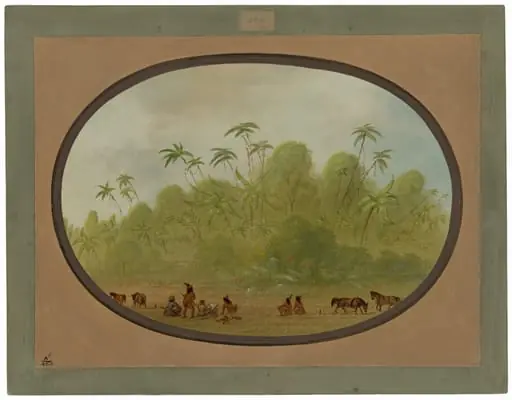
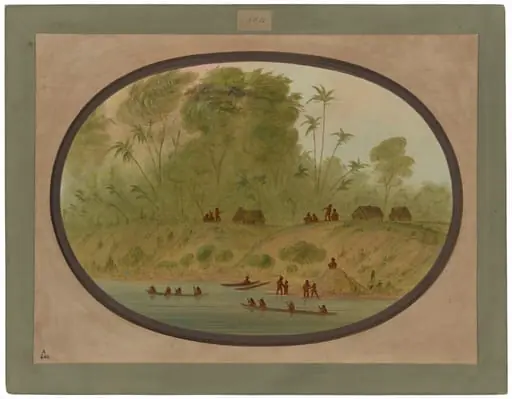
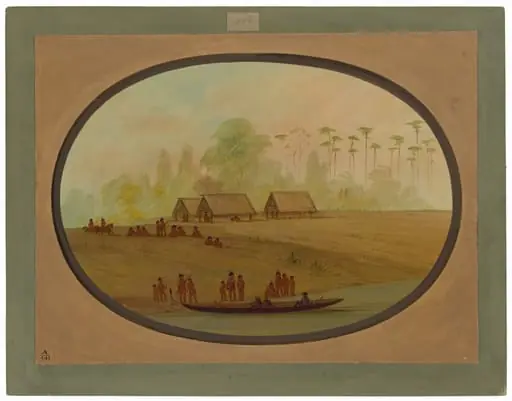
Created in 1862, A Sepibo Village is an oil painting executed on card that has been mounted on paperboard. The composition presents a modest settlement framed by a surrounding woodland, with a solitary, prominently rendered tree occupying the central space. The work reflects the artist’s interest in recording the visual character of frontier communities.
Subject & Meaning
The scene depicts a small village of Plains Indians, its modest structures clustered amid a forested landscape. The dominant tree serves as a visual anchor, suggesting both a natural landmark and a gathering point for the inhabitants. The painting conveys a quiet, everyday moment rather than a dramatic event, emphasizing the relationship between the community and its environment.
Own this work as a print
Artist & collection

Artist
George Catlin ( KAT-lin; July 26, 1796 – December 23, 1872) was an American lawyer, painter, author, and traveler, who specialized in portraits of Native Americans in the American frontier.

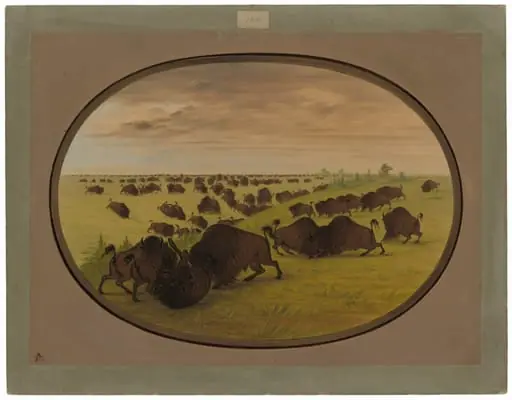 Bulls Fighting
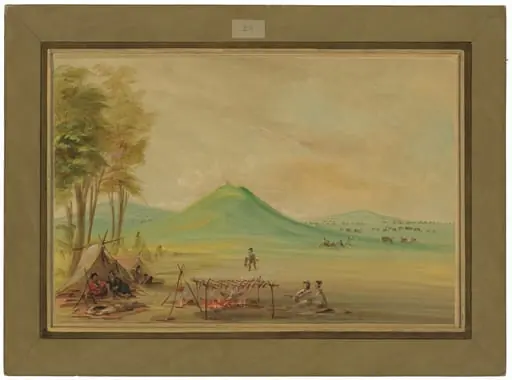 Expedition Encamped on a Texas Prairie. April 1686
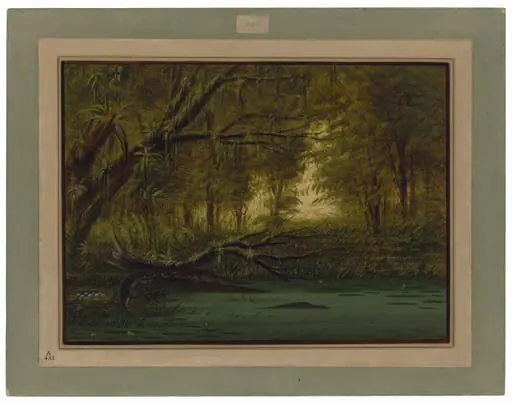 An Alligator's Nest
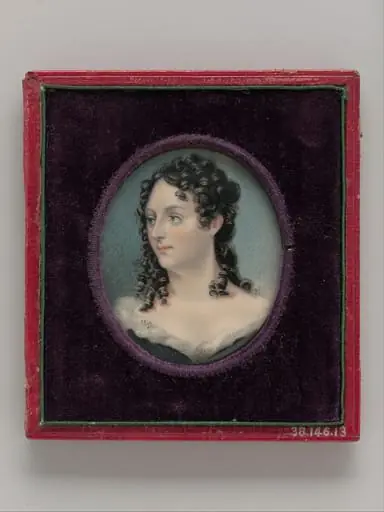 Mrs. George Catlin (Clara Bartlet Gregory)
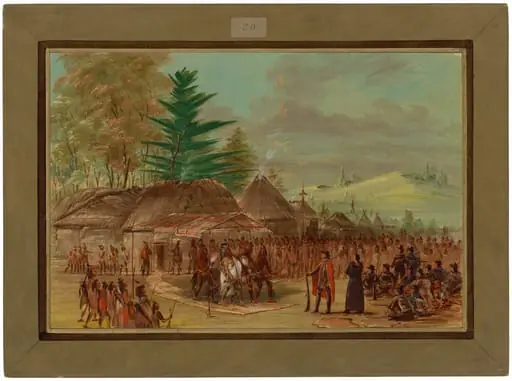 Chief of the Taensa Indians Receiving La Salle. March 20, 1682
 A Small Village - Payaguas Indians
 Omaha Chief, His Wife, and a Warrior
 Father Hennepin Leaving the Mississippi to Join La Salle. May 8, 1680